
Finding a good phone that actually fits in your pocket can be a challenge these days. Screens just keep getting bigger, right? But don’t worry, there are still some really solid options out there if you’re after a compact device. We’ve looked at a bunch of phones to find the best small phones 2025 has to offer. Whether you want a traditional phone or something that folds, there’s probably something here for you. Let’s check out some of the top picks.
Key Takeaways
- The Samsung Galaxy S25 is a top choice for a compact phone, offering a good screen size, fast performance, and long software support.
- For a budget-friendly option with great cameras and a sleek design, the Google Pixel 9a is a strong contender.
- Foldable phones like the Samsung Galaxy Z Flip 6 offer a larger screen experience in a pocket-friendly package.
- Older models like the Samsung Galaxy S24 are still excellent choices if you want a compact phone with good performance and cameras.
- The Motorola Razr 2025 provides an affordable foldable experience with a useful external screen for quick tasks.
1. Samsung Galaxy S25
Alright, let’s talk about the Samsung Galaxy S25. If you’re looking for a smaller phone that still packs a serious punch, this one is definitely worth a look. Samsung really refined the design this year, making it even slimmer and lighter than the S24, which is great for just slipping into your pocket. It feels good in the hand, and they’ve used solid materials like Gorilla Glass Victus 2, so you don’t have to baby it too much.
Under the hood, it’s got the latest Snapdragon 8 Elite for Galaxy chipset paired with a generous 12GB of RAM. What does that mean for you? Basically, super smooth performance whether you’re gaming, multitasking, or just scrolling through your feeds. It handles heavy loads without getting too hot, which is a nice bonus. Plus, Samsung is promising seven years of software updates, which is pretty wild and means this phone should stay relevant for a long time.
Here’s a quick rundown of what you get:
- Display: A bright 6.2-inch AMOLED screen with a 120Hz refresh rate that makes everything look smooth.
- Performance: Top-tier Snapdragon 8 Elite for Galaxy chip with 12GB RAM for all your needs.
- Software: Seven years of OS updates and access to new Galaxy AI features.
- Design: Slimmer, lighter, and durable build.
Now, it’s not all perfect. The battery is a decent 4,000mAh, which should get most people through a day, but heavy users might find themselves looking for a charger before bedtime. Charging speeds are also a bit on the slower side at 25W wired. And while the cameras are perfectly fine, they’re pretty much the same as last year’s model, so don’t expect a huge leap there. Still, if you want a compact phone with flagship power and a great display, the Galaxy S25 is a strong contender.
2. Google Pixel 9a
Alright, let’s talk about the Google Pixel 9a. This phone is kind of an unsung hero in the compact phone world for 2025. It manages to pack a lot of what makes the bigger Pixel phones great into a smaller, more affordable package. It really feels like a premium device without the premium price tag.
When you hold it, it feels solid. The design is pretty straightforward, maybe a little plain compared to some others, but it’s comfortable. Google says it’s their most durable A-series phone yet, which is good to hear. It’s got that nice 6.3-inch OLED screen, which is bright and shows colors really well, pretty much on par with the main Pixel 9. It’s great for just scrolling through stuff or watching videos.
Here’s a quick look at what you get:
- Display: 6.3-inch OLED, 120Hz refresh rate
- Processor: Tensor G4 chip
- RAM: 8GB
- Storage: 128GB or 256GB options
- Battery: 5,100 mAh
- Cameras: 48MP main, 13MP ultrawide
- Updates: Seven years of OS and security updates
The camera is surprisingly good, especially for the price. It takes nice photos, and it’s got this really impressive macro mode that can capture tiny details. Performance-wise, the Tensor G4 chip handles everyday tasks just fine, and you get access to a bunch of Google’s AI smarts. It might not be the absolute fastest chip out there, but for most people, it’s more than enough. Battery life is also pretty solid, usually getting you through a full day without much fuss. Plus, it even has wireless charging, which is a nice bonus at this price point. If you’re looking for a capable small phone that won’t break the bank, the Pixel 9a is definitely worth considering. It’s a great example of a value flagship phone.
3. Samsung Galaxy Z Flip 6
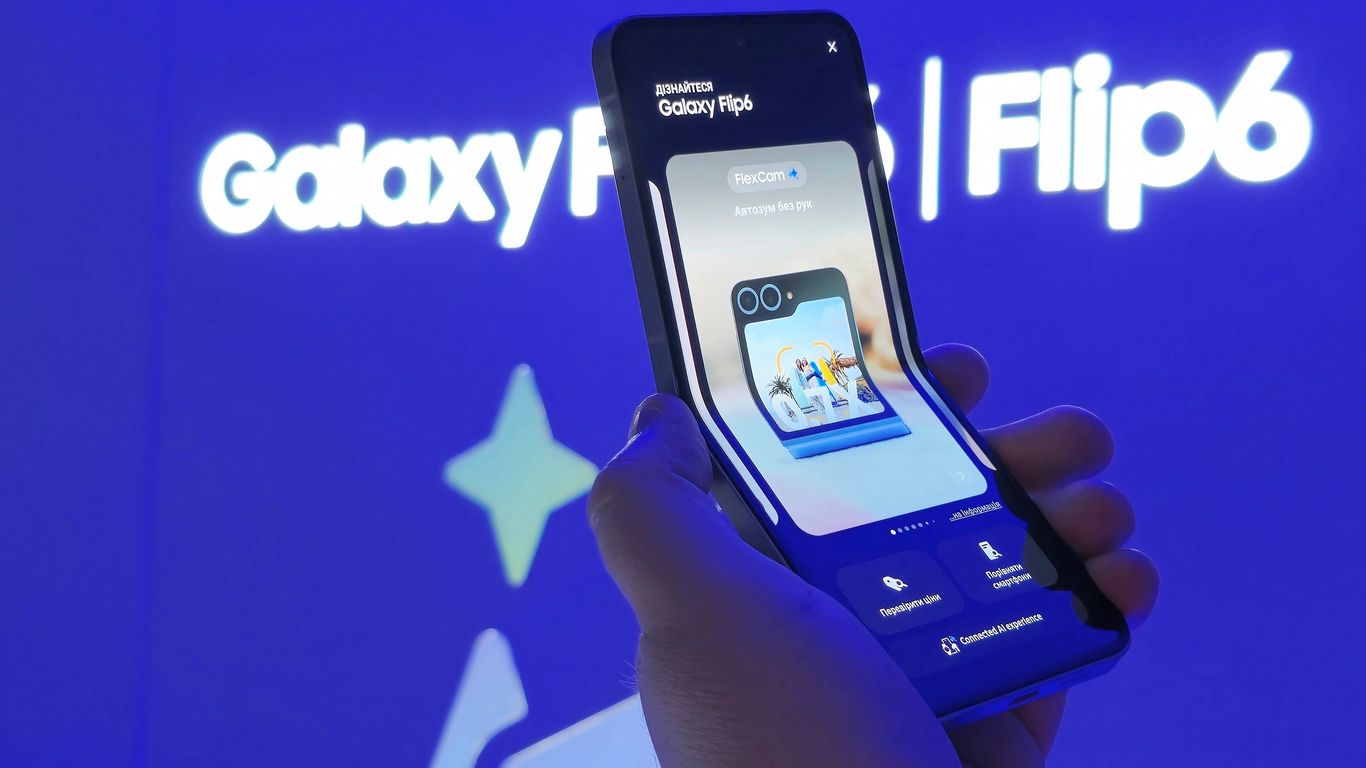
Alright, let’s talk about the Samsung Galaxy Z Flip 6. This phone is pretty neat if you’re into that whole foldable thing but still want something that fits in your pocket without a struggle. It’s got this cool design where it folds in half, so you get a big screen when you need it, but it shrinks down to a manageable size when you’re done.
The big draw here is definitely the blend of a large internal display with a compact, pocketable form factor. It’s a bit of a throwback to the flip phones many of us grew up with, but with all the modern tech packed inside. Samsung really refined this model, making it a bit thinner when folded and giving it a solid build that feels good in the hand.
Under the hood, it’s running on the Snapdragon 8 Gen 3 for Galaxy, which is a powerhouse. Seriously, this thing flies through apps and games without breaking a sweat. Plus, Samsung is promising seven years of software updates, which is pretty amazing for a foldable.
Here’s a quick look at what you get:
- Display: A nice big 6.7-inch internal AMOLED screen and a handy 3.4-inch cover display.
- Performance: Top-tier Snapdragon 8 Gen 3 for Galaxy chip.
- Cameras: A solid 50MP main camera, a 12MP ultrawide, and a 10MP selfie camera. No telephoto lens, though.
- Battery: A 4,000mAh battery, which is better than previous models, but charging is still a bit on the slower side at 25W wired.
- Durability: It’s got an IP48 rating for dust and water resistance, which is a big plus for a foldable.
It’s not perfect, of course. The cover screen experience could be a bit more robust out of the box, and it’s definitely on the pricier side. But if you want a foldable that feels polished and offers a unique way to use your phone, the Z Flip 6 is a strong contender.
4. Samsung Galaxy S24
Even though the newer Galaxy S25 is out and getting all the attention, the Samsung Galaxy S24 is still a fantastic choice, especially if you can find it at a good price. It really holds its own as a compact powerhouse.
This phone packs a lot of the same great features as its bigger siblings into a much more manageable size. It’s a solid option if you’re looking for a high-end Android experience without the bulk.
Here’s a quick look at what it offers:
- Display: A crisp 6.2-inch AMOLED screen with a smooth 120Hz refresh rate. It’s bright and looks great for just about anything.
- Performance: Powered by the Snapdragon 8 Gen 3 chip (in US models), it’s still really fast for apps and games.
- Cameras: You get a capable 50MP main camera, a 10MP telephoto, and a 12MP ultrawide. It takes good pictures, though sometimes the results can be a bit inconsistent.
- Battery: A 4,000mAh battery should get you through most of the day. It charges at 25W wired and 15W wireless.
- Software Support: Samsung promises an impressive seven years of updates, which is pretty amazing for keeping your phone current.
While the S25 brings some upgrades, the S24 remains a strong contender. It’s a great way to get a premium Samsung phone that fits comfortably in your hand and pocket.
5. Google Pixel 10
The Google Pixel 10 is a solid choice if you’re looking for a smaller phone that doesn’t skimp on features. It’s got this nice 6.3-inch display that feels just right in your hand, making it way easier to use one-handed than those giant phones everyone else seems to be pushing. This phone packs a serious punch with its camera system, now including a dedicated telephoto lens.
Here’s a quick look at what you get:
- Display: A bright 6.3-inch OLED screen with a smooth 120Hz refresh rate.
- Cameras: A 50MP main sensor, a 48MP ultrawide, and a new 48MP telephoto lens with 5x optical zoom. The front camera is 42MP.
- Performance: Powered by the Tensor G5 chip, it handles everyday tasks and AI features well, even if it’s not topping benchmark charts.
- Battery: Expect over 13 hours of use, plus 30W wired charging.
Google really leaned into its AI capabilities with this model. You get all the smart features you’d expect, like Magic Cue and Ask Photos, which genuinely make things simpler. It’s a great option for anyone who loves taking pictures or needs a phone that can keep up with their daily digital life without feeling like a brick in their pocket. Plus, it sticks to the same $799 price point as the previous generation, which is a nice surprise these days. If you’re curious about how it stacks up against other budget options, you might want to check out the Pixel 10a for comparison.
6. Motorola Razr 2025
Okay, so the Motorola Razr 2025. This one’s interesting because it really tries to hit that sweet spot between a regular phone and a foldable. When it’s all folded up, you’ve got this handy 3.6-inch external screen that’s surprisingly useful. You can check notifications, reply to texts, see your calendar, or even play some simple games without having to flip the whole thing open. It’s pretty neat for quick tasks.
Then, when you need more space, it unfolds into a big 6.9-inch AMOLED display. It’s got a nice, bright screen with good picture quality, which is great for watching videos or browsing the web. Motorola also beefed up the hinge with titanium, so it feels pretty solid when you open and close it. Plus, it’s got that IP48 rating, meaning it can handle some dust and water splashes, which is a nice bit of reassurance for a foldable.
Under the hood, it’s running a MediaTek Dimensity 7400X chip. Now, it’s not the absolute fastest processor out there, and sometimes you might notice a little lag, especially if you’re pushing it hard. But for everyday stuff like social media, emails, and most apps, it gets the job done. The battery life is actually a strong point here, which is a big deal for foldables. You can expect it to last you through most of the day, and it charges up reasonably fast too.
Here’s a quick look at some specs:
- Display: 6.9-inch AMOLED (main), 3.6-inch pOLED (external)
- Processor: MediaTek Dimensity 7400X
- RAM: 8GB
- Storage: 256GB
- Battery: 4,500mAh
- Charging: 30W wired, 15W wireless
- Cameras: 50MP main, 13MP ultrawide
It’s not perfect, mind you. Some of the fancy Moto AI features don’t actually run on the device itself, which is a bit of a bummer. And software support only goes for three years, which is shorter than some competitors. Also, the cameras, while decent, can be a bit of a fingerprint magnet. But if you’re looking for a foldable that doesn’t break the bank and gives you that cool flip experience with a usable external screen, the Razr 2025 is definitely worth considering. It’s a solid choice for dipping your toes into the foldable world without spending a fortune.
7. Google Pixel 10 Pro
Google really packed a lot into the Pixel 10 Pro, and it’s a solid choice if you want a top-tier Android experience without a massive phone. It’s got that familiar Pixel feel, but with some neat upgrades under the hood. The Tensor G5 chip is definitely the star here, making everything feel zippy and handling all those AI smarts Google is known for.
When it comes to the camera, it’s pretty much the same hardware as last year, which is still really good, mind you. You get that excellent 50MP main sensor that captures great shots, and the 5x optical telephoto lens is handy for getting closer to your subject. Plus, the 100x Pro Res Zoom is kind of wild to play with, even if you don’t use it every day. Google’s photo processing is still top-notch, so your pictures should look sharp and detailed.
Here’s a quick look at some of its features:
- Display: A bright 6.3-inch OLED screen that’s easy on the eyes.
- Processor: The new Tensor G5 chip, which is more efficient and powerful.
- Cameras: A versatile triple-camera system with a 50MP main, 48MP ultrawide, and 48MP 5x telephoto.
- Updates: Google promises seven years of Android updates, which is pretty amazing for long-term use.
- Charging: It supports Qi2 magnetic wireless charging, which is a nice convenience.
Battery life is decent, lasting over 13 hours in web browsing tests, which should get most people through the day. One thing to note, especially if you’re in the US, is that it doesn’t have a physical SIM card slot, relying entirely on eSIM. It’s a small phone that punches above its weight, offering a lot of Google’s best tech in a comfortable package.
8. Apple iPhone 16 Pro
Alright, let’s talk about the Apple iPhone 16 Pro. If you’re looking for a smaller iPhone that still packs a serious punch, this is definitely one to consider. It’s basically got all the same camera smarts as its bigger Pro Max sibling, just in a more pocket-friendly size. This phone is a great choice if you want top-tier Apple features without the bulk.
One of the cool new things is the ‘Camera Control’ button on the side. It makes snapping photos and videos feel a bit more like using a real camera, which is a nice touch. Plus, the A18 Pro chip inside is no joke – this thing flies through pretty much anything you throw at it. Apps load instantly, games run smoothly, and multitasking is a breeze.
Here’s a quick look at some of the specs:
- Display: 6.1-inch OLED, always-on, 120Hz refresh rate.
- Processor: A18 Pro chip.
- Camera: Features the same 5x optical zoom lens as the Pro Max, with improved quality thanks to the new chip. Slow-motion video is particularly smooth.
- Storage: Starts at 128GB (though you might want to upgrade if you take a lot of photos or videos).
- Battery: Should comfortably last a full day for most users.
Now, it’s not perfect for everyone. If you’re all about having the absolute biggest screen possible, you’ll want to look at the Pro Max. Also, while Apple’s AI features are coming, they might not be as readily available right now compared to some Android phones. But if you’re already in the Apple ecosystem and want a powerful, compact iPhone with a fantastic camera, the 16 Pro is a solid pick.
9. Motorola Razr Ultra 2025
Motorola really went all out with the Razr Ultra 2025, and honestly, it shows. This isn’t just another flip phone; it feels like they finally put all the best parts into one package. It’s easily the most powerful and best-looking flip phone I’ve ever gotten my hands on.
What really sets it apart is the performance. We’re talking about a top-tier Snapdragon 8 Elite chipset paired with a hefty 16GB of RAM and 512GB of storage right out of the box. That’s more than some of the big names are offering in their foldables, which is pretty wild for a flip phone.
And the battery? It’s a solid 4,700mAh, which is pretty big for this form factor. Plus, the charging is seriously fast – up to 68W wired TurboPower. You can get a good chunk of juice back in no time, which is a lifesaver when you’re on the go.
Let’s talk about the displays. You get a nice 7-inch folding screen, but the real star is the cover screen. It’s super functional without any weird hoops to jump through. Apps work across the whole thing, and you can easily adjust them if they get cut off by the camera. Plus, having AI tools like Perplexity and Gemini ready to go on the cover screen is pretty handy for quick questions.
Motorola also partnered with Pantone for the colors, and the materials feel really premium. I saw a version with a wooden back and a bronze frame, and another with a cool green Alcantara finish. It definitely stands out from the usual glass backs.
However, it’s not all perfect. The Moto AI features feel a bit unfinished, and the company’s software update commitment isn’t as long as some competitors. Also, that long-range zoom on the camera isn’t the best, and let’s be honest, this phone comes with a pretty steep price tag.
Key Specs:
- Processor: Snapdragon 8 Elite
- RAM: 16GB
- Storage: 512GB
- Main Display: 7-inch folding
- Cover Display: Half-size front display
- Battery: 4,700mAh
- Wired Charging: 68W TurboPower
- Wireless Charging: 30W
- Materials: Premium finishes (e.g., wood, Alcantara) with Pantone colors
10. Google Pixel 9 Pro
Okay, so the Google Pixel 9 Pro. It’s kind of a big deal if you’re into the whole AI thing. Google really went all out with the artificial intelligence features on this one. You can make pictures, mess with photos, write stuff, and a whole lot more. It’s like having a little creative assistant right in your pocket.
One of the coolest parts, for me anyway, is the note-taking. If you’re on a call and someone’s giving you a bunch of instructions – maybe your vet or a contractor – the phone can actually listen in and take notes for you. No more scrambling for a pen!
But, if you’re a bit wary of AI, this might not be your jam. It can do some pretty convincing deep fakes, and if that makes you nervous, well, you’ve been warned. Also, if you’re chasing the absolute best camera out there, some folks say the Galaxy S24 Ultra still has the edge, even with Pixel’s Video Boost. And if you just want this phone but bigger, there’s the Pixel 9 Pro XL, which is basically the same phone, just… more of it.
Here’s a quick rundown:
- AI Powerhouse: If you want to create and generate content with AI, this is your phone.
- Smart Assistant: Great for taking notes during calls or important conversations.
- Design Refresh: It sports a new, sleeker camera bump, ditching the old bar. Plus, it’s got tough Gorilla Glass Victus 2.
- Display: Google continues to impress with bright, colorful screens.
The Google Pixel 9 Pro is a fresh take on the Pixel design, packing a ton of AI tools and a really nice display. It’s a solid choice if you want cutting-edge AI smarts and a phone that feels modern. Just be aware of the AI’s capabilities and maybe check out other options if cameras are your absolute top priority.
Wrapping It Up
So, there you have it. Finding a great small phone in 2025 isn’t as hard as you might think, even though the trend is definitely towards bigger screens. Whether you want the absolute best tech packed into a compact body like the Samsung Galaxy S25, a solid performer that won’t break the bank like the Google Pixel 9a, or even a foldable that shrinks down when you need it to, like the Galaxy Z Flip 6, there are some really good options out there. It just goes to show that you don’t need a giant phone to get a powerful and enjoyable mobile experience. Happy hunting for your perfect pocket-sized powerhouse!
Frequently Asked Questions
What makes a phone considered “small” these days?
Even phones with screens around 6.1 to 6.3 inches are now called small because phone screens have gotten so big. Anything bigger than that is usually considered a large phone.
Are there any small phones that can still do big things?
Yes! Foldable phones are a great option. They can fold up to be super small and fit in your pocket, but when you open them, you get a big screen for watching videos or playing games.
Which small phone is the best overall for 2025?
The Samsung Galaxy S25 is currently the top pick. It’s small enough to hold comfortably, has a fast processor, great cameras, and Samsung promises seven years of software updates, which is a really long time!
What if I want a good small phone without spending too much money?
The Google Pixel 9a is a fantastic choice if you’re on a budget. It costs less than $500 but still has amazing camera technology and the same powerful chip found in more expensive Pixel phones.
How important is battery life when choosing a small phone?
Battery life is definitely important! While bigger batteries usually mean longer life, it’s not always the case. It’s good to look at reviews that test how long phones actually last when you use them a lot.
What are AI features on phones, and are they in small phones?
AI features use smart technology to help you do things like create images, improve your photos, or even make tasks simpler. Google’s Pixel phones, like the Pixel 10, are known for having really advanced AI features, and Samsung is adding them to their phones too.