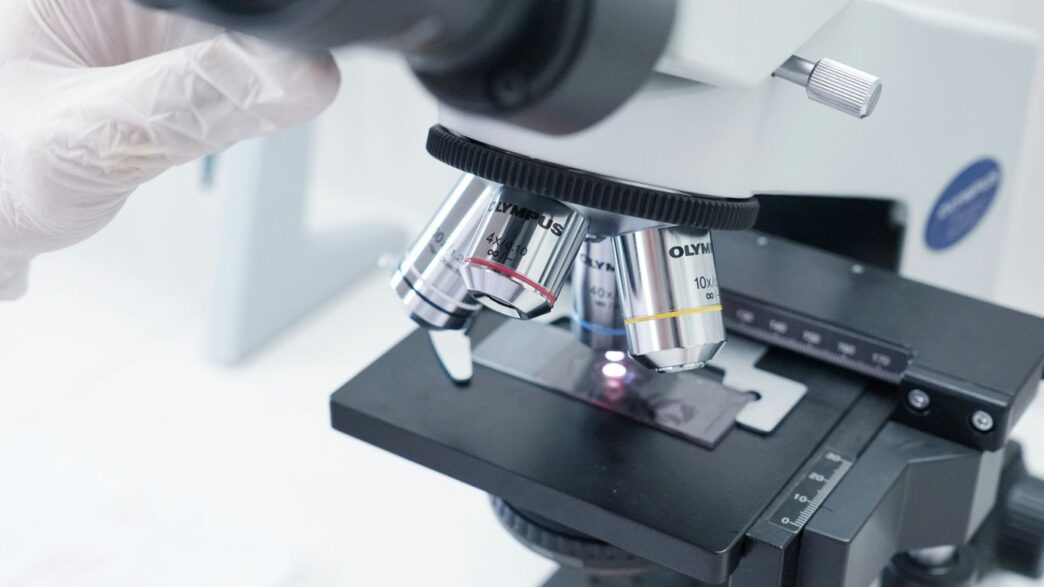
Treeline Biosciences is shaking things up in the world of drug discovery. They’re using some really advanced ways to look at proteins, which is a big deal for finding new medicines. Think of it like having super-powered glasses to see things smaller than ever before. This approach helps them pinpoint targets for drugs that might have been missed before, potentially leading to treatments for diseases we haven’t been able to tackle effectively.
Key Takeaways
- Treeline Biosciences focuses on seeing proteins at atomic detail, a new way to find drug targets.
- They combine different scientific tools, like imaging and computer modeling, to understand proteins better.
- The company works on making and purifying proteins, which is a key step in drug research.
- Treeline Biosciences is helping to find ways to treat diseases caused by proteins that were previously considered ‘undruggable’.
- Their methods aim to speed up the process of developing new medicines.
Treeline Biosciences: A New Era in Drug Discovery
It feels like every day there’s some new company popping up, promising to change how we find medicines. Treeline Biosciences is one of those outfits, and they’re trying to do things a bit differently. They’re not just looking at the usual suspects when it comes to finding new drug targets. Instead, they’re digging into the really complex parts of proteins, the bits that have been tough to get a handle on.
Illuminating Novel Protein Targets
Think of proteins as the tiny machines that run our bodies. When these machines go wrong, that’s when diseases can start. Treeline’s main goal is to find these broken or malfunctioning protein machines that nobody else has really been able to study properly. They’re focusing on proteins that are hard to ‘drug’ with current methods, which opens up a whole new area for potential treatments. It’s like finding a hidden switch that could fix a whole system.
Atomic Resolution Protein Imaging
To really understand a protein machine, you need to see it in super-fine detail. Treeline is using advanced techniques to image proteins at what they call ‘atomic resolution.’ This means they can see the exact position of every single atom in the protein. It’s like having a 3D blueprint of the machine down to the smallest screw. This level of detail is pretty important for figuring out how a protein works and how to fix it if it’s not doing its job right.
Leveraging Advanced Biophysical Techniques
Seeing is one thing, but understanding how these protein machines interact and behave is another. Treeline uses a bunch of different scientific tools, like Surface Plasmon Resonance (SPR) and mass spectrometry, to study proteins. They also use computer simulations, called in-silico molecular dynamics, to predict how proteins will move and change. Plus, they’re using cryo-electron microscopy (cryo-EM) to get those detailed images we talked about. By combining all these different methods, they get a much clearer picture of what’s going on at the molecular level, which is key to finding new ways to treat diseases.
Pioneering Technologies at Treeline Biosciences
Synergistic Subdiscipline Integration
Treeline Biosciences doesn’t just use one tool; they bring a whole toolbox together. Think of it like building a really complex model airplane. You wouldn’t just use glue, right? You need different parts, different glues for different materials, maybe some tiny tweezers. That’s what Treeline does with science. They combine things like Surface Plasmon Resonance (SPR), which helps measure how molecules interact, with mass spectrometry, which identifies and counts molecules. They also use X-ray crystallography to see the 3D structure of proteins and in-silico molecular dynamics to simulate how they move. It’s this mix-and-match approach that lets them see things others miss.
In-Silico Molecular Dynamics
This is where computers get to play scientist. In-silico molecular dynamics is basically running super-detailed computer simulations of proteins. We’re talking about watching how a protein folds, how it changes shape, and how it interacts with other molecules, all at an atomic level. It’s like having a virtual laboratory where you can test out different scenarios without actually needing to do the experiment in a real lab. This helps Treeline predict how a drug might behave or how a protein might function before they even start the physical work. It saves a lot of time and resources, honestly.
Cryo-Electron Microscopy Applications
Cryo-electron microscopy, or cryo-EM, is a pretty amazing technique. It lets scientists see the detailed, 3D structure of proteins and other biological molecules. They freeze the sample really quickly, so it’s preserved in a natural state, and then use an electron microscope to get images. By taking lots of images from different angles, they can build a super high-resolution picture of the molecule. This atomic-level detail is key to understanding how proteins work and how we might be able to influence them with new drugs. It’s like going from a blurry photograph to a crystal-clear, 3D model you can examine from every side.
Treeline Biosciences’ Commitment to Innovation
Comprehensive Protein Synthesis and Purification
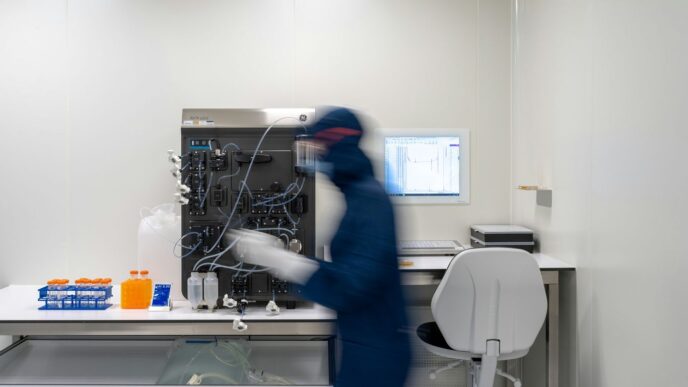
At Treeline Biosciences, we really focus on getting the proteins right from the start. It’s not just about having a protein; it’s about having a pure, well-defined sample to work with. We put a lot of effort into synthesizing and purifying these proteins, making sure they’re exactly what we need for our imaging and analysis. This step is super important because if your starting material isn’t top-notch, everything that follows can be a bit shaky. We’ve got processes down to make sure we’re getting high-quality protein batches, every time.
Exploiting Diverse Scientific Disciplines
What makes Treeline stand out is how we pull together different areas of science. It’s not just one thing; we’re using a mix of techniques. Think surface plasmon resonance (SPR) for looking at how molecules interact, mass spectrometry to figure out what’s in our samples, and crystallography to see the 3D structure. We also use computer simulations, called in-silico molecular dynamics, to predict how things will behave. And then there’s cryo-electron microscopy (cryo-EM), which gives us really detailed pictures of proteins. By combining these different scientific tools, we get a much clearer picture of the biological systems we’re studying. It’s like having multiple angles on the same problem, and it helps us find answers faster.
Advancing Therapeutic Target Identification
Our main goal here is to find new targets for drugs. A lot of diseases are hard to treat because we haven’t found the right protein or pathway to aim for. Treeline’s approach, using all those advanced techniques we just talked about, helps us spot these previously hidden targets. We can see how proteins interact in their natural settings, which is something that’s been tough to do before. This means we can identify molecules that could be good starting points for new medicines, especially for diseases that don’t have many treatment options right now.
The Treeline Biosciences Advantage
Unlocking Undruggable Proteins
So, what makes Treeline Biosciences stand out in the crowded field of drug discovery? Well, a big part of it is their knack for tackling proteins that other companies just can’t seem to get a handle on. You know, those tricky ones that have been labeled ‘undruggable’ for ages. They’re using some pretty advanced imaging and biophysical tools to get a look at these proteins in incredible detail, down to the atomic level. This isn’t just about seeing them; it’s about understanding their structure and how they work (or don’t work, in the case of disease). By getting this close, they can figure out new ways to interact with them, which is a game-changer for developing treatments for diseases that haven’t had good options.
Precision Medicine Through Protein Insights
It’s all about getting super specific. Treeline’s work with atomic resolution imaging means they’re not just guessing. They’re getting a clear picture of the molecular machinery involved in diseases. This detailed view allows them to pinpoint exactly where a drug needs to act. Think of it like having a highly detailed map versus a vague sketch. With a map, you can plan a precise route. That’s what Treeline is doing for drug development. They’re building the foundation for truly personalized medicine, where treatments are tailored to the specific molecular culprits of a patient’s illness. This precision can lead to more effective treatments with fewer side effects, which is a win-win for everyone.
Accelerating Drug Development Timelines
Time is money, especially in drug discovery. The traditional path from identifying a target to getting a drug to patients can take years, even decades. Treeline’s integrated approach, combining various scientific methods from synthesis to imaging and computational analysis, helps speed things up. Instead of working in separate silos, their team brings different disciplines together. This means they can move from initial protein characterization to identifying potential drug candidates much faster. They’re not just finding new targets; they’re making the whole process more efficient. This acceleration is vital for getting life-changing therapies to people who need them sooner rather than later.
Strategic Vision of Treeline Biosciences
Treeline Biosciences is really focused on getting a super clear picture of proteins, down to the atomic level. That’s the main goal. They believe that by seeing exactly how these protein targets look and interact, they can figure out new ways to create drugs.
Focus on Atomic Resolution
This isn’t just about looking at proteins; it’s about understanding them in incredible detail. Think of it like having a super high-definition camera for molecules. They use techniques like cryo-electron microscopy (cryo-EM) and X-ray crystallography to achieve this. Getting this level of detail helps them see the tiny spots where a drug could potentially bind, or how a protein might be malfunctioning in a disease.
Interdisciplinary Approach to Discovery
No single science has all the answers, right? Treeline brings together different fields to tackle drug discovery. They combine things like:
- Protein Synthesis and Purification: Making sure they have pure, usable protein samples to study.
- Biophysical Techniques: Using tools like Surface Plasmon Resonance (SPR) to see how molecules interact.
- Computational Modeling: Running simulations on computers to predict protein behavior.
This mix of skills means they can look at a problem from many angles, which is pretty smart.
Driving Future Therapeutic Breakthroughs
Ultimately, all this detailed work is aimed at finding new treatments for diseases that are hard to treat now. By understanding proteins at such a deep level, they hope to create medicines that are more effective and have fewer side effects. It’s about pushing the boundaries of what’s possible in medicine.
Looking Ahead
So, Treeline Biosciences is really pushing the boundaries in how we find new medicines. They’re using some pretty advanced tech, like looking at proteins really closely and using computers to help figure things out. It’s not just about finding new drug ideas faster, but also making them work better. This kind of work is super important because it could lead to treatments for diseases that we don’t have good options for right now. It’s exciting to see companies like Treeline making these kinds of strides, and it definitely feels like we’re on the verge of some big breakthroughs in medicine thanks to their efforts.