The Tennessee Valley Authority (TVA) is making some big moves in the world of nuclear power. They’re looking at small modular reactors, or SMRs for short. It’s a pretty big deal because they want to be one of the first big utility companies to get one permitted. This could change how we think about getting electricity in the future, especially with demand going up.
Key Takeaways
- TVA is aiming to be the first major utility to get a permit for a small modular reactor (SMR), a significant step for next-generation nuclear power.
- The Clinch River Nuclear Site in Oak Ridge, Tennessee, has been chosen for the SMR project, a location with a history in nuclear development.
- TVA is partnering with companies like GE Hitachi (for the BWRX-300) and NuScale Power (through ENTRA1 Energy) to explore different SMR technologies.
- The initiative is supported by significant investment from TVA and federal grants, aiming to speed up deployment and manage financial risks.
- SMRs offer benefits like reliable, carbon-free energy, potentially faster construction, and a smaller footprint, supporting economic growth and new digital infrastructure needs.
TVA’s Small Modular Reactor Initiative
First Utility To Permit A Small Modular Reactor
The Tennessee Valley Authority is making some serious moves in the nuclear energy world. They’ve put in an application with the Nuclear Regulatory Commission to build a small modular reactor (SMR). This is a pretty big deal because it makes TVA the first major utility in the U.S. to go this route with permitting. The plan is to put this new reactor at the Clinch River site in Oak Ridge, Tennessee. It’s all part of a bigger push to get next-generation nuclear power up and running. TVA folks are talking a lot about how nuclear power is reliable, can bounce back from problems, and doesn’t put out carbon emissions. They think this whole SMR project could be a blueprint for other power companies down the line.
Addressing Future Energy Demand
So, why the sudden push for SMRs? Well, TVA is looking ahead and sees a huge jump in how much electricity people are going to need. They’re predicting demand could go up by as much as 26 gigawatts by 2035. That’s a lot of extra power needed, and it’s coming from a few places. More people are moving into the area, and industries are shifting towards using more electricity for everything. To get ready for this, TVA is putting up $350 million for their SMR program. They’re also asking for $800 million in federal money to help speed things up. If everything goes according to plan, this new reactor could be online by 2032, churning out 300 megawatts of power. That’s enough to keep about 175,000 homes powered up.
A Model For Next-Generation Nuclear Power
The specific SMR design TVA is looking at is GE Hitachi’s BWRX-300. It’s a light water reactor, and get this – it’s the same kind of reactor that’s already being built up in Ontario, Canada. That Canadian project is costing around $6.1 billion for the first reactor, but the idea is that building more will bring the costs down. TVA’s own cost estimates seem to be in the same ballpark, though they haven’t shared all the exact numbers yet. This move by TVA really shows a shift in how the U.S. is thinking about nuclear energy. The goal is to get past the old problems with building big nuclear plants, like going way over budget and taking forever to finish.
The Clinch River Nuclear Site
Site Selection And History
So, picking a spot for this new nuclear tech wasn’t exactly a spur-of-the-moment decision. TVA looked around and landed on the Clinch River Nuclear site. It’s got a bit of history, actually. Back in the early 80s, there was a different nuclear project planned here, the Clinch River Breeder Reactor Project. That didn’t pan out, but they did manage to get the land back into good shape environmentally after it wrapped up. It’s kind of neat that they’re repurposing a site with that kind of past for something so forward-looking.
Location And Land Management
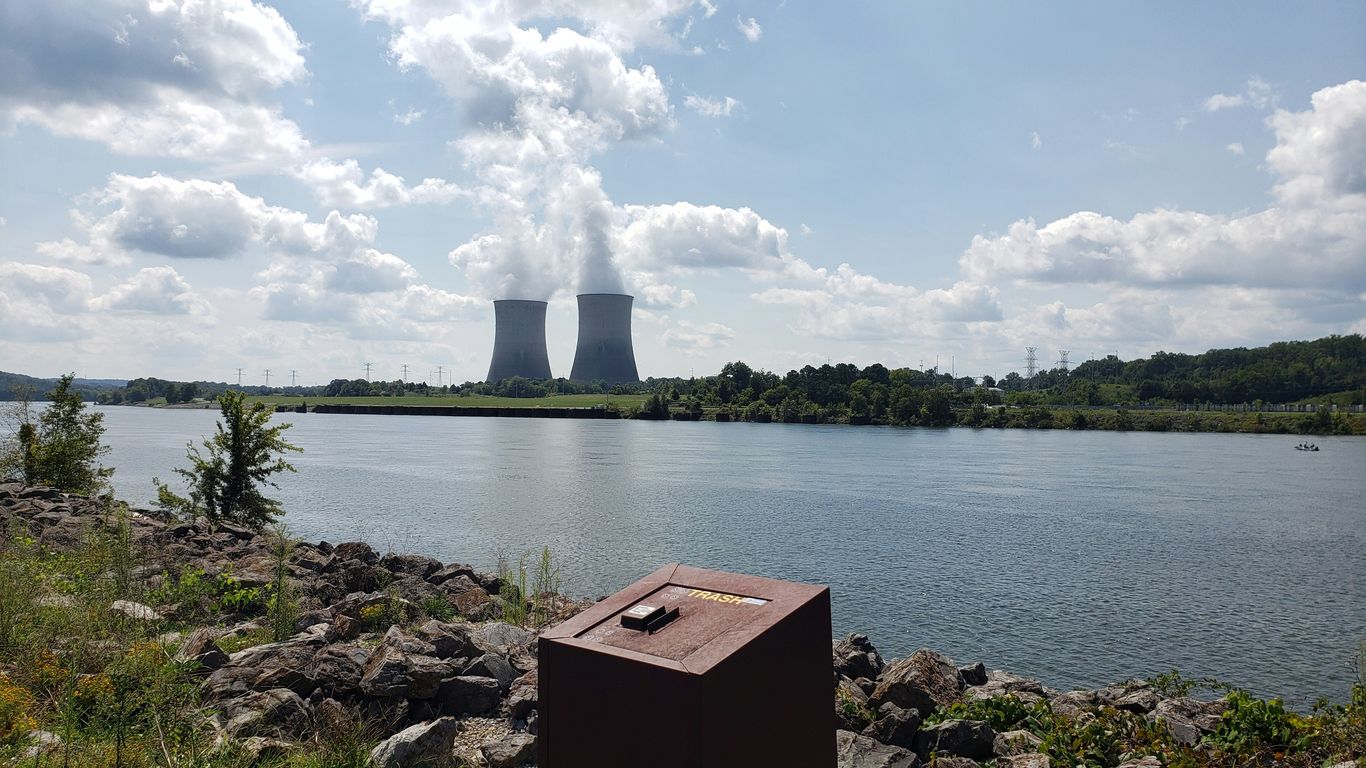
The actual site itself is pretty sizable – we’re talking about 935 acres. It’s situated on the north side of the Clinch River arm of the Watts Bar Reservoir, right there near Oak Ridge, Tennessee. The land is actually owned by the federal government, and TVA manages it. They’ve got a whole plan for how they handle the land around Watts Bar, so it’s all pretty organized.
Partnerships For Deployment
Building something like this isn’t a solo act, right? TVA is teaming up with some big names to make this happen. They’re working with GE Hitachi, who are designing the reactor, and Bechtel, who are known for their construction know-how. It’s these kinds of collaborations that really help move these advanced projects forward. TVA is aiming to have up to four small modular reactors on this site. They’re also looking into other advanced energy ideas, like fusion power, and working with companies like Type One Energy on that front. It seems like they’re really trying to cover all the bases for future energy needs.
Reactor Technology And Partnerships
When we talk about TVA’s SMR plans, it’s not just about one type of reactor. They’re looking at a few different technologies and working with some big names to make it happen. It’s pretty interesting how they’re approaching this, trying to get the best tech out there.
GE Hitachi’s BWRX-300
One of the main players here is GE Hitachi with their BWRX-300. This is a boiling water reactor design, and it’s based on technology that’s already been around and proven. They say it can be built pretty quickly, maybe in about 36 months, and takes up a lot less space than older reactors. Plus, it uses less concrete, which is a nice bonus. TVA even got a federal grant to help move this forward at the Clinch River site. It’s already being built in Canada, so they’re not exactly starting from scratch here.
NuScale Power Module
Then there’s NuScale Power. They have a different kind of reactor, a smaller "power module" that’s rated at 77 megawatts. The Nuclear Regulatory Commission has already given the thumbs-up to their design. TVA has teamed up with ENTRA1 Energy, and ENTRA1 is actually the one that has the rights to use NuScale’s technology. This partnership aims to develop a pretty large amount of new nuclear power, potentially up to 6 gigawatts across TVA’s service area. That’s a lot of power, enough to run millions of homes or a whole bunch of new data centers.
ENTRA1 Energy Collaboration
ENTRA1 Energy is a key partner in all of this. They’re an independent energy company that’s working closely with both TVA and NuScale. They’re essentially the ones who will be developing and owning these new "energy plants" that will sell power back to TVA. This kind of public-private setup is something TVA says is really important for bringing new nuclear tech to life. They’re also looking at working with other government groups and figuring out sites that could handle both new nuclear and maybe some gas power too, just to cover all the bases.
Financial And Federal Support
So, how is TVA actually paying for all this new nuclear stuff, especially the SMRs? It’s a big undertaking, and they’re not doing it alone. The federal government is stepping in with some serious cash, which is a pretty big deal.
TVA’s Investment In SMRs
TVA is putting its own money on the table, too. They’ve authorized a good chunk of change, around $350 million, specifically for their SMR program. This isn’t just pocket change; it shows they’re serious about making these advanced reactors a reality. They’re also looking at building up to four SMRs at the Clinch River site. Plus, they’re investing heavily in other areas, like battery storage – aiming for 1.5 GW by 2029 – and transmission upgrades. All this adds up to a massive capital investment, with projections suggesting over $19 billion will go into new generation and updating their systems.
Federal Grants Accelerating Deployment
This is where things get really interesting. The U.S. Department of Energy (DOE) has thrown its support behind TVA’s SMR plans, specifically awarding them a $400 million grant. This money is earmarked to speed up the deployment of what could be the country’s first Generation 3+ SMR. It’s a big win for TVA and a clear signal that the feds see SMRs as a key part of America’s energy future. This grant is part of a larger effort to boost the domestic nuclear industry and get these newer, potentially faster-to-build reactors online.
Managing Financial Risk
Even with federal help, building new nuclear facilities is a massive financial commitment. TVA is smart about this, though. They’re structuring their deals so that the financial risk isn’t solely on their customers, the ratepayers. They’re watching how other companies are partnering with tech giants like Google for advanced nuclear projects, and they want to make sure they can advance nuclear power without putting undue financial strain on the people they serve. It’s a balancing act, for sure, but they seem committed to moving forward responsibly.
Benefits Of Small Modular Reactors
Reliability and Carbon-Free Energy
Small Modular Reactors (SMRs) are a pretty big deal for keeping the lights on without messing up the planet. Unlike some other energy sources that can be a bit unpredictable, nuclear power, especially with SMRs, offers a steady stream of electricity. This means you don’t have to worry about the power going out when the wind isn’t blowing or the sun isn’t shining. Plus, they don’t produce greenhouse gases, which is a major win for the environment. TVA is looking at SMRs as a way to provide clean, reliable power for decades to come.
Faster Construction and Reduced Footprint
One of the biggest headaches with traditional nuclear power plants has always been the time and space they take up. SMRs are designed to be built much faster, almost like assembling a big Lego set, and they need a lot less land. Think about it: instead of a massive construction site that takes years, you get a more compact facility that can be up and running sooner. This makes them a lot more practical for fitting into existing energy grids and landscapes.
- Smaller Footprint: SMRs require significantly less land compared to traditional nuclear reactors.
- Modular Construction: Many components are built off-site in factories, speeding up on-site assembly.
- Shorter Construction Timelines: This modular approach can lead to quicker project completion.
Powering Economic Growth and Digital Infrastructure
As our world gets more digital and energy demands climb, SMRs are looking like a smart solution. Places like the Tennessee Valley are seeing a huge jump in power needs, partly because of things like data centers and the push to electrify everything. SMRs can provide the large amounts of consistent, carbon-free power needed to support this growth. This isn’t just about keeping your phone charged; it’s about enabling new industries and keeping local economies humming along.
TVA’s Broader Energy Strategy
Advancing Nuclear Amidst Gas Build
TVA is really pushing forward with new nuclear projects, which is interesting because they’re also in the middle of a pretty big natural gas build-out. It’s like they’re covering their bases, you know? They’ve got plans for new gas plants at Cumberland and Kingston, adding quite a bit of capacity. These gas projects are expected to bring in a lot of cash flow over the next few years. But even with all that gas coming online, TVA is still putting a lot of energy into developing advanced nuclear, especially with SMRs. They’re trying to make sure that the financial risk for these new nuclear ventures doesn’t fall on the people who pay their bills. It’s a balancing act, for sure.
Battery Storage Integration
Beyond nuclear and gas, TVA is also looking at battery storage. They’re aiming to have up to 1.5 gigawatts of battery storage ready by the end of 2029. This makes sense, right? Batteries can help smooth out the power supply, especially when you have different types of generation coming online. It’s another piece of the puzzle for making sure the lights stay on reliably.
Focus On Operational Efficiency
Even with all these new projects, TVA hasn’t forgotten about making sure their current operations are running as smoothly as possible. They’ve been using downtime at their existing nuclear plants strategically to work on extending their lifespan. This kind of focus on efficiency is important, especially when you’re dealing with big investments in new technology. It’s not just about building new things; it’s also about taking care of what you already have and making it last longer. They’ve also seen their operating revenue go up, which is a good sign, but fuel costs have also increased, partly because they had to rely more on natural gas and coal when nuclear generation was down.
Wrapping It Up
So, the Tennessee Valley Authority is really making a move with these small modular reactors. They’ve put in the paperwork to be the first big utility to get one permitted, and it’s happening at the Clinch River site. It’s a big deal because, if it works out, it could show other power companies how to do this too. They’re expecting a lot more demand for electricity in the coming years, and these SMRs are seen as a way to meet that need without adding to carbon emissions. It’s not going to be cheap, and there’s a lot of planning and funding involved, but the idea is to have it up and running by the early 2030s. It’s definitely a significant step in how we think about nuclear power in the U.S.