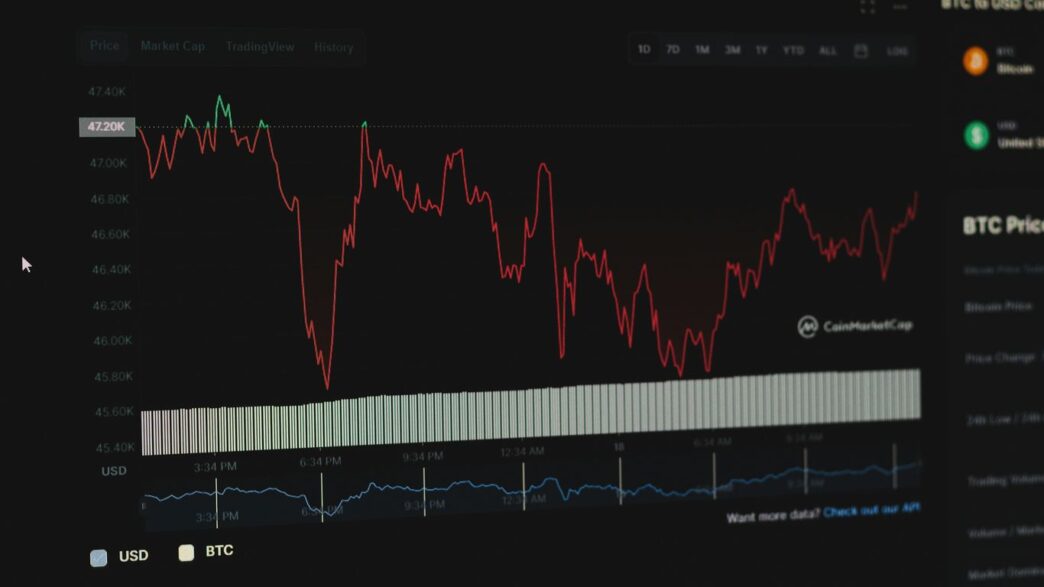
So, you’re looking into crypto trading, huh? It can feel like a lot to take in, especially with all the numbers and jargon flying around. One thing that keeps popping up is ‘trading volume crypto,’ and for good reason. It’s basically a way to see how much action is happening in the market for a specific coin. Think of it like the pulse of the crypto world. This guide is here to break down what trading volume really means, why it’s not just some random number, and how you can actually use it to get a better feel for the market. We’ll go over the basics and then get into some practical stuff, so hopefully, you’ll feel a bit more confident when you’re looking at crypto charts.
Key Takeaways
- Trading volume crypto shows how much of a coin is being bought and sold in a set time, telling you about market activity.
- Higher trading volume often means more people are interested and it’s easier to trade without big price changes.
- Looking at volume alongside price helps confirm if a trend is strong or might be fake.
- Sudden big changes in volume can signal important news or big players entering the market.
- Always check volume from different places and don’t just focus on price – volume gives you a bigger picture.
Understanding Crypto Trading Volume
So, what exactly is crypto trading volume? Think of it as the total amount of a specific cryptocurrency that’s been bought and sold over a certain period. Usually, this is measured over a 24-hour window, but you can look at weekly or monthly figures too. It’s a key indicator of how much action is happening in the market for that particular digital asset.
What Constitutes Crypto Trading Volume?
Basically, it’s the sum of all transactions for a coin or token within a set timeframe. This can be shown as the total number of coins traded or the total dollar value of those trades. High volume means lots of people are actively trading, buying and selling. Low volume suggests less interest or fewer people participating. It’s a pretty straightforward concept, but it tells us a lot about market engagement.
The Role of Volume in Market Activity
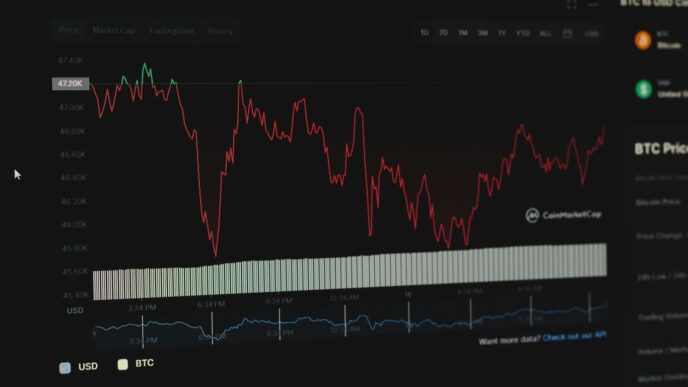
Volume is like the pulse of the market. When you see a cryptocurrency’s price making a big move, and the trading volume is also high, it usually means that move has some serious backing. People are really putting their money where their mouth is, so to speak. On the flip side, if a price jumps or drops but the volume is low, it might not be as significant. It could just be a few people making trades, and the trend might not last. Watching volume alongside price helps you gauge the conviction behind price changes.
Volume as a Measure of Liquidity
Liquidity is super important in trading. It’s how easily you can buy or sell an asset without drastically affecting its price. High trading volume generally means high liquidity. This is good because it means you can get in and out of trades at prices close to what you expect, with less chance of
The Significance of Trading Volume in Crypto Markets
So, why should you even bother paying attention to crypto trading volume? It’s more than just a number; it’s a real indicator of what’s happening under the hood of the market. Think of it like checking the pulse of a cryptocurrency. A strong, steady pulse usually means things are healthy, while a weak or erratic one might signal a problem.
Why Trading Volume Matters for Investors
For anyone putting their money into crypto, volume is a big deal. It tells you how much actual buying and selling is going on. When you see high volume, it generally means a lot of people are actively trading that particular coin or token. This is good news because it usually means the market is liquid. What does that mean? It means you can buy or sell without drastically changing the price. Imagine trying to sell a rare collectible – if only a few people want it, you might have to lower your price a lot to find a buyer. With high volume, it’s more like a busy marketplace where there are always buyers and sellers ready to make a deal at a fair price.
Here’s a quick rundown of why it’s important:
- Liquidity: High volume means you can get in and out of trades easily without causing big price jumps or drops. This is super important for managing risk.
- Market Interest: Big volume shows that people are paying attention and actively participating. This can be a sign of a healthy, growing project.
- Trend Confirmation: When prices move with high volume, it often means the move has more backing and is more likely to continue. A price jump on low volume? That might not last.
Volume’s Impact on Cryptocurrency Credibility
Beyond just day-to-day trading, volume plays a role in how credible a cryptocurrency seems. A coin that consistently has low trading volume might be seen as less serious or less adopted. It’s like a shop that’s always empty – you start to wonder if they even sell anything. On the flip side, a crypto with steady, high trading volume over time suggests it has staying power and isn’t just a fleeting trend. This can build confidence for both new and existing investors. It signals that the project has real users and developers who are actively engaged, which is a good sign for its long-term prospects.
Identifying Trends with Volume Analysis
This is where things get interesting for traders. Volume can be a powerful tool for spotting potential market shifts. When a cryptocurrency’s price starts to move significantly, checking the volume can tell you if that move is likely to stick. For example:
- Bullish Signal: If a price is going up and the trading volume is also increasing, it suggests strong buying interest and that the upward trend has momentum.
- Bearish Signal: Conversely, if a price is falling and volume is rising, it indicates strong selling pressure, suggesting the downtrend might continue.
- Potential Reversal: If a price is making a big move but the volume is low or decreasing, it could be a sign that the trend is weakening and might reverse soon. It’s like a car running out of gas – it might keep rolling for a bit, but it’s not going to go much further without a refill.
By looking at volume alongside price action, you get a much clearer picture of what the market is really doing, not just what the price chart might initially suggest.
Analyzing Crypto Trading Volume Effectively
So, you’ve got the basics of what crypto trading volume is. Now, how do you actually use it to get a better sense of what’s going on in the market? It’s not just about looking at a number; it’s about understanding what that number tells you.
Comparing Current Volume to Historical Data
One of the most straightforward ways to make sense of today’s trading activity is to look at what happened yesterday, last week, or even last month. Think of it like checking the weather – you know it’s usually sunny in July, but a sudden cold snap is noteworthy. Similarly, a crypto asset that normally trades $10 million a day suddenly seeing $100 million in volume is a big deal. This jump could mean something significant is happening, like a major announcement or a big investor jumping in.
- Look for significant deviations: Is the current volume much higher or lower than the average for the past month?
- Consider the context: Was there a news event or a listing on a new exchange that might explain the change?
- Identify patterns: Does this high volume happen regularly, or is it a one-off event?
A sudden surge in trading volume, compared to its usual activity, often signals a shift in market interest.
Volume and Price Action Correlation
This is where things get really interesting. Volume and price don’t always move in lockstep, and understanding their relationship can give you clues about the strength of a price move. If a cryptocurrency’s price is climbing, and the volume is also increasing, that’s generally seen as a strong signal. It means more people are buying in as the price goes up, supporting the move. On the flip side, if the price is rising but the volume is dropping, it might suggest that the upward trend doesn’t have much backing and could be weaker.
Here’s a quick rundown:
- Price Up + Volume Up: Often a sign of a strong, healthy uptrend.
- Price Up + Volume Down: Could indicate a weakening uptrend, possibly a reversal soon.
- Price Down + Volume Up: Suggests strong selling pressure, potentially a healthy downtrend.
- Price Down + Volume Down: Might mean selling interest is fading, possibly a bottom is forming.
Utilizing Volume Indicators and Profiles
Beyond just looking at raw volume numbers, there are tools that can help you dig deeper. Volume indicators, like the On-Balance Volume (OBV), try to connect price and volume to show buying and selling pressure over time. Then there are volume profiles. These are a bit more advanced; they show you how much volume traded at specific price levels. This can highlight areas where a lot of trading happened, suggesting strong support or resistance levels. It’s like seeing where the most activity occurred on a map – those spots are usually important.
- Volume Indicators: Help gauge buying/selling pressure.
- Volume Profiles: Show trading activity at specific price points.
- Interpreting these tools: Requires practice but can reveal hidden market sentiment.
Volume’s Relationship with Market Volatility
How Volume Influences Price Swings
Think of trading volume as the energy behind price moves in the crypto world. When lots of people are buying and selling, prices can really start to move, sometimes quite a bit. It’s like a busy highway versus a quiet country road; more cars (trades) mean more potential for things to happen quickly. For big coins like Bitcoin, with billions traded daily, this usually means prices are a bit more steady. But for smaller, less-known coins, even a few million dollars in trades can cause prices to jump or drop dramatically. This is why volume is so closely tied to how wild the price swings can get.
Volume as a Market Heartbeat
Basically, volume acts like a pulse for the market. A sudden spike in trading activity can mean a lot of things. It might show that people are getting excited about a coin again, or it could be a sign of panic selling. Figuring out which is happening is key to understanding if a big price move is just noise or something more significant.
Interpreting Volatility Spikes
Crypto markets are open 24/7, unlike traditional stock markets. This means prices can react instantly to news or just general sentiment, often leading to sharp moves. Knowing whether a price swing is driven by emotion or by something more solid, like actual adoption or development progress, helps you decide how to react. It’s easy to get caught up in the moment and want to jump in or out of trades, but looking at the volume can give you a better sense of what’s really going on.
Here’s a quick look at how volume can signal different market conditions:
- Rising Price with Increasing Volume: Often seen as a sign of strength, suggesting buyers are confident and pushing the price up.
- Falling Price with Increasing Volume: This can be a bearish signal, indicating strong selling pressure and potential for further declines.
- Price Moving Sideways with Low Volume: Might suggest a lack of conviction from either buyers or sellers, indicating a potential pause or consolidation.
- Sudden Volume Spike on News: This could signal a significant event impacting the asset, requiring closer attention to price action and potential follow-through.
Practical Strategies for Using Trading Volume
Alright, so we’ve talked about what trading volume is and why it’s a big deal. Now, let’s get down to how you can actually use this information to make smarter moves in the crypto market. It’s not just about looking at the numbers; it’s about understanding what they’re telling you.
Focusing on Significant Volume Changes
Look, minor ups and downs in volume happen all the time. What you really want to pay attention to are the big shifts. Think of it like this: a tiny ripple in the water isn’t that interesting, but a sudden wave? That’s something to notice. A sharp increase in trading volume, especially when it happens alongside a price move, can signal that a lot of people are suddenly interested. This could mean a trend is gaining serious momentum, or maybe something important is happening with the coin. Don’t get bogged down by every little fluctuation; focus on the volume spikes that stand out.
Monitoring Volume Across Different Timeframes
Just looking at a single day’s volume might not give you the full picture. It’s like trying to understand a movie by watching only one scene. You need to see how volume behaves over different periods. Check the hourly, daily, weekly, and even monthly volume. A coin might have a quiet day, but if its weekly volume is steadily climbing, that tells a different story about sustained interest. This helps you see if a volume surge is a fleeting event or part of a larger pattern. It’s a good way to get a clearer view of the market’s overall mood towards a particular cryptocurrency.
Verifying Volume Data from Multiple Sources
This is super important, especially in crypto. Sometimes, you might see inflated volume numbers on certain exchanges. This can happen for various reasons, and it can really mess with your analysis if you’re not careful. Always cross-check the volume data from a few different, reliable sources. Most major crypto data sites and exchanges will show you this information. If one source looks way different from the others, it’s a red flag. Making decisions based on bad data is a fast track to losing money, so take the extra minute to verify. It’s a key part of developing effective cryptocurrency trading strategies.
Common Pitfalls in Volume Analysis
Looking at trading volume seems pretty straightforward, right? You see a lot of trades, you think it’s important. But it’s easy to trip up if you’re not careful. Let’s talk about some of the common mistakes people make when they’re trying to figure out what volume is telling them.
The Danger of Artificially Inflated Volume
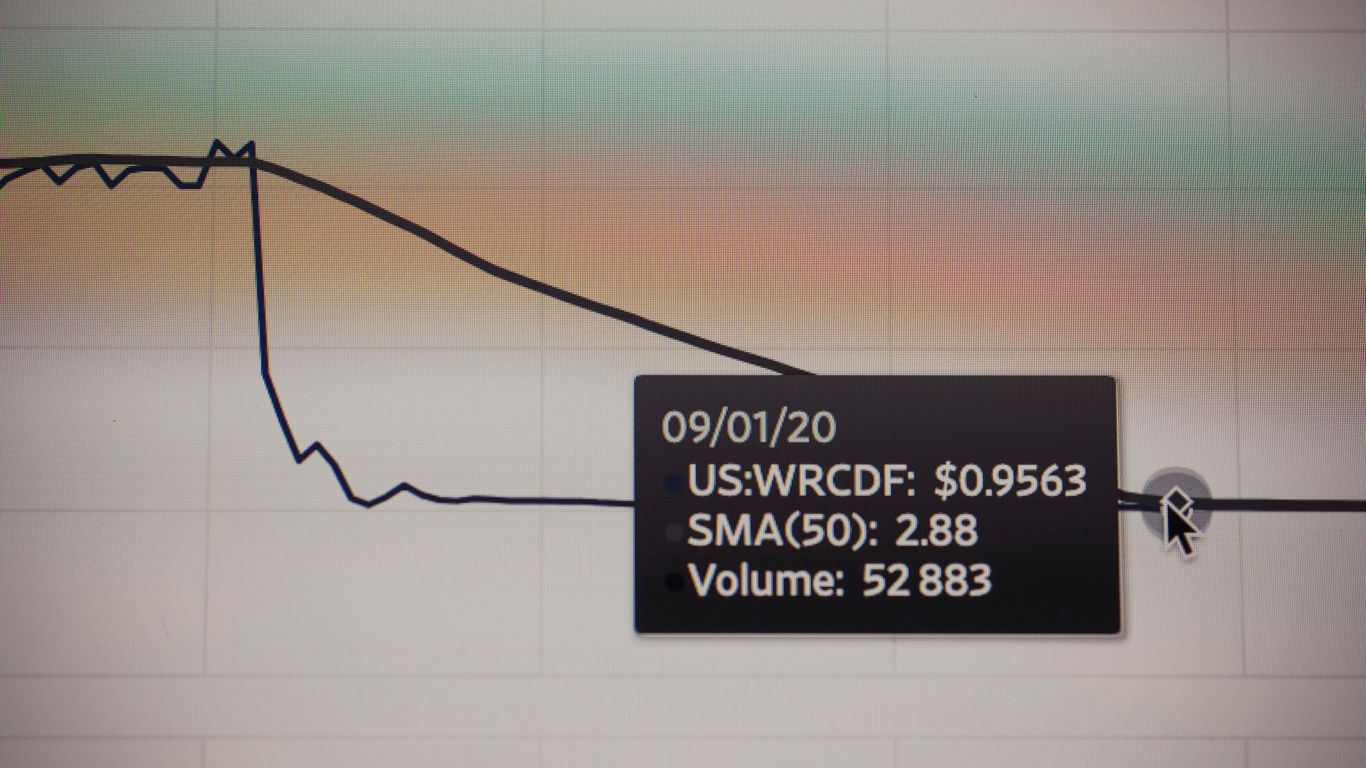
This is a big one, especially in the crypto world. Some projects or exchanges might try to make their trading volume look bigger than it really is. They might do this through wash trading, where they essentially trade with themselves to create fake activity. This can make a small, illiquid coin look like a hot commodity, luring unsuspecting traders into a bad situation. When you see a coin with a surprisingly high volume for its market cap, or if the volume seems inconsistent across different reputable exchanges, it’s worth digging deeper. You don’t want to buy into something based on fake hype.
Ignoring Volume When Chasing Trends
It’s tempting, I know. You see a coin’s price shooting up, and you just want to jump in. But if that price surge isn’t backed by a solid increase in trading volume, that trend might not have much staying power. Think of volume as the fuel for a price move. Without enough fuel, the move might sputter out quickly. A price increase on low volume could mean only a few people are buying, and a small sell-off could easily reverse the gains. Always check if the volume supports the price action you’re seeing.
Misinterpreting Low Volume Signals
Low volume doesn’t always mean a coin is dead or worthless. Sometimes, a coin might have low volume simply because it’s not widely traded yet, or perhaps it’s in a consolidation phase where traders are waiting for more information. However, low volume can also make a market very unstable. Even small trades can cause big price swings when there aren’t many buyers or sellers around. This means it can be hard to get in or out of a position at your desired price without causing a significant price movement yourself. So, while low volume isn’t automatically a death sentence, it definitely signals caution and can make trading much riskier.
Integrating Volume with Other Market Metrics
So, we’ve talked a lot about trading volume on its own, but honestly, it’s not really a solo act. To really get a handle on what’s happening in the crypto world, you’ve got to look at volume alongside other key numbers. Think of it like trying to understand a car’s performance – you wouldn’t just look at the speedometer, right? You’d check the engine RPMs, the fuel level, maybe even the tire pressure.
Volume’s Role Alongside Market Capitalization
Market cap is basically the total value of all the coins out there for a specific crypto. It gives you a sense of the project’s overall size. Now, how does volume fit in? Well, a crypto with a huge market cap but low trading volume might mean it’s not being bought and sold much, even though it’s "big." This could suggest it’s less liquid, meaning it might be harder to sell your holdings quickly without affecting the price. On the flip side, a smaller crypto with surprisingly high volume could be a sign of growing interest or a lot of speculative trading.
Here’s a quick way to think about it:
- High Market Cap + High Volume: Generally a good sign. It means a large, established asset is actively traded, suggesting good liquidity and strong market interest.
- High Market Cap + Low Volume: Might indicate lower liquidity. It could be harder to trade large amounts without moving the price significantly.
- Low Market Cap + High Volume: Could signal increasing interest or speculative activity. Worth watching, but also potentially more volatile.
- Low Market Cap + Low Volume: Often means a less liquid, potentially riskier asset with limited market participation.
Combining Volume with Price Trend Analysis
We touched on this before, but it’s worth repeating. Volume is a fantastic way to confirm or question price movements. If Bitcoin’s price is shooting up, but the trading volume is actually dropping, that’s a bit of a red flag. It suggests that maybe not many people are actually buying in on that rise, and it could be weaker than it looks. Conversely, if the price is climbing and volume is steadily increasing, that’s usually a stronger signal that the trend has some real backing.
Think about these scenarios:
- Bullish Confirmation: Price goes up, and volume goes up too. This suggests strong buying interest and conviction behind the move.
- Bearish Confirmation: Price goes down, and volume goes up. This indicates strong selling pressure and a lack of buyers stepping in.
- Divergence (Potential Reversal): Price goes up, but volume goes down. This might mean the upward momentum is fading.
- Divergence (Potential Reversal): Price goes down, but volume goes down. This could suggest selling pressure is easing, and a bottom might be forming.
Achieving a Holistic Market View
Ultimately, no single metric tells the whole story. By looking at trading volume not just in isolation, but in conjunction with market capitalization, price action, and even news events that might be driving activity, you start to build a much clearer picture. It’s about connecting the dots. High volume during a major announcement? That makes sense. Low volume on a quiet Tuesday? Also makes sense. When these things align, you can feel more confident about your analysis. When they don’t, it’s a signal to dig a little deeper and understand why.
Wrapping It Up: Volume as Your Market Compass
So, we’ve talked a lot about crypto trading volume. It’s not just a number; it’s like the pulse of the market. When volume is high, things are usually busy, and when it’s low, the market might be taking a breather. Understanding this helps you see if a price move has real backing or if it’s just a quick blip. Remember, volume works best when you look at it alongside other info, like price action and market trends. Don’t get caught up in every little price swing; use volume to get a clearer picture and make more sensible decisions. Keep an eye on those volume charts, and they’ll help you navigate the crypto world with a bit more confidence.
Frequently Asked Questions
What exactly is crypto trading volume?
Think of crypto trading volume like the number of people buying and selling a specific digital coin in a set amount of time, like a day or a week. It’s basically a way to see how busy the market for that coin is. More buying and selling means higher volume, and less means lower volume.
Why is trading volume important for crypto?
Trading volume tells you how much people are interested in a crypto. If lots of people are trading it (high volume), it usually means the coin is active and easier to buy or sell without causing big price changes. Low volume can mean fewer people are interested, making it harder to trade.
How does volume help predict price changes?
When a coin’s price goes up or down a lot, and the trading volume is also high, it often means that move is strong and likely to continue. But if the price changes with very little trading (low volume), that move might not be as reliable and could even reverse soon.
Can trading volume help me know if a crypto is trustworthy?
High and steady trading volume often suggests that a cryptocurrency is popular and has a lot of people using it. This can make it seem more reliable. On the other hand, coins with very low volume might be less well-known or have fewer people using them, which could make them riskier.
What’s the difference between market cap and trading volume?
Market cap is like the total value of all the coins that exist for a specific crypto, kind of like a company’s total worth. Trading volume is just how much of that crypto is being bought and sold over a certain time. So, market cap shows size, while volume shows activity.
Are there any tricks to watch out for when looking at trading volume?
Yes, sometimes the volume numbers can be made to look bigger than they really are, especially with newer or less popular coins. It’s always smart to check the volume from a few different places to make sure the numbers are real and not just made up to trick people.