So, you’re trying to figure out how is CNC machining different from 3D printing? It’s a common question, and honestly, they’re both pretty cool ways to make stuff, but they go about it in totally opposite directions. Think of it like building with LEGOs versus sculpting from a block of clay. One adds pieces, the other carves them away. This basic difference leads to a whole bunch of other distinctions that matter a lot when you’re actually making something.
Key Takeaways
- CNC machining carves material away from a solid block (subtractive), while 3D printing builds objects layer by layer (additive).
- 3D printing generally offers more freedom for complex shapes and internal features, whereas CNC machining can be limited by tool access.
- CNC machining can work with a wider variety of materials, especially metals, and often achieves better strength for high-stress parts.
- CNC machining typically provides higher precision and a smoother surface finish straight off the machine compared to 3D printing.
- CNC machining is usually more cost-effective for larger production runs, while 3D printing is better suited for prototypes and small batches.
Fundamental Manufacturing Approaches
When you’re looking at how parts get made, CNC machining and 3D printing are like night and day, even though they both end up creating physical objects from digital files. The biggest difference? How they get there. Think of CNC machining as a sculptor. It starts with a solid block of material – metal, plastic, wood, you name it – and uses spinning tools to carve away everything that isn’t part of the final shape. It’s a subtractive process, meaning material is removed. On the flip side, 3D printing, also called additive manufacturing, is more like building with LEGOs. It adds material, layer by tiny layer, from the bottom up, until the whole object is formed. This core difference, subtractive versus additive, really sets the stage for everything else that follows, from the kinds of shapes you can make to how much material you end up wasting.
Additive Versus Subtractive Processes
This is the big one, the foundational difference. CNC machining is a subtractive method. You take a block of material, and tools like end mills or drills cut away excess to reveal your part. It’s like chiseling a statue from a block of marble. This approach is great for making parts that need to be strong and precise, especially from metals. You’re essentially starting with more material than you need and refining it down. 3D printing, or additive manufacturing, on the other hand, builds things up. It deposits material, often plastic or resin, layer by layer, based on a digital model. It only uses the material it needs for the part and any temporary supports. This makes it really efficient for complex shapes and prototypes where material waste can be a big concern.
Layer-By-Layer Construction vs. Material Removal
So, how does this play out in practice? With additive manufacturing, like most 3D printing, you’re looking at a layer-by-layer construction. Imagine printing a document, but instead of ink on paper, it’s plastic or metal powder fused together, one thin slice at a time. This allows for incredibly intricate internal structures and complex geometries that would be impossible or extremely difficult to create with traditional methods. Some advanced 3D printing technologies, like Selective Laser Sintering (SLS) or Multi Jet Fusion (MJF), don’t even need support structures, which opens up even more design possibilities for hollow parts or internal channels. CNC machining, the subtractive approach, works by removing material. A computer-controlled machine precisely guides cutting tools to shave, drill, and mill away unwanted material from a workpiece. While it can create very precise parts, the tool access can sometimes limit the complexity of internal features or undercuts. Even with advanced multi-axis CNC machines, reaching every surface can be a challenge, unlike the layer-by-layer freedom of 3D printing.
Design Freedom and Geometric Capabilities
When you’re thinking about making parts, how complex can they actually be? This is where CNC machining and 3D printing really show their differences.
Intricate Geometries and Internal Structures
3D printing is pretty amazing when it comes to making wild shapes. Because it builds things layer by layer, it can create internal cavities, complex curves, and organic forms that would be a nightmare, or even impossible, for a CNC machine. Think of things like lattice structures or parts with internal cooling channels – 3D printing handles these with ease. It doesn’t need to worry about a cutting tool getting into tight spots. This makes it a go-to for creating unique, lightweight designs or parts with very specific internal features. For example, creating complex internal channels for fluid flow is something 3D printing excels at.
Limitations Imposed by Tool Access
CNC machining, on the other hand, has some built-in limitations because it works by removing material with cutting tools. The biggest hurdle is tool access. A drill bit or end mill is usually round, so it can’t create sharp internal corners; you’ll always end up with a slight radius. Also, if a feature is deep inside a part or on a side that’s hard to reach, it can be difficult or impossible to machine without repositioning the part multiple times, which adds time and cost. Sometimes, you might need custom fixtures just to hold the part at the right angle for a specific cut. This means that while CNC can make very precise parts, extremely complex internal geometries are often off the table or become prohibitively expensive.
Here’s a quick look at how they stack up:
| Feature | CNC Machining | 3D Printing |
|---|---|---|
| Internal Features | Limited by tool access, rounded corners | Easily creates complex internal structures |
| Complex Shapes | Restricted by tool paths and clearance | High degree of freedom, organic shapes possible |
| Sharp Internal Corners | Not possible without special tooling/operations | Possible, depending on the printing process |
| Multi-Axis Needs | Often requires 5-axis for complex external shapes | Generally not required for geometric complexity |
Sometimes, the best approach is a hybrid one. You might 3D print the complex core of a part and then use CNC machining to create the critical features, like mounting holes or sealing surfaces, that need super tight tolerances. This way, you get the best of both worlds.
Material Compatibility and Properties
When you’re deciding between CNC machining and 3D printing, the materials you can use is a big deal. They both handle different stuff, and it really changes what you can make and how well it works.
Wider Range of Materials in Machining
CNC machining is a real workhorse when it comes to materials. It’s especially good with metals like aluminum, stainless steel, and titanium. You can also machine a lot of plastics, woods, acrylics, and even some foams. This broad compatibility makes it a go-to for parts that need to be tough and precise. Because it’s a subtractive process, it can work with solid blocks of material, giving you parts with consistent properties throughout. You can get really good mechanical and thermal performance from machined parts, and they’re usually isotropic, meaning they perform the same in all directions. The main limitation here is the size of the raw material block you start with, though you can often find custom sizes if needed. For a look at what CNC machining can handle, check out CNC machining offers superior material compatibility.
Specialized Materials for 3D Printing
3D printing, on the other hand, has a huge and growing list of materials. It’s great for things that are tricky or expensive to machine, like certain flexible plastics (TPU) or advanced metal alloys. You can find thermoplastics, thermosets, ceramics, and even some biomaterials. A key thing to remember with 3D printing is that parts can sometimes be anisotropic, meaning they might be weaker along the layer lines where the material was added. This is something to keep in mind for parts that will experience stress.
Material Suitability for High-Strength Applications
For applications needing serious strength, CNC machining often has the edge, especially with metals. It can produce parts with very tight tolerances and excellent mechanical properties. However, 3D printing is catching up fast, especially with metal powders and reinforced plastics. For instance, carbon fiber-reinforced filaments can create lightweight yet strong parts that might be difficult for traditional machining. Sometimes, a hybrid approach works best: 3D print a complex shape and then CNC machine the critical surfaces for maximum accuracy and strength. This way, you get the best of both worlds – intricate design possibilities and reliable, high-performance parts.
Precision, Accuracy, and Surface Finish
When we talk about how precise a part is, we’re usually looking at two main things: accuracy and surface finish. CNC machining and 3D printing handle these quite differently, and it really matters depending on what you need the part for.
Achieving Tighter Tolerances with CNC
CNC machining is generally the go-to when you need parts that are super accurate. Think about it – a spinning cutting tool is removing material from a solid block. This process is incredibly controlled. CNC machines can consistently hit tolerances as tight as ±0.025 mm (or about ±0.001 inches). This means if you need parts where dimensions have to be exact, like for fitting into a larger assembly or for critical mechanical functions, CNC is usually the better bet. While CNC can’t create perfectly sharp internal corners (there’s always a slight radius from the tool), it can make external edges very sharp and precise.
Surface Quality Differences
Surface finish is another big one. CNC machining, especially with the right tools and speeds, can produce very smooth surfaces right off the machine. You can get finishes that are almost mirror-like, or you can choose different textures depending on the operation. This often means less work is needed afterward if a smooth finish is important.
Impact of Layer Lines on 3D Prints
3D printing, on the other hand, builds parts layer by layer. Even with advanced technologies like SLA or SLS, you’ll often see faint lines where each layer was added, especially on curved or angled surfaces. While these layer lines might not affect how a part functions for some applications, they can be noticeable and might not look as polished as a machined part. For parts that need to look really good or have a very smooth feel, 3D printing often requires extra steps like sanding, polishing, or even a secondary CNC machining process to get that desired finish. The minimum thickness of features in 3D printing is also limited by things like the nozzle size on an FDM printer or the laser spot size in other technologies.
Production Volume and Scalability
When you’re figuring out how to make your parts, the number you need is a big deal. It really changes which method makes more sense.
CNC Machining for High-Volume Production
If you need a lot of parts, like hundreds or even thousands, CNC machining often becomes the go-to. It’s pretty good at churning out identical pieces quickly once it’s set up. Think of it like a factory line; the initial setup takes time and effort, but once it’s running, it’s efficient for big batches. This is especially true for simpler designs where the machine can just keep going without much fuss. It scales up well, meaning as your order size grows, the cost per part usually goes down.
3D Printing for Prototyping and Low Volumes
On the flip side, 3D printing really shines when you only need a few parts, or just one for testing. It’s super fast to get that first part off the printer, and you don’t need a ton of setup. This makes it perfect for prototypes, custom one-offs, or small runs where the cost of setting up a CNC machine wouldn’t be worth it. Changing designs is also a breeze – just load a new file. However, as you print more and more, the cost per part doesn’t really drop like it does with CNC. So, for huge quantities, it usually doesn’t compete on price.
Economic Break-Even Points
So, where’s the sweet spot? It really depends on the part, the material, and how complex it is. Generally:
- 1-10 Parts: 3D printing is usually the winner, especially for plastics. It’s fast and cheap to get started.
- 10-100 Parts: It gets trickier. 3D printing is still an option, but you might start looking at CNC, especially if precision is key.
- 100-1000 Parts: CNC machining often becomes more economical, particularly for metals. For plastics, you might even start thinking about injection molding if the volume is high enough.
- 1000+ Parts: For plastics, injection molding is usually the most cost-effective. For metals, CNC machining is still a strong contender, but casting methods might also be considered.
It’s not always a clear-cut line, though. Sometimes, a mix of technologies or even a hybrid approach can give you the best balance of cost, speed, and quality for your specific needs.
Workflow and Operational Considerations
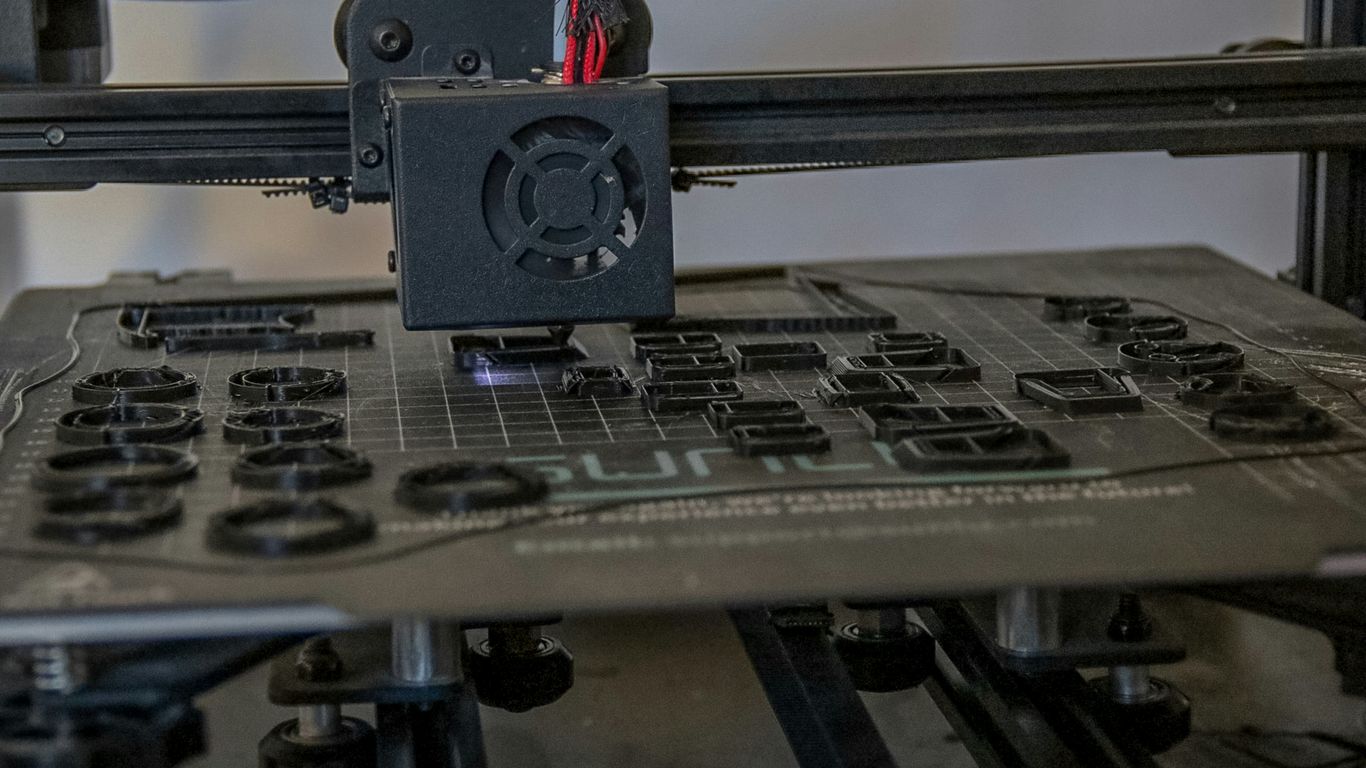
When you’re trying to figure out if CNC machining or 3D printing is the right way to make your part, how you actually go about making it matters a lot. The whole process, from start to finish, can really change how long it takes, how much work is involved, and how smooth everything runs.
Setup and Operator Involvement
CNC machining often needs a pretty hands-on approach. You’ve got to think about a bunch of things before the machine even starts cutting:
- Tool Selection: Picking the right drill bits, end mills, and other cutting tools is key. It depends on what material you’re working with and the shape you need.
- Machine Settings: Figuring out the right speed for the spinning tool (spindle speed) and how fast it moves through the material (cutting path) takes know-how.
- Workholding: You need to securely clamp the material down. Sometimes, you have to reposition the part to get the machine’s tools into all the necessary spots, especially for complex shapes.
- Machining Strategy: Planning the order of operations to hit those tight tolerances and get the surface finish you want is a big part of the job.
3D printing, on the other hand, can be more automated once the design is loaded. While some advanced printers might need calibration or material loading, the actual printing process often requires less direct operator intervention compared to setting up a CNC machine.
Automated Processes in Both Technologies
Both CNC machining and 3D printing have seen a big push towards automation, especially with online manufacturing platforms. You can upload your design, and the system can often:
- Analyze the Design: Check if the design is actually makeable with the chosen process and suggest any tweaks.
- Provide Instant Quotes: Give you a price right away based on the material and process.
- Manage the Production Line: Automatically send the job to the right machine and keep track of its progress.
This automation helps speed things up and can reduce mistakes that might happen with manual steps.
Post-Processing Requirements
After the main manufacturing step, there’s usually some finishing work needed for both methods, though the type and extent can differ:
- CNC Machining: Often requires deburring to remove sharp edges left by the cutting tools. Sometimes, polishing or other surface treatments are needed to get the desired finish.
- 3D Printing: Depending on the technology, you might need to remove support structures that were printed to hold up overhangs. Cleaning off excess powder (for powder-bed fusion methods) or curing parts with UV light (for resin-based printing) are also common steps. Some prints might also need sanding or smoothing to get a better surface feel.
Wrapping It Up
So, when it comes down to it, both 3D printing and CNC machining are pretty neat tools in the world of making stuff. They just go about it in totally different ways. 3D printing is like building with LEGOs, adding bits layer by layer, which is awesome for weird shapes and quick prototypes. CNC machining, on the other hand, is more like sculpting, carving away from a block, and it’s usually the go-to for super precise parts, strong materials, and when you need a lot of the same thing. Neither one is ‘better’ overall; it really just depends on what you’re trying to make, how many you need, and what kind of finish you’re after. Think of them as different tools in a toolbox, each with its own job it does best.