So, you’re curious about how long windmill wings actually affect how much power these giants can make? It’s a pretty big deal, actually. Think about it, those massive blades are what catch the wind, so their size has to matter, right? We’re going to break down why windmill wing length is so important for getting the most electricity out of the breeze.
Key Takeaways
- The length of windmill wings, or rotor diameter, directly impacts how much wind energy a turbine can capture. Bigger blades sweep a larger area, grabbing more wind.
- Longer windmill wings mean taller towers are needed. This helps turbines reach higher altitudes where winds are generally faster and more consistent, boosting power output.
- Making windmill wings longer isn’t simple. It brings up big engineering challenges like making towers strong enough and figuring out how to move these huge parts around.
- The length of windmill wings affects how often a turbine runs at its full potential, known as the capacity factor. It also plays a role in how the turbine handles choppy winds.
- While longer windmill wings can make wind power cheaper in the long run by producing more energy, the initial costs for bigger turbines and infrastructure are higher.
The Physics Of Windmill Wing Length And Power
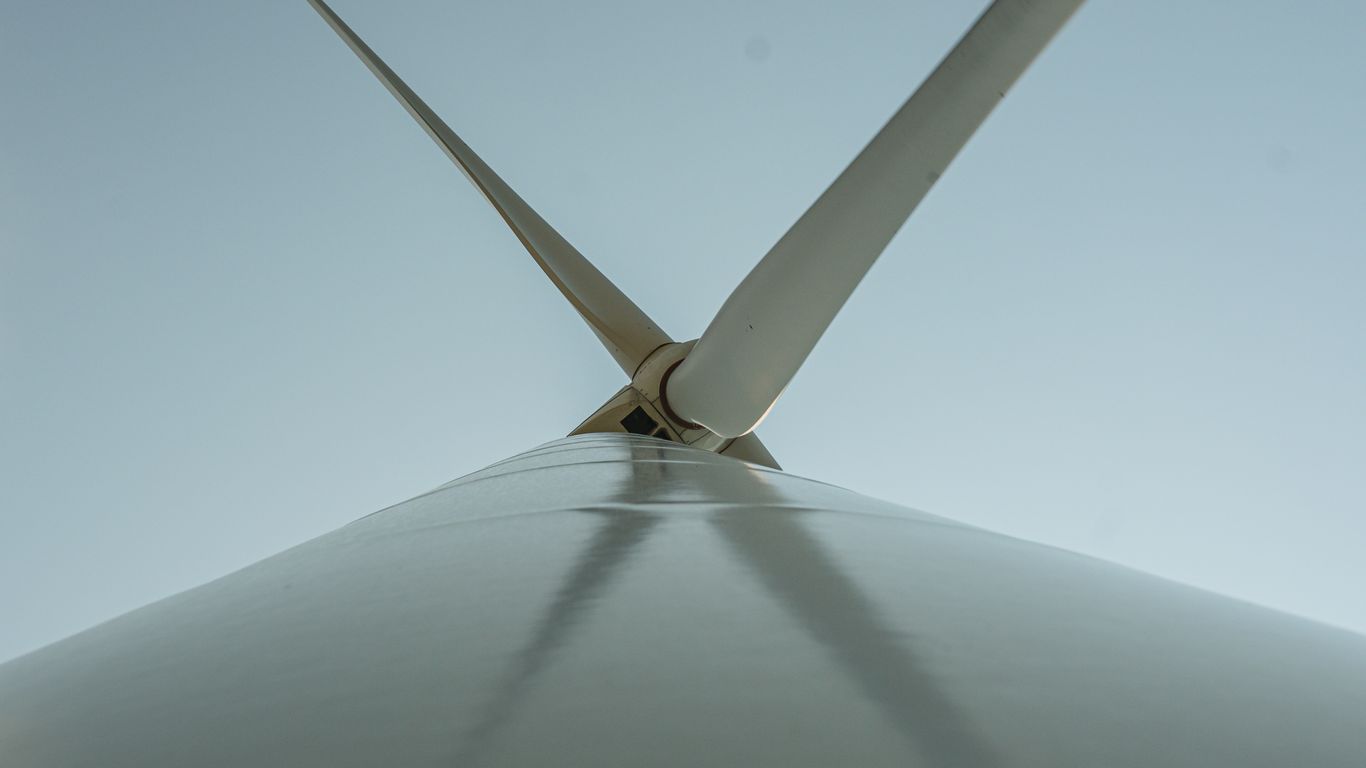
So, how exactly do these giant windmills turn wind into electricity? It all comes down to some pretty neat physics. Think of the blades not just as paddles, but as airplane wings. When wind flows over them, it creates a difference in air pressure. Higher pressure on one side, lower on the other. This pressure difference is what we call ‘lift’, and it’s the main force that gets those massive blades spinning.
Now, there’s a theoretical ceiling on how much energy we can actually pull from the wind. It’s called the Betz Limit, and it basically says you can’t capture more than about 59.3% of the wind’s kinetic energy. Some energy is always lost, either because the wind has to keep moving after it passes the blades, or just due to the nitty-gritty inefficiencies of the machinery. It’s like trying to catch water in a sieve – you’re going to lose some.
Understanding The Betz Limit
The Betz Limit is a fundamental concept in wind energy. It’s not a suggestion; it’s a hard physical boundary. It tells us that even with a perfectly designed turbine, there’s a maximum amount of power we can extract from the moving air. This limit exists because if a turbine were to stop the wind completely, no air would flow through it, and thus no energy would be captured. So, some airflow must always be maintained.
How Windmill Wings Generate Lift
Windmill wings, or blades, are shaped like airfoils. As wind moves across the curved upper surface and the flatter lower surface, it travels faster over the top. According to Bernoulli’s principle, faster-moving air has lower pressure. This pressure difference between the top and bottom of the blade creates an upward force – lift. This lift is what causes the rotor to turn, initiating the energy conversion process.
Rotor Diameter’s Influence On Power Output
This is where blade length really matters. The power a wind turbine can generate is directly related to the area swept by its blades. A bigger rotor diameter means a larger swept area. It’s not just a little bit more power, either. The power output increases with the square of the blade length. So, if you double the length of the blades, you quadruple the swept area and, theoretically, the potential power output. It’s a significant jump.
Here’s a simplified look at how rotor size can affect power:
| Rotor Diameter (meters) | Approximate Swept Area (m²) | Relative Power Output |
|---|---|---|
| 80 | 5,026 | 1.0x |
| 120 | 11,310 | 2.25x |
| 160 | 20,106 | 4.0x |
This table just gives you an idea. Real-world power output depends on many things, like wind speed, but you can see the trend: bigger blades mean a lot more potential power.
Scaling Up: The Drive For Longer Windmill Wings
You know, it’s funny how things change. Just a few years ago, the wind turbines we saw seemed pretty massive. But the push for more power means they’re getting bigger and bigger. It’s all about capturing more of that free energy from the wind, and longer wings are a big part of that story.
Maximizing Energy Capture With Larger Rotors
Think about it: the bigger the circle the blades sweep, the more wind they can catch. It’s pretty straightforward physics. We’ve seen rotor diameters grow a lot. Back in the early 2000s, turbines with rotors over 115 meters were rare. Now, it’s pretty much the standard for new installations. This larger sweep means more electricity generated, even in areas that aren’t the absolute windiest.
- More wind caught: Longer blades mean a bigger area is swept by the rotor.
- Better performance in lower winds: This allows turbines to start generating power at lower wind speeds.
- Increased overall output: More wind captured translates directly to more electricity produced.
Economic Benefits Of Increased Turbine Size
Why go bigger? Well, it often makes more financial sense. While building a giant turbine costs more upfront, it can generate significantly more power over its lifetime. This means a better return on investment. Plus, a single, larger turbine can often do the job of several smaller ones, potentially reducing the number of sites needed and the associated installation costs.
| Metric | Early 2000s (Approx.) | 2023 (Approx.) | Change |
|---|---|---|---|
| Average Rotor Diameter | ~70 meters | ~134 meters | ~91% |
| Rotor Swept Area | ~3,850 m² | ~14,100 m² | ~266% |
Wind Speed And Consistency At Higher Altitudes
It’s not just about the blades; it’s also about how high the whole thing is. Wind speeds generally pick up the higher you go. There’s less friction from trees, buildings, and other stuff on the ground way up there. So, taller towers mean the turbine can access these faster, more consistent winds. This leads to more reliable power generation throughout the year. It’s a double win: bigger blades catching more wind, and those blades being placed where the wind is stronger and steadier.
Engineering Challenges Of Extended Windmill Wings
So, you want to make windmill wings bigger? Sounds simple enough, right? Just slap on some longer blades and boom, more power. Well, it’s not quite that straightforward. Making those giant blades and the towers they sit on taller brings a whole host of tricky engineering problems.
Structural Integrity Of Taller Towers
Think about it: a taller tower means more weight, and more importantly, more leverage for the wind to play with. The higher you go, the more the tower has to deal with wind shear – that’s when the wind speed changes quite a bit from the bottom to the top. This puts a lot of stress on the structure, especially during strong gusts or storms. We’re talking about needing really strong materials, but also smart designs to keep the whole thing from wobbling too much or, worse, breaking.
- Materials Science: We’re constantly looking for lighter, stronger stuff than just plain steel. Think about hybrid towers that mix concrete and steel, or even new composite materials. The goal is to build high without making the tower so heavy it’s impossible to transport or so expensive it’s not worth it.
- Dynamic Loads: The wind doesn’t just push; it can make things twist and bend. Engineers have to figure out how the tower will react to all sorts of wind conditions, not just a steady breeze. This involves complex computer models to predict how the structure will behave over its lifetime.
- Foundation: A taller, heavier turbine needs a seriously solid base. The ground conditions can make a big difference, and designing a foundation that can handle all that weight and stress is a huge part of the puzzle.
Logistical Hurdles In Component Transportation
Even if you can design the perfect, super-tall tower and giant blades, getting them to the installation site can be a nightmare. These things are massive. We’re not talking about fitting them in the back of a pickup truck.
- Size Limits: Roads, bridges, and even tunnels have limits. A blade that’s 100 meters long? That’s a serious transportation challenge. You might need special routes, road closures, or even barges if you’re near water.
- Heavy Lifting: Once the pieces arrive, you need cranes that can lift incredibly heavy components hundreds of feet into the air. These cranes are huge, expensive, and sometimes need to be assembled on-site themselves.
- Remote Locations: Many wind farms are built in remote areas to catch the best winds. Getting these enormous parts to these out-of-the-way places adds layers of complexity and cost.
Advanced Materials For Turbine Construction
To deal with the stresses and the sheer scale, we need better materials. The drive for longer wings and taller towers is pushing the boundaries of what materials science can do. We’re moving beyond traditional steel and concrete.
- Composites: Things like carbon fiber are super strong and light, perfect for blades. But they’re also expensive.
- Hybrid Designs: Combining different materials, like steel and concrete for towers, can offer a good balance of strength, cost, and manufacturing ease.
- Innovative Shapes: Engineers are also looking at new ways to shape towers and blades to make them more efficient and less prone to stress, even if they are bigger.
It’s a constant balancing act between getting more power out of the wind and making sure the whole system is safe, reliable, and doesn’t cost an arm and a leg to build and maintain.
Windmill Wing Length And Operational Efficiency
So, how does making those windmill wings longer actually affect how well the whole thing works? It’s not just about grabbing more wind, though that’s a big part of it. We need to think about the bigger picture.
Impact On Capacity Factor
The capacity factor is basically a way to measure how much power a turbine actually produces over a year compared to the absolute maximum it could produce if it was running at full tilt all the time. Longer wings, by capturing more wind, generally help boost this number. But it’s not a simple one-to-one relationship. Sometimes, making a turbine bigger might mean it operates at its peak power less often, which could actually lower the capacity factor even if the total energy produced is higher. It’s a balancing act.
Here’s a simplified look at how rotor size can influence potential output, assuming other factors are equal:
| Rotor Diameter (meters) | Relative Power Output |
|---|---|
| 80 | 1.0x |
| 100 | 1.56x |
| 120 | 2.25x |
Note: This table uses a simplified relationship where power scales with the square of the rotor diameter. Real-world output is more complex.
Turbulence And Its Effect On Performance
Wind isn’t always smooth sailing. When wind hits obstacles like trees, buildings, or even just uneven ground, it gets choppy and unpredictable. This is turbulence. Longer blades are more exposed to these wind variations. While they can capture more energy from steadier winds, turbulence can cause:
- Uneven stress: Different parts of the blade experience different forces, which can lead to wear and tear over time.
- Reduced efficiency: The blades might not be able to ‘bite’ into the wind as effectively when it’s swirling around.
- Increased noise: Turbulent airflow can create more sound, which is a consideration for nearby communities.
Blade Design And Aerodynamic Optimization
It’s not just about making the blades longer; it’s about making them smarter. Engineers are constantly tweaking the shape and design of the blades to get the most out of the wind. This involves:
- Adjusting the twist and taper: The angle of the blade changes from the root (where it connects to the hub) to the tip. Optimizing this twist helps the blade work efficiently across different wind speeds.
- Wingtip design: The very end of the blade is important. Special designs can help reduce drag and improve airflow, making the whole system more efficient.
- Material science: Using lighter, stronger materials allows for longer blades that can still withstand the forces of nature without being excessively heavy.
Economic Considerations Of Windmill Wing Length
So, how does making those windmill wings longer actually affect how well the whole thing works? It’s not just about grabbing more wind, though that’s a big part of it. We’re talking about the "capacity factor" here, which is basically a measure of how much power the turbine actually produces compared to its maximum possible output over time. When you have longer blades, they can catch more wind, especially at higher altitudes where the wind is usually steadier and faster. This means the turbine spends more time spinning closer to its top speed, which is great for getting more electricity out of it. Think of it like a car – a bigger engine (longer blades) can go faster and more consistently if the road is clear.
But it’s not all smooth sailing. Longer blades also mean the whole setup is dealing with more intense forces. We need to think about turbulence, which is basically choppy air. While higher up the air is often smoother, certain weather patterns can still create turbulence. This choppy air can put a lot of stress on those long blades and the whole turbine structure. So, engineers have to design these blades really carefully, not just to catch wind, but also to handle these rough patches without breaking. It’s a balancing act, for sure.
This is where blade design and aerodynamic optimization come into play. It’s not just about making the blade long; it’s about its shape. The way the air flows over the blade is super important. Engineers use fancy computer models to figure out the best shape – think of it like designing an airplane wing, but for wind. They tweak the curves, the thickness, and even add little features to make sure the air pushes the blade in just the right way to generate power efficiently, while also dealing with those tricky turbulence moments. It’s a complex puzzle, trying to get the most power without causing too much wear and tear.
Future Research In Windmill Wing Design
Refining Wind Profile Models
So, we’ve talked a lot about how longer windmill wings can grab more wind, right? But the wind itself isn’t just a steady breeze. It changes a lot depending on how high up you are. Standard models that just say ‘wind gets faster with height’ are starting to show their limits. We need to get better at predicting how the wind actually behaves way up there. Things like atmospheric stability and big weather patterns can really mess with wind speed and direction as you go higher. Researchers are using fancy tools like lidar and radar to get super detailed info about the wind across the whole spinning area of the blades. This helps us make better predictions about how much power we’ll get and how the turbine will handle all the forces.
Advanced Fluid Dynamics Simulations
When you have these giant windmill wings spinning, especially in winds that aren’t uniform, things get complicated. That’s where advanced computer simulations come in. These aren’t just simple calculations; they’re complex models that show exactly how the air flows around the blades. They help us understand tricky stuff like turbulence and how it affects the blades. The goal is to design blades that are super efficient and don’t get worn out too quickly. These simulations are key to figuring out how to make the next generation of turbines work even better.
Innovative Tower Designs and Construction
Building these super tall towers for longer wings is a whole other ballgame. Traditional steel towers get really heavy and expensive as they get taller. Plus, getting those massive sections to the site can be a nightmare. So, engineers are looking at new ideas. Think about towers made from a mix of materials, like wood and concrete, or even using carbon fiber. They’re also playing with different shapes and designs to make them lighter and easier to build. Some ideas involve building the tower in sections on-site, like a giant Lego project. It’s all about finding ways to build higher and stronger without breaking the bank or the transport trucks.
Wrapping It Up
So, we’ve talked a lot about how longer windmill blades can really make a difference in how much power a turbine generates. It’s not just a small tweak; it’s a big deal. Basically, the longer the blades, the more wind they can catch, and the more electricity we can make. This means we can get more bang for our buck with wind farms. Of course, there are always trade-offs, like making sure the whole thing can be built and stays standing, but the trend is clear: bigger blades often mean better efficiency. It’s pretty neat how a simple change in size can have such a large impact on clean energy production.