Ever wonder, “what are bitcoins worth right now?” It’s a question on a lot of people’s minds, especially with how much this digital money can swing. Bitcoin, the first of its kind, has a history of wild rides and big changes. We’ll take a look at what gives it value today, how it all started, and how it stacks up against other digital coins and even traditional stuff. Think of this as a quick guide to understanding Bitcoin’s price tag.
Key Takeaways
- Bitcoin’s current price is influenced by many things, including how much is available and what people think about it.
- The value of Bitcoin has changed a lot since it first came out, with ups and downs over the years.
- Bitcoin works using a technology called blockchain, and it’s used for sending money directly between people.
- When looking at Bitcoin’s worth, it’s helpful to compare it to other cryptocurrencies and even traditional investments.
- Investing in Bitcoin comes with risks, and it’s smart to do your homework before buying.
Understanding What Are Bitcoins Worth Today
So, you’re wondering about the value of Bitcoin right now? It’s a question a lot of people ask, and honestly, the price can swing quite a bit. Think of it like trying to catch a greased pig – sometimes it’s right there, and other times it’s off running wild.
Current Bitcoin Price and Recent Performance
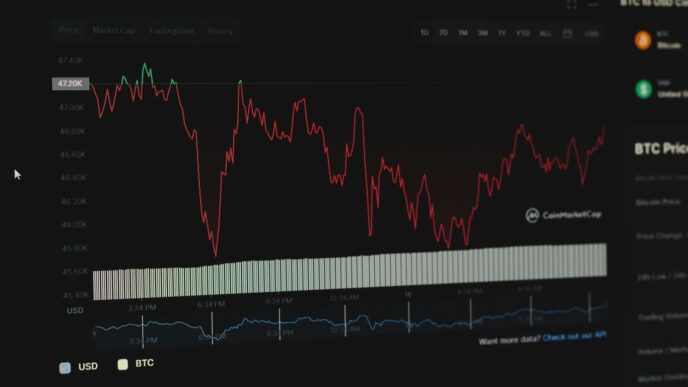
As of today, February 7th, 2026, Bitcoin’s price is hovering around $67,470.52 USD. That’s a bit of a dip, actually, down 2.65% in the last 24 hours. It’s been a bit of a rollercoaster lately. Just last week, it saw a drop of about 16.66%, and over the past month, it’s down around 24.84%. It’s a far cry from its all-time high, but that’s just how this market rolls sometimes. You can see how it’s been trading on over 12,000 different markets.
Bitcoin’s Market Capitalization and Trading Volume
When we talk about Bitcoin’s overall value, market capitalization is a big number to look at. It’s essentially the total value of all the Bitcoins that have been mined. Right now, that figure is sitting around $1.41 trillion USD. The trading volume over the last 24 hours has been pretty active, with about $146.24 billion USD changing hands. This shows there’s still a lot of interest and movement in the Bitcoin space.
Historical Bitcoin Price Trends
Looking back, Bitcoin has had some wild rides. It started out practically worthless, trading for fractions of a cent back in 2010. Fast forward a bit, and it hit a peak of around $126,272 USD on October 6th, 2025. Of course, it’s also seen its lows, dropping to as little as $2 USD back in 2011. These historical movements are important to consider when thinking about its current worth. It’s a good idea to check out the BTC price chart to get a visual sense of these ups and downs.
Here’s a quick look at some recent performance:
- 1 Day: +12.19%
- 1 Week: -16.66%
- 1 Month: -24.84%
- 1 Year: -27.10%
It’s clear that while Bitcoin can see rapid gains, it also experiences significant pullbacks. Understanding these trends helps paint a clearer picture of its current value and potential future movements.
Factors Influencing Bitcoin’s Value
So, what makes the price of Bitcoin go up and down? It’s not just one thing, really. Lots of different pieces fit together to decide what a Bitcoin is worth on any given day. Think of it like a big puzzle.
Bitcoin’s Circulating and Maximum Supply
One of the big talking points is how many Bitcoins actually exist and how many ever will. Right now, there are about 19.99 million Bitcoins out there. But here’s the kicker: there’s a hard limit. No more than 21 million Bitcoins will ever be created. This scarcity is a pretty big deal. It’s built into the system, kind of like how gold is rare. When something is limited, it can hold its value, or even increase, if people want it.
Market Sentiment and Technical Indicators
Then there’s what everyone thinks about Bitcoin. If a lot of people are excited and want to buy, the price tends to go up. If folks get nervous and start selling, well, you know what happens. This feeling, or ‘sentiment,’ can be influenced by news, what big companies are doing, or even just general buzz online. Technical indicators are like charts that traders look at to guess where the price might go next. They look at past price movements and trading volumes to spot patterns. Sometimes these charts suggest it’s a good time to buy, other times they scream ‘sell!’ It’s a bit like reading tea leaves, but with numbers.
Volatility and Investment Considerations
Let’s be real, Bitcoin is known for being a bit wild. Its price can jump or drop by a lot in a short amount of time. This is called volatility. It’s why some people see it as a risky place to put their money. You might see big swings, like a $10,000 drop in a single day, which can cause a lot of money to be lost by traders who bet on prices going a certain way. Because of this, people need to think carefully before investing. It’s not like putting money in a savings account. You have to be prepared for the ups and downs. Some folks look at how much it’s moved in the past week or month to get a sense of how bumpy the ride might be.
The Genesis and Evolution of Bitcoin’s Worth
The Origins of Bitcoin and Its Technology
It all started back in 2008 when a person, or maybe a group, using the name Satoshi Nakamoto, put out a paper. This paper laid out a plan for something called Bitcoin. It wasn’t like regular money that comes from a bank or government. Instead, it was designed to be a digital currency, a new kind of money that could be sent directly from one person to another without needing a middleman. The whole system was built on a technology called blockchain, which is basically a public record book that everyone can see but nobody can easily change. This was a pretty wild idea at the time, and it was the start of what we now call cryptocurrency.
Early Trading and Development Milestones
So, Nakamoto actually made the first Bitcoin in early 2009. At first, only a few tech-savvy folks were involved, mining these new coins. Things really started to get interesting in July 2010 when the first places to actually trade Bitcoin popped up. Back then, the price was super low, like fractions of a penny. It wasn’t long after that Nakamoto handed over the reins of the project to someone named Gavin Andresen. From there, lots of people chipped in to make the Bitcoin code better. It was a slow build, but it was the beginning of Bitcoin becoming something more than just a niche experiment.
Bitcoin’s Role in the Digital Asset Landscape
Bitcoin was the very first digital coin, and because of that, it’s still the most well-known. It basically created a whole new category of things you can own and trade – digital assets. Think of it as the original blueprint that all the other cryptocurrencies followed. For a long time, it was the biggest player in this new market, and many people believe it’s still a major part of how money might work in the future. It’s a big departure from the money systems we’re all used to, which are usually controlled by central banks. Bitcoin showed that a decentralized system could actually work, and that’s a pretty big deal.
How Bitcoin Operates and Its Utility
So, how does this whole Bitcoin thing actually work? It’s pretty interesting, really. At its core, Bitcoin is a digital currency, but it’s not like the money in your bank account. It operates on a decentralized network called the blockchain. This means no single company or government is in charge. Instead, a whole bunch of computers around the world work together to keep track of all the transactions. It’s kind of like a giant, shared digital ledger that everyone can see, but nobody can easily mess with.
The Blockchain and Mining Process
The blockchain is the backbone of Bitcoin. Think of it as a chain of blocks, where each block contains a list of recent transactions. Once a block is filled, it’s added to the chain, and it’s pretty much permanent. To get new transactions added and new Bitcoins created, there’s a process called "mining." Miners use powerful computers to solve complex math problems. The first one to solve the problem gets to add the next block to the chain and is rewarded with some newly created Bitcoin. It’s a bit like a digital gold rush, but instead of pickaxes, they use processing power. This whole system is what makes Bitcoin secure and transparent. It’s a clever way to manage a currency without needing a central bank. You can read more about Bitcoin’s resilient blockchain technology.
Bitcoin as a Peer-to-Peer Transaction Medium
One of the main ideas behind Bitcoin was to allow people to send money directly to each other, anywhere in the world, without needing a bank or a payment processor in the middle. This is what "peer-to-peer" means. So, if I want to send you some Bitcoin, I can do it directly from my digital wallet to yours. It’s pretty straightforward once you get the hang of it. This bypasses traditional financial systems, which can sometimes be slow and expensive, especially for international transfers. It’s a way to have more control over your own money.
The Expanding World of Cryptocurrencies
Bitcoin was the first, but it definitely paved the way for a whole lot more. Since Bitcoin came along, thousands of other digital currencies, often called "altcoins," have popped up. Some try to improve on Bitcoin’s technology, others focus on different uses, like smart contracts or faster transactions. It’s a rapidly growing space, and while Bitcoin is still the biggest player, these other cryptocurrencies are changing how we think about digital money and assets. It’s a whole new financial landscape that’s still being built.
Comparing Bitcoin’s Value to Other Assets
When we talk about Bitcoin’s worth, it’s easy to get lost in just its own price movements. But to really get a handle on things, we need to see how it stacks up against other things people invest in, both in the crypto world and outside of it.
Real-Time Performance of Major Cryptocurrencies
Bitcoin is the big boss in the crypto space, no doubt about it. It was the first one out there, and it still holds the largest chunk of the market. But it’s not alone. Lots of other digital coins, often called altcoins, are out there trying to do their own thing. Some are trying to be faster, some are trying to be cheaper to use, and others have totally different goals. Looking at how Bitcoin performs compared to these other coins gives you a sense of its dominance, but also shows where it might be lagging or leading.
For example, you’ll see coins like Ethereum, which powers a lot of the decentralized applications you might hear about. Then there are newer ones popping up all the time, some with huge price swings. It’s a wild west out there, and Bitcoin’s performance is often the benchmark everyone else is measured against.
Here’s a quick look at how some other digital assets have been doing recently:
- Hedera (HBAR): Up over 13% recently.
- Sui (SUI): Showing gains of more than 13%.
- Toncoin (TON): Seeing a rise of nearly 13%.
- Pepe (PEPE): Experiencing a jump of over 13%.
- Ethereum Classic (ETC): Gaining close to 10%.
It’s important to remember that these numbers change by the minute, and past performance is never a guarantee of future results.
Wrapped Bitcoin and Similar Digital Assets
This is where things get a bit more technical, but it’s pretty interesting. You’ve got things like Wrapped Bitcoin (WBTC). Basically, it’s Bitcoin that’s been put onto another blockchain, usually Ethereum, so it can be used in that ecosystem. Think of it like taking your gold bars and getting a certificate for them that you can use in a different country. It helps bridge the gap between different digital worlds.
Then there are other assets that try to mimic Bitcoin’s value or function in different ways. Some are designed to be more efficient, while others might have different supply limits. Comparing these to Bitcoin helps us understand the different approaches people are taking in building this new digital financial system.
Stablecoins and Their Relationship to Bitcoin
Stablecoins are a whole different ballgame. Unlike Bitcoin, which can swing wildly in price, stablecoins are designed to stay steady, usually pegged to a traditional currency like the US dollar. Think of coins like PayPal USD (PYUSD) or Ethena Staked USDe (SUSDE), which aim to stay at $1.00. They’re often used as a safe haven within the crypto market when things get choppy, or to make quick transactions without worrying about price changes.
Their relationship with Bitcoin is pretty direct. When people want to move out of Bitcoin quickly because they’re worried about a price drop, they might move into stablecoins. Conversely, when they feel confident, they might move from stablecoins back into Bitcoin. So, while they don’t compete with Bitcoin’s potential for growth, they play a big role in the day-to-day flow of money in the crypto markets. It’s also worth noting that some assets, like Tether Gold (XAUT) and PAX Gold (PAXG), are pegged to the price of actual gold, showing how digital assets are being used to represent even traditional commodities. Gold prices have seen a significant surge recently, which can sometimes influence sentiment around other store-of-value assets like Bitcoin as seen in recent market trends.
Looking at Bitcoin alongside these other assets – from volatile altcoins to steady stablecoins and even traditional commodities – gives you a much clearer picture of its place in the wider financial world. It’s not just about its own price; it’s about how it interacts with and is perceived relative to everything else.
Navigating Bitcoin’s Financial Landscape
So, you’re thinking about getting into Bitcoin, huh? It’s a big topic, and honestly, figuring out how to actually get some and what to do with it can feel a bit overwhelming at first. Let’s break down some of the practical stuff.
Strategies for Acquiring Bitcoin
Getting your hands on Bitcoin isn’t like walking into a bank. The most common way is through a cryptocurrency exchange. Think of these as online marketplaces where you can trade traditional money for Bitcoin. Some of the big names you’ll hear about are Binance, Coinbase, and Kraken. You’ll need to sign up, verify your identity (which is pretty standard these days), and then you can link a bank account or card to make a purchase. It’s important to pick a reputable exchange, one that’s been around and has good reviews. You can also explore peer-to-peer platforms, where you buy directly from other individuals, but you’ll want to be extra careful there.
Assessing the Risks of Bitcoin Investment
Now, let’s talk about the not-so-fun part: the risks. Bitcoin is famous for its wild price swings. One day it’s up, the next it’s down. This volatility means you could make a lot of money, but you could also lose a significant chunk of what you put in. It’s not uncommon for prices to drop sharply; for example, Bitcoin has seen significant declines, sometimes exceeding $10,000 in a single day, leading to large amounts of money being liquidated. Never invest more than you can afford to lose. It’s also wise to look at the technical indicators, which can sometimes signal whether the market is leaning towards buying or selling, though these aren’t guarantees. Remember, the maximum supply of Bitcoin is capped at 21 million coins, which is a key factor in its scarcity.
Community Discussions and Market Insights
Beyond the charts and exchanges, there’s a whole community talking about Bitcoin. Online forums, social media groups, and dedicated crypto news sites are buzzing with opinions and analysis. It’s a good idea to see what people are discussing, but take everything with a grain of salt. Not all advice is good advice, and everyone has their own agenda. You can find discussions about everything from the latest price movements to new developments in the crypto space. Sometimes, just reading through these conversations can give you a feel for the general market sentiment. You can even find places to discuss Bitcoin with other users and share your thoughts.
Wrapping It Up
So, we’ve looked at what Bitcoin is worth right now, and as you can see, the price can change pretty fast. It’s not like a regular currency sitting in your bank account. Remember, Bitcoin has been around for a while, and its value has gone up and down a lot since it started. There’s a set amount of Bitcoin that will ever be made, which is different from regular money. If you’re thinking about buying, it’s a good idea to do your homework and understand that the crypto world can be a bit wild. Keep an eye on the charts and the news, and make smart choices for yourself.
Frequently Asked Questions
What is Bitcoin worth right now?
As of today, Bitcoin’s price is around $70,355 USD. It’s seen a rise of about 5.57% in the last 24 hours. To get the most current value, it’s always best to check a live price chart.
How much Bitcoin is there in total?
There’s a limit to how many Bitcoins can ever be made, which is 21 million. Once we reach that number, no new Bitcoins will be created. This limited supply is one of the things that makes Bitcoin valuable.
What is Bitcoin’s market cap?
Bitcoin’s market cap, which is the total value of all the Bitcoins in circulation, is a huge number, currently around $1.41 trillion USD. It shows how big Bitcoin is compared to other digital currencies.
How has Bitcoin’s price changed over time?
Bitcoin’s price can change a lot! It has gone down recently, with drops over the last week, month, and year. However, over longer periods, like 5 or 10 years, its value has increased significantly.
Is it safe to invest in Bitcoin?
Investing in Bitcoin can be risky because its price can jump up and down a lot, which is called volatility. It’s important to do your research and understand these risks before deciding to invest your money.
How do I buy Bitcoin?
The most common way to buy Bitcoin is through a cryptocurrency exchange, like Coinbase or Binance. You’ll need to create an account with one of these platforms, which are like online marketplaces for digital money.