Thinking about putting your ads in magazines for the year 2026? It can be a good move if you do it right. This guide will walk you through how to pick the best magazines, make your ads pop, and figure out if it’s actually working for your business. We’ll cover everything from understanding who reads what to making sure your budget is spent wisely. Let’s get your brand noticed.
Key Takeaways
- Know your audience: Figure out who you’re trying to reach and then find magazines they actually read. It’s no use advertising in a magazine nobody in your target group picks up.
- Placement matters: Think about where your ad will go. Niche magazines can be great for hitting specific people, and regional editions work well for local pushes. Don’t forget digital versions too.
- Make your ad count: Your ad needs to look good and say the right things. Clear pictures and a simple message that tells people what to do next are a must.
- Track what works: Set clear goals for your ad campaigns and then keep an eye on the numbers to see if you’re hitting them. This helps you know if your money is well spent.
- Print and digital together: Magazines aren’t just print anymore. Using things like QR codes can link your print ads to online content, making them work harder.
Understanding the Landscape of Magazines for Advertising
So, you’re thinking about putting your brand in a magazine in 2026? That’s a solid move, but it’s not just about picking the prettiest cover. You’ve got to get smart about where you’re placing your ads. It’s like choosing the right neighborhood for your new shop – you want to be where your customers actually hang out.
Identifying Your Target Audience Demographics
First things first, who are you trying to reach? This sounds obvious, but really digging into it is key. Are you selling fancy dog food? Then maybe targeting folks who read gardening magazines isn’t the best use of your cash. You need to know their age, where they live, what they do for a living, and what their interests are. Knowing your audience inside and out is the bedrock of any successful ad campaign. Think about it: a magazine aimed at retirees will have a very different reader than one for young parents. Getting this right means your message actually lands with the people most likely to buy from you. It’s all about making sure your ad is seen by the right eyes.
Analyzing Magazine Readership and Engagement
Once you have a handle on who you’re talking to, you need to look at the magazines themselves. It’s not enough for a magazine to have a lot of readers; you want readers who are actually engaged. Are they just flipping through, or are they really reading the articles and, more importantly, paying attention to the ads? Look for magazines that have a loyal following. Sometimes, a smaller magazine with a super dedicated readership can be way more effective than a giant one where your ad gets lost. You can often find this info in media kits, which magazines provide to advertisers. They’ll usually break down who reads their publication and how they interact with the content. It’s good to check out their social media too; see if readers are commenting and talking about the articles.
Evaluating Magazine Reach and Circulation
This is where the numbers come in. Circulation figures tell you how many copies of a magazine are distributed. But don’t just look at the raw number. Think about where those copies are going. Is it a national publication, or does it have specific regional editions? For example, if you’re a local business, a magazine with a strong presence in your specific city or state might be a better bet than a national one. Also, consider the difference between paid subscriptions and newsstand sales. Paid subscribers are generally more committed readers. In 2026, marketing is about finding that authentic human connection, and magazines can still offer that genuine interaction. It’s about finding the right fit for your brand’s message and budget.
Strategic Placement for Maximum Impact
So, you’ve got your ad ready to go. Now, where does it actually live? This is where things get interesting, because putting your ad in the right magazine, or even the right section of a magazine, can make a huge difference. It’s not just about picking a publication; it’s about picking the right publication for your audience.
Leveraging Niche Publications for Precision Targeting
Think about it: if you’re selling high-end fly-fishing gear, putting an ad in a general sports magazine might get lost in the shuffle. But placing it in a magazine dedicated solely to fly fishing? That’s a whole different story. These niche publications have readers who are already deeply interested in what you offer. They’re not just flipping through; they’re actively seeking information and products related to their passion.
- Identify publications that cater specifically to your ideal customer’s hobbies, profession, or lifestyle.
- Look at the magazine’s editorial calendar. Does it align with your product launches or seasonal promotions?
- Consider the magazine’s reputation within its niche. Is it seen as an authority? This lends credibility to your ad.
Considering Regional Editions for Localized Campaigns
Sometimes, your business isn’t national; it’s local. Maybe you’re a restaurant opening in a specific city, or a service provider targeting a particular state. Many larger magazines offer regional editions. This means you can run an ad that appears only in copies distributed in your target geographic area. It’s a smart way to avoid wasting money on readers who can’t actually become your customers.
Here’s a quick look at how this can work:
| Magazine Type | National Edition Reach | Regional Edition (e.g., California) | Cost Difference (Approx.) |
|---|---|---|---|
| Lifestyle Magazine | 2,000,000 | 250,000 | -60% |
| Business Journal | 500,000 | 75,000 | -50% |
| Home & Garden | 1,500,000 | 180,000 | -55% |
Note: Cost differences are illustrative and can vary widely.
Exploring Digital Magazine Advertising Opportunities
Magazines aren’t just print anymore. Most publications have a strong online presence, offering digital versions of their magazines and dedicated websites. Advertising here can give you the best of both worlds: the perceived credibility of a magazine brand combined with the trackability and targeting options of digital ads. You can often run banner ads, sponsored content, or even video ads on their websites or within their digital editions. This synergy between print and digital is becoming increasingly important for a well-rounded campaign.
- Check the publication’s website for ad options. Look for sections like "Advertise" or "Media Kit."
- Inquire about their digital audience demographics. Are they the same as their print readers?
- Ask about performance tracking. Can they provide metrics like click-through rates or impressions for digital ads?
Crafting Compelling Advertisements for Print
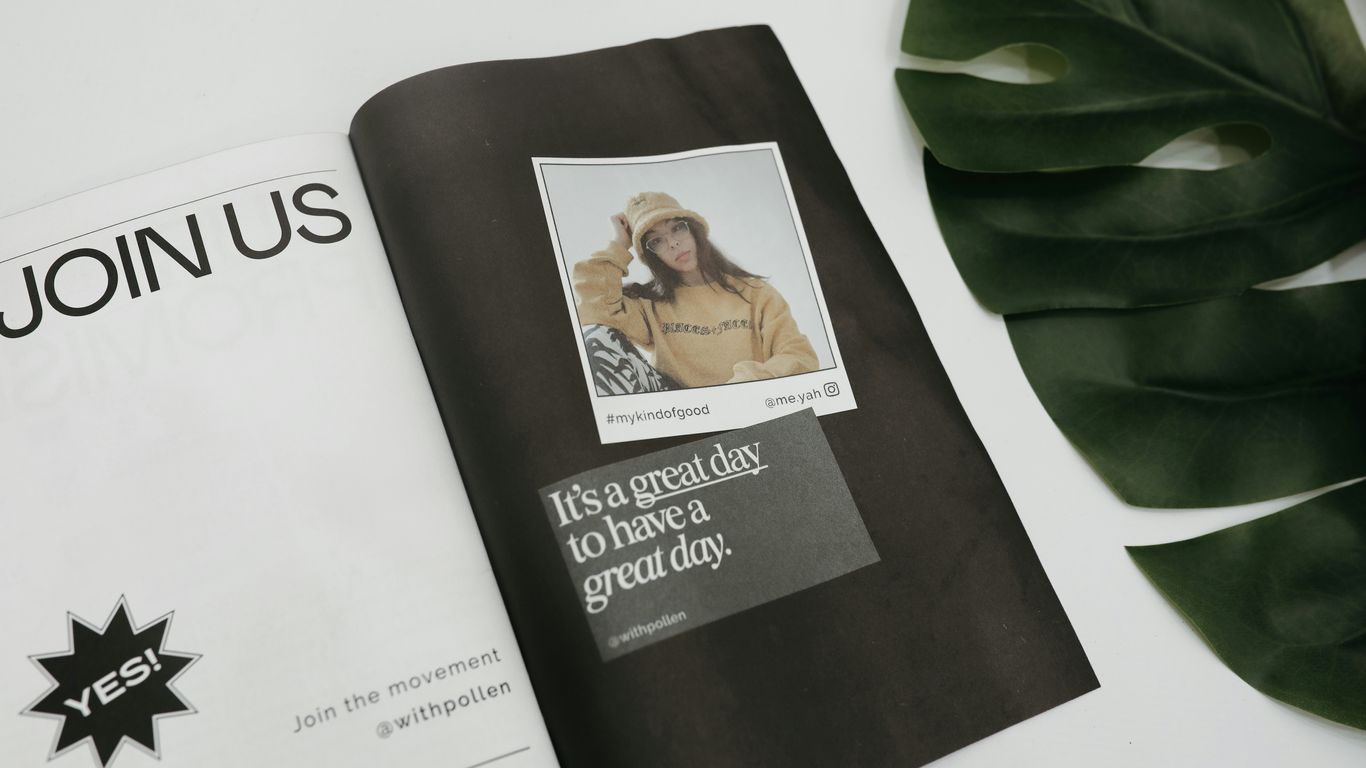
So, you’ve picked out the perfect magazine, figured out where your ad will go, and now it’s time for the fun part: making the ad itself. This isn’t just about slapping your logo on a page; it’s about creating something that grabs attention and makes people want to know more. Think of it like this: the magazine is your stage, and your ad is the performance. You want it to be memorable, right?
Designing Visually Appealing Ad Creatives
First impressions matter, especially in print. People flip through magazines pretty quickly, so your ad needs to stop them in their tracks. This means using strong visuals. What kind of images or graphics will really pop on the page? It’s not just about pretty pictures; they need to connect with your brand and the magazine’s audience. A well-designed ad can communicate a lot without a single word. Think about color schemes that stand out but also feel right for your brand. Sometimes, a simple, clean design is more effective than something cluttered. You want the reader to feel drawn in, not overwhelmed.
Writing Persuasive Copy for Magazine Readers
Once you’ve got their eyes, you need to keep their attention with words. Magazine readers are often in a relaxed state, looking for information or entertainment. Your copy needs to speak directly to them. What problem does your product or service solve? How does it make their life better? Keep it concise. Long blocks of text are a no-go. Use short sentences and clear language. Think about the tone – is it friendly, authoritative, or something else? It should match your brand’s voice. Consider what makes your offering unique and highlight that. For some inspiration on what works, check out examples of great print ads.
Integrating Calls-to-Action Effectively
An ad without a clear next step is like a story without an ending – it just sort of fizzles out. You’ve done the hard work of getting their attention and piquing their interest, so tell them exactly what you want them to do next. This is your call-to-action (CTA). It needs to be obvious and easy to follow.
Here are some common CTAs:
- Visit our website at [YourWebsite.com]
- Call us today at [Your Phone Number]
- Scan this QR code to learn more
- Find us at [Your Store Location]
Make sure the CTA is prominent in your ad design. Don’t hide it in a corner. It should be as clear as the headline. If you’re using a website, make sure the URL is easy to read and spell. If it’s a phone number, ensure it’s large enough. The goal is to make it as simple as possible for interested readers to take that next step towards becoming a customer.
Measuring Success in Magazine Advertising
So, you’ve put your ad in that magazine, and now you’re probably wondering, ‘Did it actually do anything?’ That’s a fair question. You can’t just throw money at ads and hope for the best. You need to know if it’s working, right? This is where measuring success comes in. It’s not just about looking at numbers; it’s about understanding what those numbers mean for your brand.
Setting SMART Goals for Advertising Campaigns
Before you even think about placing an ad, you need to know what you’re trying to achieve. Just saying ‘I want more sales’ isn’t really going to cut it. You need goals that are specific, measurable, achievable, relevant, and time-bound. We call these SMART goals. For example, instead of ‘increase brand awareness,’ a SMART goal might be ‘increase website traffic from magazine readers by 15% within three months of the ad running.’ This gives you something concrete to aim for and, more importantly, something to measure.
Here’s a quick look at how to frame those goals:
- Specific: What exactly do you want to accomplish? (e.g., Generate 100 new leads)
- Measurable: How will you track progress and know when you’ve succeeded? (e.g., Track leads via a unique promo code)
- Achievable: Is this goal realistic given your resources and the magazine’s reach? (e.g., Is 100 leads possible with this publication’s circulation?)
- Relevant: Does this goal align with your overall business objectives? (e.g., Do more leads mean more potential customers?)
- Time-bound: When do you want to achieve this goal by? (e.g., Within the next quarter)
Tracking Key Performance Indicators (KPIs)
Once you have your SMART goals, you need to pick the right Key Performance Indicators (KPIs) to track. These are the specific metrics that tell you if you’re on the right track. For magazine ads, some common KPIs might include:
- Direct Response Metrics: This is the most straightforward. Did people act on your ad? You can track this using unique coupon codes, dedicated landing pages mentioned only in the ad, or specific phone numbers. For instance, if your ad says ‘Visit BrandX.com/MagazineOffer,’ you can track how many people actually go to that specific URL.
- Brand Awareness Metrics: This is a bit trickier to measure directly from a single ad, but you can look at trends. Did searches for your brand name increase after the ad ran? Did you see more mentions on social media? You might also track the magazine’s own reported readership numbers and engagement rates to get a sense of potential exposure.
- Engagement Metrics: If the magazine offers a digital component or if your ad encourages further interaction (like visiting a website for more info), you can track things like website visits, time spent on site by users who came from that referral, or downloads of content promoted in the ad.
It’s important to set up tracking before the ad goes live. You don’t want to find out later that you missed a bunch of valuable data because your tracking wasn’t in place.
Analyzing Return on Investment (ROI)
This is the bottom line, isn’t it? You spent money on the ad; what did you get back? Calculating your Return on Investment (ROI) helps you understand the financial effectiveness of your magazine advertising. The basic idea is to compare the profit you made from the ad campaign against the cost of running that ad.
The formula looks something like this:
ROI = ((Revenue Generated from Ad - Cost of Ad) / Cost of Ad) * 100
Let’s say you spent $5,000 on an ad placement. Through tracking, you found that this ad directly led to $20,000 in sales. Plugging that into the formula:
ROI = (($20,000 - $5,000) / $5,000) * 100
ROI = ($15,000 / $5,000) * 100
ROI = 3 * 100
ROI = 300%
This means for every dollar you spent on the ad, you got three dollars back in profit. That’s a pretty good return! If the ROI is low or negative, it’s a clear sign that you need to re-evaluate your strategy, perhaps the magazine choice, the ad creative, or the offer itself. Regularly analyzing your ROI is key to making smart advertising decisions.
Budgeting and Resource Allocation for Print Ads
Okay, so you’ve got your magazine choices lined up, and you’re ready to put some ads in them. But how much cash are we talking about? Figuring out your budget is super important. It’s not just about picking a number out of thin air; it needs to make sense with what you want to achieve.
Determining Advertising Spend Based on Objectives
First off, what are you trying to do with these ads? Are you trying to get a bunch of new customers right away, or are you more focused on building up your brand name over time? If you need quick results, you’ll probably need to spend more. If it’s more about long-term brand building, you might spread your spending out a bit more. A good starting point for many businesses is to look at a percentage of their expected sales. For example, some companies aim for around 7-10% of their projected revenue for marketing. This can change a lot depending on your industry and how fast your company is growing. Startups, especially those looking for investment, might spend a bigger chunk. Make sure your budget actually matches the scale of your advertising goals. You can’t expect a massive impact from a tiny budget.
Allocating Funds Across Different Magazine Titles
Once you know your total budget, you’ve got to decide where that money goes. Not all magazines are created equal, right? Some might reach a super specific group of people you really want to talk to, but they might be pricey. Others might have a bigger audience but less of your ideal customer. You’ll want to look at things like:
- Reach: How many people actually see the magazine?
- Engagement: Do readers actually interact with the magazine, or is it just sitting on a coffee table?
- Cost per thousand (CPM): How much does it cost to reach 1,000 readers?
- Audience Fit: Does the magazine’s readership match your target customer profile?
It’s a balancing act. You might put more money into a few key magazines that are a perfect fit, and maybe a smaller amount into others that offer broader reach. Don’t forget to think about regional editions if you’re targeting specific areas.
Considering Production and Design Costs
Don’t forget the actual ad itself! Designing a great-looking ad costs money. You might need to pay a graphic designer, a copywriter, or even a photographer. If you’re planning on using fancy layouts or special printing techniques, that adds to the bill too. It’s easy to get caught up in the media buy and forget about the creative costs. Make sure to factor these in so you don’t end up with a great media plan but a weak-looking ad because you ran out of money for design. Sometimes, it’s worth spending a bit more on the creative to make sure your ad really stands out and does its job effectively.
The Evolving Role of Magazines in a Digital World

It’s easy to think that with everything going digital, magazines are just… well, old news. But honestly, that’s not really the case. They’ve actually found ways to stick around and even get better, especially when you think about advertising. It’s not just about flipping pages anymore; it’s about how print and online work together.
Synergizing Print Campaigns with Digital Strategies
So, how do you make a magazine ad work harder in today’s world? You connect it to your online stuff. Think about it: a reader sees your ad in a magazine, and they’re interested. What’s the next step? They’ll probably pull out their phone. Making that transition smooth is key. You can do this by including clear website addresses, social media handles, or even specific campaign hashtags right in the print ad. This way, the magazine acts as a starting point, drawing people into your digital ecosystem where you can track their behavior more closely and engage them further. It’s about creating a loop where print drives digital action, and digital reinforces the print message.
Utilizing QR Codes and Augmented Reality
This is where things get pretty cool. QR codes are super simple. You scan them with your phone, and boom, you’re taken to a website, a video, or an app. Putting a QR code in your magazine ad is like giving readers a direct express lane to more information or a special offer. It cuts out all the typing and searching. Then there’s augmented reality (AR). Imagine a reader pointing their phone at an ad, and suddenly a 3D model of the product pops up on their screen, or a short video plays right there. It makes the ad interactive and memorable. While AR might sound complicated, it’s becoming more accessible for advertisers looking to make a splash. It really changes how people experience an ad, making it more than just a static image.
Adapting to Emerging Trends in Media Consumption
People are consuming media differently now, and magazines have had to adapt. Many magazines now have strong digital presences – websites, apps, social media channels, and even podcasts. This means your advertising can live in multiple places. You might run a print ad in the magazine and then see a related banner ad on its website or a sponsored post on its social media feed. This multi-channel approach means your brand stays visible. It’s also about understanding that people might read a digital version of a magazine on their tablet or phone just as much as a physical copy. Advertisers need to be aware of these different formats and how their message will appear and perform across them. The goal is to be where your audience is, no matter the platform. This integrated approach is becoming standard practice for effective advertising in 2026.
Wrapping It Up
So, that’s the rundown on using magazines for your advertising in 2026. It’s not just about picking a pretty magazine; it’s about finding the right fit for your brand and your budget. Think about who you’re trying to reach and where they actually spend their time reading. We’ve talked about how to pick the right publications, what to look for in their numbers, and how to make sure your ad actually gets noticed. It takes a bit of planning, sure, but getting this right can really make a difference for your business. Don’t just guess; do your homework and you’ll be well on your way to making magazine ads work for you.
Frequently Asked Questions
Why should I advertise in magazines in 2026?
Magazines are still a great way to reach specific groups of people who are really interested in certain topics. Think of it like picking a magazine about cars to reach car lovers. In 2026, magazines offer a focused way to get your brand in front of the right eyes, especially when you want to connect with people who enjoy reading about particular hobbies or interests.
How do I know which magazine is best for my ads?
To pick the right magazine, first think about who you want to reach. What are their hobbies? What kind of magazines do they read? Then, look at magazines that seem like a good fit. Check how many people read them and if those readers are the kind of customers you’re looking for. It’s like choosing a sports team’s magazine if you want to advertise sports gear.
Can I still advertise in magazines if I’m mostly online?
Absolutely! Many magazines now have websites and digital versions, so you can advertise online through them too. You can even use things like QR codes in print ads that people can scan with their phones to visit your website. It’s smart to use both print and digital magazine ads to reach more people.
What makes a good magazine ad?
A good magazine ad grabs attention quickly. It should have a clear picture or design that looks nice and easy to understand. The words should be simple and tell people why your product or service is great. Most importantly, it should tell people exactly what you want them to do next, like visit your website or call a number.
How do I know if my magazine ads are working?
You can track if your ads are successful by setting clear goals before you start. For example, you might want to get more people to visit your website. You can then use special website links or ask customers how they heard about you. This helps you see if the money you spent on ads brought in good results.
Is advertising in magazines expensive?
The cost can vary a lot. Smaller, specialized magazines might be more affordable than big, popular ones. It’s important to figure out how much money you can spend and then find magazines that fit your budget and can reach the right audience. Sometimes, spending a bit more on the right magazine can bring better results than spending less on the wrong one.