The world of advanced biotech is really heating up. We’re seeing some seriously cool new ways to find and make medicines, and it feels like things are moving faster than ever. From super-smart computer programs helping design drugs to entirely new types of treatments, it’s a pretty exciting time. This article is going to look at some of the biggest changes happening right now in advanced biotech and what they might mean for the future of health.
Key Takeaways
- New drug discovery methods are using AI to find targets and design molecules faster than before, speeding up how quickly new treatments can get to people.
- Biologics and novel treatments like protein degraders and RNA platforms are becoming more common, moving beyond traditional small molecule drugs.
- Platform technologies, such as bispecific T-cell engagers and circular RNA, are key to developing next-generation therapies with improved effectiveness.
- AI is merging with biotechnology, using different types of data and new methods like federated learning to gain better insights while protecting privacy.
- Gene editing and regenerative medicine, including CRISPR and synthetic biology, are opening up new possibilities for treating genetic and degenerative conditions.
Revolutionizing Drug Discovery with Advanced Biotech
Drug discovery used to be a really slow, expensive process. Think lots of trial and error, and screening tons of compounds just hoping something would stick. But now, things are changing fast. We’re seeing AI step in, and it’s making a huge difference.
AI-Driven Target Identification and Molecule Design
Computers can now look at massive amounts of biological data – like genetic sequences and protein structures – way faster than any human team. They can spot patterns we might miss, helping scientists figure out what biological targets are most likely to be involved in a disease. Once a target is identified, AI can also help design molecules that might interact with it. It’s like having a super-smart assistant that can sift through millions of possibilities to find the best starting points for new drugs. This ability to quickly pinpoint targets and suggest potential drug candidates is dramatically speeding up the initial stages of research. For example, AI has been used to find a new drug candidate for liver cancer in just about 30 days, a process that would typically take years.
Accelerating Clinical Trials and Reducing R&D Timelines
Beyond just finding candidates, AI is also streamlining the whole drug development pipeline. It can help design better clinical trials by identifying the right patient populations or predicting potential outcomes. This means fewer failed trials, which saves a ton of money and time. AI can also help manage the huge amounts of data generated during trials, making analysis more efficient. The goal here is to get safe and effective medicines to patients much faster than before. It’s estimated that by 2030, more than half of new drugs developed will use AI in their design and production.
The Economic Impact of AI in Biopharmaceutical Innovation
The numbers are pretty impressive. The global AI market is booming, and the biopharma sector is a big part of that. In 2023, the AI market in pharmaceuticals and biotech was valued at $1.8 billion, and it’s expected to grow to $13.1 billion by 2034. This growth isn’t just about new technology; it’s about making drug development more efficient and cost-effective. Companies are investing heavily because they see the potential for quicker returns and the ability to tackle diseases that were previously too difficult or expensive to address.
The Rise of Novel Therapeutic Modalities
It feels like just yesterday we were all talking about small molecule drugs, and don’t get me wrong, they’ve been around forever and done a lot of good. But things are really shifting in biotech. We’re seeing a big move away from those traditional pills and capsules towards entirely new ways of treating diseases. It’s like the whole industry is waking up to a whole new toolbox.
Biologics Leading the Charge Beyond Small Molecules
Biologics, which are made from living organisms or their components, are really taking center stage. Think antibodies, proteins, and even more complex stuff. They can be super precise in how they target disease, often hitting specific cells or molecules that small molecules just can’t reach. This precision is a game-changer for conditions that have been really tough to treat, like certain cancers and autoimmune disorders. It’s not just about making new drugs; it’s about making drugs that work in ways we couldn’t even imagine a decade ago.
Harnessing Protein Degraders and T-Cell Engagers
Two areas that are really exciting are protein degraders and T-cell engagers. Protein degraders are clever little molecules that essentially tell the body to break down and get rid of disease-causing proteins. Instead of just blocking a protein, they eliminate it entirely. Then you have T-cell engagers. These are designed to bring a patient’s own immune cells, specifically T-cells, right up to the cancer cells. It’s like giving the immune system a direct instruction manual to find and destroy the bad guys. This approach has shown a lot of promise, especially in blood cancers, and researchers are working hard to make it effective against solid tumors too.
Advanced RNA Platforms for Durable Treatments
And then there’s RNA. We all heard a lot about mRNA vaccines, but RNA technology goes way beyond that. We’re now looking at things like circular RNA (circRNA). Unlike regular RNA that breaks down pretty quickly, circRNA is much more stable. This means it can stick around in the body longer, potentially leading to treatments that last longer and require fewer doses. Imagine a therapy that you only need once or twice, and it keeps working. That’s the kind of durable effect these advanced RNA platforms are aiming for. It’s a really promising direction for chronic conditions and diseases where long-term management is key.
Platform Technologies Fueling Next-Generation Therapies
It feels like every week there’s a new buzzword in biotech, but some of these "new" ideas are really built on solid, evolving platforms. We’re seeing a big shift away from just tweaking old drug types. Instead, companies are focusing on technologies that can do more, and do it better. Think of it like upgrading from a basic tool to a whole new workshop.
Bispecific T-Cell Engagers Targeting Solid Tumors
These aren’t your average cancer treatments. Bispecific T-cell engagers are designed to grab onto both a cancer cell and a T-cell (a type of immune cell) at the same time. This brings the T-cell right next to the cancer cell, giving it a better shot at attacking and destroying it. The real challenge has been getting these to work well against solid tumors, which are often like tough, walled-off cities. New platform developments are creating engagers that can penetrate these tumors and stay active longer, making them a much more promising option.
Circular RNA for Extended Therapeutic Efficacy
We’ve heard a lot about RNA therapies, but circular RNA (circRNA) is a bit different. Unlike the linear RNA we’re more familiar with, circRNA is shaped like a loop. This loop structure makes it more stable and resistant to being broken down by the body’s natural processes. This stability means therapies based on circRNA could potentially last much longer in the body, leading to more durable treatment effects. This is a big deal for conditions that require ongoing management, as it could mean fewer doses and a more consistent therapeutic benefit.
Identifying Unpartnered Assets for Strategic Growth
Sometimes, the next big breakthrough isn’t a brand-new technology, but a promising drug candidate that hasn’t found a home yet. Companies are getting smarter about looking for these "unpartnered assets" – therapies that are further along in development but haven’t been picked up by a major player. This can be a smart way for companies to grow their pipeline quickly. It’s like finding a hidden gem that just needs the right polish.
Here’s a look at what makes these assets attractive:
- Scientific Merit: Does the underlying science hold up? Is there strong preclinical or early clinical data?
- Market Potential: What kind of patient population could this treat, and how big is that market?
- Development Stage: Is it early-stage research, or closer to human trials? This affects the investment needed.
- Competitive Landscape: Are there already many similar treatments out there, or is this a relatively open space?
AI and Biotechnology: A Converging Frontier

It’s pretty wild how artificial intelligence and biotech are starting to really blend together. Think about it: AI is all about computers learning and making smart decisions, and biotech uses living stuff to make things work, especially in health. When you put them side-by-side, it’s like a supercharger for new ideas. We’re talking about speeding up how we find new medicines and making treatments way more personal.
Multimodal AI for Comprehensive Biological Insights
One of the really interesting parts is something called multimodal AI. This isn’t just looking at one type of information; it’s pulling together all sorts of data. Imagine combining genetic codes, patient records, medical scans, and even how molecules are shaped. By looking at all these different pieces of the puzzle at once, AI can get a much clearer picture of what’s going on in our bodies. It’s like going from seeing a blurry photo to a high-definition one. This helps researchers understand complex biological systems better than ever before.
Federated Learning for Enhanced Data Privacy
Now, when you’re dealing with health information, privacy is a huge deal, right? That’s where federated learning comes in. Instead of gathering all sensitive data in one place, which can be risky, this AI method lets models learn from data spread across different locations. The data itself doesn’t move, but the learning happens. This is super important for biotech and clinical research because it means institutions can work together and share insights without compromising patient privacy. It’s a smart way to learn from a lot of data while keeping it safe.
Democratizing Access with Open-Source AI Tools
Another cool development is how open-source AI tools are making these powerful technologies available to more people. Projects like AlphaFold for predicting protein shapes, or platforms for analyzing biological data, are now more accessible. This is a big deal because it means researchers, even those at smaller institutions or in less wealthy countries, can get their hands on advanced tools. It helps everyone play in the same sandbox, speeding up discoveries and making sure innovation isn’t just happening in a few big labs. It really helps spread the knowledge around.
Transformative Potential of Gene Editing and Regenerative Medicine
CRISPR’s Precision in Treating Genetic Diseases
Gene editing, especially with tools like CRISPR-Cas9, is really changing the game for genetic diseases. Think about it – we can now go in and fix specific errors in our DNA that cause all sorts of problems. It’s not just theoretical anymore; we’re seeing real progress in treating conditions that were once considered untreatable. This technology allows scientists to make very precise changes to DNA, like swapping out a faulty gene for a healthy one or disabling a gene that’s causing trouble. It’s like having a molecular scalpel for our genetic code. The potential here is huge, not just for rare inherited disorders but also for more common conditions with a genetic component, like certain cancers.
Synthetic Biology for Sustainable Biomaterials
Synthetic biology is another area that’s really taking off. It’s all about designing and building new biological parts, devices, and systems, or even redesigning existing natural biological systems for useful purposes. One exciting application is in creating sustainable biomaterials. Instead of relying on petroleum-based plastics or resource-intensive farming, we can engineer microbes to produce materials that are biodegradable, renewable, and have unique properties. Imagine bacteria that can churn out the building blocks for new fabrics, packaging, or even construction materials. This approach could significantly reduce our environmental footprint and lead to a more circular economy. It’s a clever way to use biology’s own manufacturing power for good.
Regenerative Medicine’s Promise for Degenerative Conditions
And then there’s regenerative medicine. This field is focused on repairing, replacing, or regenerating damaged tissues and organs. A lot of this work involves stem cells, which have the amazing ability to develop into many different cell types. The goal is to find ways to coax these cells into becoming the specific cells needed to fix damaged areas, like heart muscle after a heart attack or neurons in a brain affected by Parkinson’s disease. It’s a bit like giving the body a powerful toolkit to heal itself from conditions that were previously thought to be permanent. While there are still hurdles to overcome, the idea of reversing damage from degenerative diseases is incredibly hopeful. It offers a path towards restoring function and improving the quality of life for millions.
Navigating the Ethical and Regulatory Landscape
As we push the boundaries with advanced biotech, especially with AI playing a bigger role, we’ve got to talk about the tricky parts. It’s not all smooth sailing. We need to figure out how to make sure these new tools are used fairly and safely. This means thinking hard about who gets access to these amazing new treatments and how we prevent bad actors from misusing powerful technologies.
Addressing Equitable Access to Biotechnological Advances
It’s a big question: how do we make sure that groundbreaking treatments aren’t just for the wealthy or those in developed countries? We’ve seen how AI can help in healthcare, but if the data used to train these systems doesn’t represent everyone, we run into problems. For instance, if an AI is trained mostly on data from people with lighter skin, it might not work as well for diagnosing conditions in people with darker skin. That’s not fair, and it can make health differences even worse.
- Data Diversity: We need to make sure the data used to train AI models includes people from all backgrounds, ages, and ethnicities. This helps prevent biased outcomes.
- Global Reach: Initiatives are underway to bring AI-powered diagnostic tools to areas that don’t have many doctors. Open-source systems for medical records are also helping in developing countries.
- Cost Considerations: As new therapies become available, figuring out how to make them affordable and accessible is a major hurdle. This involves looking at pricing, insurance, and distribution.
Mitigating Biosecurity Risks in Advanced Biotech
With powerful new tools like gene editing and synthetic biology, there’s also a risk that they could be used for harmful purposes. Think about creating new pathogens or altering organisms in ways that could be dangerous. We need strong safeguards in place.
- Secure Labs: Ensuring that research facilities have top-notch security is key to preventing unauthorized access to dangerous materials or information.
- Oversight Committees: Having independent groups review research proposals, especially those involving high-risk technologies, can help identify and prevent potential dangers before they arise.
- International Cooperation: Biosecurity is a global issue. Countries need to work together to share information and develop common standards for safety and security.
Establishing Governance for Human Enhancement Technologies
This is where things get really futuristic, and maybe a little sci-fi. Technologies that could potentially enhance human abilities – like improving memory or physical strength – raise a whole new set of ethical questions. Where do we draw the line between treating a disease and trying to ‘improve’ on normal human function? Who decides what’s acceptable?
- Defining ‘Enhancement’: It’s tough to draw a clear line between therapy and enhancement. Is correcting a genetic defect therapy, but boosting intelligence enhancement? These definitions need careful thought.
- Societal Impact: We need to consider how these technologies might change society. Could they create new forms of inequality if only some people can afford them? What does it mean to be human if we can significantly alter our biology?
- Public Dialogue: These aren’t just questions for scientists and regulators. We need broad public conversations to help shape the rules and guidelines for these powerful future technologies.
The Future of Advanced Biotech Integration
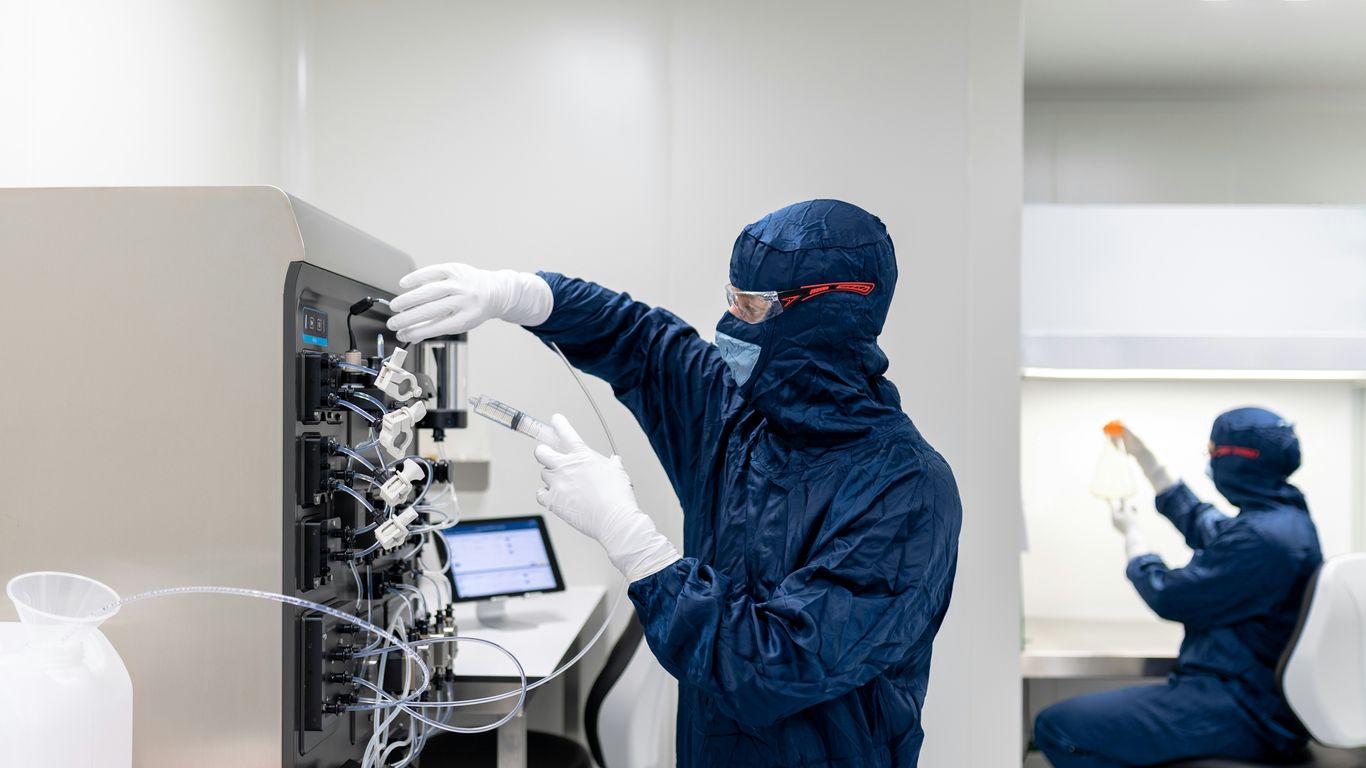
It’s pretty wild to think about how all these different tech pieces are starting to fit together in biotech. We’re not just talking about AI anymore; it’s like a whole ecosystem is forming.
Synergies Between AI, Blockchain, and IoT
Imagine this: IoT sensors are constantly checking on bioreactors, gathering all sorts of real-time data – things like temperature, pH, and nutrient levels. This data then gets sent to AI systems that can instantly figure out if something needs adjusting to make the process run smoother. And to keep all that sensitive information safe and sound? That’s where blockchain comes in, creating a secure, decentralized way to manage it all. This combination could lead to manufacturing processes that are way more adaptive and can even run themselves. It’s a big step up from how things are done now, where adjustments are often made based on schedules rather than what’s happening minute-by-minute.
Optimizing Bioprocesses with Real-Time Data
Speaking of real-time data, it’s a game-changer for making things more efficient. AI is already getting good at tweaking bioprocesses. Think about:
- Predictive Maintenance: AI can spot potential equipment issues before they cause a breakdown, saving a lot of downtime and money.
- Yield Improvement: By fine-tuning conditions based on live data, AI can help get more product out of the same process.
- Quality Control: Consistent monitoring means a more consistent final product, reducing batch failures.
Getting these systems to work together smoothly, especially when you add in new tech, is still a work in progress. But the potential for more automated and responsive biotech production is huge.
The Role of Explainable AI in Biological Research
One of the trickier parts of using AI in biology is understanding why it makes certain recommendations. That’s where "explainable AI" (XAI) becomes super important. Instead of just getting an answer, XAI aims to show the reasoning behind it. This is vital for:
- Building Trust: Scientists need to trust the AI’s suggestions, especially when it comes to patient health.
- Discovering New Biology: If we can see how the AI reached a conclusion, it might reveal new biological pathways or interactions we hadn’t considered.
- Meeting Regulations: For approval processes, being able to explain the AI’s role is likely going to be a requirement.
As AI gets more involved in everything from drug discovery to designing new biological systems, making sure we can understand its decisions is key to moving forward responsibly.
Looking Ahead
So, what does all this mean for the future? It’s pretty clear that biotech isn’t just about incremental changes anymore. We’re seeing big leaps forward, especially with AI playing a huge role in everything from finding new drugs to making treatments more personal. Things like gene editing and new ways to build therapies are changing the game for diseases we used to think were impossible to treat. It’s not just about the science, either; there’s a lot of money and effort going into these new ideas, showing that companies and investors see real potential. While there are definitely ethical questions and challenges to sort out, the direction is set. We’re heading towards a future where biotech could seriously improve our health and maybe even how long we live. It’s an exciting time to watch this field grow.
Frequently Asked Questions
What is advanced biotech and why is it important?
Advanced biotech is like using super-smart tools and new ideas to make medicines and treatments better. It’s important because it helps us find cures for diseases faster, create stronger medicines, and even help people live longer, healthier lives. Think of it as upgrading our health toolkit to solve bigger problems.
How is artificial intelligence (AI) changing drug discovery?
AI is like a super-fast helper for scientists. It can look through tons of information to find the best targets for new drugs and even help design the drugs themselves. This means finding new medicines can happen much quicker and with less trial and error, saving time and money.
What are ‘novel therapeutic modalities’?
These are new ways to fight diseases that go beyond simple pills. Instead of just small molecules, scientists are using bigger, more complex things like biologics (made from living cells), special proteins that can break down bad cells, and advanced RNA platforms that can give longer-lasting effects. It’s about finding more powerful ways to attack diseases.
How does gene editing like CRISPR help treat diseases?
CRISPR is like a tiny pair of molecular scissors that can precisely cut and change DNA. This means scientists can fix the specific genetic mistakes that cause certain diseases, like inherited conditions. It’s a very accurate way to correct the root cause of some illnesses.
What are the ethical concerns with new biotech advances?
As we get better at changing biology, we need to think carefully. Questions arise about making sure everyone can get these new treatments, not just the rich. We also need to be careful about safety and prevent misuse of powerful technologies. It’s about using these amazing tools responsibly.
What does the future hold for AI and biotech working together?
The future looks really exciting! AI will likely team up with other technologies like blockchain (for secure data) and the Internet of Things (for real-time monitoring). This combination could make creating medicines even more efficient, safe, and personalized, leading to better health for everyone.