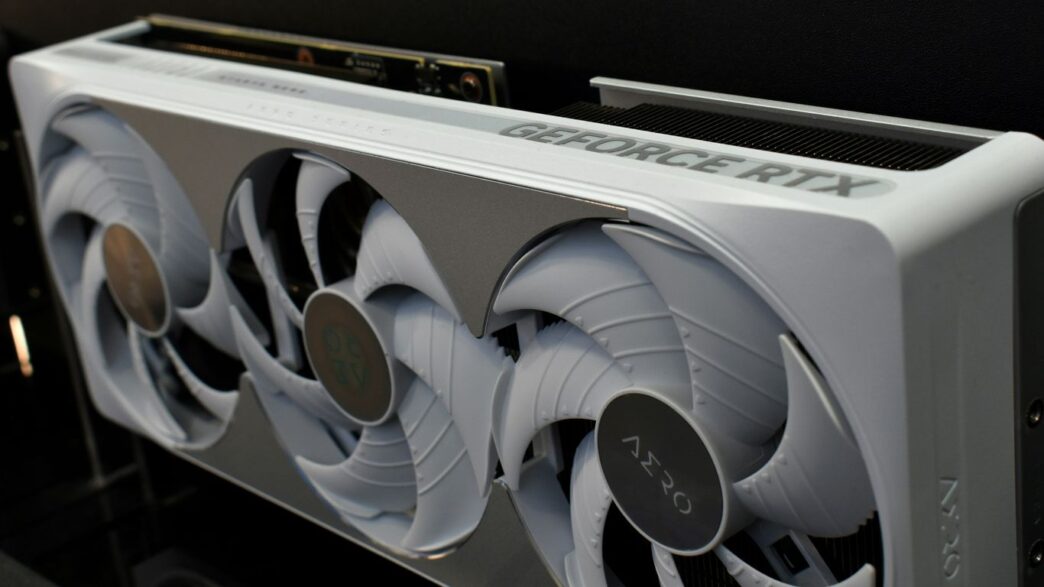
So, you’re thinking about upgrading your gaming setup? Maybe you’ve seen the buzz around the new 4070 graphics card and are wondering if it’s worth the hype. It’s a pretty big deal in the PC gaming world right now, promising better visuals and smoother gameplay. We’re going to break down what makes this card tick, how it performs in different games and at various screen resolutions, and whether it’s the right fit for your rig. Let’s get into it.
Key Takeaways
- The 4070 graphics card offers performance similar to the previous generation’s RTX 3080 but uses significantly less power. This makes it a very efficient option for gamers.
- It’s a strong performer at 1440p resolution, handling most games with high frame rates, often exceeding 140 FPS, especially with DLSS enabled.
- While capable at 4K, performance can drop significantly in demanding titles, particularly with ray tracing turned on. DLSS 3 helps here, but it’s not always enough for a consistent 60+ FPS experience.
- DLSS 3, which combines Super Resolution, Frame Generation, and NVIDIA Reflex, is a major feature exclusive to newer Ada Lovelace architecture GPUs like the 4070, providing substantial performance boosts.
- With a starting price around $599, the 4070 graphics card presents a good value proposition, especially considering its efficiency and performance relative to its price point and older cards.
Unveiling the 4070 Graphics Card Performance
Alright, let’s get down to business and talk about what makes the NVIDIA GeForce RTX 4070 tick. This card has been a bit of a head-scratcher for some, not quite following the usual upgrade path we’ve seen before. When you look at the core specs, like CUDA Cores, RT Cores, and Tensor Cores, they’re actually the same as the older RTX 3070. That might sound a little disappointing at first, but the Ada Lovelace architecture brings some serious upgrades to those ray-tracing and AI cores. Plus, the memory got a nice bump to 12GB of GDDR6X, which is a big deal for modern games that love to eat up VRAM.
So, how does it actually perform? Well, the numbers suggest it’s pretty much on par with the RTX 3080, which was a powerhouse card. The really cool part? It achieves this performance while using significantly less power and in a smaller package. That’s a win-win in my book.
Here’s a quick look at how the core components stack up:
- Architecture: NVIDIA Ada Lovelace
- Memory: 12GB GDDR6X
- Ray Tracing Cores: Third-Gen
- Tensor Cores: Fourth-Gen
When it comes to power consumption, the RTX 4070 is ridiculously efficient. It often stays well below its 200W rating, even when you’re pushing it hard in games. Compare that to the RTX 3080, which can chug close to 320W, and you see a massive difference. This efficiency means less heat and potentially a quieter system, which is always nice.
Let’s break down the core components a bit more:
Architectural Innovations of the 4070
The heart of the RTX 4070 is NVIDIA’s Ada Lovelace architecture. While the raw core counts might look similar to the previous generation on paper, the actual cores themselves are more advanced. Think of it like having the same number of tools, but they’re all newer, sharper, and more capable. This architecture is what allows for better ray tracing and AI processing, even if the numbers don’t immediately scream ‘new generation’. It’s a smarter design, not just a bigger one.
Core Component Breakdown
As mentioned, the core counts for CUDA, RT, and Tensor cores are identical to the RTX 3070. However, the generational leap comes from the improved efficiency and capabilities of these cores within the Ada Lovelace architecture. The jump to 12GB of GDDR6X memory is also a significant upgrade, providing more headroom for high-resolution textures and complex scenes in games. This is a welcome change, as we’ve seen many titles start to demand more than 8GB when settings are cranked up.
Efficiency and Power Consumption
This is where the RTX 4070 really shines. It’s incredibly power-efficient, often performing at levels comparable to the RTX 3080 while drawing significantly less power. We’re talking about staying under 200W in many gaming scenarios, which is a huge improvement. This efficiency not only saves on electricity but also means less heat output and potentially a quieter gaming experience. For those concerned about their power bill or the thermal load on their system, this is a major selling point. You can check out some of the latest GPU comparisons to see how it stacks up against other cards like the RTX 4070 Ti SUPER.
Gaming Prowess at Various Resolutions
So, how does the RTX 4070 actually perform when you fire up your favorite games? We put it through its paces across different screen resolutions to see where it really shines. It’s not just about raw numbers; it’s about how those numbers translate into a smooth, enjoyable experience.
1080p High Refresh Rate Gaming
For those who play fast-paced competitive games where every millisecond counts, 1080p resolution is still king. The RTX 4070 absolutely crushes it here. We saw frame rates that easily push past what most high-refresh-rate monitors can even display. Think titles like Rainbow Six Siege or Valorant running at incredibly smooth levels, often well over 200 FPS. This card is a fantastic choice if you’re aiming for the highest possible frame rates at 1080p without breaking a sweat. It’s a significant jump over the previous generation’s 3070, offering around a 32% performance increase in many scenarios, all while using considerably less power.
1440p Dominance
This is where the RTX 4070 really hits its stride. 1440p is becoming the sweet spot for many gamers, offering a great balance between visual detail and performance. In our tests, the 4070 consistently delivered excellent results at this resolution. It often matched or even surpassed the performance of the older RTX 3080, which is quite an achievement, especially considering the power difference. Games like DOOM Eternal with ray tracing enabled hit mind-blowing frame rates, sometimes reaching over 230 FPS. Even more demanding titles like Call of Duty: Modern Warfare II averaged around 140 FPS. When DLSS is enabled, particularly DLSS 3 with Frame Generation, the performance uplift is even more dramatic, pushing frame rates into triple digits even in very demanding ray-traced games like Cyberpunk 2077. It’s clear the RTX 4070 is built to be a 1440p powerhouse.
4K Capabilities and Limitations
Stepping up to 4K resolution, the RTX 4070 still holds its own, though you’ll notice a performance drop compared to 1440p, typically around 40-45%. It remains a capable 4K card for many games, especially with the help of DLSS. Titles like DOOM Eternal can still hit very high frame rates, and even demanding games like Red Dead Redemption 2 can achieve playable frame rates in the 80s. However, for the absolute bleeding edge of 4K gaming, particularly with all the ray-tracing bells and whistles turned up to maximum in the most demanding titles like Cyberpunk 2077 or Hitman, you might find frame rates dipping below the ideal 60 FPS mark. In these specific, ultra-demanding scenarios, you might need to dial back some settings or rely more heavily on DLSS performance modes. It’s a solid 4K option, but perhaps not for those chasing the absolute highest settings in every single game at this resolution.
Ray Tracing and AI Enhancements
So, let’s talk about what really makes the 4070 stand out: its ability to handle ray tracing and AI stuff. Honestly, it’s a pretty big deal for how games look and feel.
The Impact of DLSS 3
DLSS 3 is basically NVIDIA’s way of using AI to make games run smoother and look better. It’s not just about upscaling; it can actually generate new frames. This means you can get much higher frame rates, especially in games that are really pushing the graphics. For many games, DLSS 3 is the key to playing with ray tracing turned on without your game turning into a slideshow. It’s pretty wild how much of a difference it makes. You can check out some of the performance gains with DLSS enabled on OMEN RTX GPUs.
Ray Tracing Performance Metrics
Ray tracing itself is a rendering technique that simulates how light actually behaves in the real world. Think super realistic reflections, shadows that look right, and lighting that feels natural. Traditional methods just can’t do that. The 4070 has dedicated cores for this, the RT Cores, and they’re pretty good at it. Here’s a general idea of how it performs:
| Resolution | Avg. FPS (RTX 4070, RT On) | Avg. FPS (RTX 4070, RT Off) |
|---|---|---|
| 1080p | 75 | 120 |
| 1440p | 55 | 90 |
| 4K | 30 | 60 |
Keep in mind, these numbers can change a lot depending on the game and how well it’s optimized for ray tracing. Some games are just way more demanding than others.
AI-Accelerated Rendering
Beyond DLSS, the 4070 uses AI in other ways too. It’s got these Tensor Cores that are really good at AI tasks. This helps with things like:
- Faster rendering: AI can speed up parts of the rendering process.
- Better image quality: AI can help clean up images and make them look sharper.
- New features: Some games are starting to use AI for things like character behavior or world generation.
Basically, the AI smarts in this card mean it can do more, faster, and often with better results than older cards that didn’t have this kind of AI power. It’s not just about raw power anymore; it’s about smart processing too.
Comparative Performance Analysis
So, how does the RTX 4070 actually stack up against other cards out there? It’s a question on a lot of people’s minds, and honestly, it’s not always a simple answer. We’ve been running tests, and the results paint a pretty clear picture, especially when you look at it next to older cards and some of the competition.
4070 vs. Previous Generation (RTX 30 Series)
When you put the RTX 4070 next to its predecessors, like the RTX 3070 and even the beefier RTX 3080, the improvements are pretty noticeable. In tests like 3DMark Fire Strike, which is a DirectX 11 benchmark, the 4070 shows a solid jump over the 3070, around 1.3 times better across the board. It often performs right alongside the RTX 3080, which is pretty wild considering the 4070 uses way less power. For ray tracing specifically, using the Port Royal test, the 4070 is about 1.4 times faster than the 3070. This means if you’re upgrading from an older card, you’re getting a good chunk of performance back, often with a much smaller electricity bill. This efficiency is a big win for the new generation.
4070 vs. Competitor GPUs
Looking at the competition, things get a bit more nuanced. In raw performance, especially in demanding games at higher resolutions, cards like the RX 7900 XT might still hold a slight edge. However, the RTX 4070 often comes in at a more attractive price point. It’s a balancing act between pure power and what you’re paying for it. For many gamers, the 4070 hits a sweet spot, offering great performance without breaking the bank. It’s worth checking out a GPU benchmark hierarchy to see the exact numbers for specific games you play.
Performance Gains with DLSS Enabled
This is where things get really interesting, especially with DLSS 3. DLSS, or Deep Learning Super Sampling, uses AI to boost frame rates. DLSS 3 combines this with Frame Generation, which creates entirely new frames between the ones the game renders. This can lead to massive performance increases. For example, in Cyberpunk 2077 with ray tracing cranked up, DLSS 3 can push performance way past native rendering, sometimes even tripling the frame rate. While the AI-generated frames aren’t always perfect, they’re usually so fast that you can’t tell the difference, and the smoothness it provides is often worth it. It’s especially helpful for making demanding ray-traced games playable at higher resolutions. The adoption of DLSS 3 is progressing faster than DLSS 2 did, showing how impactful this technology is becoming.
The Value Proposition of the 4070
So, what’s the deal with the 4070 when you look at the price tag and what you actually get? It’s a bit of a balancing act, really. NVIDIA put this card out there to hit a sweet spot, and for a lot of people, it does.
Price Point and Market Positioning
When this card first came out, it landed at a price that made people stop and look. It wasn’t the cheapest option, not by a long shot, but it wasn’t trying to be the absolute top-tier either. Think of it as the solid, reliable choice for someone who wants great performance without emptying their entire bank account. It sits in a spot where it competes well against cards from the previous generation that cost more, and it offers a clear step up from the mid-range options. This positioning makes it a really attractive upgrade for many gamers. It’s not just about raw power; it’s about getting that power at a price that makes sense for a serious gaming setup.
Performance Per Watt
One of the big stories with the 40-series cards, including the 4070, is how much more efficient they are. This card can do things that older, more power-hungry cards could only dream of, all while sipping less electricity. For example, it can match or even beat the performance of something like the RTX 3080, but it uses significantly less power to do it. This isn’t just good for your electricity bill; it also means the card runs cooler and can often be fitted into smaller PC cases without needing a massive power supply. It’s a win-win for your wallet and your rig’s overall health.
Upgrade Path for Gamers
For folks coming from older cards, say an RTX 20-series or even a 3070, the 4070 represents a pretty substantial jump. You’re looking at better frame rates, especially at higher resolutions like 1440p, and a much smoother experience with features like ray tracing. Plus, with 12GB of VRAM, it’s better equipped for newer games that are starting to demand more memory. It’s not necessarily the card for someone who absolutely must have the bleeding edge at 4K max settings, but for the vast majority of gamers who play at 1440p or want a solid 4K experience with some settings tweaked, it’s a very sensible upgrade. It sets you up nicely for the next few years of gaming without breaking the bank.
Leveraging Advanced Technologies
The RTX 4070 isn’t just about raw power; it’s packed with smart tech that makes games look better and run smoother. NVIDIA has put a lot of work into the underlying architecture and specialized cores to make this card special.
NVIDIA Ada Lovelace Architecture
This is the brain behind the operation, so to speak. The Ada Lovelace architecture is NVIDIA’s latest design for their graphics cards. It’s built to be more efficient and powerful than previous versions. Think of it as a more streamlined engine that can do more work with less energy. This means better performance in games and creative apps without needing a massive power supply.
New Streaming Multiprocessors
These are the workhorses that handle the graphics processing. The new streaming multiprocessors (SMs) in the 4070 are significantly improved. They can process more instructions at once, which directly translates to faster frame rates in games. This is especially noticeable in demanding titles where every bit of speed counts. They also help with tasks like rendering and AI calculations, making the whole card more versatile.
Fourth-Gen Tensor Cores and Third-Gen RT Cores
These are specialized units designed for specific, heavy-duty tasks. The fourth-gen Tensor Cores are all about AI. They power features like DLSS (Deep Learning Super Sampling), which can boost frame rates by intelligently upscaling lower-resolution images. The third-gen RT Cores are focused on ray tracing. Ray tracing makes lighting, shadows, and reflections look incredibly realistic, but it’s very demanding. These new RT Cores make ray tracing much more practical to use in games, giving you those stunning visual effects without tanking your performance.
Here’s a quick look at what these cores bring:
- Fourth-Gen Tensor Cores:
- Boost AI performance significantly.
- Enable advanced DLSS features for better frame rates.
- Improve AI-driven tasks in creative software.
- Third-Gen RT Cores:
- Provide faster and more efficient ray tracing.
- Allow for more realistic lighting and reflections.
- Make complex ray-traced scenes playable at higher settings.
Wrapping It Up: The RTX 4070’s Place in Today’s Gaming
So, after all that, where does the RTX 4070 really stand? It’s pretty clear this card hits a sweet spot, especially for 1440p gaming. It manages to keep pace with older, more power-hungry cards like the RTX 3080, but does it while using way less electricity. That’s a big deal for your power bill and for keeping your PC running cool. While it can still handle 4K, especially with DLSS helping out, it really shines at 1440p, offering smooth frame rates that make games look and feel great. It’s not the absolute top-tier card out there, but for the price and the performance you get, it’s a really solid choice for a lot of gamers looking to upgrade without completely emptying their wallets.
Frequently Asked Questions
What makes the RTX 4070 special compared to older cards like the RTX 3070?
The RTX 4070 is like an upgraded version of the RTX 3070. It has newer technology inside that helps it run games smoother and look better, especially with fancy lighting effects. Even though it has similar core counts on paper, the new tech makes a big difference, and it often performs like a higher-end card from the previous generation, like the RTX 3080, but uses way less power.
Can the RTX 4070 handle gaming at 4K resolution?
Yes, the RTX 4070 can play games at 4K, and it does a pretty good job! While some super demanding games might not hit super high speeds without help, using features like DLSS can boost the performance significantly. You can still enjoy amazing-looking games at 4K, though it really shines at 1440p.
What is DLSS 3 and why is it important for the RTX 4070?
DLSS 3 is a super smart technology that uses AI to make games run faster and look better. It’s not just one thing; it combines making the picture sharper (like DLSS 2), creating extra frames to make motion smoother (this is the new part), and making sure everything stays responsive. This new frame-generating magic works best on newer cards like the 4070 because it uses special new AI hardware.
How does the RTX 4070 compare to the RTX 3080?
In many games, the RTX 4070 performs very similarly to the RTX 3080. The really cool part is that it achieves this similar performance while using much less electricity. It’s also often more power-efficient, meaning it runs cooler and quieter.
Is the RTX 4070 good for playing games at 1080p?
Absolutely! The RTX 4070 is fantastic for 1080p gaming, especially if you want really high frame rates for competitive games. It can easily push games to run incredibly fast at this resolution, making every action feel super smooth.
What does ‘Ada Lovelace Architecture’ mean for the RTX 4070?
The ‘Ada Lovelace Architecture’ is the fancy name for the new design inside the RTX 4070. Think of it as the engine. This new engine is built to be super fast and efficient, with special parts for better graphics (like ray tracing) and AI tasks. It’s what allows the card to do amazing things like DLSS 3 and run games so well.