So, Microsoft’s been working on something pretty big in the quantum computing world. They’ve developed this new material, called a topoconductor, which sounds like it could be a game-changer. It’s all about creating these special qubits that are more stable and easier to manage. They’re calling their new chip Majorana 1, and it’s supposed to be a huge step towards making quantum computers actually useful for real-world problems. It’s kind of exciting to think about what this could mean for science and technology.
Key Takeaways
- Microsoft has created a new material called a topoconductor, which is key to building more stable quantum bits (qubits).
- Their new chip, Majorana 1, is designed to hold up to a million qubits and is the first Quantum Processing Unit (QPU) to use a topological core.
- This new approach uses hardware-protected topological qubits, making them less prone to errors than traditional qubits.
- The company has a clear plan to build a working, fault-tolerant quantum computer prototype in the coming years, validated by DARPA.
- This development could speed up the arrival of practical quantum computers, potentially solving complex problems in areas like medicine and materials science much faster than current computers.
The Revolutionary Topoconductor Material
So, Microsoft has been working on something pretty wild, a new kind of material they’re calling a ‘topoconductor’. It’s not just a small tweak; it’s like discovering a whole new state of matter that, until recently, was just a theoretical idea. Imagine building something atom by atom, super precisely, to get these exotic particles called Majoranas to actually exist. That’s what they’ve done.
A New State of Matter
This topoconductor stuff is built by carefully combining indium arsenide, which is a semiconductor, with aluminum, a superconductor. When you cool this mix down to temperatures close to absolute zero and play around with magnetic fields, something special happens. It forms these things called topological superconducting nanowires. And at the very ends of these wires? That’s where you find Majorana Zero Modes, or MZMs for short. These particles were basically science fiction until now, only found in textbooks.
Engineering Topological Superconductivity
What’s so neat about these MZMs is how they handle quantum information. In regular superconductors, electrons pair up and zip around without any resistance. But with MZMs, an unpaired electron doesn’t just hang out by itself. Instead, it gets shared between two MZMs. This makes it really hard for the outside world to mess with it, which is exactly what you want when you’re trying to store delicate quantum data. It’s like having a secret handshake that only the right people know.
Harnessing Majorana Zero Modes
These MZMs are the basic building blocks for qubits, the quantum version of computer bits. They store information based on something called ‘parity’ – basically, whether there’s an even or odd number of electrons involved. Because the MZMs hide this information so well, it’s protected from noise and errors. But this also creates a bit of a puzzle: how do you actually read out information that’s so well hidden? You can’t just ‘look’ at it easily. Microsoft’s approach involves using tiny devices called quantum dots. They connect these dots to the ends of the nanowire. The exact way the dot holds onto electrical charge changes depending on the parity of the nanowire, giving them a way to ‘read’ the hidden quantum state. It’s a clever workaround for a very tricky problem.
Majorana 1: A Leap Towards Practical Quantum Computing

Introducing Majorana 1 is like moving from candlelight to electricity. This chip is the world’s first Quantum Processing Unit (QPU) driven by a topological core—a huge stride towards quantum computers that can actually solve big, messy problems. Building quantum hardware has always been an uphill battle, but this approach changes the rules.
The World’s First Topological QPU
Microsoft’s Majorana 1 stands apart because its core holds a type of qubit that most other companies can only dream about. Regular qubits are jittery and need babying all the time. On this chip, though, the qubits are protected by the unique design and nature of the topoconductor—a material built atom by atom.
- Majorana 1 can be managed using simple digital pulses instead of finicky, complicated analog controls.
- Its qubits are small and fast, paving the way for real quantum applications.
- For the first time, a chip has been built with these topological qubits, charting a course for real-world use.
A Path to a Million Qubits
Forget about chips that are bulky or require tangled wires everywhere. The Majorana 1 design makes it possible to fit over a million qubits onto a single chip. That’s unheard of right now, especially given how much space and support current quantum systems need. Here’s how it looks compared to traditional designs:
| Feature | Traditional Quantum Chips | Majorana 1 |
|---|---|---|
| Qubit Count | 10–100 | Scalable to 1,000,000 |
| Control Complexity | Complex analog signals | Digital pulses |
| Error Rates | High | Potentially lower |
Benefits to this approach:
- Enables calculations that are impossible with today’s classical supercomputers.
- Supports the accuracy needed for things like chemistry simulations and materials design.
- Makes mass production of quantum chips much more realistic.
Hardware-Protected Topological Qubits
Here’s what really makes the Majorana 1 chip different: its qubits are hardware-protected. That means noise from the environment has a much harder time messing things up. This protection comes from the weird way Majorana particles behave—they cancel out certain errors just by being there.
Three things to remember about hardware-protected qubits:
- They’re less likely to lose information over time.
- They use less power since digital controls are simpler.
- Their built-in stability could finally make quantum error correction less of a headache.
In summary, Majorana 1 takes ideas that used to be pure theory and makes them real. While there’s still a long road ahead before quantum computers are us as easily as laptops, this chip puts us on the fast track. Microsoft’s approach isn’t just about bigger numbers—it’s about making quantum hardware that’s actually practical.
Overcoming Quantum Computing Challenges
Building a useful quantum computer isn’t easy, and the biggest roadblocks can feel downright frustrating. Standard computers are like bicycles—they have moving parts, but they’re sturdy and predictable. Quantum computers are more like balancing a pencil on its tip in the middle of a windstorm. But that’s what makes Microsoft’s approach, using the topoconductor material, extra interesting. They’re trying to build a quantum bike that doesn’t fall over as soon as you look at it funny.
The Delicate Nature of Qubits
Qubits, the basic units of quantum computers, are incredibly touchy—almost anything can mess them up. These delicate building blocks are vulnerable to:
- Temperature shifts (even a few degrees can ruin them)
- Radiofrequency noise from the everyday world
- Slight impurities in the materials themselves
Most current quantum machines need extreme conditions just to keep qubits alive. That limits where you can put them, how big you can make them, and how easy it is to use them in the real world.
Ensuring Reliability with Error Correction
If a regular computer makes an error, it’s rarely a disaster. But with quantum computers, even the tiniest mistake flips the outcome completely. To handle that risk, researchers use error correction schemes. Here are some commonly used methods:
| Error Correction Method | Pros | Cons |
|---|---|---|
| Repetition Codes | Simple, works for certain errors | Needs lots of physical qubits |
| Surface Codes | Great for certain quantum platforms | Really hard to build physically |
| Topological Codes | Fewer errors, more stable qubits | Requires exotic materials (like topoconductors!) |
Microsoft’s topoconductor lets them use the topological code approach, making error correction built right into the hardware, not just added as an afterthought.
Digital Control for Scalability
Here’s one of the oddest things: Early quantum computers need complicated, sensitive controls. Operators have to finely tune analog signals like they’re playing some noisy, impossible violin. That’s just not going to work if we want a million qubits. Microsoft’s new architecture chucks all that complexity for something much simpler:
- Operators use digital pulses instead of messy analog controls—basically, switch flipping.
- Digital control means fewer chances for mistakes, and easier upgrades down the line.
- This method brings quantum hardware one step closer to how we already manage classical computer chips.
Scaling from a handful of qubits to thousands (or millions) is a long road, but switching out fussy analog dials for crisp digital pulses is a lot like trading in your old stick shift for an automatic car—suddenly, everyone can drive, and you stop stalling at every light.
Quantum computing is hard, and sure, there will be more bumps. But by tackling fragility, errors, and control headaches right now, Microsoft’s topoconductor chip is trying to clear the way for something way more powerful down the road.
The Promise of a Million Qubits
For years, the idea of a quantum computer with a million qubits sounded about as likely as time travel. Now, with Microsoft’s new topological qubit chip, that goal is actually coming into focus. Packing a million stable qubits onto a single chip could change what counts as possible in science and technology. The real story isn’t just about raw numbers—it’s about the kind of breakthroughs that a system like this could deliver.
Transforming Scientific Discovery
Current supercomputers can’t handle some of the world’s hardest simulations, like complex molecules or the detailed behavior of electrons. Here’s a quick snapshot:
| System Type | Problem Solvable (Number of Electrons) |
|---|---|
| Laptop | 10 |
| Supercomputer | 20 |
| Quantum (1M qubits) | 30–50+ |
With a million qubits, scientists could:
- Simulate new chemicals and materials thoroughly before making them
- Test solutions for climate change with more reliable models
- Discover new drugs and enzymes, potentially reducing the time and cost of getting from concept to real treatment
It means researchers could design things on a computer with accuracy that matches real lab experiments—computing the result before ever mixing chemicals or growing cells.
Revolutionizing Industries
Industries aren’t sitting this out. The leap to a million-qubit system could overhaul:
- Pharmaceuticals: Design custom drugs without spending billions on wet-lab experiments.
- Energy: Discover better batteries, lighter materials, and even self-repairing structures for bridges or airplanes.
- Agriculture and Food: Engineer enzymes or crops for more sustainable food production.
Companies ready to invest with a long-term mindset, even during periods of uncertainty like the current market correction, could get ahead as quantum computing shifts from theory to practical tool.
Solving Intractable Problems
Problems once deemed unsolvable might fall within reach. We’re talking about:
- Predicting climate patterns years in advance
- Finding new approaches in cryptography and cybersecurity
- Crunching untold variables in logistics or financial modeling
Of course, there are still hurdles. Physicists and computer scientists remain "cautiously optimistic," reminding us that every new leap brings new challenges. Even so, the path forward looks clearer than ever. As more experts join to test, break, and refine this tech, the move from the lab to the real world inches closer every day.
Microsoft’s Roadmap to Fault Tolerance
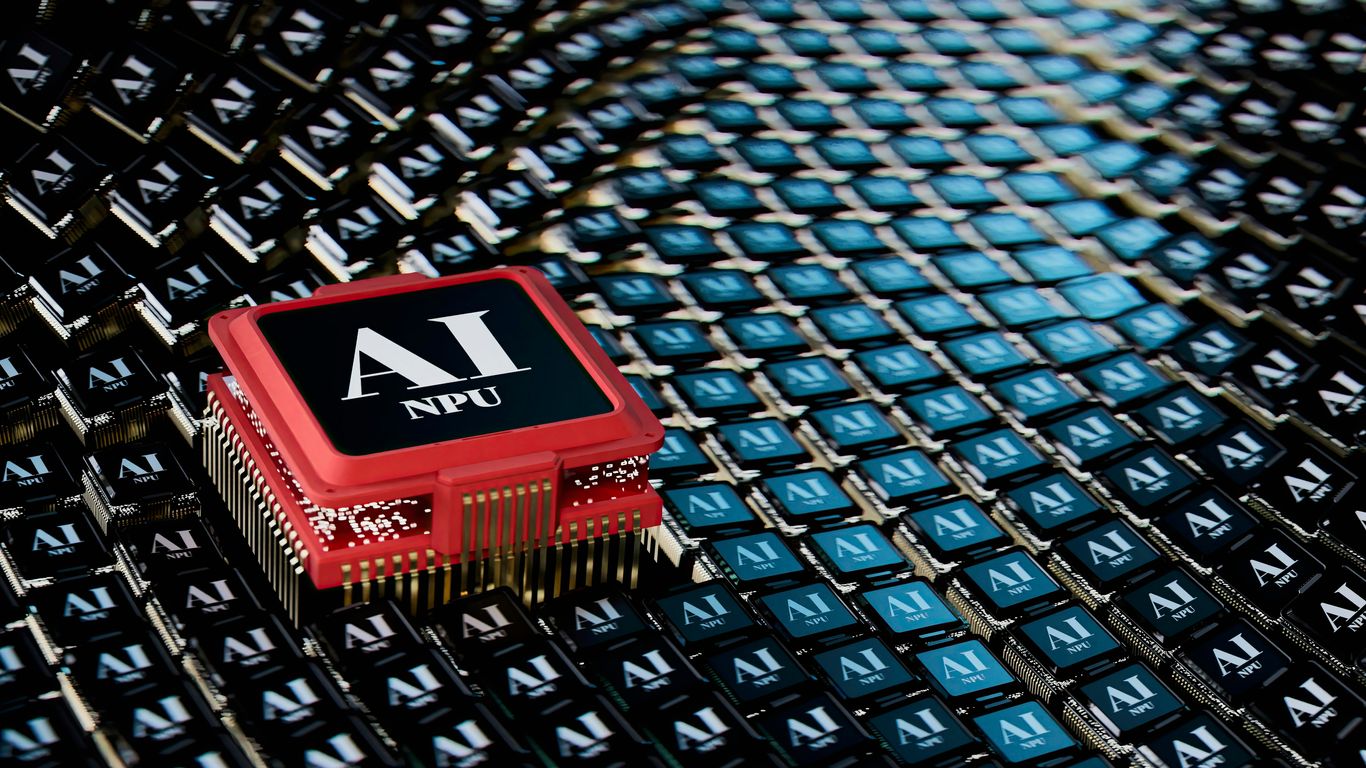
Creating a reliable, world-changing quantum computer is no small feat. Microsoft’s plan revolves around scaling up their Majorana-based qubits, improving error detection, and hitting a milestone: building a fault-tolerant prototype in just a few years. It’s about more than just theory on paper—this is about making quantum computing work day to day, not decades from now.
Building a Fault-Tolerant Prototype
Microsoft’s timeline is bold. The engineering team aims to push out a prototype quantum processor based on topological qubits, which are built for stability. Their approach uses a novel topoconductor material that allows an eight-qubit array on a chip—already a huge leap. Now, they’re going step by step:
- Start with two topological qubits to test entanglement and measurement-based transformations.
- Expand to an eight-qubit setup for demonstrating quantum error detection.
- Pair logical qubits with custom error correction codes, which shrink the number of physical qubits needed by about ten times compared to older methods.
This three-stage move sets up a quantum device fast enough—and reliable enough—to handle actual computational workloads.
DARPA’s Validation of the Approach
Getting industry approval is good, but having the Defense Advanced Research Projects Agency (DARPA) pick you for their high-stakes quantum program is something else. Microsoft is now one of only two groups moving to the final stage in DARPA’s Underexplored Systems for Utility-Scale Quantum Computing (US2QC). This isn’t just a nice headline; it’s hard evidence that experts believe this strategy could actually deliver, as explored in this staged roadmap for constructing a fault-tolerant quantum computer.
DARPA’s independent assessment led to a formal agreement, putting Microsoft on the clock to get their prototype running in years, not decades. Alongside researchers from places like NASA and Oak Ridge National Labs, this partnership brings authoritative eyes to every engineering claim they make.
Accelerating Quantum Development
What stands out most is Microsoft’s pace. Here’s what’s accelerating things:
- Using topologically protected qubits means natural error resistance.
- Adopting custom classical error correction reduces bulk and speeds everything up.
- Working towards arrays that let them scale directly from basic tests to a chip able to house a million qubits.
Microsoft believes their roadmap is not just optimistic but actionable. With the DARPA partnership and continual hardware progress, the company bets we’ll see truly fault-tolerant, utility-scale quantum computing much sooner than anyone thought possible.
The Future of Computing: The Quantum Age
Synergy with Artificial Intelligence
Quantum computing isn’t just changing how we solve tough problems; it’s going to change how we work with artificial intelligence (AI), too. Imagine pairing AI’s clever algorithms with quantum computers’ raw processing punch—this could mean answers to questions that today’s computers can’t even touch. Here’s how they’re working together:
- Quantum accelerators can process data that traditional AI finds impossible.
- Applications will be able to shuttle tasks between quantum and classical systems, letting each handle what it does best.
- With real-time learning and optimization, AI may become smarter, adapting faster as it taps into quantum power.
This combo opens up things like faster drug discovery or better climate models—stuff that’s too complex right now.
Beyond Classical Limitations
Classical computers are hitting their limits, especially on problems like simulating molecules or materials accurately. Quantum machines can handle calculations that would take a normal supercomputer millions of years. Let’s look at what each can tackle:
| Problem Type | Classical Computer | Quantum Computer |
|---|---|---|
| Simple math | Easy | Easy |
| Weather simulation | Hard | Easier |
| Drug compound design | Very Hard | Possible |
| Cryptography breaking | Mostly Safe | Risky |
| New material discovery | Nearly impossible | Doable |
When you see it like this, the direction is obvious. Quantum isn’t just an improvement—it’s an entirely new way of approaching computing’s biggest roadblocks.
Materials Defining Progress
Every major era in technology has been driven by new materials—the Stone Age, Bronze Age, Iron Age, and the Silicon Age. Now, with topoconductors and topological superconductors, the quantum age could define the next chapter. Here’s what’s changed:
- Scientists created the topoconductor, a material built nearly atom by atom.
- These new materials make exotic quantum effects stable enough for real devices.
- The hardware shift is setting the stage for a million-qubit chip—and that’s what could put unfathomable quantum computing power right in folks’ hands.
What comes next? Not everything is solved yet, and it might take a few more years to really get quantum computers everywhere. But the era when new material science changes what computers can do is definitely here. This shift feels a lot like the move from old radios to smartphones—except the changes will hit science, industry, and every part of life, not just your pocket.
The Road Ahead
So, what does all this mean for the future? Microsoft’s work with these new topoconductor materials and the Majorana 1 chip is a pretty big deal. It’s not just about making a faster computer; it’s about making a completely different kind of computer that could tackle problems we can’t even dream of solving today. Think about discovering new medicines or creating materials that could change how we build things. It’s still early days, and there are definitely hurdles to clear, but this feels like a significant step. It’s like we’re finally seeing a clear path toward quantum computers that aren’t just theoretical ideas but actual tools that could help us solve some of the world’s toughest challenges. We’ll have to wait and see how it all plays out, but the potential is definitely exciting.
Frequently Asked Questions
What is a topoconductor and why is it important for quantum computing?
A topoconductor is a new kind of material created by Microsoft that allows scientists to control special quantum particles called Majoranas. This material makes it possible to build a new type of quantum chip that could lead to much more powerful and reliable quantum computers.
How is the Majorana 1 chip different from other quantum chips?
The Majorana 1 chip uses topological qubits, which are protected by the special properties of the topoconductor material. This makes them less likely to lose information or make errors, which is a big problem for other types of quantum chips.
Why do we need millions of qubits in a quantum computer?
Having millions of qubits is important because it allows a quantum computer to solve really hard problems that normal computers can’t handle. With more qubits, the computer can do bigger calculations, like designing new medicines or discovering new materials.
How does Microsoft plan to make quantum computers more reliable?
Microsoft is using a method called quantum error correction, which helps fix mistakes that happen during calculations. Their special qubits are already more stable, and with error correction, the computers can run for longer times without losing information.
What kinds of problems could quantum computers solve in the future?
Quantum computers could help scientists find new cures for diseases, create better batteries, design safer materials for buildings, and even help fight climate change by finding new ways to capture carbon or create cleaner energy.
When will we see practical quantum computers being used?
Microsoft believes that useful quantum computers could be ready in just a few years, not decades. They are working with organizations like DARPA to build and test prototypes, and progress is happening quickly.