

So, the year is 2026, and if you’re trying to get your devices to talk to each other reliably, you’ve probably heard a lot about the best IoT connectivity platforms. It’s not just about having a lot of gadgets; it’s about making them work together without a hitch. We’re going to look at some of the top contenders out there. Think of these as the backbone for all your connected projects, from simple home setups to big industrial operations. Picking the right one can make all the difference, so let’s get into it.
Key Takeaways
- The Raspberry Pi 4 Model B is great for starting out and testing ideas but isn’t built for tough industrial jobs.
- Siemens and Rockwell offer solutions geared towards existing automation setups, especially if you’re already using their gear.
- Dell’s gateways are strong for IT-focused environments, bringing serious processing power to the edge.
- Robustel’s EG5120 stands out as a flexible option with good connectivity and management features for various industries.
- Newer wireless standards like Wi-Fi 7 and Wi-Fi HaLow are showing up on boards like those from AsiaRF, promising faster speeds and better range for future devices.
1. Raspberry Pi 4 Model B: The DIY Prototyper
When you’re just starting out with IoT projects or need a flexible platform for testing ideas, the Raspberry Pi 4 Model B is often the go-to choice. It’s like the Swiss Army knife for hobbyists and developers who like to build things themselves. You get a lot of power for the price, and the sheer number of tutorials and community support out there is pretty amazing.
This board is fantastic for proof-of-concept work and learning the ropes of embedded systems. It runs a familiar Linux-based OS, which makes it easy to get started if you’ve ever tinkered with a computer before. Plus, with options for 4GB or 8GB of RAM, it can handle more complex tasks than its predecessors, making it suitable for intermediate projects that need a bit more processing muscle. You can find all sorts of add-on boards, called HATs, to give it specific capabilities like industrial communication or better sensor integration.
However, it’s important to remember this is a consumer-grade device. It’s not built for harsh industrial environments with extreme temperatures or constant vibration. Also, cellular connectivity isn’t built-in; you’ll need to add a USB dongle or a specific HAT for that, which can sometimes be a bit fiddly and add extra points of failure. Reliability, especially with the SD card storage, can also be a concern for long-term, mission-critical deployments. It’s best suited for projects where you can afford a bit more hands-on management and aren’t operating in a demanding industrial setting. For those looking to move beyond basic prototyping, exploring options with more integrated features might be the next step, but for getting started and experimenting, the Raspberry Pi 4 is hard to beat. You can find more details on its capabilities for more complex projects on its product page.
2. Siemens Simatic IoT2050: The OT Standard
When you’re talking about industrial automation, Siemens is a name that comes up a lot. Their Simatic IoT2050 is built with that world in mind. It’s not really a general-purpose gadget; it’s made to fit right into existing factory setups, especially if you’re already using Siemens gear. Think of it as a bridge between your old operational technology (OT) systems and newer IT stuff.
This gateway is designed for reliability, which is a big deal when you can’t afford downtime. It handles industrial environments well, meaning it can take a bit of a beating and keep working. It’s particularly good at talking to Siemens PLCs and other automation equipment using their specific protocols. That makes integration smoother if your factory floor is already a Siemens ecosystem.
Here’s a quick look at what it offers:
- Industrial-grade hardware: Built tough for factory conditions.
- Siemens ecosystem support: Works well with their existing automation products.
- Optional cellular connectivity: You can add 4G LTE via Mini PCIe cards if you need it, though it’s not built-in.
- Yocto-based OS: This gives you a lot of control but can take some getting used to if you’re not familiar with it.
While it’s a solid choice for Siemens-heavy environments, the operating system might have a bit of a learning curve compared to more common Linux distributions. It’s a piece of equipment that really shines when it’s part of a larger, established industrial network, helping to bring data from the factory floor into the digital world. For those looking to improve manufacturing processes with tools like digital twins, this kind of gateway can be a key component in collecting the necessary data.
3. Rockwell Automation Optix Edge Gateway: The Ecosystem Specialist
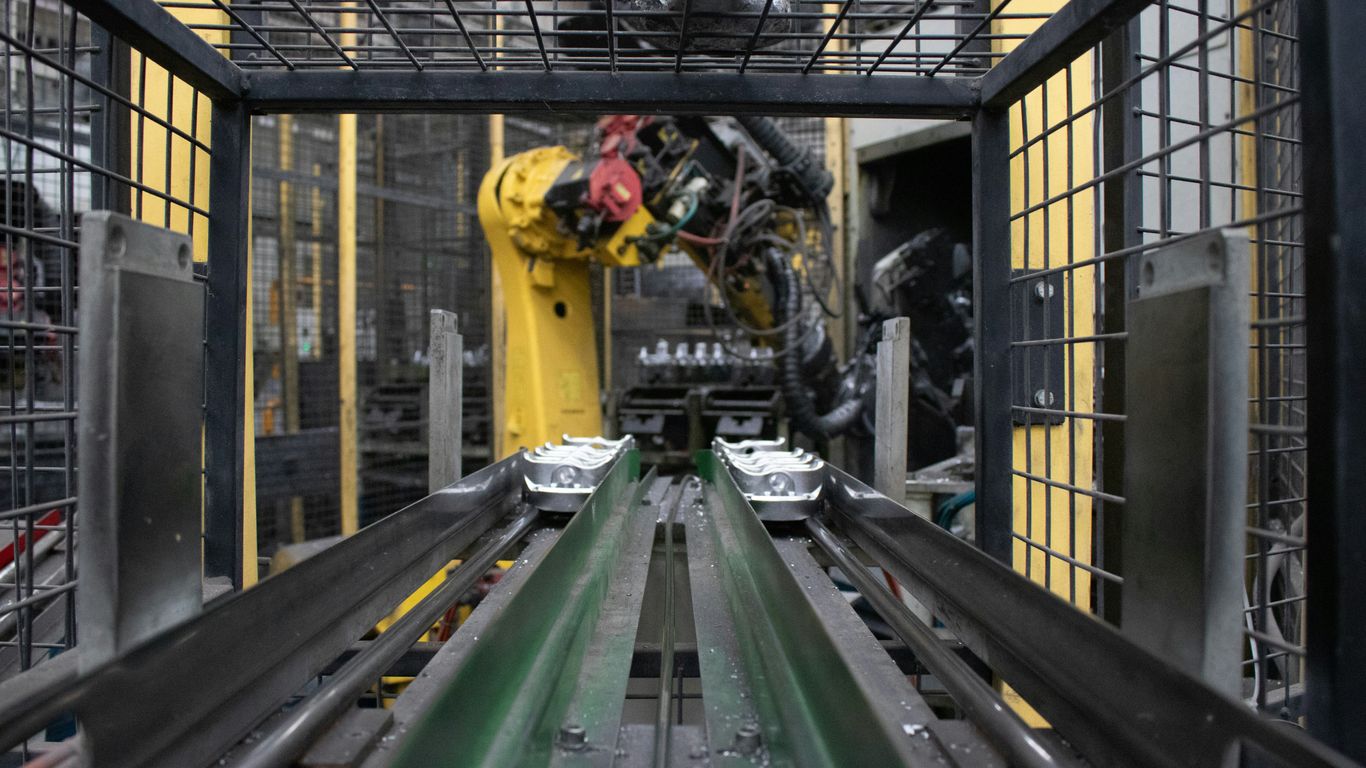
When you’re deep in the Rockwell Automation world, the Optix Edge Gateway really shines. It’s built to play nice with their existing gear, especially the Logix controllers and the whole suite of FactoryTalk software. Think of it as a translator that speaks Rockwell fluently, making it super easy to pull data right off the factory floor. This makes it a go-to for aggregating information within that specific environment.
However, it’s not really set up for remote sites or mobile applications out of the box. You won’t find built-in cellular options here, so if your data needs to travel far from the plant floor without an Ethernet cable, you’ll need to add extra hardware. It’s a specialized tool, and its strength lies in its tight integration with the Rockwell universe. If you’re already invested in their systems, it simplifies a lot of the data collection headaches.
Here’s a quick look at what it’s good for:
- Deep Factory-Floor Data Aggregation: Connects directly with Rockwell controllers for detailed operational data.
- Integration with FactoryTalk: Works seamlessly with Rockwell’s software suite for analysis and management.
- Robust Hardware: Designed for industrial settings, offering reliability on the plant floor.
It’s a solid choice if your operations are heavily tied to Rockwell Automation products and you need that specialized connection. For broader, more remote applications, you might need to look at other options that offer more built-in flexibility.
4. Dell Edge Gateway 5000 Series: The IT Powerhouse
When you think of big IT names, Dell is probably one of the first that comes to mind. Their 5000 Series Edge Gateway is built with that same kind of robust, reliable engineering you’d expect. It’s a solid piece of hardware, powered by Intel processors, and backed by Dell’s global support network. This makes it a really attractive option if you’re already in the Dell ecosystem or need that kind of enterprise-level backing.
However, it’s important to know that this gateway leans more towards IT applications. If your goal is to directly connect and manage a lot of industrial machines using specific OT protocols right out of the box, you might find yourself needing extra software and a bit more setup time. It’s not that it can’t do it, but it’s not its primary focus. Think of it as a powerful computer designed for edge tasks, which can be adapted for industrial use, rather than a device built from the ground up for the factory floor.
Here’s a quick look at what it brings to the table:
- Powerful Processing: Equipped with Intel processors, it can handle demanding edge computing tasks.
- Build Quality: It’s ruggedly built, designed to withstand tougher environments.
- Global Support: Dell’s extensive support network is a big plus for large deployments.
- Modular Connectivity: While not always built-in, it offers options for adding cellular modems through expansion slots, giving you flexibility for different network needs.
This gateway is a strong contender for IT-centric edge deployments that require significant processing power and reliability. If your project involves a lot of data processing at the edge and you have the resources to integrate OT-specific software, the Dell 5000 Series is definitely worth considering.
5. Robustel EG5120: The Versatile All-Rounder
When you need a device that can handle a bit of everything in the industrial IoT space, the Robustel EG5120 really shines. It’s built to be flexible, which is a big deal because not every factory floor or remote site is the same. This gateway aims to bridge the gap between the openness of consumer-grade tech and the toughness needed for industrial jobs.
What sets it apart is its integrated cellular connectivity. Unlike many others where you have to add a separate module, the EG5120 comes with global 4G LTE built-in, and it even has dual SIM failover. This means if one connection drops, it can automatically switch to another, which is pretty handy for keeping things running smoothly, especially in places with spotty service.
Here’s a quick look at what it packs:
- Processor: Quad-Core ARM Cortex-A53 running at 1.6 GHz. It’s got enough power for local data processing.
- Connectivity: Global 4G LTE (Cat 4) with Dual SIM, plus two Gigabit Ethernet ports. It also includes industrial ports like RS232/RS485 for older equipment.
- Operating System: RobustOS Pro, which is based on Debian 11. This gives you a familiar Linux environment and supports Docker for running applications.
- Industrial Protocols: It plays nice with common industrial languages like Modbus, OPC UA, and BACnet right out of the box.
On top of that, Robustel offers its RCMS (Robustel Cloud Management System). This platform makes it way easier to manage a bunch of these gateways remotely. You can monitor them, update their software, and even access them for troubleshooting, all from one place. This really cuts down on the hassle and cost of managing a large deployment. Plus, their commitment to security, with development following industrial cybersecurity standards like IEC 62443-4-1, means you’re not sacrificing safety for flexibility.
6. Protocol Gateway Odot
When you’re building out an IoT system, getting all your different devices and platforms to talk to each other can be a real headache. That’s where something like the Protocol Gateway Odot really shines. It acts as a translator, making sure that devices using different communication languages can understand each other. Think of it as the central hub that smooths out all the bumps in communication, which is pretty important if you want your smart setup to actually work well.
ODOT Automation, the company behind this tech, has been in the industrial communication game since 2003. They’ve focused on making products that help systems connect better. Using a gateway like Odot can really help tidy up your operations. It makes it easier to add new devices down the line without having to redo your whole network, which is a big plus as technology keeps changing.
Here’s a quick look at what makes Odot stand out:
- Interoperability: Bridges the gap between various devices and systems, allowing them to communicate effectively.
- Management: Features an intuitive dashboard for real-time monitoring and quick adjustments to network performance.
- Scalability: Lets you add new devices easily, adapting your network as your needs grow.
- Future-Proofing: Helps ensure your system can handle new tech and standards without major overhauls.
Basically, if you’re looking to build a more connected environment, whether it’s for industry or something else, a protocol gateway is a piece of the puzzle you’ll want to consider. It’s all about making sure your internet-connected environments can actually function as a cohesive unit.
7. Wi-Fi HaLow
Okay, so let’s talk about Wi-Fi HaLow. You might not have heard of it as much as regular Wi-Fi, but it’s actually pretty neat for certain jobs, especially when you’re dealing with a whole bunch of Internet of Things (IoT) devices. Think of it as a special kind of Wi-Fi that works on a different radio frequency, the sub-1 GHz band. This is a big deal because it means it can reach much further than your typical 2.4 GHz or 5 GHz Wi-Fi. Plus, it’s better at getting through walls and other stuff that usually blocks signals. And get this – it uses way less power, which is a lifesaver for battery-powered gadgets.
This makes Wi-Fi HaLow a really good fit for things like smart farms, tracking goods in warehouses, or even in factories where you have tons of sensors spread out.
Here’s why it’s getting attention:
- Longer Range: We’re talking hundreds of meters, not just a few rooms. This means fewer access points are needed to cover a large area.
- Lower Power Use: Devices can run for a long time on a single battery charge, which is super convenient for remote or hard-to-reach sensors.
- Better Penetration: Signals can get through concrete, metal, and other obstacles more easily than higher frequency signals.
- Handles Lots of Devices: It’s designed to connect many devices simultaneously without getting bogged down.
It’s not going to replace your home Wi-Fi for streaming movies anytime soon, but for connecting a massive network of smaller, low-data devices over a wide area, Wi-Fi HaLow is definitely something to keep an eye on in the IoT space.
8. Wi-Fi 7
So, Wi-Fi 7. It’s the next big thing, right? It’s officially known as IEEE 802.11be, and it’s not just about making things faster, though it certainly does that. Think of it as a major upgrade for how we handle all the data flying around, especially with more and more smart devices and things like augmented reality becoming common. Wi-Fi 6 was pretty good at handling crowded networks, but with all the new demands, it’s starting to feel a bit stretched.
Wi-Fi 7 is designed to deal with that. It’s built to be way more efficient and handle a lot more traffic without slowing down. This means smoother streaming of super high-definition video, quicker downloads, and better performance for things that need a really stable connection, like gaming or industrial automation.
Here’s a quick look at what makes it stand out:
- Higher Speeds: We’re talking significantly faster data transfer rates compared to previous versions. This is thanks to wider channels and better modulation techniques.
- Lower Latency: For real-time applications, this is a big deal. Less delay means a more responsive experience, whether you’re in a video call or controlling a robot.
- Improved Reliability: Wi-Fi 7 uses smarter ways to manage interference and connect devices, making your connection more stable, even in busy environments.
- More Capacity: It can handle more devices connected at the same time without everything grinding to a halt. This is super important as our homes and workplaces get filled with more connected gadgets.
Companies like AsiaRF are already putting out hardware that supports Wi-Fi 7, like their router development boards. They’re focusing on making these technologies work well for everything from AI PCs to industrial uses. It’s all about getting ready for a future where we rely on wireless connections for pretty much everything, and we need them to be fast, dependable, and handle a ton of data.
9. AsiaRF Innovations
AsiaRF is a company that’s really pushing the boundaries in wireless tech, especially when it comes to Wi-Fi. They’ve been around for a while, building up their knowledge, and now they’re focusing on some pretty advanced stuff. Think Wi-Fi 7 for super-fast connections and Wi-Fi HaLow for those situations where you need long range and low power, like in smart cities or industrial settings.
They’re not just talking about it, either. AsiaRF has been showing off their latest gear at big tech events like CES and Wireless Global Congress. They even have a new brand called WiBRAVO, which is all about high-end video and communication systems. It seems like they’re moving beyond just making chips and modules to offering more complete solutions.
Here’s a look at some of the technologies they’re highlighting:
- Wi-Fi 7 (802.11be): This is their go-to for speed and low delay. It’s meant for things like AI applications and networks that have a lot of devices all trying to connect at once.
- Wi-Fi HaLow (802.11ah): This is where AsiaRF seems to be putting a lot of energy. It’s designed for the Internet of Things (IoT), offering a much longer range than regular Wi-Fi and using way less power. This makes it perfect for sensors, smart grids, and other devices that need to run for a long time without needing a battery change or a strong signal.
- HaLowFly: This seems to be their solution for making Wi-Fi HaLow even easier to use, with universal driver-free support across different operating systems.
AsiaRF is also thinking about the future, like how to protect data from things like quantum computing threats. They’re working on modules that cover a range of Wi-Fi standards, from the older Wi-Fi 5 all the way up to Wi-Fi 7. It looks like they’re aiming to be a one-stop shop for a lot of different wireless needs.
10. AP7988-003 Wi-Fi 7 Router Board
Alright, let’s talk about the AP7988-003 Wi-Fi 7 Router Board. This thing is pretty beefy, designed for places like public infrastructure where you need solid, secure connections. It’s built around a quad-core ARM Cortex-A73 processor, which means it can handle some serious data traffic without breaking a sweat. Security is a big deal here, with built-in Asymmetric Cryptography technology to keep things locked down.
What’s also neat is that it can integrate with Wi-Fi HaLow modules. This is a pretty smart move because Wi-Fi HaLow is great for covering large areas with low power, making it useful for smart city projects or other big-scale IoT stuff where you can’t just run cables everywhere.
Here’s a quick look at what makes it tick:
- Processor: Quad-core ARM Cortex-A73
- Connectivity: Wi-Fi 7 support, with options for Wi-Fi HaLow integration
- Security: Asymmetric Cryptography for system protection
- Target Use: Public infrastructure, smart cities, large-scale IoT deployments
Basically, if you’re looking for a router board that’s fast, secure, and can play nice with both the latest Wi-Fi tech and the longer-range, lower-power Wi-Fi HaLow, this AP7988-003 board from AsiaRF is definitely worth a look. It’s built for demanding jobs.
Wrapping It Up
So, we’ve looked at a bunch of different ways to connect things in the coming years. It’s clear that picking the right setup isn’t just about the fancy tech specs you see on paper. You really need to think about how it all works together in the real world, from the initial setup costs to keeping it running smoothly down the line. Whether you’re leaning towards a more hands-on approach or something built for tough industrial jobs, there’s a solution out there. The main thing is to find what fits your project best, so your connected devices can actually do what you need them to do without a ton of headaches.
Frequently Asked Questions
What is an IoT Gateway?
Think of an IoT Gateway as a smart translator and traffic cop for your connected devices. It helps devices that speak different ‘languages’ (protocols) to talk to each other and to the internet. It also helps manage the flow of information, making sure everything runs smoothly and securely.
Why is ‘Total Cost of Ownership’ (TCO) important for IoT Gateways?
TCO is more than just the price tag of the device. It includes all the costs over time, like setting it up, making sure it works with other systems, keeping it updated, and fixing it if it breaks. A cheap device might end up costing more in the long run if it’s hard to manage or breaks often.
What’s the difference between an ‘Edge Gateway’ and a regular ‘IoT Gateway’?
An Edge Gateway is like a super-smart IoT Gateway. It can do more processing and decision-making right where the data is created, instead of sending everything to a faraway computer. This makes things faster and more efficient, especially when you need quick responses.
Is Wi-Fi HaLow different from regular Wi-Fi?
Yes, Wi-Fi HaLow is a newer type of Wi-Fi designed for the Internet of Things. It’s good at connecting devices over longer distances and uses less power, making it great for sensors and other gadgets that don’t need super-fast speeds.
What is a ‘protocol gateway’ like Odot?
A protocol gateway, such as Odot, acts like a bridge. It helps different communication systems and devices, which might use different languages or rules, to understand each other. This is super important for making complex systems work together smoothly.
Why are industrial-grade gateways important?
Industrial-grade gateways are built tough. They can handle harsh environments like factories with extreme temperatures or dust. They are also designed to be very reliable, which is crucial for keeping important operations running without interruption.