The NVIDIA DRIVE Platform: Powering Intelligent Mobility

Accelerated Compute for the Automotive Ecosystem
The automotive world is changing fast, and at the heart of this shift is a need for serious computing power. NVIDIA’s DRIVE platform is stepping up to meet this demand. Think of it as the central nervous system for smart cars. It’s not just one thing, but a whole set of tools designed to handle everything from training AI models in the data center to running complex systems inside the car itself. Companies are using NVIDIA’s DGX systems for the heavy lifting of AI training, which is like teaching the car to understand the world around it. Then, for testing and creating virtual environments, there’s NVIDIA Omniverse and Cosmos. These platforms let developers build incredibly detailed simulations, generating tons of synthetic data that’s crucial for training autonomous systems without needing to drive millions of real-world miles. Finally, the NVIDIA DRIVE AGX hardware is what actually goes into the car, processing all the sensor information in real-time to make driving safe and smooth.
This whole setup is helping carmakers and developers build vehicles that are not only safer but also smarter and more enjoyable for everyone. It’s about making mobility more accessible and creating experiences that feel like they’re from the future, today.
Transforming Passenger Vehicles with AI
AI is no longer just a buzzword; it’s actively reshaping what passenger cars can do. NVIDIA’s DRIVE platform is a big reason why. Take General Motors, for example. They’re working with NVIDIA to build their next generation of cars, factories, and even robots. This collaboration uses NVIDIA’s powerful computing platforms to train AI models, which is key to making vehicles more intelligent. They’re also using Omniverse and Cosmos to plan out their factories more efficiently and get their new cars out on the road faster. The goal is to create vehicles that are built with AI at their core, making them safer and more accessible.
Volvo Cars is another example. They’re putting NVIDIA DRIVE AGX into their new electric vehicles. They also use NVIDIA’s DGX platform to dig into sensor data, find new patterns, and train AI models that will make their cars even safer and perform better. It’s all about using AI to improve the driving experience and the safety features.
Here’s a look at how AI is changing cars:
- Improved Safety: AI helps cars detect hazards and react faster than a human driver could.
- Enhanced Driving Assistance: Features like adaptive cruise control and lane keeping get much smarter with AI.
- Personalized Experiences: AI can learn driver preferences for things like climate control and infotainment.
- Predictive Maintenance: Cars can start to predict when parts might need attention before they fail.
Enhancing In-Car Experiences with Generative AI
Beyond just driving, generative AI is starting to make the time spent inside the car much more interesting. Imagine having a truly intelligent assistant that can understand complex requests and even generate creative responses. SoundHound is working on exactly this, using generative AI right on the NVIDIA DRIVE AGX platform. This means that advanced AI, like large language models (LLMs), can run directly in the vehicle, not just in the cloud. This makes interactions faster and more natural.
This technology can do a lot of things:
- Natural Conversation: Talk to your car like you would a person, asking complex questions or giving multi-part commands.
- Content Creation: Get help drafting emails, summarizing information, or even brainstorming ideas while on the go.
- Personalized Recommendations: The AI can learn your tastes and suggest music, restaurants, or points of interest.
- Real-time Information: Get instant, context-aware answers to questions about your surroundings or your trip.
This integration of generative AI means the car is becoming more than just a way to get from point A to point B; it’s becoming a connected, intelligent space.
Addressing the Complexity of Autonomous Driving
Building self-driving cars is seriously complicated. It’s not just about getting from point A to point B; it’s about doing it safely, every single time, no matter what the road throws at you. Think about it: unpredictable weather, sudden stops, weird road construction, or even just a pedestrian stepping out unexpectedly. NVIDIA’s approach tackles this complexity head-on with a safety-first mindset.
NVIDIA’s Safety-First Solution for AVs
Safety is the absolute top priority when we talk about putting autonomous vehicles (AVs) on the road in large numbers. NVIDIA gets this. They’ve put together what they call NVIDIA Halos. It’s like a complete safety system that covers everything from the computer chips and software to the AI models themselves. The goal is to make sure AVs are developed with safety baked in from the ground up, all the way from the cloud to the car.
The Role of NVIDIA Halos in AV Safety
NVIDIA Halos isn’t just one thing; it’s a whole package. It includes:
- Vehicle Architecture: Making sure the car’s internal systems are designed for safety.
- AI Models: Developing and testing the artificial intelligence that drives the car.
- Chips and Software: The hardware and code that make it all run.
- Tools and Services: Resources to help developers build and verify AVs.
They even have a special lab, the NVIDIA Halos AI Systems Inspection Lab, which is all about checking AI safety and cybersecurity. It’s so serious about this that it’s even been accredited by the ANSI Accreditation Board. Companies like Bosch and Nuro are already working with them on this.
New Tools for Accelerating AV Development
To speed things up for developers, NVIDIA has also rolled out new tools. Think of them as building blocks that help create the full AV software stack, from the cloud where the AI is trained to the car itself. These tools are designed to work with real-world data, like what you’d find in the nuScenes dataset, which is a massive collection of driving information. This helps AVs get better at understanding tricky situations, like sudden traffic jams or confusing intersections, in real time. They’re also working on ways to create virtual worlds for testing, which is way faster and safer than just using real roads all the time.
Expanding the NVIDIA DRIVE Ecosystem
The NVIDIA DRIVE platform isn’t just about the hardware; it’s about building a whole network of companies and technologies that work together to move autonomous driving forward. Think of it like a big collaborative project where everyone brings something important to the table.
Collaborations with Automakers and Robotaxi Services
Lots of car companies are jumping on board with NVIDIA. General Motors, for instance, is working with NVIDIA to build their next generation of cars and even their factories using these AI platforms. Volvo Cars is putting the DRIVE AGX computer into their new electric vehicles, and they’re using NVIDIA’s tech to train better safety systems. It’s not just about making new cars, either. Companies like Stellantis are planning to put thousands of DRIVE-powered vehicles onto the road for robotaxi services, working with Uber. Even luxury brands like Mercedes-Benz are exploring how DRIVE AGX can create advanced, self-driving experiences for their customers.
Advancements in Autonomous Trucking
It’s not just passenger cars. The trucking industry is also seeing big changes thanks to NVIDIA. Companies like Gatik are using DRIVE AGX for their delivery trucks, making middle-mile deliveries more efficient. Uber Freight is also using DRIVE AGX as the main AI brain for its truck fleet, aiming to cut costs and improve how goods get moved around. Torc is another company developing self-driving trucks, and they’re relying on NVIDIA’s hardware and software to make it happen, with plans to get their trucks on the road in a few years.
A Growing Network of Industry Partners
Beyond the car and truck makers, there’s a whole bunch of other companies involved. Bosch is working on turning NVIDIA’s advanced computer systems into safe, ready-to-go platforms for car manufacturers. Lenovo teamed up with Nuro to create a complete system for self-driving vehicles. This whole ecosystem is growing, with more and more companies joining forces to speed up the development and adoption of autonomous technology across different areas of transportation.
Simulation and Data: The Backbone of AV Development
Building self-driving cars is a massive undertaking, and you can’t just wing it. It’s like trying to bake a cake without a recipe or ingredients – you’re going to end up with a mess. That’s where simulation and data come in. They’re the absolute bedrock for getting autonomous vehicles (AVs) right.
Leveraging Omniverse and Cosmos for Synthetic Data
Think of NVIDIA Omniverse as a giant digital sandbox. It lets developers build incredibly detailed 3D worlds. Why? So AVs can practice driving in pretty much any situation imaginable, without ever leaving the garage. This "synthetic data" is generated by these virtual environments. It’s super useful because you can create rare but critical scenarios – like a deer jumping out on a dark road – over and over again. NVIDIA is making this even better with something called Cosmos. It’s like a set of advanced tools that can create even more realistic and varied data. This means AVs get trained on a wider range of conditions, making them smarter and safer.
The Importance of Large-Scale Datasets
While synthetic data is great, real-world data is still king. AVs need to see and understand millions of miles of driving. This data comes from actual cars on the road, capturing everything from traffic lights to pedestrian movements. The more data, and the more diverse that data is, the better the AI models become. It’s like studying for a test – the more practice problems you do, the better you’ll do on the actual exam. Companies are collecting huge amounts of this real-world data, and NVIDIA is using it to fine-tune its simulation tools, making them even more accurate.
Accelerating Development with Physical AI Models
NVIDIA is also pushing forward with "physical AI models." These aren’t just about generating data; they’re about creating AI that behaves realistically in the virtual world. For example, Plus, a company working on self-driving trucks, is using these models. It helps them test their systems in a way that closely mimics real physics and sensor behavior. This speeds things up considerably. Instead of waiting for real-world tests, they can iterate and improve their designs much faster in simulation. It’s a smart way to get from concept to a working product without all the real-world trial and error.
The Evolution of In-Vehicle Computing
Meeting the Demand for DRIVE AGX
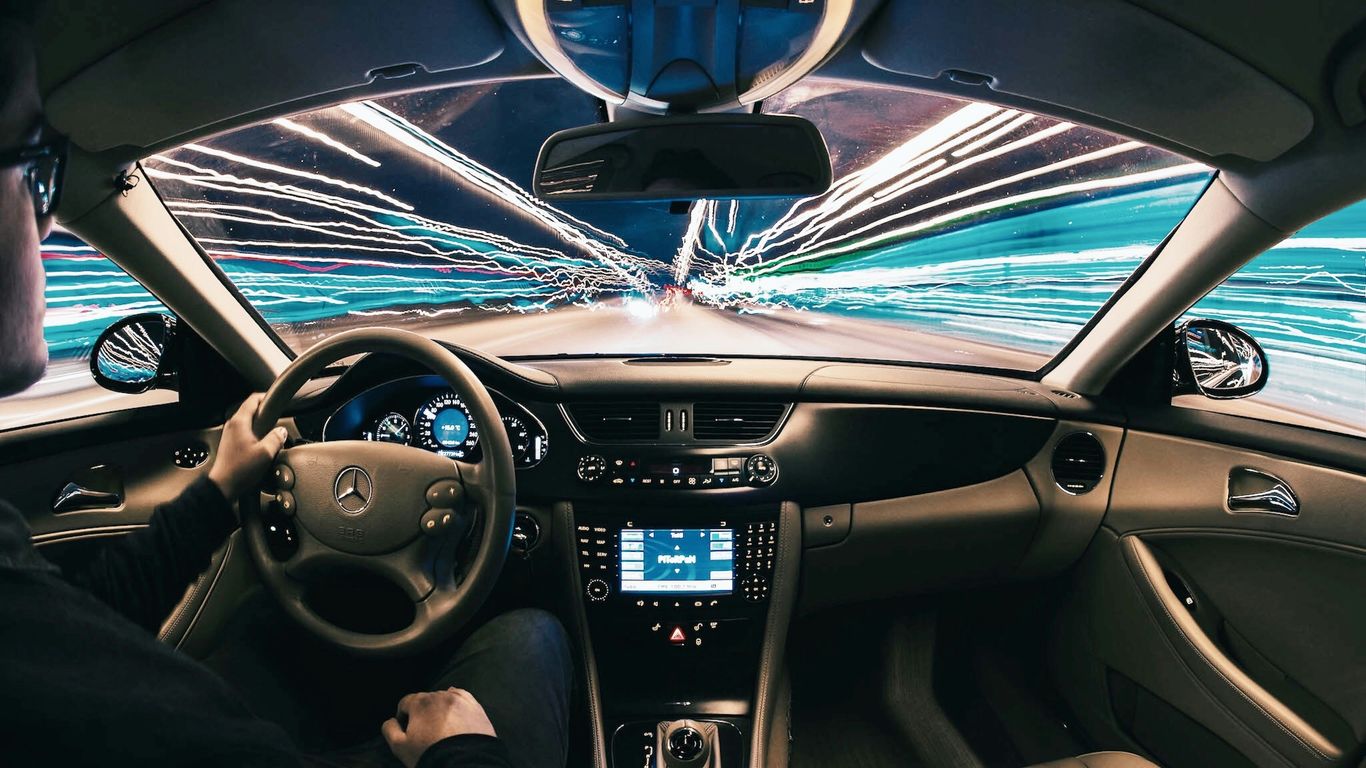
Cars are changing, and fast. They’re not just metal boxes on wheels anymore; they’re becoming sophisticated computers on four wheels. This shift means the demands on what’s inside, the "in-vehicle computing" part, are getting way higher. Think about it: all those sensors, cameras, and the AI processing they need to make driving safer and more convenient. It’s a lot to handle.
The NVIDIA DRIVE AGX platform is really at the heart of this transformation. It’s designed to be the central brain for these intelligent vehicles. We’re seeing a big push for more powerful computing right inside the car to handle everything from advanced driver-assistance systems (ADAS) to full self-driving capabilities. It’s not just about processing data; it’s about doing it in real-time, reliably, and safely. Automakers are realizing they need this kind of serious processing power to build the cars of the future, the ones that can understand their surroundings and react instantly.
The Power of DRIVE AGX Thor
Now, let’s talk about the latest and greatest: DRIVE AGX Thor. This isn’t just an upgrade; it’s a whole new level of performance. Thor is built to handle the most complex tasks, including things like generative AI, which can create new content or understand natural language. Imagine your car being able to have a more natural conversation with you or even help you plan your route in a more intuitive way. That’s the kind of stuff Thor is designed for.
It’s like having a supercomputer in your car, but it’s all integrated and optimized for automotive use. This allows for:
- Advanced AI Processing: Handling massive amounts of sensor data to enable sophisticated AI functions.
- Real-time Decision Making: Making split-second choices for safety and navigation.
- Personalized Experiences: Powering new in-cabin features and infotainment.
This kind of power is what’s needed to move beyond just driver assistance and towards truly autonomous driving. It’s a big leap forward.
Integrating Advanced Compute into Vehicle Roadmaps
So, how does this all fit into what car companies are actually building? Automakers are actively putting these advanced computing systems, like DRIVE AGX Thor, into their future vehicle plans. It’s not something they’re just thinking about; it’s becoming a core part of their design and engineering process.
- Supplier Partnerships: Companies like Magna are working with NVIDIA to build driving systems using DRIVE AGX Thor, making sure these powerful computers can be integrated into new car models.
- Software Development: This hardware needs software to make it work, and developers are creating new applications that take advantage of this computing power, from better safety features to more engaging passenger experiences.
- Vehicle Architecture: The entire way cars are designed is changing to accommodate these powerful, centralized computers, moving away from older, more distributed systems.
Basically, the car’s computer is becoming as important as its engine. It’s the brain that will drive innovation in safety, efficiency, and the overall experience of owning and using a vehicle.
Industry Implications and Future of Mobility
Platform Standardization for Autonomous Driving
So, the big picture here is that everyone’s trying to figure out how to make self-driving cars a real thing, not just a science fiction concept. A huge part of that is getting all the different companies and technologies to play nice together. Think of it like everyone agreeing on the same Wi-Fi password so your phone can connect anywhere. For autonomous driving, this means standardizing things like how cars talk to each other and to the road infrastructure. NVIDIA’s DRIVE platform is aiming to be that common ground, making it easier for automakers and developers to build and deploy these complex systems without starting from scratch every time. It’s about creating a shared language for intelligent vehicles.
The Robotaxi Revolution
This is where things get really interesting for everyday folks. Robotaxis – those cars that drive themselves and pick you up without a human driver – are starting to pop up in more places. Companies are investing a ton of money into making this happen. While it sounds cool, there are still some big hurdles. The cars themselves are expensive, and keeping them running and updated costs a lot. Plus, we need to make sure they’re super safe and reliable. It’s a massive undertaking, and we’re still figuring out the best way to make it work everywhere, not just in a few test cities. The success of these services will really show us if self-driving tech is ready for the mainstream.
Navigating Regulatory and Safety Challenges
Okay, so even with all this amazing tech, there’s still a lot of red tape and safety concerns to sort out. Governments around the world are trying to keep up with how fast this technology is moving, and they need to create rules that make sense. This means figuring out who’s responsible if something goes wrong and how to prove that these cars are actually safe to be on the road with us. It’s a slow process, and it needs to be done carefully. We’re seeing different countries have different rules, which can make it tricky for companies trying to operate globally. It’s a balancing act between pushing innovation forward and making sure everyone stays safe.
The Road Ahead
So, what does all this mean for the future of getting around? It’s pretty clear that NVIDIA’s DRIVE platform is a big deal. They’ve put together a whole system, from the computers in the cars to the tools used to train the AI, all focused on making driving safer and more automated. We’re seeing major car companies and tech players jumping on board, from building the next generation of cars to figuring out how self-driving trucks will work. It’s not just about fancy tech; it’s about making transportation more accessible and reliable for everyone. While there are still hurdles to clear, like figuring out all the rules and regulations, the direction is set. NVIDIA’s approach seems to be laying down the groundwork for a future where cars can handle more of the driving, making our journeys smoother and, hopefully, a lot safer.