
The NVIDIA DRIVE Platform: Powering Autonomous Vehicles
So, what exactly is this NVIDIA DRIVE platform everyone’s talking about? Think of it as the brain and nervous system for self-driving cars. It’s not just one piece of tech; it’s a whole setup designed to handle the immense computing needed for a car to see, think, and act on its own. NVIDIA has built an end-to-end compute stack specifically for autonomy, meaning they’ve got everything covered, from training the AI in massive data centers to the actual computers inside the car processing everything in real-time.
An End-to-End Compute Stack for Autonomy
This whole system is pretty neat because it connects different parts of the development process. You’ve got the powerful NVIDIA DGX systems for training the AI models – that’s where the car learns what a stop sign looks like or how to react to a pedestrian. Then there’s NVIDIA Omniverse and Cosmos, which are used for creating incredibly detailed simulations. Imagine building a virtual world where you can test the car in millions of different scenarios, including ones that are super rare or even dangerous to try in real life. This simulation part is really important for making sure the car is safe before it even hits the road. Finally, all of this training and simulation data gets put to use in the NVIDIA DRIVE AGX computers, which are the actual brains inside the vehicle, processing all the sensor data instantly.
Transforming Vehicles into AI-Defined Machines
Cars used to be all about mechanical parts and horsepower, right? Well, that’s changing fast. The future is about compute power and software. NVIDIA’s platform is helping turn vehicles into what they’re calling ‘AI-defined machines.’ This means the car’s capabilities are increasingly determined by the software and AI running on its computer systems, rather than just its physical hardware. It’s a big shift, and it allows for cars to get smarter and gain new features over time through software updates, much like your smartphone does.
The Cloud-to-Car Ecosystem for Innovation
What’s really cool is how this all works together in a ‘cloud-to-car’ ecosystem. The AI models are trained and tested in the cloud (or data center), and then they’re deployed to the car. But it’s not a one-way street. Data from the car can be sent back to the cloud to further improve the AI models. This creates a continuous loop of learning and improvement. This whole setup is what allows for rapid innovation, letting developers and automakers push the boundaries of what autonomous driving can do, all while keeping safety as the top priority.
Accelerating Software-Defined Vehicles With Global Partners
It’s not just car companies working with NVIDIA to make self-driving cars a reality. A bunch of tech companies from all over the world are also jumping in, using NVIDIA’s AI tech to speed things up. Think of it like a big team effort to build smarter cars, faster.
MediaTek Enhances In-Car Experiences
MediaTek is teaming up with NVIDIA to put more smarts into their car systems, called Dimensity Auto Cockpit. This means better graphics inside your car and assistants that can actually help you out. They’re making the inside of your car feel more like a high-tech command center.
ThunderSoft’s AI Box for Intelligent Cockpits
Then there’s ThunderSoft. They’ve created something called an AI Box, which is built on NVIDIA’s DRIVE AGX. This box is designed to run big AI programs right in your car. It can handle things like:
- Personalized "co-pilots" that learn your habits.
- Systems that keep an eye on you and the car for safety.
- Really immersive cabin experiences that make you feel like you’re in the future.
Cerence Ensures Safe Voice Interactions
Cerence is also on board, showing off their AI assistant. It’s built using special AI models and runs on NVIDIA DRIVE AGX. What’s cool here is how they’re using NVIDIA’s NeMo Guardrails. This helps make sure that when you talk to your car, the voice commands are safe, make sense in the moment, and stay true to the car brand’s personality. It works whether the AI is running on the car itself or in the cloud.
Advancing Safety and Intelligence on the Road

NVIDIA Halos: A Comprehensive Safety System
Safety is really the top priority when we talk about self-driving cars, right? NVIDIA has put together something called NVIDIA Halos, which is basically a full system designed to make sure autonomous vehicles are developed safely. It pulls together the vehicle’s design, the AI brains, the computer chips, all the software, and even the services needed. Think of it as a complete package from the cloud all the way to the car itself. It includes safety-approved chips, a certified operating system called NVIDIA DriveOS, and the DRIVE AGX Hyperion setup. NVIDIA even has a special program and a lab to check everything out, making sure the AI works reliably in real-time.
Simulation Tools for Rigorous Validation
Testing self-driving cars in the real world can be tricky, especially for those rare, dangerous situations. That’s where simulation comes in. NVIDIA uses tools like NVIDIA Omniverse and Cosmos to create super realistic virtual worlds. This lets automakers train and test their cars in all sorts of scenarios, even ones that are hard to recreate safely on the road, like unexpected traffic jams or tricky weather. They can even generate fake data to train the AI. Tools like the CARLA simulator are now using NVIDIA’s technology to bring these detailed virtual environments right into the testing process. Companies are already using this to push the boundaries of what’s possible with software-defined vehicles.
Ensuring End-to-End Reliability with DriveOS
To make sure everything works smoothly and safely from start to finish, NVIDIA has DriveOS. This is the operating system that runs on the car’s computer. It’s built with safety in mind and works together with the AI models and hardware. When you combine DriveOS with the NVIDIA Halos system and the simulation tools, you get a solid way to build and test autonomous driving systems. This whole setup helps make sure that the AI driving the car is dependable, no matter the situation. It’s all about creating a trustworthy system that can handle the complexities of driving.
Key NVIDIA Platforms Driving Automotive Innovation
NVIDIA has put together a suite of powerful platforms that are really changing how cars are made and how they work. It’s not just one thing; it’s a whole system designed to help cars become smarter and safer.
NVIDIA DGX for Data Center AI Training
Think of this as the brain’s gym for artificial intelligence. Before a car can drive itself or understand voice commands, the AI models behind these features need to be trained. That’s where DGX comes in. It’s a super-powerful computer system built for data centers. It crunches massive amounts of data, like sensor readings from millions of miles driven, to teach AI models how to recognize objects, predict traffic, and make driving decisions. This heavy lifting in the data center is what makes advanced AI possible in the car.
NVIDIA Omniverse for Simulation and Data Generation
Training AI is one thing, but testing it safely is another. That’s where Omniverse shines. It’s a platform that lets engineers create incredibly realistic virtual worlds. They can then simulate all sorts of driving scenarios, from everyday traffic jams to rare, dangerous situations that would be impossible or too risky to test in the real world. This helps generate vast amounts of synthetic data, which is like artificial training data, to make sure the AI is robust and reliable. It’s like having an infinite test track where you can try anything.
NVIDIA DRIVE AGX for In-Vehicle Computing
Once the AI is trained and tested, it needs to run in the car itself. That’s the job of DRIVE AGX. These are specialized computers designed to sit inside the vehicle. They take all the information coming from the car’s sensors – cameras, radar, lidar – and process it in real-time. This allows the car to understand its surroundings, make quick decisions, and control its functions, whether it’s advanced driver assistance or full autonomy. It’s the on-board brain that makes everything happen while you’re driving.
Automotive Leaders Embracing the NVIDIA DRIVE Ecosystem
It’s pretty wild how many big car companies are jumping on board with NVIDIA’s DRIVE platform. They’re not just dabbling; they’re really integrating this tech to build the cars of the future. Think about Toyota, for instance. They’re using NVIDIA’s DRIVE AGX Orin to create the core computing power for their upcoming vehicles. Plus, they’re adopting NVIDIA’s DriveOS, which is certified for safety, to get advanced driver assistance features out there.
Volvo Cars is another major player. They’re putting NVIDIA’s DRIVE AGX computers right into their new electric models. Their subsidiary, Zenseact, is also getting in on it, using NVIDIA DGX systems to crunch through all the data their cars collect from sensors. It’s a whole ecosystem approach.
Then you have the electric vehicle makers in China, who are really pushing the AI envelope. BYD, for example, started by using NVIDIA for things inside the car, but now they’re also tapping into NVIDIA’s cloud setup to train their AI applications. They’re even using NVIDIA’s platforms to plan out their factories virtually. Li Auto is another one, using NVIDIA DRIVE processors to boost their self-driving tech, and they’re planning to move up to the even more powerful DRIVE Thor system soon. XPeng has also teamed up with NVIDIA to create their XNGP advanced driving assistance system, aiming for a smarter and safer drive.
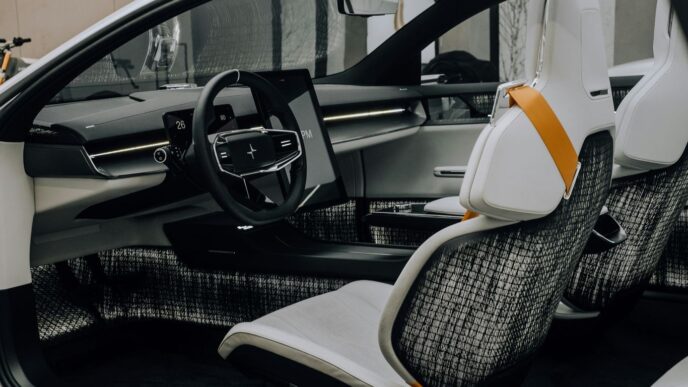
It’s not just the automakers, either. Companies like Mercedes-Benz are using NVIDIA Omniverse to build digital copies of their factories. This lets their teams work together in a virtual space to design and manage production more smoothly. Lucid Motors and Polestar are also working with NVIDIA to make their cars smarter.
Here’s a quick look at some of the key players:
- Toyota: Using DRIVE AGX Orin for vehicle brains and DriveOS for safety-certified assistance.
- Volvo Cars: Integrating DRIVE AGX into EVs and using DGX for data analysis.
- Mercedes-Benz: Employing Omniverse for factory planning and digital twins.
- BYD: Expanding from in-car solutions to cloud-based AI training and factory simulation.
- Li Auto: Boosting autonomous driving with DRIVE processors and planning for DRIVE Thor.
- XPeng: Developing advanced driving assistance with the NVIDIA DRIVE platform.
Basically, NVIDIA’s platform is becoming a go-to for automakers looking to build intelligent, software-defined vehicles.
Transforming the Driving Experience with NVIDIA DRIVE
Cars are changing, and fast. It’s not just about getting from point A to point B anymore. We’re talking about vehicles that can think, react, and even interact with you in new ways, all thanks to the computing power NVIDIA brings to the table. Think of it like upgrading your car from a basic calculator to a supercomputer on wheels.
Lotus and ZYT Showcase AI-Driven Functions
Companies like Lotus are showing off what’s possible. Their new electric models, like the Eletre SUV and the Emeya, use NVIDIA DRIVE AGX. This tech helps them pack in smart features that make driving more engaging and, importantly, safer. It’s about making the car feel more alive and responsive to what’s happening around it. ZYT is also on board, building their autonomous software on the same NVIDIA DRIVE AGX platform. They’re focused on making driving smarter and more secure, which is pretty much what everyone wants, right?
Volvo Cars Enhances Safety and Assistance
Volvo has always been big on safety, and they’re taking it up a notch with NVIDIA. Their latest electric models, like the ES90 and EX90, are running on NVIDIA DRIVE AGX and DriveOS. This setup means better AI performance, which translates directly into smarter driver assistance features. It’s like having an extra set of eyes on the road, constantly working to keep you out of trouble. They’re not just adding features; they’re rethinking how cars can actively help drivers and passengers stay safe.
XPENG Delivers Advanced Driving Assistance
XPENG is another automaker really pushing the boundaries. Their G6, G9, and X9 models are powered by NVIDIA DRIVE AGX. This allows them to offer their XPILOT smart driving assistance. It’s not just about cruise control; it’s about systems that can handle more complex driving scenarios, making long trips less tiring and commutes smoother. They’re aiming for advanced autonomy, and the tech from NVIDIA is a big part of making that happen.
The Road Ahead
So, what does all this mean for the future of getting around? Basically, NVIDIA’s DRIVE platform is becoming a really big deal. It’s not just about making cars drive themselves; it’s about making them smarter, safer, and more connected in all sorts of ways. From the fancy screens inside to how the car actually handles the road, this tech is changing things. Lots of big car companies are jumping on board, working with NVIDIA to build these next-gen vehicles. It feels like we’re really on the cusp of something new, where cars are less like machines and more like intelligent partners on our journeys. It’s going to be interesting to see how this all plays out as more of these AI-powered cars hit the streets.