So, you’ve heard about the Internet of Things, or IoT, and how it’s changing things. It’s basically about connecting everyday objects to the internet so they can talk to each other and share information. Think smart thermostats, watches, even refrigerators! This article is going to break down what makes IoT tick, looking at its main features, how it’s built, what makes it work well, and some things to watch out for.
Key Takeaways
- IoT connects physical things to the internet, letting them share data and act on their own. This is a big deal for many industries.
- The way IoT works usually involves a few main layers: sensing what’s going on, connecting devices, processing the data, and then showing it to you.
- For IoT to really work, you need things like sensors to gather info, ways to send that info (like Wi-Fi), places to store and process it (like the cloud), and tools to understand it all (analytics).
- Making sure your IoT setup can grow as you need it to, managing all those devices easily, and getting and seeing data right when you need it are super important for success.
- When setting up IoT, keep in mind that security is a big deal, getting different devices to work together can be tricky, too much data can be a problem, and it can get complicated and expensive.
Foundational Characteristics of IoT
So, what exactly makes the Internet of Things, well, the Internet of Things? It’s not just about having a bunch of gadgets connected to the internet. There are a few core ideas that really define it. Think of it as the basic building blocks that allow all these smart devices to actually do their thing.
Interconnected Devices and Data Exchange
At its heart, IoT is about connection. We’re talking about physical objects, from your smart thermostat to industrial sensors, all linked together. This network allows them to talk to each other and share information. It’s like a giant, invisible web where data travels back and forth. This constant flow of information is what makes IoT systems dynamic and responsive. Without this ability to exchange data, devices would just be isolated units, not part of a larger, intelligent system.
Physical Objects with Embedded Technology
This is where the ‘things’ in Internet of Things come into play. These aren’t just abstract digital concepts; they are real-world items. What makes them ‘smart’ is the technology embedded within them. This usually includes sensors to gather information about their surroundings or their own status, and sometimes actuators to perform actions. So, a temperature sensor in a fridge, a motion detector in a security system, or even the GPS in your car – these are all examples of embedded technology making everyday objects capable of interacting with the digital world.
Autonomous Operation and Task Performance
One of the really cool aspects of IoT is its ability to operate on its own. Once set up and connected, many IoT devices can perform tasks without constant human intervention. They can collect data, analyze it (often with the help of cloud services), and then act upon it. For example, a smart irrigation system can monitor soil moisture and water plants automatically when needed. This autonomy is what allows IoT to automate processes, improve efficiency, and even react to situations in real-time, making our lives and industries more streamlined.
Core Architectural Layers of IoT
Think of the Internet of Things like a big, complex machine. For it to actually work, all its parts need to be organized in a specific way. That’s where the architecture comes in. It’s basically the blueprint that lets all the different bits and pieces talk to each other and get things done. Without a solid structure, you’d just have a bunch of devices doing their own thing, which isn’t very useful.
There are generally four main layers that make up this structure. Each layer has its own job, and they all work together. It’s kind of like how a restaurant works: you have the kitchen staff, the servers, the managers, and the customers – all with different roles, but all necessary for the restaurant to function.
Perception and Sensing Layer
This is the very first step, the part that actually touches the real world. It’s all about gathering information. This layer uses sensors to detect things like temperature, motion, light, or even the presence of a person. Imagine a smart thermostat; its sensor detects the room temperature. Or think about a security camera; its sensor detects movement. This layer is the eyes and ears of the IoT system. It takes raw data from the physical environment and passes it along. It’s not just about sensing, though. Sometimes, this layer also includes actuators, which are devices that can do something based on the data. For example, if a sensor detects the temperature is too high, an actuator might turn on a fan.
Connectivity and Network Layer
Once the data is collected by the sensing layer, it needs to go somewhere. That’s where the connectivity layer comes in. This is the communication highway. It’s responsible for sending the data from the sensors and actuators to wherever it needs to go next, like a processing center or the cloud. This involves all sorts of technologies: Wi-Fi, Bluetooth, cellular networks, and more. It’s like the postal service or the internet itself, making sure messages (data) get from point A to point B. Without this layer, the data would be stuck at the sensor, unable to be used.
Data Processing and Analysis Layer
Now that the data has traveled through the network, it’s time to make sense of it. This layer is where the raw information gets processed and analyzed. Think of it as the brain of the operation. It takes all that data, sorts through it, looks for patterns, and turns it into something useful. This could involve simple tasks like filtering out noise or complex operations like using artificial intelligence to predict future events. For instance, data from a fleet of delivery trucks might be analyzed here to find the most efficient routes. This layer is key to getting actual insights from the collected information.
User Interface and Application Layer
Finally, we have the layer that people actually interact with. This is where the processed information is presented to users in a way they can understand and act upon. It’s the app on your phone that shows you your home’s energy usage, or the dashboard a factory manager uses to monitor production. This layer makes the IoT system accessible and useful for everyday tasks. It’s how you get alerts, control devices, or simply see what’s happening. Without this layer, all the complex processing and data collection would be hidden away, making the whole system pretty pointless for most users.
Essential Components Enabling IoT
So, what actually makes the Internet of Things tick? It’s not just magic, though sometimes it feels like it. There are a few key pieces that have to work together for all those smart devices to actually do smart things. Think of it like building a house – you need a foundation, walls, a roof, and all the plumbing and electricity inside.
Sensors and Actuators for Physical Interaction
First up, we have sensors and actuators. Sensors are like the eyes and ears of the IoT world. They’re the bits that actually detect what’s going on in the physical environment. This could be anything from a temperature sensor in your smart thermostat, a motion sensor in your security system, or even a GPS sensor in a delivery truck. They take real-world conditions and turn them into data that a computer can understand.
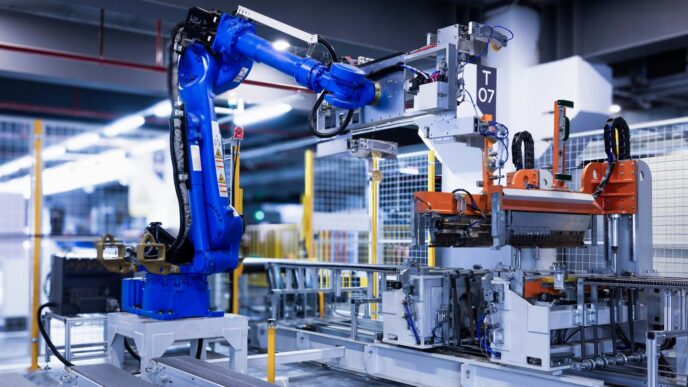
Actuators are kind of the opposite. If sensors detect, actuators do. They take the data or commands from the system and make something happen in the physical world. So, when your smart thermostat gets the signal that it’s too cold, the actuator is what turns on the furnace. Or, in a factory, an actuator might be a robotic arm that moves a part based on sensor readings. Without these two, IoT devices would just be dumb objects, unable to interact with anything.
Connectivity Technologies for Data Transmission
Okay, so you’ve got sensors detecting stuff and actuators ready to act. But how does that information get from, say, your smart fridge to your phone, or from a factory sensor to the cloud? That’s where connectivity comes in. This is the nervous system of the IoT. We’re talking about all sorts of ways devices talk to each other and to the internet.
- Wi-Fi: Pretty common for home devices, good for short to medium range.
- Bluetooth: Great for connecting devices that are really close, like your smartwatch to your phone.
- Cellular (4G/5G): Used when devices are spread out over a large area and need a robust connection, like in fleet management.
- LoRaWAN/Sigfox: These are designed for low-power, long-range communication, perfect for sensors that only send small amounts of data occasionally, like agricultural sensors.
Choosing the right connectivity is a big deal because it affects how fast data moves, how much power the device uses, and how far it can reach.
Cloud Computing for Storage and Processing
Now, imagine all the data coming from millions, even billions, of sensors. Where does it all go? And who’s going to make sense of it? That’s where cloud computing steps in. The cloud acts as a massive, centralized hub for storing all this information. But it’s not just about storage; it’s also about processing power.
Think about it: your little smart speaker doesn’t have the computing muscle to understand your voice commands on its own. It sends the audio to the cloud, where powerful servers analyze it and send a response back. For businesses, the cloud is where they can run complex analytics, manage device fleets, and develop applications that use all the collected IoT data. It’s the backbone that allows IoT systems to scale up without needing a supercomputer in every home or factory.
Big Data Analytics for Insight Extraction
Finally, we have big data analytics. All the data collected by sensors and sent to the cloud is pretty much useless if you can’t do anything with it. Big data analytics is the process of sifting through that massive amount of information to find patterns, trends, and useful insights. It’s like finding a needle in a haystack, but the haystack is made of petabytes of data.
For example, a retail company might use data from smart shelves and customer traffic sensors to figure out the best product placement. A city could analyze traffic sensor data to optimize traffic light timings and reduce congestion. This layer is what turns raw data into actionable intelligence, helping businesses and individuals make smarter decisions and improve efficiency. Without analytics, IoT is just a bunch of connected gadgets collecting dust.
Key Attributes for IoT Success
So, you’ve got your IoT devices humming along, collecting all sorts of data. That’s great, but what actually makes an IoT setup successful? It’s not just about having the tech; it’s about how it’s built and managed. Think of it like building a house – you need a solid foundation and a plan that lets you add rooms later without the whole thing collapsing.
Scalable Architecture for Growth
First off, your IoT system needs to be able to grow with you. You might start with a few sensors in one building, but what happens when you want to expand to another site, or add a hundred more devices? A system that can’t handle more devices or more data without slowing down to a crawl is a problem waiting to happen. A good platform uses a modular, cloud-based design. This means you can start small and then scale up to manage thousands of devices and high volumes of data without a hitch. It’s all about making sure your system can keep up as your needs change. This is a big deal for long-term IoT deployments.
Simplified Device Management at Scale
Imagine trying to keep track of hundreds or even thousands of individual devices. It sounds like a nightmare, right? That’s where simplified device management comes in. You need a way to easily add new devices, update their software remotely, and check their status all from one place. Automated setup, or ‘plug-and-play’ onboarding, is a lifesaver. Being able to push out firmware updates over the air, without having to physically touch each device, saves a ton of time and hassle. Without this, you end up with inconsistent setups and security holes, which really hurts your return on investment.
Real-Time Data Collection and Visualization
What’s the point of collecting all this data if you can’t actually use it? The real magic of IoT happens when you can see your data as it comes in and make quick decisions. This means collecting data from all your different sensors smoothly, putting it into easy-to-understand dashboards, and setting up alerts for when something important happens. You want to see trends, spot problems early, and have the right information in front of the right people, right when they need it. This could be anything from tracking temperature in a warehouse to monitoring vibrations on a machine.
Here’s a quick look at what makes data visualization effective:
- Dynamic Dashboards: Visuals that update automatically.
- Threshold Alerts: Notifications when data goes outside normal ranges.
- Custom KPIs: Charts that match your specific business goals.
- Historical Trends: Ability to look back at past performance.
Critical Considerations for IoT Deployments
So, you’re thinking about jumping into the Internet of Things? That’s exciting! But before you get too carried away with all the cool possibilities, let’s talk about some of the bumps you might hit along the way. It’s not all sunshine and data streams, you know.
Security and Privacy Risks
This is a big one. Think about all the devices you’re connecting – they’re basically little windows into your operations, or even your home. If they aren’t locked down tight, hackers could get in. We’re talking about sensitive data being exposed, or worse, devices being controlled remotely in ways you definitely don’t want. It’s like leaving your front door wide open. Protecting your data from the device all the way to the cloud is non-negotiable. You need to look into things like encryption and making sure only authorized people can access your devices. For enterprise IoT, securing device data with edge computing is a smart move.
Interoperability Challenges
Ever tried to get two gadgets from different brands to talk to each other? It can be a real headache. The same thing happens with IoT. Devices use different languages, or protocols, and they don’t always play nice. This means you can end up with separate little islands of data that are hard to connect. Imagine trying to build a puzzle where half the pieces are from different boxes – it just doesn’t fit together easily. Getting everything to communicate smoothly is key.
Data Overload Management
These devices churn out data, and I mean a lot of data. It’s like trying to drink from a fire hose. If you’re not ready for it, all that information can just sit there, unused and overwhelming. You need a plan for how you’re going to store it, process it, and actually make sense of it. Otherwise, you’re just collecting digital dust. Having good analytics tools is pretty important here.
Cost and Complexity of Implementation
Let’s be real, setting up an IoT system isn’t usually a cheap weekend project. There’s the hardware, the software, the network setup – it all adds up. And then there’s the ongoing management. Keeping everything running smoothly, updating software, and fixing issues requires time and often specialized skills. It’s not a ‘set it and forget it’ kind of deal. You’ve got to weigh the potential benefits against the investment and the ongoing effort required.
Wrapping It Up
So, we’ve talked about what makes the Internet of Things tick. It’s really about devices talking to each other, collecting information, and then doing something smart with it. Think about how your smart thermostat learns your schedule or how a factory can spot a problem before it gets bad. It’s not just fancy gadgets; it’s about making things work better, safer, and maybe even a little easier. As more things get connected, this whole IoT thing is only going to get bigger and more involved in our daily lives, changing how we live and work in ways we’re only just starting to see.
Frequently Asked Questions
What exactly is the Internet of Things (IoT)?
Think of IoT as a giant network where everyday objects, like your fridge, car, or even a factory machine, are connected to the internet. These ‘smart’ objects have tiny computers and sensors inside them, allowing them to collect information about their surroundings and share it with other devices or with you. It’s like giving a voice to physical things so they can talk to each other and to us.
How do these smart devices talk to each other?
These devices use different ways to communicate, much like how we use phones or computers. They connect through technologies like Wi-Fi, Bluetooth, or cellular networks. This connection allows them to send and receive data, so a smart thermostat can tell your air conditioner to turn on, or a sensor in a field can alert a farmer about the soil’s moisture level.
What are the main parts that make up an IoT system?
An IoT system usually has a few key parts. First, there are the ‘brains’ and ‘senses’ – these are the sensors that gather information (like temperature) and actuators that can do something (like turn on a light). Then, there’s the ‘nervous system’ – the network that sends the data. Next, there’s the ‘thinking’ part – where the data is processed and understood, often in the cloud. Finally, there’s the ‘display’ – the app or screen you use to see the information or control the devices.
Why is it important for IoT systems to be able to grow?
Imagine starting with just a few smart devices and then adding hundreds or even thousands more. A good IoT system needs to be ‘scalable,’ meaning it can handle this growth without slowing down or breaking. This allows businesses to start small and expand their IoT use as needed, without having to rebuild everything from scratch.
What are some of the biggest challenges with IoT?
While IoT is super useful, there are a few tricky parts. One big worry is ‘security’ – making sure hackers can’t get into these connected devices and steal information or control them. Another challenge is ‘interoperability,’ which means getting devices from different companies to work together smoothly. Also, these devices create tons of data, and figuring out what to do with it all can be tough.
Can you give an example of how IoT is used in a business?
Absolutely! Think about a factory. Sensors can monitor the temperature of machines to prevent overheating, or track how many products are being made. This information can be sent to managers in real-time, helping them fix problems quickly, make sure machines are running efficiently, and even predict when a machine might need maintenance, saving the company time and money.