Right, so AI art. It’s everywhere now, isn’t it? You see it popping up in ads, on social media, even in galleries. It’s pretty amazing what these machines can churn out, and it’s certainly fast. But as with anything new and flashy, there’s a whole lot going on under the surface. We’re talking about some pretty big problems with AI art, and it’s not just about whether it’s ‘real’ art or not. It’s about what it means for actual human artists, for our culture, and even for the planet.
Key Takeaways
- AI art often struggles with genuine creativity, lacking the subjective experience and emotional depth that human artists bring, which risks making art feel less meaningful.
- Questions about who actually owns AI-generated art and how copyright laws apply are still really messy, especially since the AI learns from existing artists’ work.
- The data used to train AI models can carry biases, meaning AI art might unintentionally spread harmful stereotypes about different groups of people.
- There’s a real worry that AI could take jobs away from human artists and designers, making it harder for them to earn a living in creative fields.
- Creating AI art uses a lot of energy, contributing to environmental concerns, and the ease of making it might make us value human craftsmanship less.
The Erosion Of Human Creativity And Artistic Value
It feels like we’re seeing a bit of a shift, doesn’t it? With all this AI art popping up, you have to wonder what it means for us humans who actually, you know, make things. It’s not just about whether a computer can paint a pretty picture; it’s about what happens to the whole idea of creativity itself.
Redefining The Nature Of Creativity
So, what even is creativity anymore? For ages, we’ve thought of it as something deeply human – tied to our experiences, our feelings, our messy lives. AI, though, it just crunches data. It looks at millions of images and figures out patterns. Is that creativity, or is it just really clever mimicry? Some reckon AI is just a new tool, like a fancy paintbrush. Others think it’s fundamentally different, a sort of computational exercise rather than a genuine act of creation. The real question is whether we’re okay with blurring that line.
The Absence Of Subjectivity And Emotional Depth
Think about your favourite piece of art. Chances are, it made you feel something. It connected with you on a personal level, maybe because you’ve been through something similar, or it just hit you in a way you can’t quite explain. AI doesn’t have feelings. It hasn’t lived through heartbreak, or the joy of a perfect cup of tea, or the sheer frustration of a wobbly bike chain. It can’t inject that raw, subjective experience into its work. What we get is technically impressive, sure, but often it feels a bit hollow, lacking that spark of genuine human emotion.
The Risk Of Cultural Homogenisation
Imagine a world where all the art starts to look the same. AI learns from the data we feed it, and if that data is already skewed towards certain styles or cultures, the AI will just churn out more of the same. It’s like a giant echo chamber. We risk losing the rich tapestry of diverse artistic expressions that make our world interesting. Instead of celebrating unique perspectives, we might end up with a flood of generic, albeit technically proficient, imagery that doesn’t really say anything new or challenging.
The speed at which AI can generate images is staggering. While this offers convenience, it also risks devaluing the time, thought, and sheer effort that human artists pour into their work. When art becomes a disposable commodity, we lose something important about its connection to human endeavour.
Here’s a quick look at how AI art generation differs from human creation:
- Human Art: Driven by lived experience, emotion, intent, and personal interpretation. Often involves a lengthy, iterative process of ideation, sketching, and refinement.
- AI Art: Based on pattern recognition from vast datasets. Can produce outputs rapidly based on prompts, but lacks genuine subjective experience or emotional understanding.
- Collaboration: A growing area where humans guide AI tools, blending human vision with machine capabilities. This is distinct from purely AI-generated work.
Intellectual Property And Ownership Quandaries
Right then, let’s talk about the sticky stuff: who actually owns AI-generated art? It’s a bit of a legal minefield, honestly. We’re used to thinking about artists owning their creations, but when a machine is doing the heavy lifting, things get complicated. The core issue is that current copyright law wasn’t built with non-human creators in mind.
Who Owns The Rights To AI Art?
This is the million-dollar question, isn’t it? Is it the person who typed in the prompt? The company that built the AI model? Or maybe the AI itself, if we’re being really futuristic? The problem is, most legal systems, including the one in the US, say that only humans or legal entities can hold copyright. AI systems just don’t fit into that box yet. It’s a bit like trying to fit a square peg into a round hole, and the courts are still figuring out how to handle it. Some suggest new legal categories might be needed, like an ‘electronic personality’, but that’s a whole other can of worms.
The Murky Waters Of Copyright Law
Copyright law is already a tangled web, and AI art just throws more knots into it. The AI learns by looking at vast amounts of existing art, and that’s where things get really interesting. Did it just get inspired, or did it copy? When an AI is trained on millions of images, often scraped from the internet without explicit permission from the original artists, it raises serious questions about infringement. The lack of clear guidelines means we’re in a bit of a legal grey area, and it’s not exactly helping anyone feel secure. It’s a bit like trying to find your way through a fog without a compass.
Plagiarism And The Mimicry Of Styles
Beyond outright copying, there’s the whole issue of style. AI can mimic the distinctive style of a famous artist with uncanny accuracy. Is that homage, or is it a form of digital plagiarism? When someone can generate a piece that looks exactly like a Van Gogh, but with a cat in it, just by typing a few words, it feels like it devalues the years of practice and unique vision that went into developing that original style. It’s a tricky line to walk, and frankly, it’s making a lot of artists quite uneasy about their work being used to train these systems without their say-so. The debate around AI training data is central to this.
Bias And Ethical Concerns In AI Datasets
AI art generators learn by looking at absolutely loads of existing images, text, and cultural information. The problem is, this information isn’t always neutral. It often contains biases that have been around for ages, relating to things like race, gender, or even how people are portrayed in different jobs. When an AI learns from this, it can end up reproducing those same stereotypes without even realising it. It’s not like the AI is being deliberately malicious; it’s just reflecting the data it was fed.
Perpetuating Cultural And Societal Biases
Think about it: if an AI is trained mostly on art from one part of the world, say, Western Europe, it’s going to naturally favour those styles and perspectives. This can mean that art from other cultures gets pushed to the side, making the AI’s output feel a bit samey and less diverse. It’s a bit like only ever listening to one type of music – you miss out on so much else.
The Ethics Of Data Scraping And Consent
Where does all this training data actually come from? A lot of it is scraped from the internet. This raises some big questions. Was the original creator of that image or artwork asked if they were okay with their work being used to train an AI? Often, the answer is no. This feels a bit unfair, doesn’t it? Artists spend years honing their skills, and then their work can be used without their permission or any sort of compensation.
Harmful Stereotypes In AI Outputs
When these biased datasets are used, the AI can churn out images that reinforce negative stereotypes. For example, it might consistently show women in certain roles or portray certain ethnic groups in a limited way. This is particularly worrying when AI art is used in things like advertising or news, as it can spread these harmful ideas to a wider audience without people even noticing.
The sheer volume of data used to train these AI models means that even subtle biases present in the source material can become amplified in the final outputs. It’s a digital echo chamber, reflecting and magnifying existing societal prejudices.
Here’s a quick look at how biases can show up:
- Gender Representation: AI might associate certain professions more strongly with one gender than another, based on historical data.
- Racial Portrayals: Outputs could default to specific racial appearances or perpetuate stereotypes about certain groups.
- Cultural Norms: AI might favour dominant cultural aesthetics, marginalising less represented traditions.
- Body Image: Training data can influence the AI’s perception of ‘ideal’ body types, leading to skewed representations.
The Economic Impact On Creative Professionals
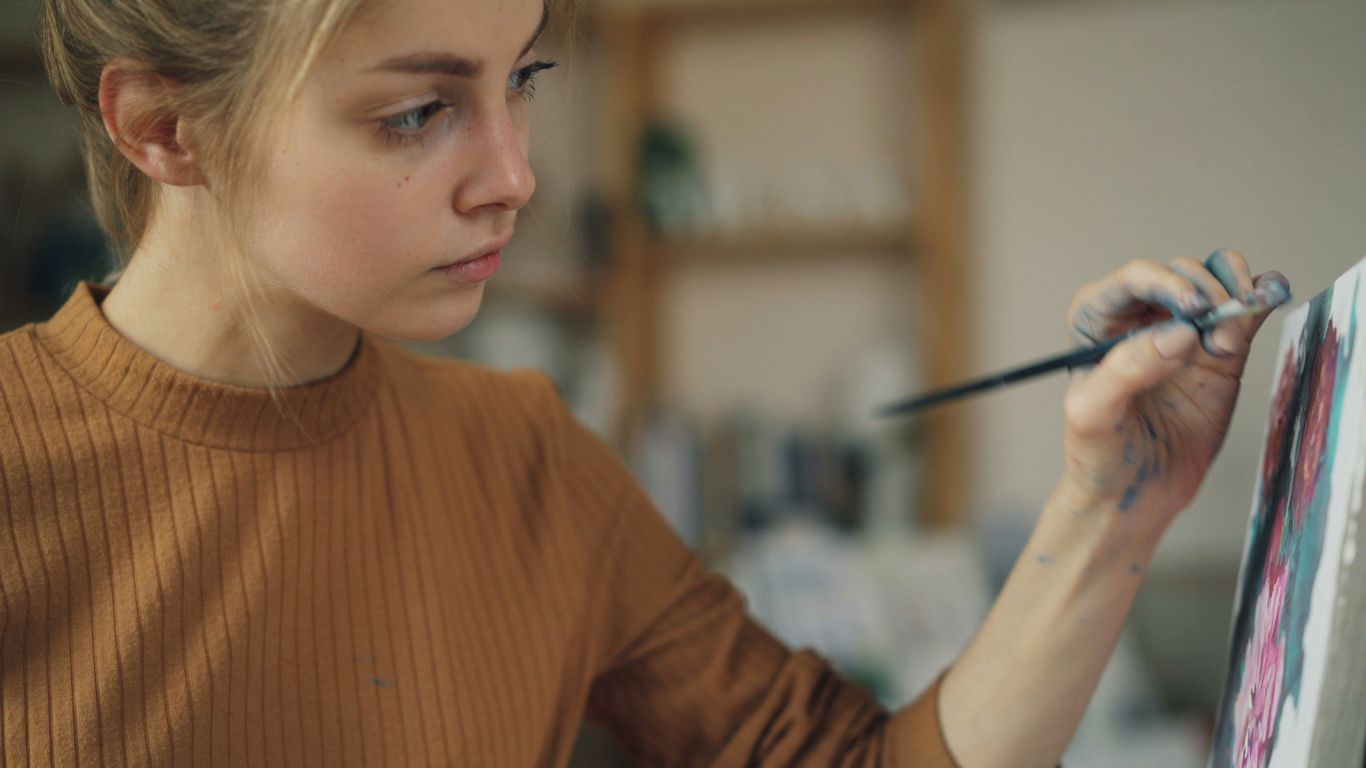
It’s hard to ignore the rumblings about how AI art is shaking things up for people who make a living from their creativity. We’re seeing a real shift, and for many artists, it feels less like a helpful new tool and more like a direct competitor. The speed at which AI can churn out images is frankly astonishing, and clients are starting to expect that same pace and lower cost, even when they still want that human touch and genuine emotion in the work. It’s a tough spot to be in.
Job Displacement And Livelihoods At Risk
One of the biggest worries is that AI could take over jobs that used to be entry-level or crucial for building a career. Think concept art, initial sketches, or even basic graphic design tasks. When AI systems can do these things faster and cheaper, it means fewer opportunities for new artists to get their foot in the door and learn the ropes. This could really narrow the pipeline for new talent and make the creative industry less diverse. When many artists are pushed out, everyone loses out on the unique perspectives they bring. It’s a bit like how some people worry about automation in manufacturing, but applied to the world of art and design. It’s not just about losing jobs; it’s about potentially losing the next generation of creative voices.
The Democratisation Of Art Creation
On the flip side, there’s an argument that AI tools are making art creation more accessible to everyone. People who don’t have formal art training – like small business owners or educators – can now create visuals to go along with their ideas. This is sometimes called the ‘democratisation’ of art. It means more people can express themselves visually without needing years of practice or expensive software. AI can be a great brainstorming partner, helping to spark ideas you might not have considered otherwise. You can generate loads of visuals around a theme and then pick and choose what works best.
Centralisation Of Power In Tech Giants
However, this ‘democratisation’ comes with its own set of problems. The powerful AI models and the platforms that host them are mostly controlled by a few big tech companies. This means that while more people can create art, the tools and the underlying technology are concentrated in fewer hands. It risks creating a situation where a small number of wealthy companies dominate the creative landscape, potentially leaving independent artists and smaller studios struggling to compete. It’s a bit of a double-edged sword: more people can create, but the power to shape what gets created might become even more centralised. It’s a complex situation, and how it all plays out is still very much up in the air.
The speed and scale of AI image generation are changing expectations around project timelines and budgets. While this opens up new possibilities, it also brings significant disruption, particularly for individual creators trying to make a living. The core challenge isn’t whether AI will be part of the creative process, but how it will be integrated without diminishing the value of human artistry and skill.
Environmental Costs Of AI Art Generation
The Significant Energy Consumption
It’s easy to get caught up in the magic of AI art, typing in a prompt and seeing a stunning image appear in seconds. But behind that instant gratification is a hefty energy bill. Training these complex AI models, the ones that learn to generate images, requires enormous amounts of computing power. Think massive data centres filled with specialised hardware running for extended periods. This isn’t like flicking a light switch; it’s more like powering a small city for a while. The sheer scale of computation needed means a significant draw on electricity, and that electricity often comes from sources that aren’t exactly green.
Computational Resources And Carbon Footprint
Every time you generate an image, or when a model is being trained or refined, powerful processors (like GPUs) are working overtime. These aren’t just consuming electricity; they’re generating heat, which then requires more energy for cooling systems in those data centres. It all adds up. While companies are looking into more efficient ways to run these models, the current reality is that AI art generation contributes to a noticeable carbon footprint. It’s a hidden cost that doesn’t appear on the screen but has real-world environmental consequences.
The environmental impact of AI art is a growing concern. The energy required to train and run the sophisticated algorithms behind these tools contributes to carbon emissions, raising questions about the sustainability of this rapidly expanding technology. As we become more reliant on AI for creative tasks, understanding and mitigating these ecological costs becomes increasingly important.
Here’s a rough idea of the energy involved:
| Task | Estimated Energy Use (kWh) | Equivalent To (Approx.) |
|---|---|---|
| Training a large AI model | 1,287,000 | 13 homes for a year |
| Generating a single image | 0.001 – 0.1 | A few hours of TV |
Note: These figures are estimates and can vary wildly depending on the model, hardware, and efficiency of the data centre.
Societal Implications And Art Appreciation
It’s easy to get caught up in the technical wizardry of AI art, but we really need to think about what it means for us, as a society, and how we actually look at art. When you can generate an image with a few typed words, it changes things, doesn’t it? It feels like art is becoming a bit like fast fashion – churned out quickly, maybe enjoyed for a moment, and then forgotten. This ease of creation risks making art feel disposable, diminishing the perceived value of human effort and skill.
The Disposable Nature Of AI Art
Think about it. We’re already drowning in content online. Now, add to that an endless stream of AI-generated images. It’s becoming harder to tell what’s made with genuine human passion and what’s just a digital echo. This constant flood can make individual pieces feel less special. It’s like having a million identical souvenirs – none of them feel particularly unique anymore.
Impact On How We Value Human Craftsmanship
When AI can mimic styles and produce technically proficient images in seconds, what does that do to our appreciation for the years of practice, the sweat, and the sheer dedication that human artists pour into their work? It’s a bit like comparing a mass-produced piece of furniture to a hand-carved heirloom. Both might look good, but the story, the effort, and the soul behind the heirloom are what give it a deeper meaning. We might start to see AI art as a quick fix, while reserving our true admiration for the painstaking process of human creation.
Audiences Evolving Into Curators
Interestingly, AI art might also change our role as viewers. Instead of just passively looking at art, we might become more involved in shaping it. Imagine AI systems that adapt based on audience feedback, or platforms where users actively guide the AI’s creative direction. This could turn us all into little curators, influencing the art we see. It’s a bit like a collaborative playlist, but for visual art. This shift could lead to:
- More interactive and personalised art experiences.
- A blurring of lines between creator and consumer.
- New forms of community-driven artistic expression.
The sheer volume of AI-generated content could lead to a cultural landscape where novelty is prized over depth, and the unique perspective of individual human artists gets lost in the noise. We need to be mindful of what we’re celebrating and why.
| Aspect of Appreciation | Traditional Art | AI Art |
|---|---|---|
| Effort & Skill | High | Low |
| Originality | High | Variable |
| Emotional Depth | High | Low |
| Speed of Creation | Slow | Fast |
| Cost of Production | High | Low |
So, Where Do We Go From Here?
Ultimately, AI art is a tool, and like any tool, its impact really depends on how we choose to use it. It’s opened up some fascinating new avenues for creativity and made art-making more accessible for many. But we can’t just ignore the tricky bits, can we? Questions about where the original ideas come from, who really owns what, and what this all means for human artists are still very much up in the air. As we move forward, it’s up to all of us – creators, consumers, and developers – to think carefully about how we integrate these technologies. The goal should be to use AI to help human creativity flourish, not to let it overshadow the unique spark that comes from people. It’s about finding that balance, ensuring that as technology advances, the heart of art remains firmly human.
Frequently Asked Questions
What’s the big deal with AI art and human creativity?
AI art can sometimes feel like it’s just copying or mixing existing art. This makes people wonder if it’s truly creative or just a clever imitation. It also raises concerns that we might start valuing machine-made images more than the unique ideas and feelings that human artists put into their work, potentially making art feel less special.
Who actually owns AI-generated art?
This is a tricky one! Is it the person who wrote the instructions for the AI, the company that made the AI tool, or maybe even the AI itself? Copyright laws weren’t really made for this, so it’s a bit of a legal puzzle right now. Plus, since AI learns from lots of existing art, it can sometimes copy styles too closely, leading to arguments about plagiarism.
Can AI art be biased or unfair?
Yes, it absolutely can. AI learns from huge amounts of data, and if that data contains unfair ideas about certain groups of people (like based on race or gender), the AI might accidentally create images that show those same unfair ideas. It’s like the AI is repeating biases it learned from the internet without realising it.
Will AI take away jobs from artists?
It’s a real worry. AI can create images very quickly and cheaply, which might mean fewer jobs for human illustrators, designers, and other artists. While some artists might use AI as a tool to help them, others could find their work less in demand, impacting their ability to make a living.
Does making AI art harm the environment?
Making AI art uses a lot of computer power, which means it uses a lot of electricity. Running these powerful computers and training the AI models creates a significant carbon footprint, similar to other energy-hungry technologies. So, while it’s a new way to create, it does have an environmental cost.
How does AI art change how we look at art?
When you can get lots of AI art instantly, it might make us see art as something more ‘throwaway’. We might start to value the effort, skill, and personal story behind human-made art less. It could also mean that instead of just looking at art, people might become more involved in choosing or guiding what art gets made, like being a curator.