Understanding Mercedes Self-Driving Car Price
So, you’re curious about what it costs to get a Mercedes with some serious self-driving chops, right? It’s not just a simple sticker price anymore. Mercedes is doing things a bit differently, and it’s worth breaking down.
The Cost of Advanced Driver Assistance
When we talk about advanced driver assistance systems (ADAS), think of things like adaptive cruise control that keeps a set distance from the car in front, or lane-keeping assist that gently nudges you back into your lane. These systems have been around for a while, getting better with each new model. They’re often bundled into packages, and while they make driving easier and safer, they add to the overall cost of the car. It’s like buying a phone – the base model is one price, but add the premium camera or storage, and the cost goes up.
Subscription Models for Driving Features
This is where things get interesting, and maybe a little confusing. Mercedes is starting to offer some of its more advanced driving features, like what they call "MB.Drive Assist Pro," as a subscription. This means the hardware might be in the car from the factory, but you pay a recurring fee – monthly, yearly, or for a set period – to actually use the feature. It’s a bit like subscribing to a streaming service for your car’s brain. You can opt in and out, which gives you flexibility, but it also means the price isn’t a one-time thing for these specific capabilities.
Optional Packages and Their Impact on Price
Beyond the subscription model, Mercedes still offers various optional packages. These can bundle together comfort features, performance upgrades, and, of course, more advanced driver assistance tech. Want the fancy massaging seats and the upgraded sound system and the more sophisticated driving aids? You’ll likely find them in a package deal. Each package adds a significant chunk to the final price, so it’s important to look at what’s included and decide if you really need all those bells and whistles. It’s easy to get carried away, but knowing what you’re paying for is key.
Key Features Influencing Mercedes Self-Driving Car Price
So, what actually makes the price tag on a Mercedes with advanced driving tech go up? It’s not just one thing, but a mix of some pretty sophisticated components and smart software.
Nvidia AI Integration and Its Value
Mercedes is teaming up with Nvidia, and that’s a big deal. Nvidia’s "AI" brainpower comes from looking at and simulating billions of miles driven by Mercedes cars over the years. Think of it like a super-smart student who’s studied every driving test ever taken. This AI helps the car understand complex situations, like changing lanes proactively or figuring out how to turn safely. The more data and processing power that goes into training this AI, the more it contributes to the car’s price. It’s the intelligence behind the wheel, making decisions that used to be solely human.
Sensor Suite and Hardware Costs
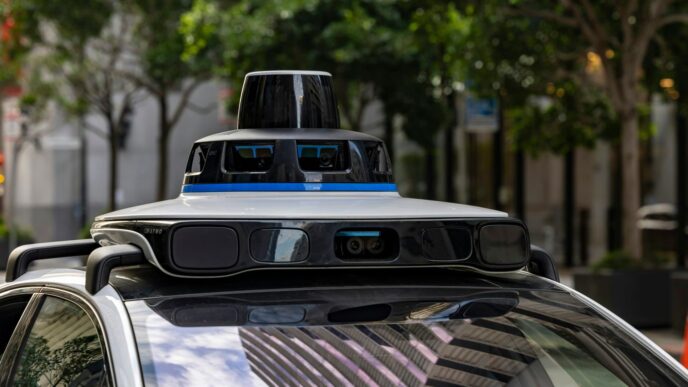
To "see" the world, these cars need a whole bunch of sensors. We’re talking cameras, radar, and maybe even lidar, all working together. These aren’t cheap bits of kit. The more advanced and numerous the sensors, the better the car can detect its surroundings, even in bad weather or at night. This hardware is the foundation for any advanced driver assistance system. Without top-notch sensors, the AI wouldn’t have reliable information to work with.
Software Capabilities: Point-to-Point Navigation
Beyond just staying in its lane, the "Pro" version of Mercedes’ driving assist system aims for "point-to-point assisted driving." This means the car can handle more complex journeys, including navigating intersections and making turns. It’s about taking the driver from one destination to another with less input. This level of software sophistication, which goes beyond simple cruise control, requires significant development and testing. It’s the difference between a car that helps you on the highway and one that can manage a whole trip.
Here’s a quick look at what the "Pro" upgrade might add:
- Proactive Lane Changes: The car can initiate lane changes when it deems it safe.
- Intersection Analysis: It can better understand and navigate complex intersections.
- Pedestrian Yielding: Improved ability to detect and react to pedestrians.
- "Nudging" Capability: Minor adjustments to stay centered or avoid obstacles.
These features, while impressive, are a direct result of the advanced software and AI working together, and that complexity is reflected in the final price.
Mercedes CLA: A Benchmark for Self-Driving Car Price
The Mercedes CLA is shaping up to be a really interesting case study when we talk about the price of advanced driving tech. It’s not quite a full self-driving car yet, but it’s getting pretty close, and that puts it in a unique spot price-wise. Mercedes is calling it "Point-to-point assisted driving with cooperative steering," which sounds fancy, but basically means it can handle a lot of the driving for you on certain roads.
Base Model Pricing and Included Technology
When you look at the CLA, the starting price gets you a solid car with some good driver aids already built-in. Think of things like adaptive cruise control and lane keeping assist – those are pretty standard now. The car rides on Mercedes’ new MMA platform, which is designed to handle both electric and eventually gas engines. The electric versions, like the CLA 250+ with EQ Technology, offer a decent amount of power and range, with some models hitting over 370 miles on a charge according to EPA estimates, and even more in real-world tests. This baseline technology is what sets the stage before you even consider the more advanced features.
The MB.Drive Assist Pro Upgrade Cost
Now, if you want to step up to that "Level 2++" semi-autonomous driving, that’s where the MB.Drive Assist Pro comes in. This is an optional upgrade, and it adds a significant chunk to the price tag. For about $3,950, you get features like proactive lane changes, better navigation that handles intersections, and the ability to yield to pedestrians. It’s a big jump in capability, and you can feel it when you’re in the car. It uses a lot of smart tech, including AI from Nvidia that’s been trained on billions of miles of driving data. It’s a lot of computing power and software development packed into that price.
EV Powertrain and Charging Technology Value
Beyond the driving tech, the CLA’s electric powertrain also adds to its overall value and, consequently, its price. The impressive range figures, like the 434 miles seen in real-world testing, are a big selling point. This means you’re not just paying for the assisted driving; you’re also investing in advanced battery technology and efficient electric motors. While the hybrid version is still a bit further out, the current EV focus means Mercedes is putting a lot of its cutting-edge powertrain tech into the CLA. This includes the hardware that supports fast charging, which is another aspect of the EV experience that contributes to the car’s premium positioning and price.
The Evolution of Mercedes’ Self-Driving Technology
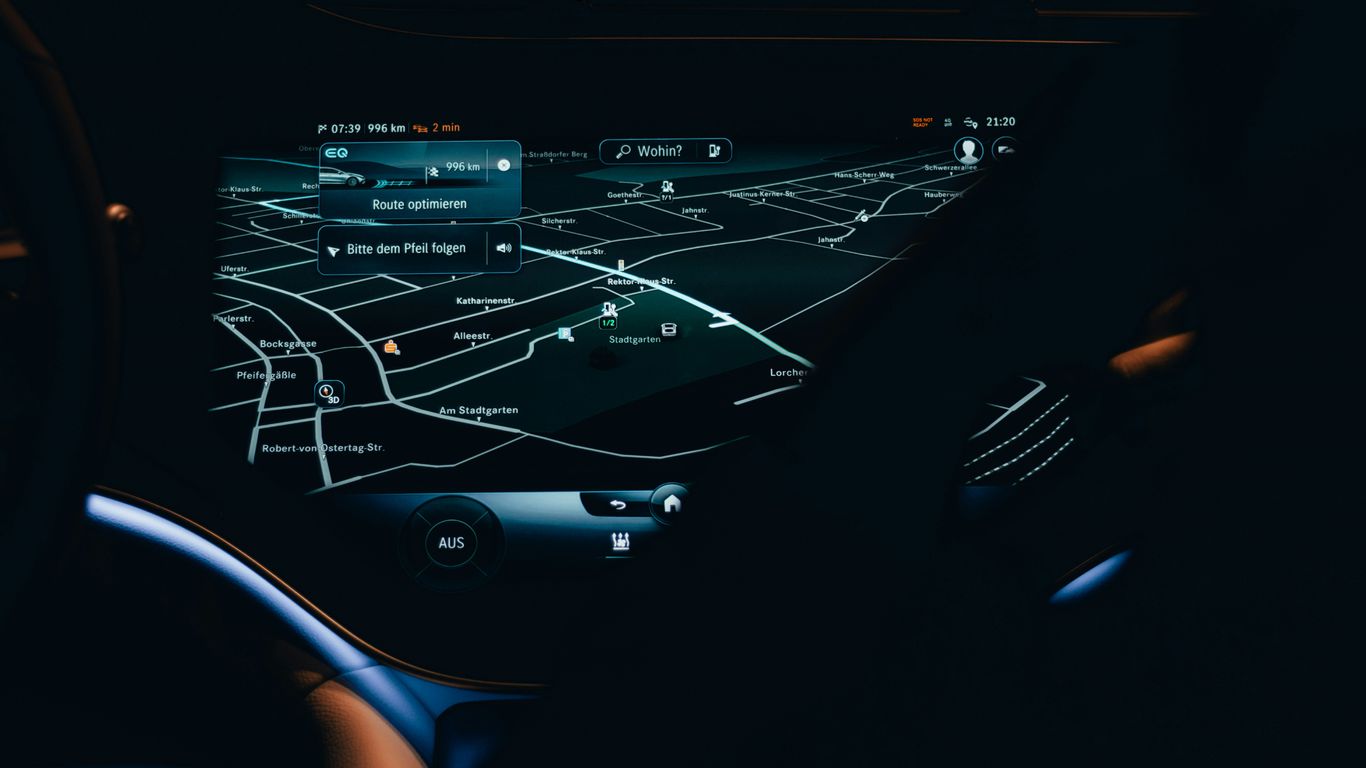
Mercedes has been working on making cars drive themselves for a long time. It started way back in 1998 with something called Distronic, which was basically an early version of adaptive cruise control. Think of it as the great-grandparent of today’s advanced systems. Over the years, they’ve slowly added more features, moving from basic driver assistance to what they now call Level 2+ and even Level 2++.
From Distronic to Level 2+
Distronic was a big step, letting the car keep a set distance from the car in front. Fast forward to today, and you have systems like MB.Drive Assist Pro. This isn’t quite full self-driving, but it’s a lot more capable. It can help with things like changing lanes, making turns, and even navigating through intersections. The jump from simple cruise control to these more complex systems represents years of development and learning from real-world driving data.
The Role of Google Gemini in the System
Mercedes is also teaming up with Google for some of the tech inside the car. You’ll see Google’s Gemini AI powering parts of the infotainment system, like the "Hey Mercedes" voice assistant. While Mercedes still handles the main operating system, Gemini helps make the voice commands smarter. It’s interesting because Google’s AI is known for searching and processing information, and now it’s being used to help a car understand and react to its surroundings. It’s a partnership that brings together car smarts and AI smarts.
Future Potential and Price Adjustments
What does this all mean for the future? Well, Mercedes is aiming for higher levels of autonomy, like Level 3, where the car company takes over liability. But right now, even with these advanced systems, the driver is still responsible. The technology is getting better, but it’s not perfect. As these systems become more advanced and reliable, we can expect the price to change. More sophisticated hardware and software will likely cost more, but maybe as the technology becomes more common, prices could eventually come down. It’s a balancing act between innovation and affordability.
Navigating the Price of Autonomy in Mercedes Vehicles
So, you’re looking at a fancy new Mercedes and wondering about the self-driving stuff, right? It’s not quite as simple as just ticking a box. Mercedes is playing a bit of a game with how they label and price these features, and it’s good to know what you’re actually getting.
Understanding SAE Levels and Liability
First off, let’s talk about those SAE levels. You’ve probably heard of them, but they’re important because they define who’s responsible when something goes wrong. Right now, most advanced systems, including Mercedes’ own MB.Drive Assist Pro, fall under Level 2 or Level 2+. This means the driver is still ultimately in charge, even when the car is doing a lot of the work. It’s like having a really good co-pilot, but you’re still the captain.
- Level 2: The car can control steering and acceleration/braking under certain conditions, but the driver must constantly supervise.
- Level 2+: Mercedes’ term for systems that offer more advanced features like proactive lane changes and point-to-point navigation, but still require driver oversight.
- Level 3 (and above): This is where the car takes full responsibility for driving in specific situations. Mercedes has this with systems like Drive Pilot, but it’s not standard on most models.
The Driver’s Responsibility and Cost Implications
Because most Mercedes systems are Level 2+, you, the driver, are still on the hook legally. This is a big deal. Even if the car can handle a tricky intersection or a complex lane change, if something happens, the blame often falls back on you. This is why Mercedes is careful with its wording, often calling it "assisted driving" rather than fully autonomous. The price you pay for the MB.Drive Assist Pro upgrade, which is around $3,950, gets you these advanced capabilities, but it doesn’t absolve you of responsibility. Think of it as paying for a very sophisticated cruise control that can also steer and navigate, but you still need to keep your eyes open.
Comparing Mercedes’ Approach to Competitors
Other car companies are also navigating this space. Tesla has its Full Self-Driving (FSD) beta, and others offer systems like GM’s Super Cruise or Ford’s BlueCruise. What’s different with Mercedes is their emphasis on the hardware being present from the start, with features like MB.Drive Assist Pro being a software subscription. You can buy it for a month, a year, or three years. This means the car is equipped for these advanced features, but you choose when to activate and pay for them. It’s a flexible approach, allowing drivers to try out the tech without a massive upfront commitment, but it also means the cost can add up over time if you decide to keep the subscription active long-term.
Factors Affecting the Mercedes Self-Driving Car Price
So, what really makes the price tag on these advanced Mercedes vehicles tick up? It’s not just one thing, but a mix of fancy tech and how it all comes together. Think of it like building a really complex Lego set – the more specialized pieces you add, the more it costs.
Hardware Costs for Advanced Sensors
These cars are packed with sensors. We’re talking cameras, radar, and sometimes even lidar, all working together to see the world. The more sophisticated these sensors are, the better they can detect things like lane lines, other cars, and even pedestrians, especially in tricky weather. More advanced sensor suites mean a higher upfront cost for the vehicle. It’s like buying a high-end camera versus a basic one; the better optics and features come with a bigger price.
Software Development and AI Training
Beyond the physical parts, there’s a ton of work that goes into the software. Mercedes partners with companies like Nvidia, using their AI power. This AI is trained on billions of miles of driving data – real-world stuff collected over years. Developing and constantly updating this complex software, making sure it can handle everything from simple lane keeping to more complex maneuvers like proactive lane changes, takes a lot of brainpower and resources. This ongoing development is a big part of the price.
The Value of Real-World Driving Data
Remember all those miles of data? That’s gold. Mercedes-Benz has been collecting data since 1998 with systems like Distronic. This massive dataset is what allows their AI to learn and improve. The more data they have, the better the system can predict and react. This accumulated knowledge, refined over decades, adds a significant layer of value to the technology, and naturally, that value is reflected in the final price you pay for the car.
So, What’s the Bottom Line?
Alright, so we’ve talked a lot about the fancy tech packed into these new Mercedes models, like the MB.Drive Assist Pro. It’s pretty wild how much the car can do on its own now, handling turns, lane changes, and even tricky intersections. But here’s the thing: it’s not quite ‘set it and forget it’ yet. You still need to pay attention, and the whole question of who’s responsible if something goes wrong is still a bit fuzzy until we get to higher levels of self-driving. For now, it’s a really advanced helper, but you’re still the driver. It’s a big step, for sure, but maybe not the giant leap into full autonomy we’ve all been imagining just yet. It’s definitely something to keep an eye on as the technology keeps changing.