The Most Advanced Humanoid Robot 2025: A New Era Dawns
Wow, 2025 is shaping up to be a big year for robots that look and act like us. It feels like just yesterday we were seeing clunky machines in factories, but now? We’re talking about humanoids that can actually interact with the world in pretty amazing ways. Consumer tech shows have been buzzing with these new bots, and it’s clear companies are serious about making them a part of our lives.
Old World Labs’ AI-Integrated Humanoids
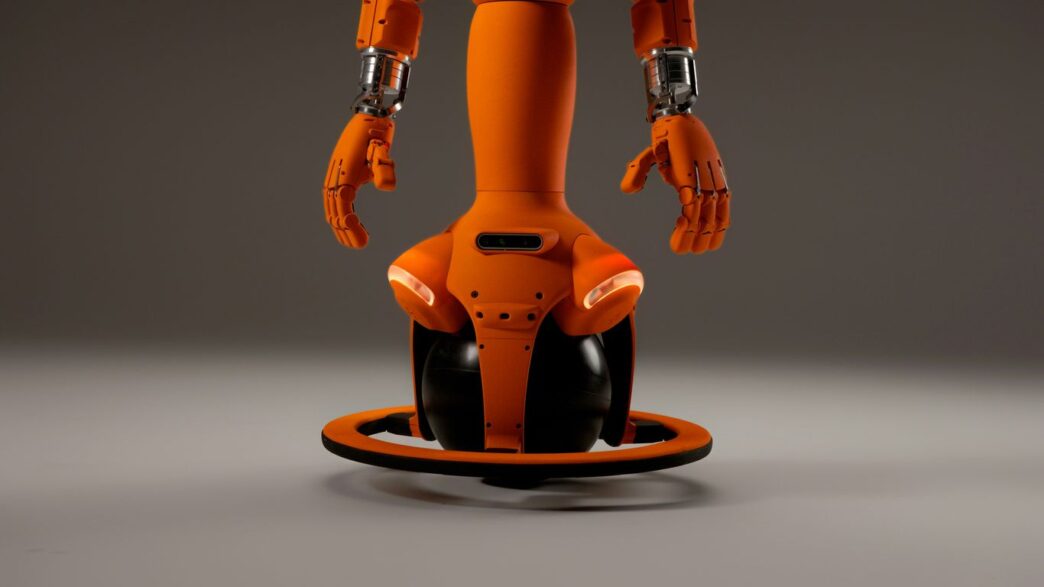
Old World Labs (OWL) really caught my eye with their compact, 4-foot-tall humanoid. It’s not just about looking human; this bot moves with a smoothness that’s pretty impressive. The real magic seems to be their new ‘Replicants’ system. This platform lets their AI agents actually live inside the robots, letting them figure things out and do complex jobs all on their own. They can look at a 3D space, decide what needs doing, and then do it. This ability to learn and adapt on the fly is what sets these robots apart. It’s like they’re not just programmed, but actually thinking.
IntBot’s Interactive Nylo Bot
IntBot is also making waves with their ‘Nylo’ bot. While details are still a bit scarce, the buzz is around its advanced AI designed for really natural conversations and interactions with people. Think less ‘robot voice’ and more actual back-and-forth. It’s powered by NVIDIA’s Cosmos platform, which suggests some serious processing power behind those friendly-looking interfaces. It’s clear the goal here is to make robots that people feel comfortable around, not just tools for tasks.
Pioneering Dexterity and Autonomy in Humanoid Design
When we talk about the most advanced humanoid robots of 2025, it’s not just about looking human. It’s about what they can actually do. The real magic happens in how these machines move and think for themselves. Companies are pushing the boundaries to make robots that can handle complex tasks with precision and adapt to new situations on the fly.
Old World Labs’ Replicants System
Old World Labs (OWL) is making waves with its Replicants system. This isn’t just about one robot; it’s a platform for creating self-replicating humanoids powered by sophisticated AI. Imagine robots that can not only perform intricate jobs but also learn and adapt as they go. The Replicants system allows AI agents to seamlessly operate these robots, enabling them to reason, interact, and adjust to their surroundings in real-time. This means they can tackle tasks that were previously too difficult or unpredictable for robots, from helping in hospitals to assisting in disaster zones.
Intelligent Reasoning and Real-Time Adaptation
What sets the top-tier humanoids apart is their ability to process information and make decisions instantly. This is where intelligent reasoning and real-time adaptation come into play. Robots like the NEURA Robotics 4NE-1, for example, are equipped with advanced vision and tactile feedback systems. They can sense their environment and react accordingly, whether it’s carefully handling a delicate object or navigating a busy factory floor. This capability is key for robots to work safely and effectively alongside people.
Here’s a look at how some robots stack up in terms of their physical capabilities:
| Robot Model | Height (m) | Weight (kg) | Max Payload (kg) | Primary Use |
|---|---|---|---|---|
| NEURA Robotics 4NE-1 | 1.8 | 80 | 100 | Domestic, service, and industrial tasks |
| DEEP Robotics Dr02 | 1.75 | 65 | 20 | Manufacturing, quality control, automation |
| Robot Era L7 | 1.71 | ~60 | 20 (dual arm) | Logistics, manufacturing, research |
| Sanctuary AI Phoenix | ~1.65 | ~55 | N/A | Service, collaborative work |
| Agility Robotics Digit | ~1.2 | ~30 | 15 | Urban navigation, logistics, package delivery |
These robots are moving beyond simple programmed movements. They are learning, adapting, and performing with a level of dexterity that brings us closer to truly capable robotic partners.
Industrial Powerhouses: Durability Meets Advanced Functionality
When we talk about robots getting tough, we’re looking at machines built for the real grind. Forget the clean rooms and controlled labs for a second. These are the robots heading out into factories, warehouses, and even outdoor sites where things aren’t always so tidy. They need to handle tough conditions and keep working.
DEEP Robotics Dr02: All-Weather Deployment
DEEP Robotics’ Dr02 is a prime example of a robot designed for the rough and tumble. It’s not just about lifting heavy things; it’s about doing it when the weather isn’t cooperating. Think rain, dust, and a wide range of temperatures. This robot is built to keep going, no matter what the environment throws at it. Its IP66 rating means it’s protected against dust and strong water jets, which is pretty important if you’re working in a place that gets washed down or is just plain dusty.
Here’s a quick look at what makes the Dr02 stand out:
- All-Weather Capability: Designed for outdoor and harsh industrial settings.
- Robust Construction: Built to withstand challenging conditions.
- Precision Tasks: Equipped with sensors for accurate monitoring and operation.
- Speed: Can move at up to 4 m/s, making it efficient for moving around.
Robot Era L7: Versatile and Modular
The Robot Era L7 takes a different approach, focusing on flexibility. It’s not necessarily about surviving the harshest elements like the Dr02, but about being able to change and adapt to different jobs. Its modular design means you can swap out parts or reconfigure it for various tasks. This makes it a good fit for places that need robots for different things, maybe moving goods one day and helping with assembly the next.
Key features of the L7 include:
- Modularity: Easily reconfigured for different applications.
- Versatility: Suitable for logistics, manufacturing, and research.
- Payload: Can carry up to 20 kg with its dual arms.
- Speed: Also capable of reaching a top speed of 4 m/s.
These industrial robots show that the future isn’t just about smarts; it’s also about being tough and adaptable enough to actually get the work done where it’s needed most.
Redefining Human-Robot Interaction
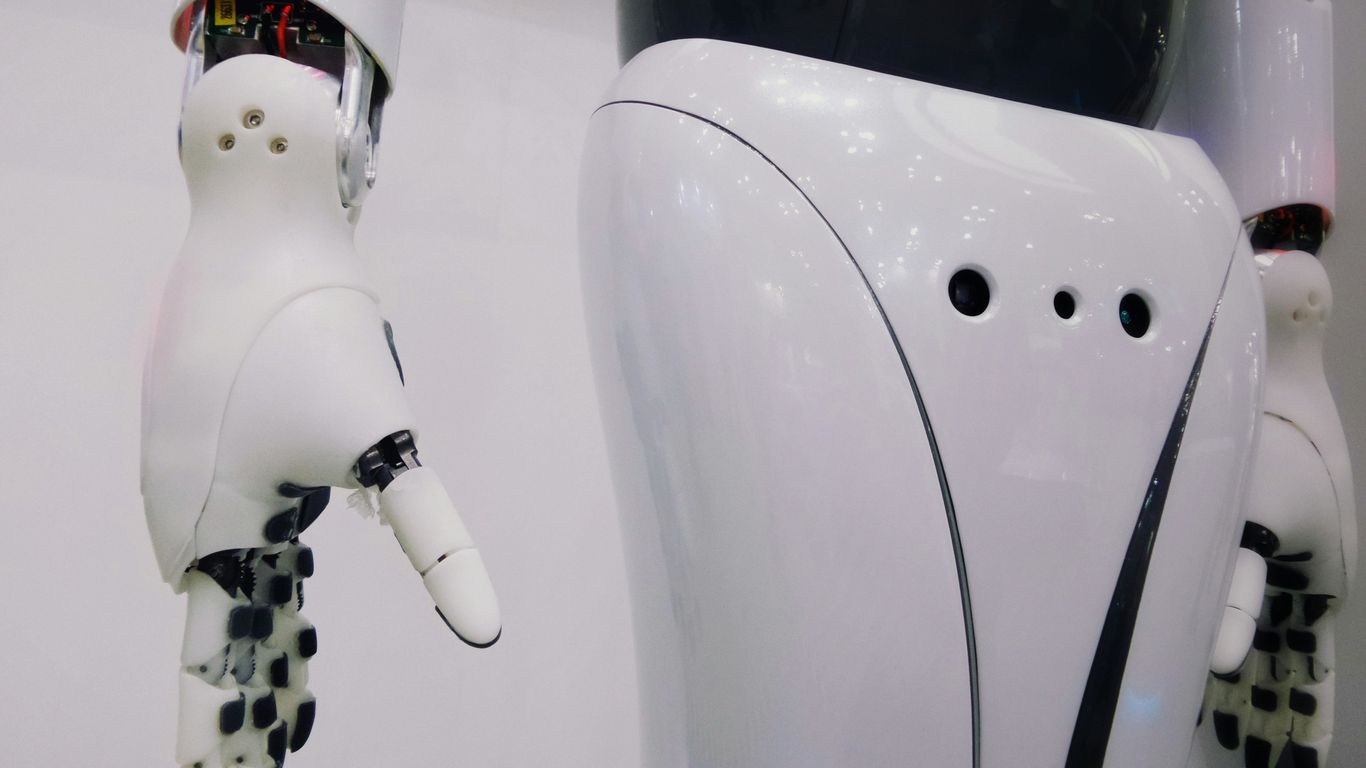
It’s pretty wild how much robots are starting to feel like they’re part of the conversation, isn’t it? We’re moving past just clunky machines that do one thing. Now, companies are really focusing on making these robots interact with us in ways that feel, well, more human.
Engineered Arts Ameca: Lifelike Expressions
Engineered Arts has really made a name for itself with the Ameca robot. You’ve probably seen videos of it online – it’s got this incredibly expressive face. They say it can do over 50 different facial expressions, which sounds like a lot, but when you see it, it really does look natural. It’s not just about smiling or frowning; it’s the subtle shifts that make it seem more alive. This focus on expression is a big deal for how we’ll connect with robots in places like customer service or even just as companions.
| Feature | Detail |
|---|---|
| Height | Approx. 1.7 meters |
| Facial Expressions | Over 50 lifelike expressions |
| Primary Use | Social interaction, customer service |
Sanctuary AI Phoenix: Cognitive Robotics
Sanctuary AI is taking a different, but equally interesting, approach with their Phoenix robot. Instead of just focusing on looks, they’re building robots with what they call "cognitive architecture." Think of it like giving the robot a brain that can learn and reason more like ours. It uses a system with different parts, kind of like our own brains, to process information and decide what to do. One part handles quick reactions, another handles logical thinking, and a third manages basic reflexes like staying balanced. This ability to learn and adapt in real-time is what sets these advanced robots apart. It means they can handle unexpected situations much better than older models. It’s a big step towards robots that can truly understand and work with us in complex environments, not just in controlled settings.
The Race for General Robotics: Domestic and Industrial Applications
It feels like just yesterday we were talking about robots doing simple, repetitive tasks in factories. Now, we’re on the cusp of something much bigger: general robotics. This is about building humanoid robots that can handle the messy, unpredictable real world, not just a perfectly controlled assembly line. Companies are pouring money and brainpower into this, seeing a massive opportunity to change everything from how we work to how we live at home.
Figure AI’s Figure 03: A Leap Forward
Figure AI is making some serious waves. They’re aiming to create humanoid robots that can do pretty much anything a human can, from folding laundry to working in dangerous environments. Their goal is to fill the gap left by a shrinking global workforce and potentially lower the cost of goods and services for everyone. It’s a bold vision, and they’ve got some big names backing them, like Nvidia and OpenAI. They’re talking about robots being in every home, helping out with chores, and even working in fields like healthcare. It sounds like science fiction, but the progress they’re showing is pretty impressive.
Tesla Optimus Gen 2: Evolving Capabilities
Tesla’s Optimus project is another major player in this race. While early versions might have looked a bit clunky, the Gen 2 is showing off some serious improvements. They’re focusing on making Optimus capable of real-world tasks, moving beyond just demonstrations. Think material handling and order fulfillment in warehouses. It’s clear Tesla sees a future where these robots are integrated into various industries, and eventually, our homes too. The competition is fierce, with companies like Boston Dynamics and Unitree also pushing the boundaries.
Here’s a quick look at how some of these robots stack up:
| Robot Name | Manufacturer | Approx. Height | Approx. Weight | Primary Use Cases |
|---|---|---|---|---|
| Figure 03 | Figure AI | N/A | N/A | General purpose, domestic, industrial |
| Optimus Gen 2 | Tesla | N/A | N/A | Industrial tasks, material handling, order fulfillment |
| Electric Atlas | Boston Dynamics | 1.9 m | 90 kg | Industrial inspection, search & rescue, research |
| G1 | Unitree Robotics | 1.4 m | 40-50 kg | Service industries, research |
| Apollo | Apptronik | 1.7 m | 60 kg | Industrial automation, manufacturing support |
It’s not just about building the robots; it’s about making them smart enough to learn and adapt. Companies are working on AI that allows these machines to understand instructions, learn from experience, and operate safely around people. The idea is that these robots won’t just be tools; they’ll be partners, capable of handling tasks that are currently too dangerous, too dull, or too difficult for humans. The implications for society, both in industry and our daily lives, are pretty huge.
Innovations in AI and Customization
This section really gets into the nitty-gritty of what makes these new robots so special: the brains behind the brawn. It’s not just about building a metal body anymore; it’s about giving it the smarts to actually do useful things, and to do them in a way that can be changed and improved over time.
Jizai Mi-Mo: Generative AI and Customization
Jizai, a company from Japan, has been doing some really interesting work with their Mi-Mo robot. They’re using something called generative AI, which is a big deal in the AI world right now. Basically, it means the robot can create new things, not just follow pre-programmed instructions. Mi-Mo combines seeing, hearing, and moving, all powered by different AI models working together. This lets it figure things out and react to its surroundings on its own. What’s really cool is how much you can change Mi-Mo. Users can tweak and add to its AI models. Think of it like teaching the robot new skills, and it gets smarter the more you work with it. Jizai is hoping this community approach will lead to all sorts of different uses for the robot.
OpenDroids R2D3: Personal Assistant Robot
Over in California, OpenDroids has come up with the R2D3. This robot is designed to help out with tasks around the house or in places like restaurants. It’s got two arms and is built to learn and get better at whatever job it’s given. The R2D3 is also modular, meaning you can swap out parts and add different sensors. This makes it adaptable for a bunch of different jobs. It’s pretty good at avoiding obstacles, so it can move around complex spaces without bumping into things. Plus, OpenDroids is making the R2D3 open-source. That means people can mess with the code and customize it, which should help build a community of users who share ideas and improvements. It’s like a robot that grows with its users.
The Future of Humanoid Robots in Society
So, where are all these fancy new robots heading? It’s a big question, right? We’re talking about machines that can do more than just assemble cars or sort packages in a warehouse. These are humanoid robots, designed to walk, talk, and maybe even think a bit like us. It feels like we’re on the edge of something huge, a real shift in how we live and work.
Navigating Unpredictability with General Robotics
For a long time, robots were pretty much stuck in their lanes. They needed super controlled environments to do their jobs. But the new wave of general robotics is different. These bots are being built to handle the messy, unpredictable real world. Think about it: a robot that can help out in a disaster zone, or even just navigate a busy home without bumping into everything. It’s about making robots more adaptable, more like us in their ability to figure things out on the fly. This means they could eventually do all sorts of jobs that are too dangerous, too repetitive, or just too difficult for people.
The Societal Impact of Ubiquitous Humanoids
If these robots become as common as, well, smartphones, the impact is going to be massive. On one hand, imagine the possibilities: robots helping the elderly live independently, taking over dangerous jobs, or even just freeing up our time from chores. It could mean a world where goods and services are cheaper because robots can do the work for less. But then there’s the other side of the coin. What happens to jobs when robots can do them? We’re already seeing discussions about things like universal basic income because so many jobs might change or disappear. It’s not just about the tech; it’s about how we, as a society, adapt to having these capable machines all around us. We’ll need to figure out new rules, new ways of living, and maybe even a new social contract to make sure this future works for everyone, not just a select few.
The Road Ahead
So, what does all this mean for us? Seeing these robots up close, it’s clear we’re not just talking about science fiction anymore. The leaps made in just the last year are pretty wild. While some of these machines are still a bit clunky, and the idea of them doing chores around the house might be a few years off, the progress is undeniable. Companies are pouring serious money into this, and it feels like we’re on the edge of something big. Whether it’s helping out in factories, assisting in homes, or even going to space, these humanoids are set to change how we live and work. It’s going to be a fascinating journey to watch it all unfold.