We hear a lot about artificial intelligence these days, and honestly, it can sound pretty complicated. But at its heart, AI is really about making things work better, both for us as individuals and for the world around us. It’s not just about fancy robots or super-smart computers; it’s about practical improvements that are already starting to show up in our daily lives and across different industries. This article looks at the good stuff, the positive impacts of AI, and how it’s helping to build a brighter future for everyone. It’s kind of amazing when you stop and think about it.
Key Takeaways
- AI is making everyday life easier by personalizing services and handling routine tasks, freeing up our time.
- Across industries like healthcare and science, AI is driving new discoveries and improving how things are done.
- AI tools are helping to create new forms of art and content, changing how we express ourselves and share information.
- Businesses are using AI to become more productive and safer, and transportation systems are becoming more efficient.
- AI offers solutions to big global issues, like climate change and disease, helping us work towards a more sustainable future.
Enhancing Daily Life Through AI Integration
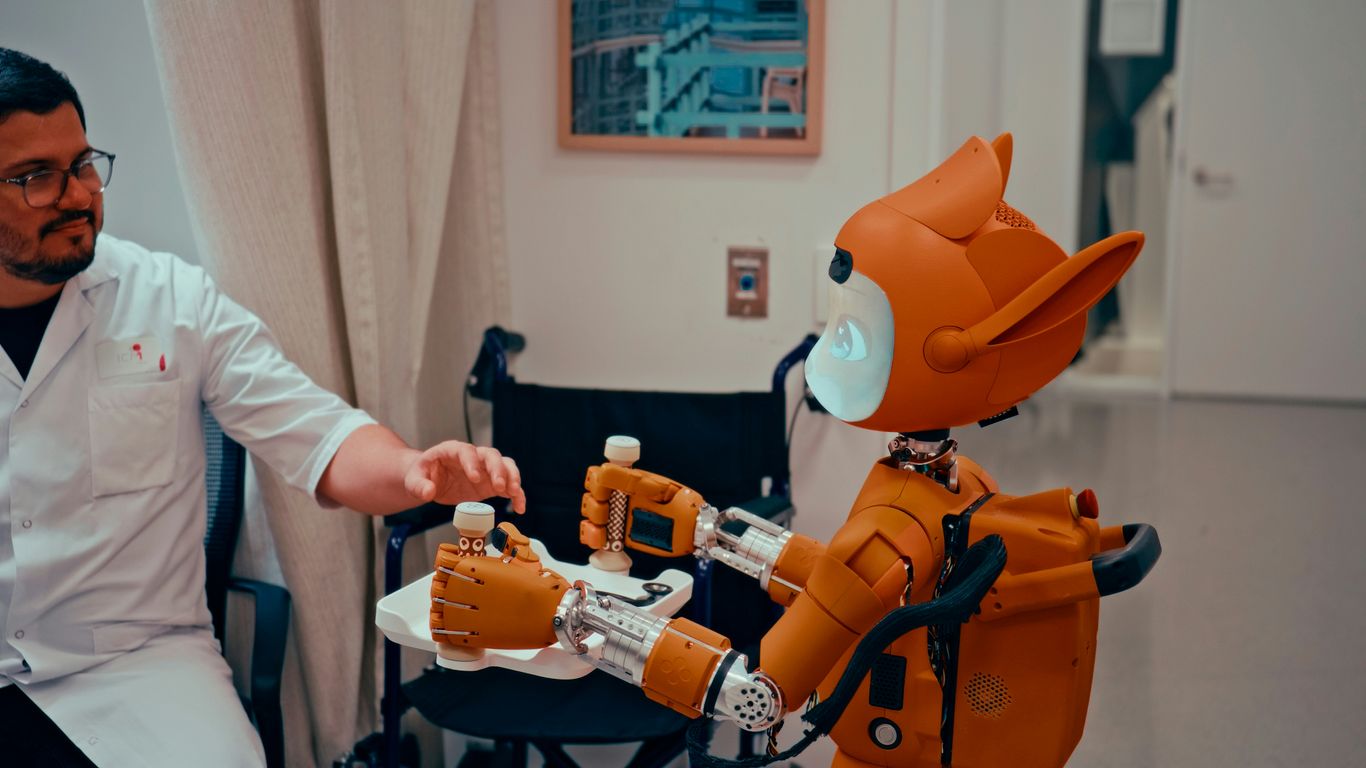
It’s pretty wild how much artificial intelligence is already woven into our daily routines, even if we don’t always notice it. Think about it: from the moment you wake up, AI is likely playing a role. It’s not just about futuristic robots; it’s about making everyday tasks smoother and more personal.
Personalized Services and Predictive Accuracy
Ever feel like your phone or streaming service just knows what you want? That’s AI at work. It learns your habits and preferences to suggest things you might like, whether it’s a song, a movie, or even a news article. This predictive power extends beyond entertainment. In healthcare, AI can help doctors anticipate potential health issues based on your medical history and lifestyle, leading to earlier interventions. For instance, systems are being developed to analyze patient data and flag individuals who might be at higher risk for certain conditions, allowing for proactive care.
- Recommendation Engines: Tailoring content and product suggestions based on past behavior.
- Predictive Maintenance: Alerting you before a device or appliance is likely to fail.
- Personalized Learning: Adapting educational content to a student’s pace and style.
Automating Mundane Tasks for Efficiency
Let’s be honest, nobody enjoys repetitive, boring tasks. AI is stepping in to take over many of these. Think about scheduling appointments, sorting emails, or even managing your home’s energy usage. These automated processes free up our time and mental energy for more important things. For businesses, this means streamlining operations, reducing errors, and allowing employees to focus on more complex, creative work. It’s about making our lives and workplaces run a bit more smoothly.
AI-Powered Household and Personal Assistance
Smart speakers and virtual assistants are becoming common fixtures in many homes. These AI-powered tools can control lights, play music, answer questions, and even help manage your shopping lists, all through voice commands. They act like a helpful assistant, ready to lend a hand (or a voice) whenever you need it. This technology is also finding its way into personal care, with AI helping to monitor health metrics or provide reminders for medication, contributing to a greater sense of well-being and independence for many individuals.
Revolutionizing Industries with AI Innovations
It’s pretty wild how much AI is shaking things up across so many different fields. We’re not just talking about futuristic concepts anymore; AI is actively changing how businesses work and how we get things done, right now. Think about it – companies are pouring more money into AI, with a huge chunk planning to spend even more in the next few years. This isn’t just a trend; it’s a fundamental shift.
Transforming Healthcare Delivery and Patient Care
Healthcare is seeing some really significant changes thanks to AI. It’s not just about fancy new machines; AI is helping doctors spot diseases earlier and more accurately than before. Plus, it’s speeding up the whole process of finding new medicines. We’re also seeing virtual assistants that can keep an eye on patients, which is a big deal for people who need constant monitoring but don’t necessarily need to be in a hospital bed.
- Early Disease Detection: AI algorithms can analyze medical images and patient data to identify potential health issues at their earliest stages.
- Drug Discovery Acceleration: Machine learning models can sift through vast amounts of biological data to identify promising drug candidates much faster than traditional methods.
- Personalized Treatment Plans: AI can help tailor medical treatments to individual patients based on their genetic makeup, lifestyle, and medical history.
Advancing Scientific Research and Discovery
Scientists are using AI to crunch massive datasets that would be impossible for humans to go through. This is helping them form new ideas and test them out way faster. Some folks think this could really cut down the time it takes to go from a scientific discovery to actually using it, like what happened with CRISPR technology. It’s like giving researchers a super-powered assistant for their most complex problems.
Streamlining Business Operations and Decision-Making
Businesses are really leaning into AI to automate tasks that used to take up a lot of time. Chatbots and digital assistants are handling customer questions and employee queries, freeing up people for more complex work. AI can also look at huge amounts of data and present the findings in easy-to-understand ways. This means leaders can make smarter choices quicker, without getting bogged down in spreadsheets. It’s about making businesses run smoother and making better decisions, faster.
Here’s a quick look at how AI is impacting business operations:
| Area of Operation | AI Application | Benefit |
|---|---|---|
| Customer Service | Chatbots, Virtual Assistants | Faster response times, 24/7 availability |
| Data Analysis | Predictive Analytics, Machine Learning | Improved forecasting, risk assessment |
| Supply Chain | Route Optimization, Demand Forecasting | Reduced waste, lower costs |
| Human Resources | Resume Screening, Candidate Matching | More efficient hiring process |
AI’s Role in Societal Progress and Governance
Artificial intelligence is starting to play a bigger part in how our communities and governments work. It’s not just about making things faster; it’s about making them fairer and more connected. AI can help us understand what people really need and want from their leaders.
Improving Democratic Processes and Public Discourse
Think about how we talk about important issues. Social media algorithms, for example, can sometimes push us into little groups where we only hear opinions we already agree with. This can make people more divided. But AI can be designed differently. Instead of just showing us more of the same, AI could help connect us with different viewpoints, making public conversations more balanced and informed. It could also help sort through the huge amount of feedback citizens give to local governments, making it easier for officials to see what people are saying.
- Summarizing Citizen Feedback: Generative AI can take thousands of comments from residents and boil them down into key themes, helping officials grasp public opinion without getting lost in the details.
- Facilitating Informed Debate: AI tools can help identify misinformation and provide context, allowing for more productive discussions on complex topics.
- Making Voting Easier: AI can streamline voter registration and provide clear, accessible information about elections, potentially increasing participation.
Facilitating Urban Planning and Community Engagement
Cities are getting smarter, and AI is a big part of that. Imagine AI helping city planners figure out the best places for new parks or public transport routes by looking at lots of data about how people move around and where they live. It can also help communities have a real say in decisions. For instance, a city might use AI to gather feedback from residents about choosing a new city manager, making the process more open.
Enhancing Transparency and Responsiveness in Government
Governments often have a lot of information, but it’s not always easy for people to find or understand. AI can help make government operations clearer. It can process large amounts of data to spot patterns or potential problems, and it can also help answer citizen questions more quickly. This means governments could become more open about what they’re doing and react faster to people’s concerns. It’s about building more trust by making government work better for everyone.
The Creative and Communicative Potential of AI
It’s pretty wild how AI is stepping into the creative and communication spaces, isn’t it? We’re seeing tools pop up that can actually generate text, images, and even music. Think about it – writers can use AI to brainstorm ideas or even draft sections of their work. It’s not about replacing human creativity, but more like having a super-powered assistant.
Generative AI for Content Creation
Generative AI models, like the ones behind popular chatbots, are getting seriously good at producing all sorts of content. They can write articles, poems, scripts, and even code. This is a big deal for businesses that need a lot of written material, from marketing copy to internal reports. It can also help individuals who might struggle with writing to get their ideas down.
Here’s a quick look at what generative AI can do:
- Text Generation: Creating articles, stories, emails, and social media posts.
- Image Generation: Producing unique artwork, illustrations, and graphics from simple descriptions.
- Code Generation: Assisting programmers by writing or suggesting code snippets.
- Audio Generation: Creating music, voiceovers, and sound effects.
AI in Journalism and Information Dissemination
Journalism is also feeling the AI effect. AI can help journalists by sifting through vast amounts of data to find stories, fact-checking information, and even writing basic news reports. This frees up human reporters to focus on more in-depth investigations and analysis.
- Automated Reporting: Generating routine financial reports or sports summaries.
- Data Analysis: Identifying trends and patterns in large datasets for investigative pieces.
- Content Summarization: Condensing long documents or articles for quicker understanding.
- Translation Services: Making news accessible across different languages.
Artistic Expression Through AI Tools
And then there’s the art world. Artists are using AI as a new medium, creating visuals that would be impossible to make otherwise. It’s sparking a lot of conversation about what art is and who the artist is. Some see it as a tool that expands the possibilities, while others are still figuring out the implications for copyright and originality. It’s definitely a space to watch as these tools become more sophisticated and accessible.
Driving Efficiency and Safety with AI
Artificial intelligence is really changing how we work and how we stay safe, making things smoother and less risky. Think about your average workday. AI is stepping in to handle those repetitive, mind-numbing tasks that used to eat up so much time. This isn’t just about making things faster; it’s about freeing up people to focus on the more interesting, creative parts of their jobs.
Boosting Workplace Productivity and Safety Measures
In many workplaces, AI is becoming a go-to tool for boosting output. It can sort through massive amounts of data in seconds, spot trends we might miss, and even help draft reports. This means less time spent on tedious paperwork and more time for actual problem-solving or innovation. But it’s not just about getting more done. AI is also making workplaces safer. Imagine AI systems monitoring factory floors, spotting potential hazards before an accident happens, or guiding robots in dangerous environments.
Here are a few ways AI is helping:
- Predictive Maintenance: AI analyzes equipment data to predict when a machine might fail, allowing for repairs before a breakdown occurs, which prevents downtime and potential accidents.
- Hazard Detection: AI-powered cameras and sensors can identify unsafe conditions, like spills or improper use of equipment, and alert staff immediately.
- Ergonomic Analysis: AI can assess worker movements to identify risks of strain or injury, suggesting adjustments to improve comfort and safety.
- Automated Safety Checks: AI can automate routine safety inspections, ensuring compliance and reducing the chance of human error.
Optimizing Transportation and Logistics
The world of moving goods and people is also getting a serious AI upgrade. Logistics companies are using AI to figure out the best routes, taking into account traffic, weather, and delivery windows. This means less fuel is used, deliveries arrive on time more often, and costs go down. For us as consumers, it often means getting our packages faster. AI is also playing a role in making our roads safer. Think about advanced driver-assistance systems in cars that can warn you if you’re drifting out of your lane or automatically brake to avoid a collision. While fully self-driving cars are still a work in progress, these AI features are already making a noticeable difference in reducing accidents.
Improving Customer Service Interactions
Customer service is another area where AI is making waves. Chatbots are getting smarter, able to handle a wider range of customer questions and issues without needing a human agent. This means quicker answers for customers, even outside of regular business hours. For businesses, it helps manage a higher volume of inquiries efficiently. AI can also help human customer service agents by providing them with relevant information instantly, suggesting responses, and even analyzing customer sentiment to help tailor the interaction. This leads to happier customers and more efficient support teams.
AI as a Catalyst for Global Problem-Solving
It’s pretty wild to think about, but artificial intelligence is starting to play a big role in tackling some of the planet’s most pressing issues. We’re talking about things like climate change, managing our resources better, and even keeping a lid on widespread diseases. It’s not just about fancy algorithms; it’s about using these tools to make real, tangible progress.
Addressing Climate Change and Resource Management
Climate change is a huge challenge, and AI is stepping up to help us understand it better and find solutions. Think about analyzing massive amounts of satellite data to track deforestation or monitor wildlife. AI can spot patterns we’d never see on our own. For instance, systems can analyze air pollution levels in cities, giving policymakers the specific information they need to cut down on emissions. It’s also helping us predict natural disasters with more accuracy. By looking at satellite images and sensor data, AI can create detailed models of things like hurricanes, giving us more time to warn people and get them to safety. This kind of predictive power is a game-changer for crisis response globally.
Aiding Disease Control and Public Health Initiatives
When it comes to public health, AI is proving to be a valuable ally. It can help track the spread of diseases by analyzing data from various sources, allowing health organizations to respond more quickly and effectively. Imagine AI systems that can identify potential outbreaks early on, or help researchers speed up the development of new treatments and vaccines. This proactive approach is key to managing global health challenges.
Supporting Sustainable Development Goals
Beyond immediate crises, AI is also contributing to long-term sustainability. It can optimize energy grids, improve agricultural yields with less waste, and help design more efficient cities. The goal is to create systems that work better for both people and the planet. AI offers a way to make our world more efficient and equitable, if we guide its development thoughtfully. It’s about using technology not just for innovation’s sake, but to build a future that’s healthier and more stable for everyone.
Looking Ahead
So, where does all this leave us? It’s pretty clear that AI isn’t just some futuristic idea anymore; it’s here, and it’s changing things. From making our daily tasks smoother to helping us tackle big problems, the ways AI can help are growing fast. We’ve seen how it can speed up research, make businesses run better, and even help us connect with our communities in new ways. Of course, there are still things to figure out, like making sure it’s used fairly and doesn’t cause new problems. But the potential for good is huge. By thinking carefully about how we build and use these tools, we can steer AI towards making our lives better, our communities stronger, and our future brighter for everyone.
Frequently Asked Questions
How is AI making our daily lives easier?
AI is like a helpful assistant that learns what you like. It suggests movies you might enjoy, helps you find information faster, and even controls smart devices in your home. Think of it as technology that makes everyday tasks smoother and more personalized, from helping you shop to managing your schedule.
Can AI help doctors and patients?
Yes, AI is a big help in healthcare! It can help doctors find diseases earlier, suggest treatments, and even assist in surgeries. For patients, AI can remind them to take medicine or help them understand their health information better, making care more efficient and personal.
Is AI changing how businesses work?
Absolutely! Businesses are using AI to understand customers better, make smart decisions quickly by looking at lots of data, and automate tasks that used to take a lot of time. This helps companies run more smoothly and offer better services.
How is AI used for creating things?
New AI tools, called generative AI, can create amazing things like pictures, music, and even stories. It’s like having a creative partner that can help artists, writers, and designers bring their ideas to life in new ways.
Can AI help solve big world problems?
AI is being used to tackle huge challenges like climate change by helping us understand weather patterns and manage resources better. It’s also helping with health issues, like tracking diseases, and supporting efforts to make the world a more sustainable place for everyone.
Will AI take away jobs?
AI is changing jobs, but it’s also creating new ones. While some tasks might be done by AI, people are needed to design, manage, and work alongside these systems. The focus is shifting towards skills that AI can’t easily do, like creativity and problem-solving.