Right then, let’s have a look at the companies really making waves in the AI scene for 2026. It feels like AI is just about everywhere now, doesn’t it? From the big players in tech to the smaller outfits, everyone’s trying to get a piece of the action. We’re seeing a big shift from just talking about AI to actually using it in ways that make a real difference to businesses and, well, to us too. So, who’s leading the charge with these top AI startups and established giants?
Key Takeaways
- The focus in 2026 is on AI that shows clear business results, not just spending on tech. Companies are looking for proof that AI investments are paying off.
- While NVIDIA is still a big name in AI chips, others like Google and Amazon are making their own chips, which could change the market.
- Using AI to automate tasks, known as agentic AI, is growing fast. Think of AI that can do jobs on its own, not just answer questions.
- New rules, like the EU AI Act, are coming into play. Companies need to make sure their AI systems follow these laws, especially by August 2026.
- Big tech companies are spending a lot on AI infrastructure, with Meta planning the biggest expansion. This shows how important AI is becoming for their future.
1. Microsoft
Microsoft continues to be a major player in the AI space, really pushing forward with its cloud services and intelligent tools. It feels like everywhere you look, there’s a Microsoft AI product or integration being talked about. Their Azure cloud platform is a big part of this, acting as the backbone for a lot of AI development and deployment. They’ve been investing heavily, with a significant portion of their capital expenditure going into building out this infrastructure.
The company’s focus is clearly on making AI accessible and useful for businesses of all sizes. This isn’t just about flashy new tech; it’s about practical applications that can genuinely change how companies operate. Think about their Copilot tools, which are popping up in various applications, aiming to assist users with tasks and boost productivity. It’s a smart move, embedding AI directly into the workflows people are already familiar with.
Here’s a look at some of their key AI-related investments:
- Azure AI: Expanding its capabilities for training and deploying AI models.
- Copilots: Integrating AI assistants across their software suite.
- Data Centers: Significant investment in infrastructure to support AI workloads.
- Custom Accelerators: Developing their own hardware (like Maia) to optimise AI tasks.
It’s not all smooth sailing, though. With such massive investment in AI infrastructure, there’s a noticeable pressure on cloud gross margins. It’s a trade-off, I suppose – building the future often comes with a hefty price tag in the present. Still, the momentum seems strong, and they’re definitely shaping the direction of AI innovation, as discussed by leaders in the field regarding AI-powered startups.
The sheer scale of Microsoft’s AI infrastructure build-out is impressive. They’re not just dabbling; they’re committing enormous resources to create a foundation for widespread AI adoption. This commitment is evident in their financial reports, showing a substantial increase in capital expenditure aimed at bolstering their AI capabilities and cloud services.
2. NVIDIA
Right then, NVIDIA. It’s hard to talk about AI in 2026 without mentioning them, isn’t it? They’ve pretty much built the engine that powers a lot of this AI revolution. Their latest Blackwell platform, for instance, has seen the fastest product rollout in the company’s history. We’re talking about billions in revenue in its first quarter alone, which is pretty wild.
It seems like the big cloud providers, the Amazons and Googles of the world, are still buying up a huge chunk of their hardware. But it’s not just them anymore. More and more regular businesses are getting in on the act, using NVIDIA’s tech to fine-tune their own AI models and build these new ‘agentic’ AI systems that can actually do things on their own.
Here’s a quick look at how their numbers have been stacking up:
| Metric | Q4 FY2025 | YoY Growth |
|---|---|---|
| Total Revenue | $39.3 billion | 78% |
| Data Center Revenue | $35.6 billion | 93% |
| Blackwell Revenue | $11 billion | N/A |
Of course, it’s not all smooth sailing. While NVIDIA is still the king of the hill for AI chips, other companies are starting to make their own custom silicon. Google’s TPUs, Amazon’s Trainium, and Microsoft’s Maia accelerators are all aiming to offer better value for money, especially for the really big players. This means NVIDIA’s profit margins have taken a bit of a hit, dipping to around 73.5%. They’ve got their next big thing, the Rubin architecture, lined up for late 2026, which will be pretty important for them to keep ahead of the game.
The sheer demand for NVIDIA’s hardware is undeniable, but the landscape is shifting. While they continue to dominate, the rise of custom silicon and the increasing focus on inference costs mean that businesses are looking for more tailored and cost-effective solutions. NVIDIA’s challenge now is to maintain its lead not just through raw power, but through innovation and adaptability in a rapidly evolving market.
So, while they’re still a massive force, it’s worth keeping an eye on how they handle the competition and the changing economics of AI infrastructure. It’s a fast-moving sector, and staying on top requires constant effort.
3. Meta
Right then, Meta. It’s easy to think of them as just Facebook and Instagram, but they’re really pushing hard into the AI space, especially with their Llama models. They’ve been spending a serious amount of cash on AI infrastructure, more than most of the other big players, actually. It seems like Mark Zuckerberg has this grand vision for what he calls "Meta Superintelligence Labs," and they’re backing it up with some pretty hefty investment.
What’s interesting is how they’re linking this AI spending directly to their core business – advertising. Their latest results show that the improvements they’ve made in ad targeting and recommendations, all thanks to AI, are directly boosting their revenue. It’s not just about building fancy AI for the sake of it; they’re making it work for them.
Here’s a look at their projected spending:
| Year | Projected AI Infrastructure Spend | Primary Focus |
|---|---|---|
| 2025 | $70-72 billion | AI Training Infrastructure, Llama Models |
| 2026 | $115-135 billion | AI Training Infrastructure, Llama Models |
They’ve got billions of users across their apps, and they’re using AI to make sure the ads people see are more relevant. This means more ad impressions and higher prices per ad, which is a pretty neat trick if you can pull it off. It’s a clear sign that the money they’re pouring into AI is starting to pay off in a big way.
The company’s strategy seems to be about building the foundational AI models and the massive computing power needed to train them. This allows them to then apply these advancements across their entire suite of products, from social media feeds to virtual reality experiences, aiming for a future where AI is deeply integrated into how we connect and interact online.
It’s not just about the models themselves, though. They’re also focusing on making sure their AI is efficient, especially when it comes to running these large language models. The goal is to get more performance for less cost, which is something everyone in the AI game is trying to figure out right now. They’re definitely one to watch as they try to make their AI investments translate into even more profit.
4. Amazon
Amazon’s cloud arm, AWS, has been a powerhouse, but even they’ve hit a few speed bumps. You know, the usual stuff like not having enough chips or power to keep up with demand. It’s a bit of a paradox, really – they’re growing, but they could be growing even faster if they just had more bits and bobs to build with.
On the flip side, they’re pushing their own custom silicon, like the Trainium chips. These things have seen some serious growth, which is pretty interesting because it shows companies are looking for alternatives to the usual suspects, like NVIDIA. It’s a smart move, trying to get a bit more control over their hardware.
The sheer scale of Amazon’s cloud infrastructure means that even minor constraints can have a noticeable impact on growth rates. This highlights the complex interplay between demand, supply chains, and technological innovation in the current AI landscape.
Here’s a quick look at how things have been shaping up:
- AWS Revenue: Reached a solid $33 billion in Q3 2025, showing a 20% increase year-on-year.
- Cloud Backlog: This is the amount of future revenue they’ve already secured, and it’s looking healthy at $200 billion.
- Capital Expenditure: They’re planning to spend a hefty $125 billion in 2025 on infrastructure, which is a massive investment in their future capabilities.
It’s clear Amazon is playing the long game, investing heavily to keep its cloud services competitive and to develop its own AI hardware solutions.
5. Alphabet
Alphabet has made an aggressive push into AI, and in 2026, it’s hard to ignore the scale of their ambition. Their focus has shifted from building infrastructure to proving that AI earns real money for the business. While pundits used to joke about Google’s R&D labs as a playground, now it’s a race for profit and efficiency. This year, they’re pouring $91-93 billion into AI infrastructure, all while managing to keep costs down thanks to their latest hardware – Google’s TPU v7 (Ironwood) chips. These have allowed them to match GPU speeds at a fraction of the price, which is a big deal in the current era where inference costs are dropping every quarter.
Here’s a quick look at where Alphabet stands:
| Metric | 2025 | 2026 (Guidance) |
|---|---|---|
| CAPEX (billion USD) | $75 | $91-93 |
| Google Cloud Revenue | $15.2B | N/A |
| AI Lab Customers | 9 of Top 10 | N/A |
Some key moves from Alphabet lately:
- They’ve become the backbone provider for nearly every major AI lab.
- Their Gemini suite gained traction after lowering deployment costs for large enterprises.
- Google Cloud’s backlog has ballooned by $49 billion in just the last reporting cycle, showing just how much demand there is.
In 2026, Alphabet isn’t just showing off what its AI tech can do—they’re determined to make it count on the balance sheet and in customer adoption. The pressure’s on to keep up with growing demand but keep those costs under control at the same time.
6. UiPath
UiPath has really carved out a niche for itself in the world of automation, and it’s not just about robots doing simple tasks anymore. They’re focusing on how to make businesses run smoother by automating complex processes, which is a big deal when you think about how much time and money gets tied up in repetitive work.
Their approach is all about making automation accessible, even for people who aren’t tech wizards. This means they’re building tools that are easier to use, so more people in a company can get involved in finding ways to automate things.
UiPath is particularly good at tackling some of the biggest headaches businesses face:
- Finance and Accounting: Imagine invoices just getting processed automatically, straight into your accounting system. No more manual data entry, fewer mistakes.
- Customer Support: They’re looking at how AI can help sort out customer problems from start to finish. This could mean quicker responses and happier customers.
- Supply Chain: Think about planning delivery routes or figuring out where to move resources when things go wrong. UiPath’s tools can help make these decisions faster and smarter.
It’s not just about the software, though. UiPath seems to understand that just having the tech isn’t enough. People need to be on board, and the company needs to have a clear idea of what problem they’re trying to solve before they even start automating.
The real trick with automation, it seems, is to not get bogged down in endless small tests. Instead, pick a really big problem your business has and go for a significant win. That’s how you show the value and get everyone excited about what’s possible.
They’re also big on making sure their automation solutions can work with other systems already in place, which is pretty important for most companies. It’s this practical, problem-solving focus that’s keeping them ahead of the curve.
7. Intel
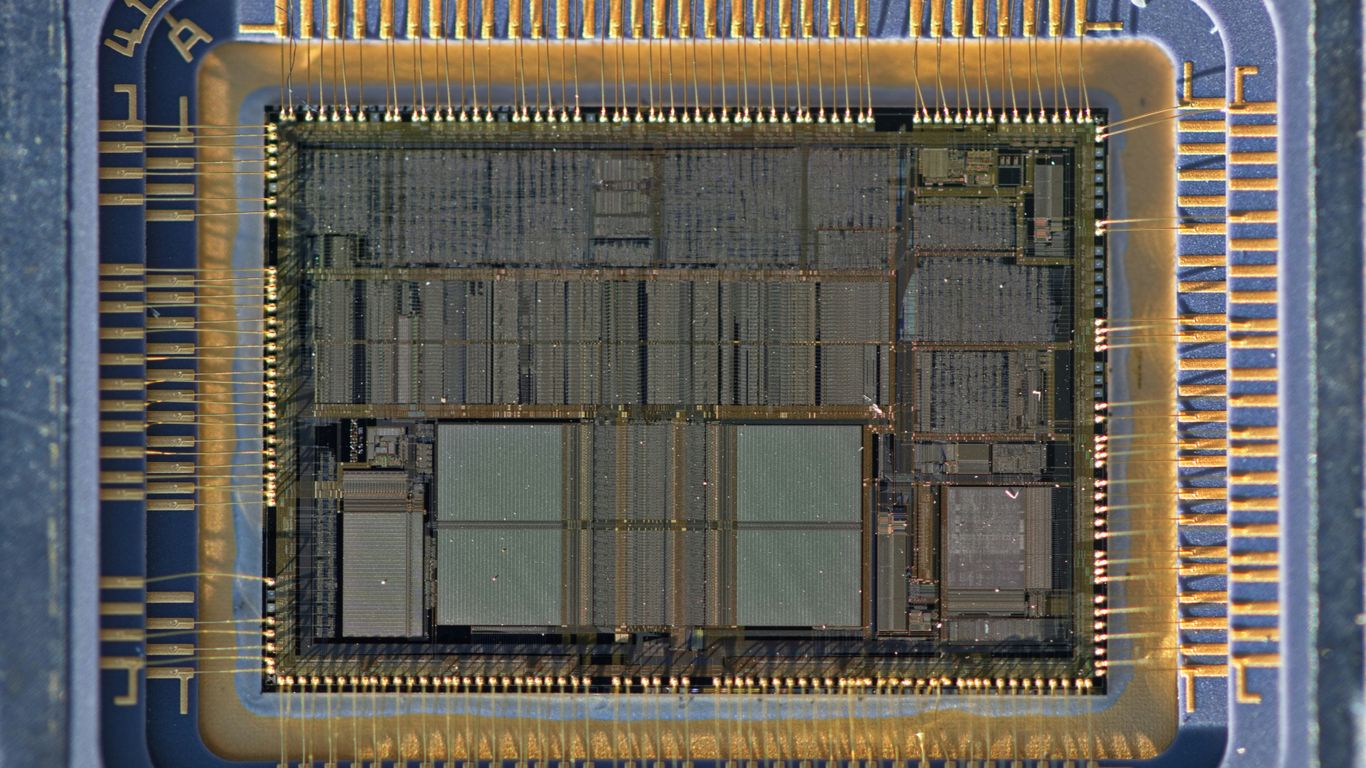
Intel’s been making some noise in the AI space, and it’s not just about their usual processors anymore. They’re really pushing into the graphics processing unit (GPU) market, which is pretty much dominated by NVIDIA right now. It’s a big move, aiming to grab a slice of the pie in both gaming and, more importantly, AI model training. This expansion beyond their traditional CPU focus shows they’re serious about competing in the AI hardware arena.
Intel is reportedly looking to acquire AI chip startup SambaNova Systems, signalling a significant investment in the enterprise AI computing market.
They’ve got a strategy to challenge NVIDIA’s stronghold, and it’s being overseen by some serious talent within the company. While it’s still early days for their GPU plans, the intention is clear: to offer alternatives and compete directly. This hardware diversification is becoming a key advantage for businesses looking to build flexible AI systems.
The push into new hardware areas like GPUs is a natural progression for a company like Intel, especially as AI workloads become more demanding. It’s about adapting to the evolving needs of the tech landscape and ensuring they remain a major player.
Here’s a look at some of the areas Intel is focusing on:
- GPU Market Entry: Directly challenging NVIDIA’s dominance in AI training hardware.
- Custom Silicon Development: Exploring options beyond standard chips to meet specific AI demands.
- Enterprise AI Solutions: Providing hardware that supports the growing need for AI in businesses.
- Research and Development: Investing in future technologies to stay ahead in the competitive AI chip race.
8. DeepL
DeepL has really made a name for itself in the world of AI-powered translation. It’s not just another translation tool; it’s known for producing remarkably natural-sounding text, which is a pretty big deal when you’re dealing with language.
Their approach focuses on neural networks that are trained on vast amounts of text, allowing them to grasp the nuances and context of different languages far better than older methods. This means fewer awkward phrases and a more accurate reflection of the original meaning. It’s the kind of tech that makes you stop and think, ‘Wow, that actually sounds like a human wrote it.’
Here’s a quick look at what makes them stand out:
- Accuracy: Consistently ranks high in independent tests for translation quality.
- Naturalness: Produces translations that flow well and don’t sound robotic.
- Language Support: While not as extensive as some giants, they cover key global languages and are always expanding.
- API Access: Offers tools for businesses to integrate their translation capabilities into their own applications.
It’s interesting to see how they’ve managed to carve out such a strong niche. While the big tech companies are busy with all sorts of AI projects, DeepL has stayed focused on doing one thing exceptionally well: language translation. It’s a good reminder that sometimes, a clear focus can lead to impressive results.
The drive for better AI translation isn’t just about convenience; it’s about breaking down communication barriers on a global scale. Tools like DeepL are making it easier for people and businesses to connect across different cultures and languages, which feels pretty important in today’s world.
9. SS&C Blue Prism
SS&C Blue Prism is a name that keeps popping up when we talk about making business processes smarter. They’re all about robotic process automation (RPA), which basically means using software robots to do repetitive digital tasks that people usually do. Think of it like having a digital workforce that can handle things like data entry, processing invoices, or managing customer queries without getting tired or making mistakes.
Their focus is on helping organisations automate their core operations, making them more efficient and freeing up human staff for more complex work. It’s not just about replacing people, though; it’s about augmenting what they can do. They’ve been around for a while, building up their platform to handle pretty intricate workflows.
Here’s a look at some areas where their technology makes a difference:
- Finance and Accounting: Automating things like invoice processing across different accounting systems. This can really speed things up and reduce errors.
- Customer Support: Handling end-to-end customer issues, from initial contact to resolution. Some reports suggest a massive return on investment here.
- Supply Chain Management: Optimising things like route planning for deliveries or reallocating resources when things change unexpectedly.
While the buzz around AI is all about fancy new agentic systems that can think and plan, SS&C Blue Prism reminds us that getting the basics right is key. They reckon you need to have a solid handle on traditional automation first. Trying to jump straight into the really advanced stuff without that foundation can lead to all sorts of unpredictable outcomes. It’s about building up that capability and having the right governance in place to manage it all properly.
10. Broadcom
Broadcom, a company often seen as a hardware giant, is making some interesting moves in the AI space, particularly when it comes to how businesses actually use the technology. They’re not just about chips; they’re looking at the practical side of things.
One of the key things Broadcom seems to be focusing on is making sure AI investments actually pay off. Their CIO has pointed out that without a clear business problem to solve, it’s easy to spend money on AI and see no real benefit. This practical approach is pretty sensible, isn’t it?
Here’s a look at some areas where AI is making a difference, and where Broadcom’s influence might be felt:
- Finance and Accounting: Automating invoice processing across different accounting systems.
- Cybersecurity: Helping to spot and react to threats in real-time, and managing user access.
- Customer Support: Sorting out customer issues from start to finish, with some reports showing massive returns on investment.
- Supply Chain: Planning delivery routes and shifting resources around more efficiently.
The company seems to be pushing for a mindset where you tackle the biggest problems first, rather than getting bogged down in endless small tests. It’s about aiming for a significant outcome, which makes a lot of sense when you’re talking about big tech investments.
While NVIDIA is still the big name in AI hardware, Broadcom is part of a wider trend where companies are looking at custom silicon solutions. This isn’t just about challenging the big players, but also about finding ways to manage costs and get better performance for specific tasks. It’s a complex market, and Broadcom’s role in providing the underlying technology for these solutions is quite important.
What’s Next?
So, looking at all these companies and what they’re up to, it’s clear that AI isn’t just a buzzword anymore. It’s really changing how businesses work, and not just in the big tech firms. We’re seeing AI move from just being about fancy new tech to actually solving real problems and making things more efficient. The focus is shifting, and it’s less about just spending loads of money on hardware and more about showing that this technology actually helps the bottom line. It’s going to be interesting to see how these trends play out, especially with new rules coming into play and companies figuring out the best way to use AI without causing more problems than they solve. One thing’s for sure, though: AI is here to stay, and it’s going to keep evolving.
Frequently Asked Questions
Which AI companies are set to do well in 2026?
Companies that are already making money from AI, not just spending a lot on it, are in a good spot. Microsoft is doing great because lots of businesses are using its Azure AI services, and Meta is seeing more money from ads thanks to its AI improvements. These companies show they can actually earn money from their AI work.
Is NVIDIA still a safe bet for investors, even with new rivals?
NVIDIA’s new computer chips are still in high demand, bringing in billions. However, they aren’t making as much profit on each chip as before because other companies are starting to make their own alternatives. NVIDIA’s next-generation chips, due out in late 2026, will be very important to see if they can keep their leading position.
What’s the biggest worry for AI investments in 2026?
The main risk is that technology moves too fast for businesses to keep up. Companies might create amazing AI tools, but if they can’t use them to actually improve their business and make more money, investors might get worried. It’s about showing real results, not just having cool tech.
When will the EU’s AI rules really kick in?
The EU AI Act is being introduced in stages. Some rules about what AI can’t do start in February 2025. Rules for AI models that create content begin in August 2025. Then, in August 2026, the main rules for AI systems considered ‘high-risk’ will take effect, and rules for AI built into products will follow in August 2027.
Are big tech companies spending a lot on AI?
Yes, major tech companies are investing huge amounts in AI technology. Microsoft, Meta, Amazon, and Alphabet (Google) are all planning to spend hundreds of billions of dollars on things like AI chips, data centres, and developing new AI models over the next couple of years. Meta is planning the biggest increase in spending.
What’s changing about how AI is used in businesses?
AI is moving beyond just helping with simple tasks. New ‘agentic AI’ systems can now think, plan, and act on their own across different software. This means AI can handle more complex jobs like managing finances, improving cybersecurity, or sorting out customer problems automatically, potentially saving companies a lot of time and money.