Ever wondered how those powerful welding machines that join metal get made? It’s quite a process, really. It starts with just raw metal and ends with a sturdy piece of equipment ready for tough jobs. We’re going to take a look at the welding machine manufacturing process, from picking the right materials to putting everything together. It’s not as simple as it looks, involving a lot of steps and careful work to get it right.
Key Takeaways
- The welding machine manufacturing process begins with selecting and preparing high-quality raw metals, ensuring they meet the necessary standards for strength and integrity.
- Precision forming and shaping techniques, including bending, stamping, and roll forming, are used to create the various components of a welding machine.
- Essential joining methods like MIG, TIG, and traditional arc welding are employed to assemble the machine’s structure and internal parts.
- The assembly phase involves integrating all components, including the critical electrical and control systems, to create a functional unit.
- Rigorous quality assurance checks and final surface finishing are performed to guarantee the durability, longevity, and reliable performance of the finished welding machine.
The Welding Machine Manufacturing Process: An Overview
So, you want to know how those machines that join metal together are actually made? It’s a pretty involved process, not just a simple assembly line. We’re talking about taking raw materials and turning them into complex pieces of equipment that can handle serious heat and power. It all starts with understanding what these machines do and why precision matters so much.
Understanding the Core Functionality of Welding Machines
At its heart, a welding machine’s job is to provide the energy needed to melt metal so it can fuse together. Think of it like a really powerful, controlled torch. Different types of welding machines do this in slightly different ways, using electricity to create an arc or intense heat. This process is what allows us to build everything from cars and bridges to the very machines we’re discussing.
Types of Welding Machines and Their Applications
Not all welding machines are the same, and they’re built for different tasks. You’ve got your MIG welders, which are great for production lines because they’re fast and easy to use. Then there are TIG welders, known for making really clean, precise welds, often used for delicate work or high-end projects. Stick welders, or traditional arc welders, are super versatile and can handle rougher conditions, making them a go-to for field repairs. Each type requires specific components and manufacturing approaches.
The Importance of Precision in Manufacturing
When you’re building something that generates intense heat and needs to create incredibly strong bonds, accuracy is everything. Even small errors in manufacturing can lead to big problems down the line – think weak joints or equipment that just doesn’t perform right. That’s why manufacturers pay so much attention to getting the measurements and assembly just so. It’s about making sure the machine works reliably and safely, every single time. This attention to detail is why companies like Apex Precision Tech are so important in the fabrication world.
Material Selection and Preparation for Welding Machines
Getting the materials right is the first big step in building any welding machine. It’s not just about grabbing any old metal; you’ve got to pick stuff that can handle the heat and stress of welding itself, plus whatever job the machine is built for. Think of it like picking the right ingredients for a recipe – use the wrong ones, and the whole dish can go wrong.
Sourcing High-Quality Raw Metals
We start by looking for metals that meet strict standards. For the main body and structural parts of a welding machine, we often use steel. Different types of steel have different strengths and properties. For instance, mild steel is common because it’s strong enough for most jobs and doesn’t cost a fortune. Stainless steel might be used in areas where corrosion is a concern, though it’s pricier and can be trickier to work with. Sometimes, specialized alloys are needed for components that get really hot or need to be super tough. The quality of these raw metals directly impacts the final machine’s performance and how long it lasts. We get these from trusted suppliers who can provide documentation showing what the metal is and how it was made. This helps us know we’re starting with good stuff.
Initial Material Cutting and Shaping
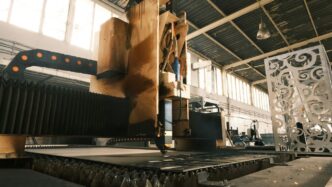
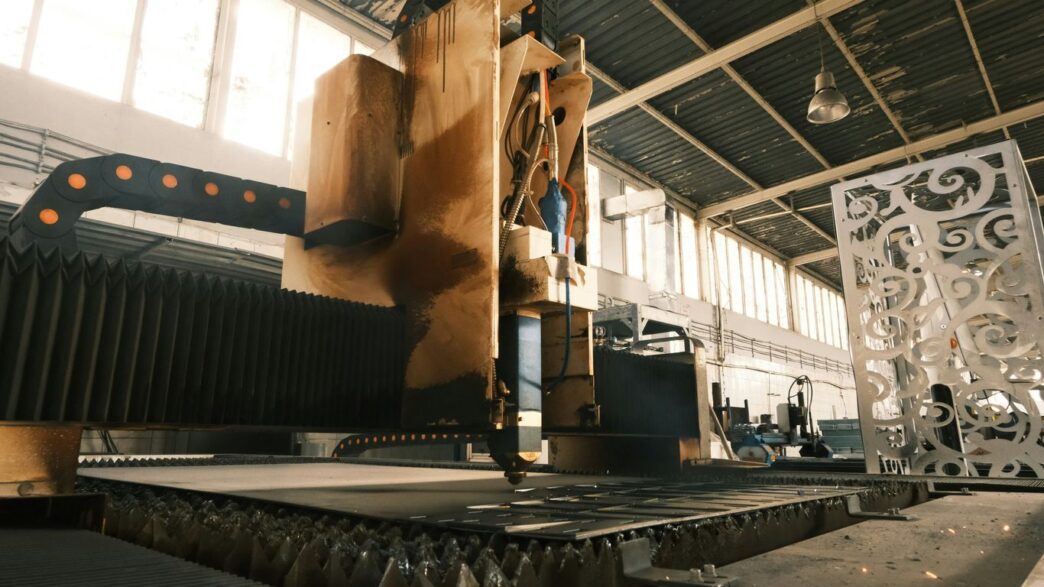
Once we have the metal, it needs to be cut into the right shapes and sizes. This is often done using machines like CNC plasma cutters or lasers. These machines are programmed to make very precise cuts, which is important because parts need to fit together well later on. We might also use bending machines to give flat sheets a curve or angle. For smaller parts, stamping might be used to create many identical pieces quickly. It’s all about getting the raw metal into the basic forms we need before we start putting things together.
Ensuring Material Integrity and Cleanliness
Before any welding or assembly can happen, the metal surfaces have to be perfectly clean. Any oil, grease, rust, or dirt can cause problems during welding, leading to weak spots or cracks. We use various methods to clean the metal, like degreasing with solvents or mechanical cleaning with wire brushes or grinding. Sometimes, we inspect the metal using things like ultrasonic testing to check for hidden flaws. It’s a bit like prepping a surface before painting – you need it clean and smooth for the next step to work properly. This attention to detail at the start saves a lot of headaches down the line and is a key part of successful fabrication.
Precision Forming and Shaping in Manufacturing
After we’ve got our raw materials sorted and cut to size, the next big step is giving them their shape. This isn’t just about making things look good; it’s about making sure every piece fits perfectly and can handle the job it’s designed for. Think of it like tailoring clothes – you need the right measurements and cuts for a good fit.
Advanced Bending Techniques for Components
Bending metal is a pretty common process, but doing it with real precision is where the magic happens. We’re not just talking about simple folds here. Modern manufacturing uses sophisticated machines, like press brakes, that can bend metal sheets to exact angles. Computer-aided design (CAD) plays a huge role, letting us plan out these bends down to the millimeter. This accuracy is super important for parts that need to fit together tightly later on, like the housing for sensitive electronics or the frame of the welding machine itself. Getting these bends right means the final product will be strong and reliable.
Stamping and Hydroforming for Complex Parts
When we need to make a lot of identical, complex shapes, stamping is the way to go. It uses dies and presses to quickly turn flat metal into three-dimensional parts. This is how you get consistent components for things like casings or internal brackets, especially when you need thousands of them. For even more intricate or challenging shapes, hydroforming comes into play. This method uses water pressure to push metal into a mold. It’s great for creating lightweight yet strong parts that would be really tough to make any other way. It’s a bit more specialized, but for certain components, it’s a game-changer.
Roll Forming for Consistent Profiles
Roll forming is another neat technique, especially when you need long, uniform shapes with a specific cross-section, like channels or tubes. Imagine a piece of sheet metal being fed through a series of rollers, each one bending it a little more until it reaches the final profile. This process is fantastic for creating things like the structural beams or conduits that make up the backbone of a welding machine. It’s efficient and produces parts with very consistent dimensions, which is exactly what you want for a sturdy build. This method is key for creating stable fan housings where roundness and concentricity are vital.
Essential Joining Methods in Welding Machine Production
When you’re putting together a welding machine, how you join the different metal parts together really matters. It’s not just about sticking pieces of metal together; it’s about making sure those connections are strong, reliable, and can handle the heat and power these machines put out. Different parts of the machine might need different joining techniques, depending on what they do and what materials they’re made from.
The Role of MIG Welding in Assembly
MIG welding, or Metal Inert Gas welding, is a workhorse in manufacturing for a good reason. It’s pretty fast and can handle a wide range of metal thicknesses, making it great for putting together the main body or frame of a welding machine. The process uses a continuous wire feed, which means you can keep welding without stopping to change electrodes. This speeds things up a lot, especially when you have a lot of similar joints to make. It’s a good balance between speed, cost, and the strength of the weld.
Here’s why MIG is so popular:
- Speed: The continuous wire feed allows for faster welding than some other methods.
- Versatility: Works well on various metals like steel, stainless steel, and aluminum.
- Ease of Use: While it takes practice, it’s generally considered easier to learn than TIG welding.
- Efficiency: Great for repetitive tasks on production lines.
Precision TIG Welding for Critical Joints
For parts of the welding machine that need really clean, precise connections, TIG welding (Tungsten Inert Gas) is often the go-to. This method gives the welder a lot of control, which is important for areas where appearance and a lack of defects are key. Think about the internal components or connections that need to be perfect to avoid issues down the line. TIG welding uses a non-consumable tungsten electrode and a separate filler rod, if needed, all under a shielding gas. This results in very clean welds with minimal spatter and a high-quality finish. It’s slower than MIG, but the precision is often worth it for critical areas.
Traditional Arc Welding for Robustness
Sometimes, you just need a really strong, no-nonsense weld, and that’s where traditional arc welding, like stick welding (SMAW), comes in. This method is super versatile and can be used in less-than-ideal conditions, like outdoors or on surfaces that aren’t perfectly clean. For the heavy-duty parts of a welding machine, or for repairs in the field, stick welding can provide the robust connections needed. It’s known for its ability to handle thicker materials and create deep penetration, which is great for structural integrity. While it might not offer the same level of finesse as TIG or the speed of MIG for mass production, its reliability and toughness are undeniable for certain applications.
Assembly and Integration of Welding Machine Components
Component Assembly for Structural Integrity
Putting the pieces together is where the real magic happens, turning individual parts into a functional welding machine. For the main body and frame, we’re talking about robust construction. Think thick steel plates, precisely cut and formed, then joined together. This isn’t just about making it look good; it’s about making sure the machine can handle the vibrations and stresses of welding without falling apart. We use a combination of welding techniques here, depending on the thickness of the metal and where the joints are. For really thick sections, traditional arc welding might be used for its deep penetration. For areas where appearance matters more, or where we need a cleaner look, MIG welding is often the go-to. The goal is a solid, stable structure that forms the backbone of the entire machine.
Integrating Electrical and Control Systems
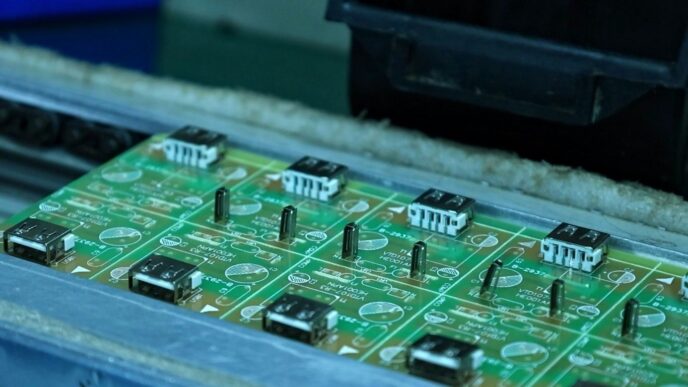
Once the metal shell is built, it’s time to bring the machine to life with its brains and nervous system – the electrical and control components. This involves mounting circuit boards, transformers, power supplies, and all the wiring. It’s a bit like building a complex computer, but for welding. Careful routing of wires is super important to avoid interference and to make sure everything is accessible for maintenance later on. We also install the user interface, like the control panel with all the buttons, knobs, and displays. This part needs to be user-friendly, so operators can easily select settings and monitor the welding process.
The Importance of Seamless Transitions
What really separates a good welding machine from a great one is how well all these parts work together. It’s not enough to just bolt everything on. We need to make sure the electrical systems communicate perfectly with the mechanical parts, and that the user interface provides accurate feedback. For example, when you turn a dial to adjust the amperage, the electrical system needs to respond instantly and precisely. This involves a lot of testing and fine-tuning. We check that power flows correctly, that safety features work as intended, and that the machine performs consistently across its range of settings. It’s all about making sure the operator has full control and can rely on the machine to perform exactly as expected, every single time they use it.
Quality Assurance and Final Touches
So, we’ve gone through all the steps, from picking the metal to putting the pieces together. But we’re not quite done yet. This is where we make sure everything is just right before it leaves the factory. It’s all about making sure the welding machine you get is tough, reliable, and works exactly how it should.
Implementing Rigorous Quality Control Systems
Quality control isn’t just a quick check at the end; it’s woven into the whole process. We’re talking about checking things at multiple stages. This means looking at the raw materials when they come in, keeping an eye on things during manufacturing, and then doing a thorough inspection once it’s all assembled. This proactive approach helps catch any potential problems early on, saving a lot of headaches down the road. It’s about having solid procedures in place that everyone follows, from the folks on the shop floor to the inspectors. This is how we make sure we’re meeting all the specifications for welding and fabrication services.
Ensuring Durability and Longevity
When we talk about making welding machines that last, we’re thinking about how they’ll hold up over time and in tough conditions. This involves a few key things:
- Material Integrity: Making sure the metals we used can handle the heat and stress of welding without breaking down.
- Joint Strength: Double-checking that all the welded joints are strong and won’t fail, even under heavy use.
- Component Fit: Verifying that all the parts fit together correctly, so there’s no unnecessary strain on any one piece.
We also consider things like how the machine will resist rust or other forms of wear and tear. It’s about building a machine that’s not just functional today, but for years to come.
Surface Finishing and Protective Coatings
Once the welding machine is fully assembled and has passed all its checks, we move on to the final cosmetic and protective steps. This usually involves:
- Cleaning: A thorough cleaning to remove any oils, dust, or debris from the manufacturing process.
- Surface Treatment: Depending on the design, this might include grinding or other methods to get a smooth finish.
- Painting or Coating: Applying a durable paint or powder coat. This not only makes the machine look good but also provides a vital layer of protection against corrosion and physical damage. We choose coatings that can stand up to the workshop environment.
This final stage really completes the product, making it ready for the customer and giving it that professional, finished look.
Wrapping Up the Welding Machine Journey
So, there you have it. From the very first bits of metal and wires to the finished welding machine ready to make sparks fly, it’s quite a process. It’s not just about throwing parts together; it’s a careful dance of engineering, precise manufacturing, and skilled hands. Seeing how each step, from cutting and bending to the final welding and testing, plays its part really shows you the effort that goes into these machines. Next time you see a welding machine in action, you’ll know there’s a whole lot more to it than just the flash and the heat.