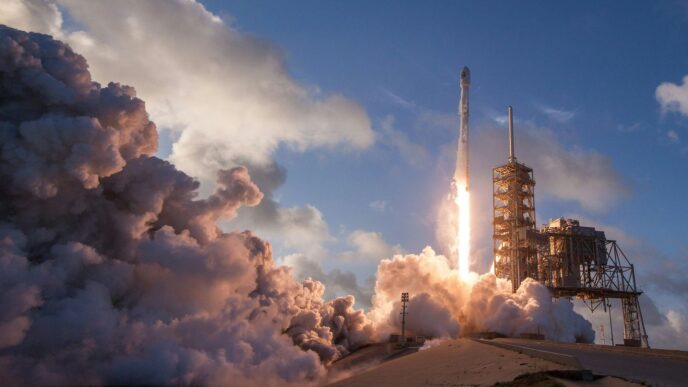

Thinking about catching a rocket launch in Florida? It’s pretty exciting stuff! The Space Coast sees launches pretty often now, with companies like SpaceX and NASA sending things up into space. If you’re planning a trip or just curious about what’s happening in the sky, this guide is for you. We’ll cover the upcoming schedule, how to see a launch, and some history behind it all. Get ready for some lift-off action!
Key Takeaways
- Florida’s Space Coast is a busy place for rocket launches, with many happening throughout the year.
- You can find great spots to watch a rocket launch, and there are even some unique ways to experience the event.
- Keeping up with launch schedules and any changes is important, and there are apps and websites to help.
- The Space Coast has a long history of space exploration, with many significant missions taking off from the area.
- Planning your trip around a rocket launch involves knowing where to stay, what to see, and how to get the best view.
Upcoming Rocket Launch Florida Schedule
Featured Launches This Season
Florida’s Space Coast is buzzing with activity, and it’s shaping up to be a huge year for rocket launches. We’ve already seen a record number of liftoffs, and there’s plenty more on the horizon. Keep an eye out for these exciting missions:
- Project Kuiper: Amazon is ramping up its satellite deployment for its internet service, aiming to compete with other major players.
- Axiom Space 4: This mission will send a crew of four private astronauts to the International Space Station, marking another step in commercial spaceflight.
- Crew-11: SpaceX is scheduled to launch the next group of astronauts to the ISS, continuing their regular crew rotation.
Remember, all launch dates and times are subject to change. It’s always a good idea to check for the latest updates.
Key Missions to Watch
With so many launches happening, it can be tough to keep track. Here are a few missions that are particularly noteworthy:
- December 14, 2025, 9:43 PM: A SpaceX Falcon 9 rocket is set to launch Starlink Group 6-82. This is just one of many Starlink deployments happening this season.
- December 9, 2025, 2:16 PM: Look out for a SpaceX Falcon 9 carrying a national security mission for the Space Force. Sonic booms are expected as the booster returns.
- December 11, 2025, between 1:59 PM and 5:59 PM: Another SpaceX Falcon 9 launch, this time carrying 29 Starlink satellites.
It’s amazing to think about the sheer volume of launches happening from places like Cape Canaveral Space Force Station and Kennedy Space Center. The pace has really picked up compared to years past.
Stay Updated with Launch Details
Things can change quickly in the world of rocket launches. Weather delays, technical checks, and other factors can shift schedules. To make sure you don’t miss out, here’s how to stay in the loop:
- Download the Space Coast Launches App: This is your go-to resource for real-time updates, live video feeds, and detailed mission information. It’s automatically updated throughout the day.
- Check Official Sources: Websites for NASA, SpaceX, and the Space Force often have the most current launch information.
- Follow Local News: Local news outlets on the Space Coast usually provide extensive coverage of upcoming launches and any schedule changes.
Staying informed is key to planning your launch viewing experience. Don’t rely on just one source; cross-referencing will give you the best chance of catching a liftoff.
Experiencing A Rocket Launch Florida
Prime Viewing Venues
Seeing a rocket blast off is pretty amazing, and there are tons of places along Florida’s Space Coast where you can get a good look. You’ve got your classic spots, of course, like the Kennedy Space Center Visitor Complex. It’s a bit of a drive, but they often have special viewing events, and you’re right there in the heart of the action. Then there are the public beaches – Cocoa Beach and Playalinda Beach are popular choices. Just be sure to check which beaches are open for viewing on launch days, as sometimes access is restricted. Parks like Jetty Park in Port Canaveral also offer great views and usually have facilities.
Here are a few popular spots:
- Jetty Park, Port Canaveral: Offers a clear view and often has events.
- Cocoa Beach: A classic choice with plenty of space.
- Titusville: Various parks and waterfront areas provide good vantage points.
- Kennedy Space Center Visitor Complex: For an immersive experience.
Unique Ways to Witness Liftoffs
Beyond just finding a good spot on the beach, there are some really cool ways to make your launch experience even more memorable. Ever thought about watching from the water? Some boat tours specifically cater to launch viewing, giving you a unique perspective as the rocket climbs into the sky. Imagine the rumble you’d feel from the water! Another idea is to combine your launch viewing with a bit of local flavor. Many breweries and restaurants along the coast offer viewing parties, so you can enjoy a cold drink and some food while you wait for the countdown. It’s a fantastic way to soak in the atmosphere and connect with other space enthusiasts.
Consider these options:
- Launch Viewing Boat Tours: Get a different angle from the water.
- Local Restaurants & Bars: Many host viewing parties.
- Drive-in Theaters: Some might offer special launch viewing events.
Making the Most of Your Launch Day
So, you’ve picked your spot and maybe even booked a special tour. Now, how do you make sure launch day itself goes smoothly? First off, check the launch status constantly. Schedules change, and weather can be a big factor. The "Space Coast Launches" app is a lifesaver for real-time updates. Pack smart – bring chairs, snacks, drinks, and definitely some sunscreen. Traffic can get pretty heavy around launch times, so plan to arrive early, maybe even the day before if it’s a big one. And don’t forget your camera! You’ll want to capture that incredible moment when the rocket lights up the sky. It’s a long day sometimes, waiting for that ignition, so bring something to keep you entertained while you wait, like a book or some games.
Navigating Space Coast Launch Information
So, you’re planning to catch a rocket launch on Florida’s Space Coast? Awesome! It can feel a little overwhelming trying to figure out all the details, but don’t worry, we’ve got you covered. It’s not just about showing up and looking up; there are a few things to keep in mind to make sure you have the best experience.
Essential Launch Viewing Maps
Finding the perfect spot to watch a liftoff is key. While you can see launches from many places along the coast, some spots are definitely better than others. You can find a helpful Google Map with recommended viewing locations, including some favorites suggested by NASA itself. This map can really help you zero in on where to set up your chairs and blankets. Knowing the best vantage points can make the difference between a good view and a truly unforgettable one.
Understanding Hazard and Airspace Restrictions
This is super important, especially if you’re planning to be out on the water or flying a drone. Space Launch Delta 45 puts out official notices about hazard zones and airspace restrictions for each launch. These are put in place for safety, and you really need to pay attention to them. They usually post this info on their website, so it’s a good idea to check it a day or two before your planned launch. Ignoring these can lead to trouble, so always check the latest advisories.
The Space Coast Launches App
If you’re serious about not missing a single detail, you’ll want to download the Space Coast Launches app. Seriously, this thing is a lifesaver. It gives you live video streams of launches from both Kennedy Space Center and Cape Canaveral Space Force Station. Plus, it has up-to-the-minute launch schedules, mission details, and even a countdown clock. It’s pretty much your go-to source for everything launch-related. You can even use its compass feature to help you find the launch pad on the horizon. It’s a great way to stay informed and get the most out of your launch day experience. For example, you can track upcoming missions like the Starlink Group 6-82 launch, which is scheduled for December 14th.
Florida’s Space Coast Launch History
Florida’s Space Coast has a long and storied past when it comes to launching rockets. It’s not just about the future; looking back gives you a real appreciation for how far we’ve come. For decades, this stretch of coastline has been the gateway to space for the United States. Think about the early days of the space race, the iconic missions that captured the world’s imagination – they all started right here.
Recent Launch Highlights
Things have really picked up pace lately. In June 2024 alone, there were seven rocket launches from the Space Coast. Six of those were SpaceX missions, including a Falcon Heavy launch carrying a NOAA satellite. United Launch Alliance also sent Boeing’s Starliner capsule on its first crewed flight test to the International Space Station. It’s pretty wild to think about how many launches are happening now compared to just a decade or two ago. We’ve seen records broken year after year, with 2025 already surpassing previous annual launch tallies. It feels like there’s almost always something heading skyward!
Record-Breaking Launch Years
Florida’s launch cadence has seen some serious growth. In years past, seeing 10 to 20 launches in a calendar year was considered a lot. Now, that number is dwarfed. By early December 2025, the Space Coast had already seen over 100 launches, shattering previous records for the fourth year in a row. This surge is thanks to the increased frequency of satellite deployments, like those for Starlink and Amazon’s Project Kuiper, alongside important national security missions and crewed flights. It’s a testament to the evolving capabilities and demand in the space industry.
Notable Missions from the Past
Of course, you can’t talk about the Space Coast without mentioning some of the legendary missions that took place here. The Apollo program, which landed humans on the Moon, was a defining era for Kennedy Space Center. Then came Skylab, America’s first space station, and the groundbreaking Space Shuttle program, which operated for three decades. These missions weren’t just technological achievements; they were moments that united people and pushed the boundaries of what was thought possible. Each launchpad here has a history, a story of innovation and human ambition reaching for the stars.
Planning Your Rocket Launch Florida Trip
So, you’re thinking about catching a rocket launch down in Florida? Awesome! It’s a pretty wild experience, and honestly, planning is half the fun. You don’t want to just show up and hope for the best, right?
Astronaut Itinerary Ideas
Think of your trip like a mini-mission. You’ve got your launch window, but what else can you pack in?
- Day 1: Arrival & Exploration. Get settled in, maybe hit a beach. Check out the American Space Museum in Titusville – it’s got some cool old artifacts.
- Day 2: Launch Day! Head out early to your chosen viewing spot. After the excitement, maybe grab some seafood. If the launch is later, you could visit the Kennedy Space Center Visitor Complex earlier in the day.
- Day 3: Reflection & Departure. If you missed the launch or want to see more, maybe visit the Valiant Air Command Warbird Museum. Or just relax by the water before heading home.
Remember to book accommodations and any tours well in advance, especially if a big launch is scheduled.
Local Attractions Near Launch Sites
Beyond the rockets, the Space Coast has its own charm. You’ve got beaches, of course – Cocoa Beach is a classic. But there’s more.
- Kennedy Space Center Visitor Complex: This is a must-do if you’re really into space. You can see rockets up close, learn about the history, and even meet an astronaut sometimes.
- Brevard Zoo: It’s a pretty decent zoo, and they have some unique exhibits. Good for a break from all the space talk.
- Merritt Island National Wildlife Refuge: If you like nature, this place is great for bird watching and seeing local wildlife. Just be aware of any access restrictions around launch times.
Accommodation Options for Launch Viewers
Finding a place to stay can be tricky, especially around launch dates. Hotels in Titusville, Cocoa Beach, and Cape Canaveral tend to fill up fast.
- Hotels: Plenty of standard hotel chains are available. Booking months ahead is a good idea.
- Vacation Rentals: Sites like Airbnb and VRBO can offer more space, especially if you’re traveling with a group. Look for places with a clear view of the launch pads if possible.
- Camping: If you’re feeling adventurous, there are campgrounds in the area. Just make sure you know the rules and book your spot early.
Don’t forget to factor in travel time to your viewing location on launch day. Traffic can get pretty heavy!
Understanding Rocket Launch Dynamics
Ever wonder what actually happens when a rocket blasts off? It’s more than just a big boom and a trail of smoke. Rockets are complex machines designed for a very specific job: getting things into space. Let’s break down some of the key aspects.
Rocket Specifications Explained
Different rockets are built for different tasks. You’ve got your heavy lifters, designed to carry large payloads like satellites or parts of space stations, and then there are smaller, more agile rockets for specific scientific missions. The size, engine power, and fuel type all play a big role in what a rocket can do.
Here’s a look at some common rocket types you might see:
- Falcon 9: Known for its reusability, this SpaceX workhorse is used for launching satellites (like Starlink) and cargo to the International Space Station.
- Atlas V: A reliable rocket from United Launch Alliance (ULA), often used for national security missions and complex scientific payloads.
- Ariane 5: A European Space Agency workhorse, capable of launching heavy payloads into orbit.
- Long March Series: China’s primary launch vehicles, used for a variety of missions from satellite deployment to crewed flights.
Mission Objectives and Trajectories
Every launch has a purpose. Is it sending a new satellite to orbit the Earth? Is it carrying astronauts to the International Space Station? Or is it part of a larger deep-space exploration effort, like NASA’s Artemis program aiming for the Moon?
The mission objective dictates the rocket’s trajectory, which is the path it will follow into space. This path is carefully calculated to reach the desired orbit or destination. For example, a rocket heading to the International Space Station will follow a different path than one going to Mars.
Booster Landing Updates
One of the most exciting developments in recent years has been the ability of rockets to land their boosters back on Earth, often vertically. This isn’t just for show; it’s a huge step towards making spaceflight more affordable and sustainable. Companies like SpaceX have become famous for their booster recovery operations, where the first stage of the rocket returns to a landing pad or a drone ship at sea.
These landings are tricky. They require precise control and timing, with the booster firing its engines again to slow down and guide itself back. Watching a booster land is a pretty incredible sight, showing off the advanced engineering involved in modern rocketry.
Ready for Liftoff?
So, there you have it. Florida’s Space Coast is buzzing with activity, and it feels like there’s always something new heading skyward. Whether you’re planning a trip specifically to catch a launch or just happen to be in the area when one is scheduled, it’s definitely an experience worth seeking out. Keep an eye on those schedules, maybe download that app we mentioned, and get ready to witness some serious engineering in action. It’s pretty wild to think about all the planning and work that goes into each one, and seeing it all come together is just… wow. Hope this guide helps you catch your own piece of the action.
Frequently Asked Questions
When is the next rocket launch from Florida?
Rocket launch schedules can change quickly! For the most up-to-date information on upcoming liftoffs, it’s best to check the Space Coast Launches app or official NASA and SpaceX websites. They usually have the latest details on dates, times, and which rockets are heading to space.
Where are the best places to watch a rocket launch?
You can see launches from many spots along Florida’s Space Coast! Popular places include Playalinda Beach, Jetty Park, and even from your car along State Road 401. Some parks and beaches offer great views, but it’s a good idea to check a launch viewing map to find the perfect spot for you.
How can I find out if a launch is delayed or canceled?
Launches can be delayed due to weather or technical issues. The best way to stay informed is to follow the official social media accounts of NASA, SpaceX, or the ULA. The Space Coast Launches app also provides real-time updates. Often, live video streams will announce any changes during the countdown.
What should I bring to watch a rocket launch?
Pack for a day of excitement! Bring chairs or a blanket to sit on, snacks and drinks, sunscreen, and maybe a hat. Binoculars can help you see the rocket as it climbs higher. Don’t forget your camera to capture the amazing sight!
How loud is a rocket launch?
Rocket launches are incredibly loud! When a rocket takes off, it creates a powerful sound that you can feel as much as hear. It’s a thrilling experience, but if you’re sensitive to loud noises, you might want to consider ear protection.
Can I see the rocket booster land?
Sometimes, you can! Companies like SpaceX aim to land their rocket boosters back on Earth after they separate from the main rocket. If a landing is planned and the conditions are right, you might be able to see the booster return to a landing pad or even a ship at sea. Check the mission details for landing information.