
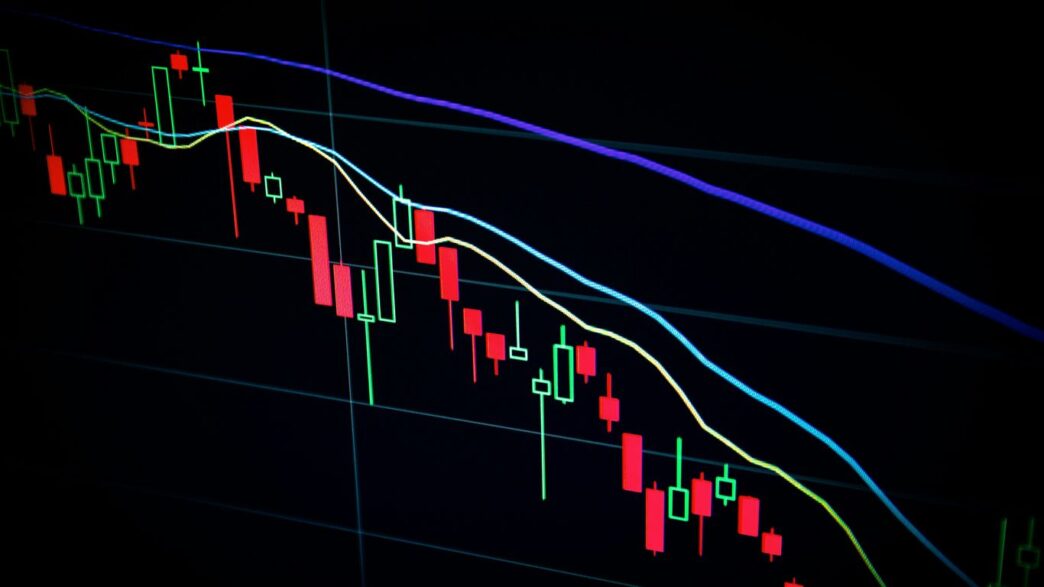
Hey everyone, welcome to our live look at the US Tech 100 Index. We’re going to break down what’s happening right now, how things have been going over the last few weeks and months, and what might be coming up. We’ll also check in on the individual stocks that make up this important index, see how they’re doing, and look at some of the bigger numbers and history behind it all. Think of this as your go-to spot for real-time info and a bit of analysis on the tech world’s performance.
Key Takeaways
- The US Tech 100 Index showed a gain of 0.78% in the recent trading session, closing at 25226.
- Over the past month, the index has increased by 2.88%, and the yearly gain stands at 19.19%.
- Future projections estimate the index at 24634 by the end of this quarter and 22378 in one year.
- Individual stock performance varies, with companies like Intel and Analog Devices showing significant gains, while NVIDIA and Gilead Sciences experienced declines.
- The Nasdaq 100 is composed of 100 large companies traded on the Nasdaq, weighted by market capitalization, and is reviewed annually for composition and weighting.
US Tech 100 Index Live: Performance Overview
Current Trading Session Performance
As of Monday, December 1st, 2025, the US Tech 100 Index (often referred to as the NASDAQ 100) is showing positive movement. The index is currently trading at 25226, marking an increase of 198 points, or 0.78 percent, since the previous trading day. This uptick suggests a generally optimistic sentiment in the tech sector during this trading session.
Recent Weeks and Annual Gains
Looking at the broader picture, the index has demonstrated solid performance over the past month. It has gained 2.88 percent in the last four weeks. On a longer timescale, the US Tech 100 has seen a significant rise of 19.19 percent over the last 12 months. This sustained growth indicates a strong upward trend for the technology companies represented in the index.
Future Price Projections
Forecasting future market movements is always tricky, but current projections offer some insight. Analysts and global macro models suggest the US 100 Tech Index might reach around 24634 by the end of the current quarter. Looking further out, the projection for one year from now is 22378. These figures should be viewed as estimates, as market conditions can change rapidly. For real-time updates and detailed analysis, you can track the US Tech 100 Index.
Here’s a quick look at recent performance metrics:
| Period | Performance |
|---|---|
| 30 Days | -1.17% |
| 90 Days | 9.49% |
| 250 Days | 26.04% |
Real-Time NASDAQ 100 Stock Movements
Top Performing Stocks
Keeping an eye on the NASDAQ 100 means watching the big players. Today, we’re seeing some interesting moves. Intel (INTC) is leading the pack with a solid gain of 10.19%. Following them are Analog Devices (ADI) up 2.88%, and Micron Technology (MU) with a 2.70% increase. Palo Alto Networks (PANW) is also showing strength, up 2.58%, and Meta Platforms (META) is contributing with a 2.26% rise. These companies are really driving the index today.
Stocks Experiencing Declines
It’s not all upward movement, of course. Some stocks are facing headwinds. NVIDIA (NVDA) is down 1.81%, and Gilead Sciences (GILD) has seen a dip of 1.31%. Ross Stores (ROST) is also trading lower, down 0.75%, and AstraZeneca (AZN) is experiencing a slight decrease of 0.64%. It’s normal to see some stocks pull back even when the overall market is doing well.
Individual Stock Price Changes
Here’s a quick look at how some of the NASDAQ 100 components are doing right now. Remember, these numbers can change by the minute!
| Ticker | Company Name | Current Price Change | Percentage Change |
|---|---|---|---|
| INTC | Intel | +$4.10 | +10.19% |
| ADI | Analog Devices | +$7.40 | +2.88% |
| MU | Micron Technology | +$6.20 | +2.70% |
| PANW | Palo Alto Networks | +$4.77 | +2.58% |
| META | Meta Platforms Rg-A | +$14.40 | +2.26% |
| NVDA | NVIDIA | -$3.25 | -1.81% |
| GILD | Gilead Sciences | -$1.66 | -1.31% |
| ROST | Ross Stores | -$1.33 | -0.75% |
| AZN | AstraZeneca Sp ADR | -$0.60 | -0.64% |
This snapshot gives you a feel for the day’s trading action within the NASDAQ 100. It’s a dynamic environment, and these movements are what make following the market so interesting.
Key Figures and Historical Performance
Looking at the numbers behind the US Tech 100 Index gives us a clearer picture of its recent activity and longer-term trends. It’s not just about today’s headlines; understanding these metrics helps put current market movements into perspective.
30-Day Performance Metrics
Over the past month, the index has seen some ups and downs. Here’s a quick look at how it’s performed:
| Metric | Value |
|---|---|
| Performance | -1.17% |
| High | 26,132.87 |
| Low | 23,854.03 |
| Volatility | 21.65 |
90-Day Performance Metrics
Stepping back to a 90-day view, we can see a different story unfold. The index has shown more positive movement in this timeframe:
- Performance: The index gained 9.49% over the last three months.
- High: The highest point reached was 26,182.10.
- Low: The lowest point during this period was 22,977.89.
- Volatility: Volatility measured at 17.53.
250-Day Performance Metrics
When we look at the longer haul, the 250-day period, the US Tech 100 Index has demonstrated substantial growth. This longer-term view often smooths out short-term fluctuations. The index has climbed by 26.04% over the last 250 days. This sustained upward trend highlights the resilience and growth potential within the technology sector. The high for this period was 26,182.10, with a low of 16,542.20, and volatility stood at 25.14. For a broader perspective on recent performance, you can check the US 100 Tech Index performance.
Understanding the US Tech 100 Index
Index Composition and History
The US Tech 100, more formally known as the Nasdaq 100, isn’t just a random collection of tech stocks. It’s a specific benchmark that tracks the performance of the 100 largest non-financial companies listed on the Nasdaq stock exchange. Think of it as a snapshot of the big players in technology and other growth sectors. This index has been around since January 31, 1985. Back then, its starting value was set at 250 points. It’s interesting to note that in 1994, the index was split, and its base value was cut in half. This means the numbers you see today aren’t directly comparable to its very early days without accounting for that change.
Weighting and Calculation Method
So, how does the index actually work? The Nasdaq 100 is a price-weighted index. This means companies with higher stock prices have a bigger influence on the index’s overall movement. It’s not just about how many companies are in it, but also how much each share costs. The index level essentially represents the average of the stock prices of the companies included. It’s important to know that dividend payments aren’t factored into the calculation. This is a key difference from some other types of indexes, so it’s something to keep in mind when you’re looking at its performance figures.
Inclusion Criteria and Review Process
Getting into the Nasdaq 100 isn’t automatic. Companies have to meet certain requirements to be considered. For starters, a company needs to have been listed on the Nasdaq for at least two years. Beyond that, they must have a substantial market capitalization and a decent amount of trading activity. The Nasdaq committee reviews the index’s components and their weightings once a year. This annual check-up helps make sure the index continues to accurately reflect the leading non-financial companies on the exchange. It’s a way to keep the index relevant and representative of the market.
Market Data and Analysis
Real-time Data Sources
Getting the most up-to-date information is key when you’re watching the US Tech 100. The data you see is usually pulled from places like Nasdaq Data Link, which is a pretty solid source for financial info. They use what’s called Nasdaq Last Sale Data to give you the most current prices. It’s all about making sure the numbers you’re looking at are as fresh as possible, so you can make informed decisions. You can even check out data.nasdaq.com if you want to explore more.
Data Disclaimer and Delays
Now, it’s important to know that "real-time" often has a small catch. Most index data, including the NASDAQ 100, usually has a delay of at least a minute. This isn’t because the data isn’t available, but more to do with how the information is processed and distributed across different platforms. So, while it’s close to live, don’t expect every single tick to be instantaneous. It’s good to keep this in mind when you’re making quick trading choices. This slight delay is standard practice across most financial data providers.
Market Capitalization Insights
Looking at market capitalization gives you a sense of the overall size and value of the companies within the index. It’s not just about individual stock prices, but the total worth of these tech giants. While we don’t have the specific market cap breakdown for the US Tech 100 right here, comparing it to other major indices like the S&P 500 or the Dow Jones can show you where the tech sector stands in the broader market. For instance, the S&P 500 has a massive market cap of over 63 trillion USD, showing the sheer scale of the US stock market overall. The NASDAQ 100 index itself is currently trading at 25,434.89, and its ticker symbol is NDX.
US Tech 100 Index Live: Volatility and Trends
Understanding how much the US Tech 100 Index swings around is pretty important for anyone watching the market. It’s not just about the big picture gains; it’s also about the day-to-day ups and downs.
Measuring Index Volatility
Volatility basically tells us how much the price of the index tends to move. A higher number means bigger price swings, both up and down. It’s a way to gauge the risk involved. For example, looking at the 30-day volatility, we see a figure of 21.65. Compare that to the 90-day figure of 17.53, and you can see the short-term price action has been a bit more jumpy recently. The 250-day volatility, which gives a longer-term view, stands at 25.14. This suggests that while the index can have periods of relative calm, it also experiences significant movements over longer stretches.
Identifying Market Trends
Spotting trends helps us figure out if the market is generally heading up, down, or sideways. We can look at different timeframes to see this. For instance, over the last four weeks, the index has shown a positive trend, gaining about 2.88 percent. Looking back over the last 12 months, the performance is even stronger, with a rise of 19.19 percent. This longer-term upward movement is a key trend to note. For more detailed analysis on how to spot these movements, you can check out technical analysis tools.
High and Low Price Ranges
Knowing the recent highs and lows gives us a sense of the index’s boundaries. It helps put current prices into perspective. For example, over the last 90 days, the index has seen a high of 26,182.10 and a low of 22,977.89. These numbers show the range of trading activity. Looking at the 250-day period, the high remains 26,182.10, but the low drops to 16,542.20. This wider range over the longer term highlights the significant recovery and growth the index has experienced.
Here’s a quick look at some recent performance figures:
- 30-Day Performance: -1.17%
- 90-Day Performance: 9.49%
- 250-Day Performance: 26.04%
Wrapping Up: What’s Next for the US Tech 100?
So, we’ve taken a look at how the US Tech 100 index is doing right now, checking out the numbers and what’s moving the market. It’s clear that tech stocks can be a bit of a rollercoaster, with some big names seeing solid gains while others are taking a hit. Keeping an eye on these trends is pretty important if you’re invested or just curious about where the tech world is headed. Remember, past performance doesn’t guarantee future results, but understanding the current landscape gives us a better idea of what might be around the corner. We’ll keep watching these movements to see how things shake out.
Frequently Asked Questions
What is the US Tech 100 Index?
The US Tech 100 Index is like a list of the 100 biggest technology companies traded in the U.S. It includes companies from the U.S. and other countries that are listed on the Nasdaq stock exchange. These companies are chosen based on how much they’re worth and they can’t be from the finance industry.
How is the US Tech 100 Index calculated?
The index is calculated based on the market value of the companies in it. This means bigger companies have more influence on the index’s number. It’s a price index, so it mainly looks at the stock prices, not including money paid out to shareholders (dividends).
How often does the list of companies in the index change?
The companies that make up the US Tech 100 Index are reviewed once a year. If needed, adjustments are made to keep the index up-to-date with the largest and most important tech companies.
What does ‘real-time performance’ mean for this index?
Real-time performance means the index’s value is updated very quickly, usually every second, as the stock market is open. This gives you the most current picture of how the top tech companies are doing at any given moment.
Are the stock prices in the index delayed?
Sometimes, there can be a small delay, usually at least one minute, for the index data. This is because it takes a moment for the latest stock sales information to be processed and shown.
What are some examples of companies in the US Tech 100 Index?
Some of the major companies you might find in the US Tech 100 Index include tech giants like Apple, Microsoft, Amazon, Alphabet (Google’s parent company), and Meta (Facebook’s parent company), along with many other leading technology firms.