It feels like every week there’s something new happening in the world of artificial intelligence. This time around, we’re looking at some pretty big shifts, from how we use AI tools to the big questions about jobs and creativity. We’ve got updates from major players like OpenAI and Google, plus a look at how AI is shaking up older industries. It’s a lot to take in, but it’s also pretty fascinating stuff.
Key Takeaways
- OpenAI is turning ChatGPT into an app platform and introducing tools for AI agents that can do tasks on their own. They’re also working on new hardware.
- A new report suggests AI could lead to millions of job losses, sparking calls for new rules to make sure everyone benefits from AI.
- Questions about who owns the copyright for AI-generated content, especially with tools like Sora, are still a big topic, with debates about digital likeness.
- Google’s Gemini Enterprise aims to be a central AI hub for workplaces, pushing the idea of ‘omni-intelligence’ where AI is everywhere and can take action.
- AI is starting to change industries like insurance and healthcare, and the race for better AI chips continues to be a major factor.
OpenAI Dev Day: A New AI Operating System
Right then, OpenAI’s Dev Day. It feels like just yesterday we were all marvelling at ChatGPT as a clever chatbot, but Sam Altman has made it abundantly clear: that’s old news. The company is positioning ChatGPT as the foundational operating system for this new AI era. It’s a pretty big shift, moving from something you can ask questions of, to something that can actually do things for you.
ChatGPT Transforms into an App Store
This is a massive change. OpenAI has essentially turned ChatGPT into a platform, a bit like a digital marketplace where developers can build and share their own applications. They’ve rolled out an SDK (Software Development Kit) for apps, meaning you can now use tools from companies like Coursera directly within your ChatGPT conversations. Imagine learning a new skill or even making a purchase, all without leaving your chat window. It’s all about making things more connected and, well, simpler.
Introducing Agent Kit for Autonomous Tasks
Beyond just apps, OpenAI also revealed the Agent Kit. This is a set of tools designed to help build AI agents that can handle real-world tasks on their own. Think about automating your business expenses or managing entire workflows without you lifting a finger. Altman described it as moving from asking AI to do things, to asking AI to get things done. It’s a subtle but important difference, pointing towards a future where AI takes on more responsibility.
Surprise Hardware Collaboration Revealed
And then there was the surprise. Sam Altman, alongside Jony Ive – yes, that Jony Ive from Apple – announced a secret, three-year collaboration. They’re working on a new line of AI hardware. Details are scarce, naturally, but the fact that these two are teaming up suggests something pretty significant is on the horizon. It hints at a future where AI isn’t just software on our screens, but something more tangible. This move could really change the internet’s operating system as we know it.
The Political Landscape of VentureBeat AI
Senate Report Warns of Mass Job Displacement
It’s getting a bit heated out there, politically speaking, when it comes to AI. A recent report from the US Senate has dropped a bit of a bombshell, suggesting that AI and automation could be responsible for wiping out as many as 100 million jobs in America alone over the next ten years. That’s a staggering number, and it’s got a lot of people worried about what this means for the future of work. The report, which apparently used AI itself to help with the analysis, points to specific sectors like fast food, accounting, and trucking as being particularly vulnerable. It paints a picture where ‘artificial labour’ could fundamentally change how our economy functions.
The current path of AI development seems to favour corporate profits over worker security, potentially leading to widespread job losses and increased wealth disparity.
Calls for Equitable AI Benefits and Policy Interventions
Following on from that rather grim jobs report, there’s a growing chorus of voices calling for some serious policy changes. The idea is that the benefits of AI shouldn’t just end up in the pockets of a few tech giants or billionaires. Instead, there’s a push for more fairness, with suggestions like a shorter work week (think 32 hours), making companies share profits with their employees, and even a ‘robot tax’ to help fund retraining or support those displaced by automation. It’s all about trying to make sure that as AI advances, it helps everyone, not just a select few. It feels like we’re at a crossroads, and the decisions made now will shape things for a long time.
The Growing Debate on AI and Labour Automation
This whole AI and jobs thing is becoming a really big discussion. On one side, you have the argument that AI will create new jobs and boost productivity, leading to overall economic growth. On the other, as that Senate report highlights, there’s a very real fear of mass unemployment and increased inequality. It’s not just about whether jobs will disappear, but also about the quality of the jobs that remain and how workers will adapt. We’re seeing a collision between the rapid pace of technological change and the need for social and economic stability. It’s a complex puzzle with no easy answers, and it’s clear that governments, businesses, and individuals all have a part to play in figuring it out.
Navigating Copyright and AI-Generated Content
It feels like every other week there’s a new AI tool that can whip up text, images, or even video that looks surprisingly real. But as these tools get better, they’re bringing a whole heap of questions with them, especially around who owns what. The latest buzz around things like Sora 2, for instance, has people scratching their heads about copyright.
Ongoing Concerns Over Sora 2’s Copyright Implications
When AI can generate video that’s almost indistinguishable from reality, it throws up some tricky copyright issues. Think about it: if an AI creates a scene that looks a lot like something from a copyrighted film, or uses a style that’s clearly inspired by a specific artist, where does that leave the original creator? The lines between inspiration, imitation, and outright infringement are getting seriously blurred. It’s not just about direct copying; it’s about the AI learning from vast datasets of existing works. Are those datasets being used with permission? And if the AI produces something that feels derivative, who’s responsible?
Industry Bodies Weigh In on IP Issues
Because this is such a big deal, various industry groups are starting to make their voices heard. They’re looking at how current intellectual property laws can even apply to AI-generated content. Some are pushing for clearer guidelines, while others are concerned about the potential for AI to devalue human creativity. It’s a complex puzzle, and everyone’s trying to figure out their piece.
Ethical Debates on Digital Likeness and Recreation
Beyond just copyright, there’s a whole ethical side to this. What happens when AI can perfectly recreate someone’s voice, face, or even their artistic style? This raises questions about consent and the right to control one’s own digital likeness. Imagine an AI generating a performance by a deceased actor – it’s technically possible, but is it right? These debates are only going to get louder as the technology advances.
The rush to build ever more powerful AI models has often outpaced the careful consideration of the data used to train them. This has led to a situation where the very foundations of AI innovation are built on a shaky legal and ethical ground, with creators and rights holders feeling increasingly exposed. The challenge now is to find a balance that allows for technological progress without undermining the rights and livelihoods of those who create the original works.
Google’s Gemini Enterprise and Omni-Intelligence
Google’s latest push into the AI space with Gemini Enterprise and the concept of ‘Omni-Intelligence’ feels like a significant step towards making AI a truly integrated part of our daily lives and workplaces. It’s not just about having a chatbot anymore; it’s about AI working behind the scenes, making things smoother and more intuitive.
A Comprehensive AI Platform for the Workplace
Gemini Enterprise is being pitched as a complete AI toolkit for businesses. The idea is that any employee, regardless of their technical skill, can build custom AI agents. These agents can then securely access information from various work tools, like Google Workspace, Microsoft 365, and even Salesforce. This means less time spent digging for data and more time on actual work. Google has also included pre-built agents for common tasks such as data analysis and customer support, which should speed things up even further. They’ve also added security features like ‘Model Armor’ to help keep things safe and compliant.
- No-code agent building: Allows anyone to create AI tools.
- Cross-platform data access: Connects to Google Workspace, Microsoft 365, and more.
- Pre-built agents: Ready-to-use tools for data science, software development, and customer engagement.
- Enhanced security: Features like Model Armor help protect data and ensure compliance.
The aim here is to embed AI directly into the workflow, making it a natural extension of how people already work, rather than a separate tool to learn.
The Rise of Omni-Intelligence in Daily Life
Beyond the office, Google is also bringing Gemini into our homes with ‘Gemini for Home’. This is essentially an upgrade to the Google Assistant, making smart home devices more intelligent. You can now have more natural conversations with your devices. Instead of rigid commands, you can ask things like, "Turn off all the lights except the office," and it just works. It can also handle more complex requests, like adding ingredients for a specific dish to your shopping list, even if you can’t remember the exact name. Home cameras are also getting smarter, providing AI-generated descriptions of events instead of just generic motion alerts. There’s even a new ‘Google Home Premium’ subscription for these advanced features.
Actionable AI: Moving Beyond Information Retrieval
What’s really interesting about this direction is the shift from AI just giving us information to AI actually doing things for us. Gemini Enterprise’s ability to build agents that can interact with other software is a prime example. It’s about AI taking action based on our requests. This is also seen in the Gemini 3.1 Flash Live model, which is designed for AI agents that need to respond quickly and handle audio and video inputs. This move towards AI that can perform tasks, rather than just answer questions, is what truly defines the next wave of innovation. It means AI is becoming less of a search engine and more of a digital assistant that can manage and execute tasks. For those looking to see how AI is being integrated into everyday tools, exploring Google’s AI advancements provides a good overview of this evolving landscape.
AI’s Impact on Traditional Industries
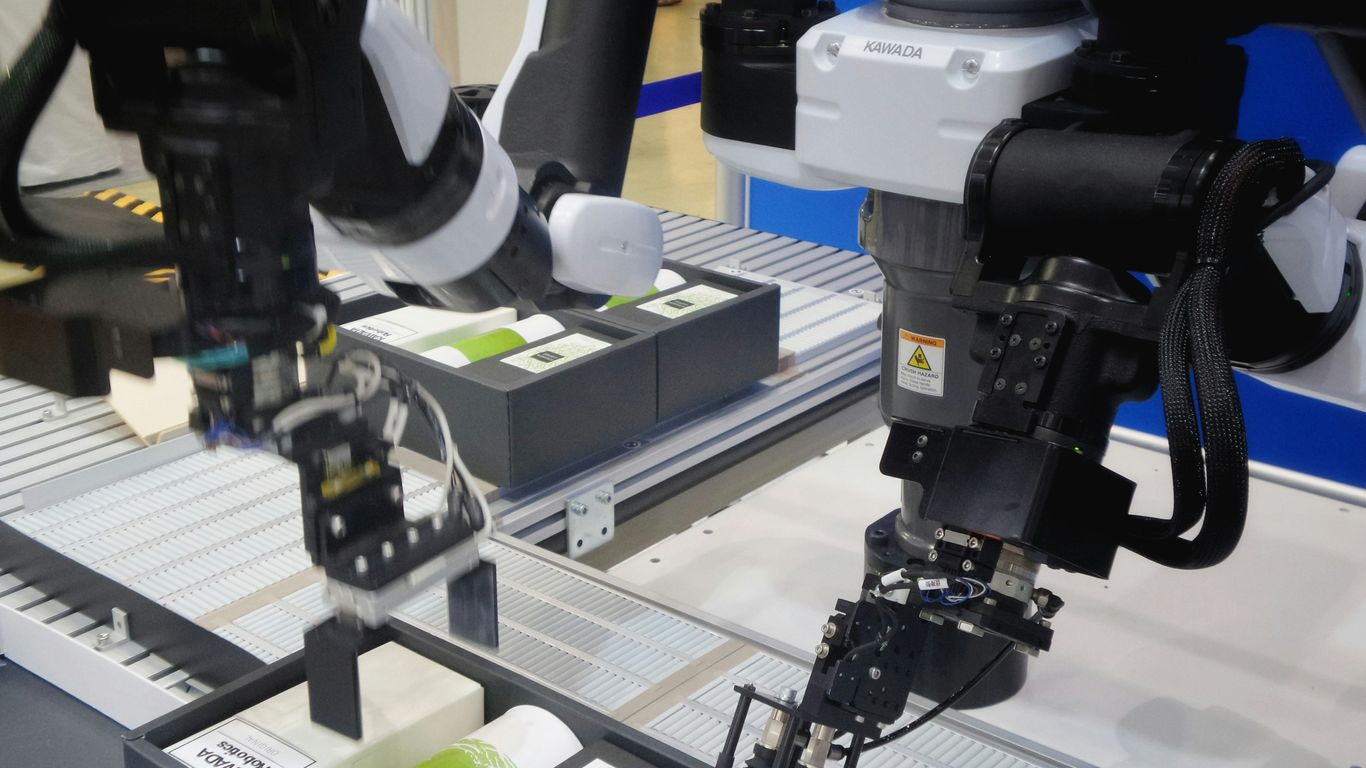
It feels like every week there’s a new headline about AI shaking things up, and honestly, it’s not just the tech world that’s feeling the tremors. Traditional industries, the ones that have been around for ages, are really starting to see some big changes thanks to artificial intelligence. It’s not just about making things faster; it’s about rethinking how entire sectors operate.
Transforming the Insurance Sector with Generative AI
The insurance industry, often seen as a bit slow to adopt new tech, is finding generative AI to be a game-changer. Think about claims processing. Instead of piles of paperwork and manual checks, AI can now sift through documents, identify patterns, and even draft initial reports. This speeds things up massively, cutting down on waiting times for customers and freeing up human staff for more complex cases. It’s also being used to create more personalised insurance policies. By analysing vast amounts of data, AI can help insurers understand individual risk profiles much better, leading to policies that are a closer fit for what people actually need. This shift means insurers can move from a reactive model to a more proactive one, potentially preventing issues before they even arise.
AI in Healthcare: Driving Transformation and Use Cases
Healthcare is another area where AI is making serious inroads. We’re seeing AI tools that can help doctors diagnose diseases earlier and more accurately, sometimes spotting things that the human eye might miss. For example, AI algorithms are getting really good at analysing medical images like X-rays and MRIs. Beyond diagnostics, AI is also being used in drug discovery, which is a notoriously long and expensive process. By simulating how different compounds might interact, AI can significantly speed up the initial stages of finding new medicines. There’s also a lot of work happening around AI-powered personal health assistants, which can help patients manage chronic conditions or simply remind them to take their medication. The potential for improving patient outcomes and making healthcare more efficient is huge.
The Chip Race and Dynamics in AI Hardware
None of this AI advancement would be possible without the right hardware, and that’s where the chip race comes in. The demand for specialised processors, particularly GPUs (Graphics Processing Units), has exploded. Companies like NVIDIA are at the forefront, but there’s intense competition from Intel, AMD, and even custom chip designs from the big tech players themselves. This isn’t just about making faster chips; it’s about creating chips that are specifically designed to handle the massive parallel processing required for AI tasks, like training large language models. The ongoing innovation in AI hardware is directly influencing the pace and scale of AI adoption across all industries. It’s a constant cycle: better hardware enables more powerful AI, which in turn drives demand for even better hardware. This dynamic is reshaping the global semiconductor industry and has significant geopolitical implications, as access to cutting-edge AI chips becomes a strategic advantage. You can find a continuously updated catalog of significant AI use cases, categorized by industry, sector, and function, which highlights the diverse applications driving this hardware demand here.
The move towards ‘permissioned intelligence’ is a significant development. Instead of AI freely accessing and processing data, platforms are increasingly controlling access. This means the future of AI adoption hinges not just on the technology’s capability, but on the willingness of data owners to grant permission, leading to a more regulated and potentially slower, but more controlled, integration of AI into business processes.
Here’s a look at how AI is changing things:
- Insurance: Faster claims processing, personalised policy creation, fraud detection.
- Healthcare: Improved diagnostics, accelerated drug discovery, patient management tools.
- Manufacturing: Predictive maintenance, quality control automation, supply chain optimisation.
- Finance: Algorithmic trading, fraud prevention, customer service chatbots.
It’s clear that AI isn’t just a futuristic concept anymore; it’s actively reshaping the foundations of many established industries, bringing both challenges and opportunities.
The Future of Work in the Age of AI
It feels like we’re on the cusp of something massive, doesn’t it? The way we work, the jobs we do, it’s all up for grabs thanks to artificial intelligence. We’re not just talking about robots on assembly lines anymore; AI is getting into every nook and cranny of the economy. Some reports are pretty stark, suggesting millions of jobs could be gone in the next decade. Think about roles in fast food, accounting, even driving – they’re all flagged as potentially being taken over by AI.
Full Automation of Work and the Economy
The idea of full automation isn’t just science fiction anymore. It’s becoming a real possibility, and some people argue it’s even desirable. The thinking is that if AI can do all the jobs more efficiently and perhaps cheaper, then society as a whole could benefit. It’s a bit of a mind-bender, really. The argument goes that the gains from automating everything could far outweigh the costs, so we should actually speed this whole process up.
The trajectory of technological development suggests that full automation is not a matter of if, but when. While this presents significant challenges to the current employment landscape, it also opens up discussions about how society might restructure itself to accommodate a future where human labour is no longer the primary economic driver.
The Tenfold Opportunity in Labour Replacement
This might sound a bit alarming, but some see the replacement of human labour by AI as a massive opportunity. The idea is that by automating tasks, we free up human potential for other things. It’s not necessarily about people being out of work, but about work itself changing. Imagine a world where the most tedious, dangerous, or repetitive jobs are handled by machines, allowing people to focus on creativity, problem-solving, or simply having more leisure time. It’s a big shift in perspective, moving from ‘jobs for everyone’ to ‘tasks done by the best available means’.
Building Trust Through Observability and Reliability
Of course, none of this happens without a hitch if we can’t trust the systems. As AI takes on more critical roles, making sure it’s reliable and transparent becomes really important. We need to be able to see how these systems work, understand their decisions, and have confidence that they won’t suddenly go wrong. This ‘observability’ is key to building that trust. Without it, the transition to an AI-driven economy could be a lot bumpier than anyone wants.
Here’s a look at some potential job impacts:
| Sector | Potential Job Displacement (Next Decade) |
|---|---|
| Fast Food | Up to 89% |
| Accounting | Up to 64% |
| Trucking | Nearly 50% |
| Retail | Significant |
| Customer Service | High |
Looking Ahead
So, where does all this leave us? It’s clear that AI isn’t just a passing trend; it’s rapidly changing how we work, create, and even think about our future. From new ways to build apps with tools like OpenAI’s platform to serious discussions about job security and the ethics of digital likeness, the pace is relentless. It feels like we’re only just scratching the surface of what’s possible, and frankly, it’s a lot to take in. The key takeaway seems to be that staying informed and adaptable is more important than ever as this technology continues to evolve at speed.
Frequently Asked Questions
What’s new with ChatGPT?
ChatGPT is getting a big upgrade! It’s turning into a platform where people can build and share apps, kind of like an app store for AI. You can now use apps from other companies, like Coursera, right inside your chat.
Can AI do tasks on its own now?
Yes, OpenAI has new tools called Agent Kit that let developers create AI ‘agents’. These agents can do jobs for you, like managing tasks or handling work processes without you needing to tell them every single step.
Is AI going to take away lots of jobs?
There’s a lot of worry about this. A recent report suggests that AI and robots could replace millions of jobs in the next ten years. This is making people think about how we can make sure everyone benefits from AI and doesn’t lose their livelihood.
What about AI making art or videos and copyright?
This is a tricky area. When AI creates things like videos (think Sora 2), there are big questions about who owns the copyright. Also, people are concerned about AI being used to copy or recreate digital likenesses of people without permission.
How is Google using AI for work?
Google has launched Gemini Enterprise, which is a big AI system designed for workplaces. It aims to help employees with all sorts of tasks through a simple chat interface, making AI a central part of how people work.
What does ‘omni-intelligence’ mean for AI?
Omni-intelligence is the idea that AI will be woven into everything we do, both at home and at work. The key is that these AIs won’t just give us information; they’ll be able to take action and make changes on our behalf, making our lives and jobs easier.