As freight rail operators face mounting pressure to cut costs and decarbonize simultaneously, the global logistics industry is entering a pivotal energy transition. Rail, long considered one of the most efficient modes of transporting goods, now sits at the center of a costly dilemma: how to eliminate diesel dependency without triggering trillion-dollar infrastructure overhauls. Into this gap steps Voltify, a startup aiming to fundamentally redesign how rail networks are powered.
A $30 Million Seed Bet on Reinventing Rail Energy
Voltify, a Los Angeles and Tel Aviv-based startup developing a distributed electrification platform for freight rail, has raised $30 million in seed funding to accelerate deployment of its technology across global rail corridors. The round was co-led by venture capital firm Aleph and mining giant Fortescue, with participation from additional strategic investors and prominent angels.
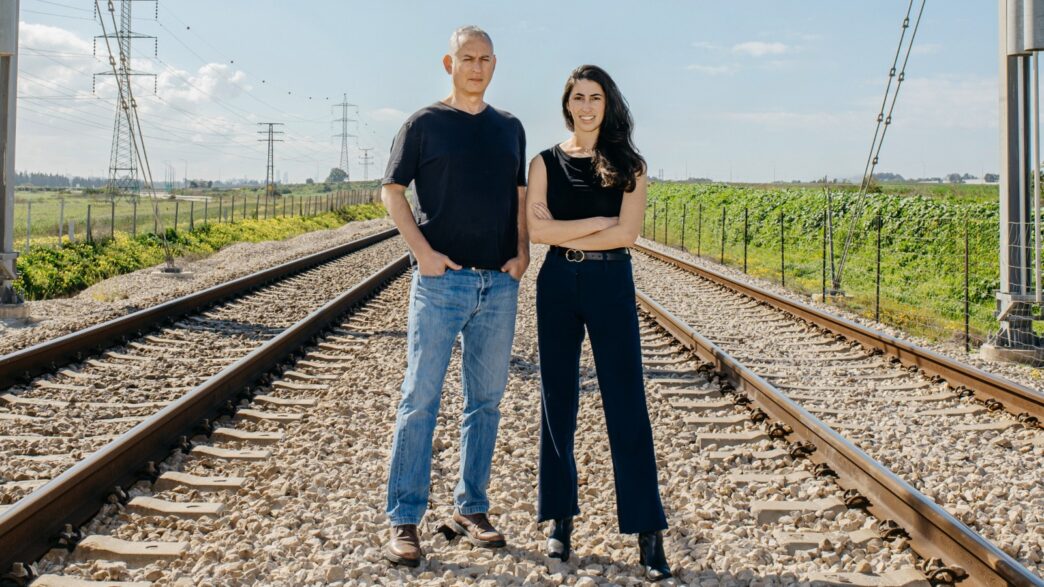
Founded by Dafna Langer and Alon Kessel, Voltify is positioning itself as a systems-level rethink of rail energy infrastructure that bypasses traditional electrification models in favor of a flexible, distributed approach designed to reduce both emissions and operating costs.
The company’s ambition is clear: enable rail operators to transition away from diesel without the massive capital burden typically associated with overhead wiring and grid-scale electrification.
The $11 Billion Diesel Problem in North American Rail
Freight rail remains one of the most energy-intensive components of global supply chains, particularly in North America. According to Voltify, the six largest U.S. rail operators collectively spend approximately $11 billion annually on diesel fuel.
While full electrification has long been viewed as the most direct path to reducing both costs and emissions, the economics have proven prohibitive. Traditional rail electrification, relying on overhead wire systems, would require more than $1 trillion in infrastructure investment across major rail networks, effectively placing it out of reach for most operators.
Voltify is instead targeting the problem from a different angle: reducing reliance on centralized infrastructure altogether.
“We built Voltify to solve one of the rail industry’s biggest challenges: energy costs,” said Langer, Co-founder and CEO of Voltify. “Our platform allows rail companies to access clean, affordable energy without changing the way they operate. If you can reduce energy costs by even 5%, it’s huge. If you can reduce them by more than 20%, it becomes transformative.”
A Moving Electrification System, Not a Fixed Grid
At the core of Voltify’s approach is a distributed energy system that combines battery-powered locomotives, dynamic fast-charging technology, and renewable-powered microgrids deployed along rail corridors.
Unlike conventional electrified rail systems that require continuous overhead infrastructure or battery systems that require trains to stop and recharge, Voltify’s platform enables dynamic charging while trains are in motion. The company argues this removes one of the most persistent bottlenecks in electrified freight logistics: downtime.
Crucially, Voltify also claims its approach eliminates what it calls the “green premium,” reframing decarbonization as a cost advantage rather than a tradeoff.
“Our goal is to lower energy costs by over 20%; this is not just the diesel costs, but all the next energy that the industry needs,” Langer said. “Rail companies shouldn’t have to choose between sustainability and economics. We’re making clean energy the financially smarter option.”
Building a Distributed Microgrid Backbone for Rail
Voltify’s platform is anchored by a network of renewable-powered microgrids distributed along rail corridors. These systems generate and store energy locally using solar infrastructure, battery storage, and energy management software designed to balance supply and demand in real time.
The result is a localized energy backbone for rail operations that reduces dependence on fossil fuels and enhances resilience across long-distance freight routes.
“Fortescue is committed to investing in the research and development of innovative technologies to drive Real Zero and accelerate decarbonisation across our operations and beyond. Voltify’s mission to eliminate emissions in the heavy rail industry aligns with ours at Fortescue, and we’re encouraged by the solutions they are working on,” said Gus Pichot, CEO Growth & Energy at Fortescue.
Voltify describes its long-term vision as restoring energy ownership to operators, reducing reliance on external fuel supply chains.
“Our vision is to bring the power back to the industry, without dependency on buying diesel elsewhere; this gives the company complete ownership, thus complete freedom,” said Langer.
Decarbonization at Scale and Early Industry Traction
Beyond cost reduction, Voltify is positioning its platform as a large-scale climate intervention. The company estimates that by 2035, its system could reduce more than 50 million tons of CO₂ emissions annually from rail operations alone.
It also highlights the potential secondary impact of reducing reliance on high-emission peaker plants, which collectively contribute more than 60 million tons of CO₂ emissions each year in energy markets.
Voltify’s system is designed to be fully renewable, autonomous, and compliant with stringent safety standards, enabling rail operators to decarbonize without disrupting established logistics flows.
Early commercial traction appears to be building. The company has signed a paid pilot agreement with one of the world’s largest Class I rail operators, with deployment expected to begin in the coming months. It is also reporting a growing pipeline of interest from U.S. regional rail operators.
The company plans to demonstrate its fully integrated locomotive, charging, and microgrid system later this year.
“Rail is the backbone of global logistics,” Langer said. “If we can transform how energy is produced and consumed across this network, we unlock enormous economic and environmental benefits.”