Understanding The Walker S2 Robot Price Point
So, let’s talk about the big question: how much does Ubtech’s Walker S2 actually cost? It’s not a simple number you can just look up on a price tag, you know? There are a bunch of things that play into the final price, and it’s worth digging into them a bit.
Factors Influencing The Walker S2 Robot Price
When you’re looking at a piece of advanced tech like the Walker S2, the price isn’t just about the parts. It’s about the whole package. Think about it:
- Research and Development: Ubtech has poured a ton of money into making this robot work. That includes all the scientists, engineers, and designers who spent years figuring out how to make it walk, balance, and do all the cool stuff it can do. That kind of brainpower doesn’t come cheap.
- Component Quality: This isn’t your average gadget. The sensors, motors, processors, and materials used in the Walker S2 are top-notch. They need to be durable and precise, especially for industrial use, and that drives up the cost.
- Manufacturing Complexity: Building a humanoid robot is way more complicated than assembling a car. You’ve got intricate joints, delicate electronics, and a whole lot of moving parts that need to fit together perfectly. The factories and processes needed for this are specialized and expensive.
- Software and AI: The ‘brain’ of the robot is just as important as its body. The advanced AI, the control systems, and the software that allows it to operate autonomously or collaboratively all require significant investment and ongoing updates.
Comparative Cost Analysis Of Humanoid Robots
It’s helpful to see where the Walker S2 fits in with other advanced robots. While some robots, like the Unitree R1, are being positioned as more accessible platforms for developers, they often focus on specific capabilities rather than the all-around performance and endurance of something like the S2. The R1 might be a good entry point for experimentation, but it’s not built for the same kind of continuous, heavy-duty operation. On the other end, you have robots that are still largely in the prototype phase, like Tesla’s Optimus, where the final price is still a big unknown and likely years away from mass production. The Walker S2 seems to be aiming for a sweet spot, offering advanced capabilities that justify a higher price point than entry-level models but perhaps less than some of the ultra-high-end research platforms.
Investment In Advanced Humanoid Technology
Buying a Walker S2 isn’t just a purchase; it’s an investment. Companies looking at this robot are thinking about how it can change their operations. For example, its ability to swap batteries autonomously means it can keep working around the clock. That kind of continuous operation can save companies a lot of money in the long run by reducing downtime and the need for constant human oversight. So, while the upfront cost might seem high, the potential return on investment through increased productivity and efficiency is what makes it attractive for serious industrial applications.
Key Features Driving The Walker S2 Robot Value
When you look at the Walker S2, it’s clear Ubtech didn’t just slap some arms and legs on a computer. They’ve packed in some serious tech that really makes it stand out, especially if you’re thinking about using it for actual work, not just showing it off.
Endurance and Continuous Operation Capabilities
This is a big one. A lot of robots look cool doing a few tasks, but they need a break. The Walker S2 is built for the long haul. Its design prioritizes staying active for extended periods, which is a game-changer for industries where downtime costs a fortune. Think about a factory floor or a busy warehouse; you can’t just stop everything for a battery change. This robot is made to keep going, reducing the need for constant human oversight and intervention.
Autonomous Battery Swapping System Innovation
How does it keep going? The Walker S2 has this neat trick up its sleeve: an autonomous battery swapping system. When its battery gets low, it can actually go and swap itself out for a fresh one without anyone needing to help. This is super important for keeping operations running 24/7. It means the robot can pretty much work around the clock, only pausing briefly to refuel itself. This kind of self-sufficiency is what makes robots like the S2 practical for demanding jobs.
Industrial Application Suitability
All these features point to one thing: this robot is meant for business. It’s not just a research project; it’s designed to fit into industrial settings. The ability to operate continuously, handle tasks efficiently, and integrate into existing workflows makes it a serious contender for manufacturing, logistics, and other heavy-duty fields. While other robots might be great for specific, simple tasks or just for showing off new tech, the Walker S2 seems built with real-world, demanding applications in mind.
The Broader Humanoid Robot Market Landscape
The world of robotics is really heating up, and humanoids are right in the middle of it. It’s not just about one or two companies anymore; it feels like a whole industry is taking shape. We’re seeing some pretty big predictions out there. For instance, some folks think the market could hit a massive $5 trillion by 2050. That’s a huge number, and it includes not just the robots themselves but all the software, services, and new ways we’ll end up using them.
Market Growth Projections For Humanoids
Right now, the growth looks pretty wild. One report suggests the humanoid robot market could grow by a staggering 154% annually between 2024 and 2027. That kind of jump could push the market value past $2 billion pretty quickly. Why the surge? Well, labor costs are going up everywhere, and companies are really looking for ways to automate more tasks. Plus, these robots are just getting better and better at what they do.
China’s Role In Humanoid Robot Production
Keep an eye on China. They’re really pushing to be a leader in this space. By 2025, it looks like a good number of Chinese companies – maybe six out of eleven major ones – are planning to build over a thousand robots each. That’s a serious production goal and shows their commitment to making a big impact.
Specialized Robots Versus General-Purpose Humanoids
It’s interesting to see how humanoids fit into the bigger picture. We already have robots that are super good at one specific job, like moving things around a warehouse. But the real game-changer everyone’s aiming for is the general-purpose humanoid – a robot that can do a bit of everything, just like a person. This pursuit of adaptable, multi-tasking robots is what’s driving a lot of the investment and research right now. While specialized robots are great for immediate needs, the long-term bet is on these more versatile humanoids that can fit into almost any environment.
Technological Advancements And Their Cost Implications
So, what’s really driving up the price tag on these advanced robots like the Walker S2? It’s not just about making them look cool; it’s about packing them with some seriously smart tech. Think of it like buying a high-end smartphone versus a basic flip phone – the brains inside make a huge difference, and that brainpower costs money.
On-Device AI Processing Power
One of the biggest cost factors is the artificial intelligence. We’re not talking about simple programming here. These robots need to process a ton of information in real-time to understand their surroundings, make decisions, and interact safely. Having powerful AI that can run directly on the robot, rather than relying on a constant connection to a remote server, is a game-changer for speed and reliability, but it also means more expensive chips and complex software. This on-device processing allows for quicker reactions, which is super important when you’re dealing with dynamic environments. It’s like having a super-fast computer built right into the robot’s head.
Collaborative Operation Design
Another area that adds to the cost is how these robots are designed to work with people and other machines. This isn’t just about avoiding collisions; it’s about creating a smooth, intuitive partnership. Designing robots that can safely and effectively share space and tasks with humans requires sophisticated sensors, advanced control systems, and a lot of testing. It means the robot needs to be able to predict human movements and adapt its own actions accordingly. This level of interaction is complex and adds significant development and hardware expenses.
Hardware Breakthroughs In New Platforms
Beyond the brains, the physical bodies of these robots are also getting a serious upgrade, and that comes with a price. We’re seeing breakthroughs in materials, joint design, and power systems. For instance, lighter yet stronger materials can reduce the robot’s weight, making it more energy-efficient and agile. Better joint actuators allow for more fluid and precise movements, mimicking human dexterity. These hardware innovations are what allow robots to perform more complex tasks, but they often involve cutting-edge engineering and manufacturing processes that are, frankly, expensive right now. It’s a bit of a cycle: the more advanced the hardware, the higher the initial cost, but this also paves the way for future, potentially more affordable, generations.
Challenges And Future Outlook For Humanoid Robots
So, we’ve talked a lot about what makes the Walker S2 and other advanced humanoids so impressive, but let’s get real for a second. Building these things isn’t exactly a walk in the park. There are some pretty big hurdles to clear before we see them everywhere, doing everything.
Addressing Dexterity And Hardware Flaws
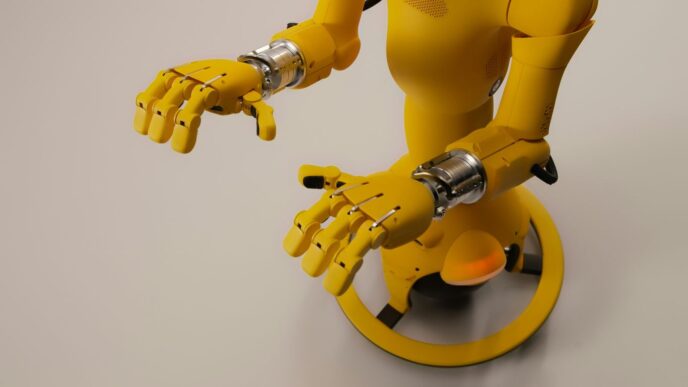
One of the biggest headaches right now is getting a robot’s hands to work like ours. Think about picking up a delicate egg or tying your shoelaces – that takes a crazy amount of fine motor control. Early versions of some robots have shown issues with this, and honestly, sometimes the hardware itself just isn’t up to snuff. We’ve heard about joints overheating, which is a real bummer for continuous operation. It’s like trying to run a marathon with a sprained ankle; it just doesn’t work well.
- Achieving human-like hand dexterity for intricate tasks.
- Overcoming hardware limitations like overheating components.
- Improving battery life to allow for longer operational periods.
Reliability, Safety, And Ethical Considerations
Beyond just making them work, we need to make sure they work safely and reliably. If a robot is going to be working alongside people, especially in places like hospitals or homes, it absolutely has to be dependable. No one wants a robot malfunctioning and causing problems. Then there’s the whole ethical side of things. What happens to jobs when robots can do them? How do we make sure these powerful machines aren’t misused? These aren’t small questions, and they need solid answers before we can really embrace this technology.
Long-Term Market Potential And Investment
Despite the current bumps in the road, the future looks pretty bright, if you ask the big players. Some analysts are talking about the humanoid robot market hitting trillions of dollars by mid-century. That’s a massive number, and it includes not just the robots themselves but all the software, services, and new uses we haven’t even thought of yet. Companies are pouring money into this because they see the potential for robots that can adapt to our world, not the other way around. It’s a long game, for sure, but the investment signals a strong belief in where this is all headed. The next few years will be key for ironing out the kinks and making these robots ready for the big time.
So, What’s the Bottom Line on the Walker S2?
Alright, so we’ve looked at the Walker S2 and what it costs. It’s clear that Ubtech isn’t just making a robot for show; they’re aiming for serious work, especially with that cool battery-swapping trick for constant operation. But, like with all these advanced humanoids, the price tag is definitely up there. It makes you think about who this robot is really for right now – probably big companies that can afford the investment for specific jobs. We’re still a ways off from having these robots in every home, but the Walker S2 shows us what’s possible and where things might be heading. It’s a big step, for sure, but one that comes with a significant cost.