Introducing The Waymo 6th Generation Driver
Alright, let’s talk about what’s new with Waymo. They’ve just rolled out their 6th Generation Driver, and it feels like a pretty big deal for the whole self-driving car scene. Think of it as the engine for their next big push into more cities and more roads. They’ve managed to simplify things a bit, which apparently helps bring down costs, but they’re sticking to their guns on safety – no compromises there.
A New Era of Autonomous Expansion
This new system is really the main force behind Waymo’s plans to grow. It’s designed to be more adaptable, letting them get into trickier places and different kinds of weather, like real winter conditions. It’s all about scaling up, and doing it safely, which is obviously the main thing.
Streamlined Configuration for Growth
One of the key things they’ve done is make the setup more straightforward. This isn’t just about making it easier for them; it means they can build these systems faster and, hopefully, cheaper. This streamlined approach is what lets them think about putting the Waymo Driver into all sorts of different vehicles and expanding their reach.
Uncompromising Safety Standards
Even with all the upgrades and cost-saving measures, Waymo is making it clear that safety is still number one. They’ve been driving for years, racking up millions of miles, and all that experience is baked into this new system. They’re not cutting corners when it comes to keeping people safe on the road. It’s built on everything they’ve learned from their previous generations.
Enhanced Sensing Capabilities
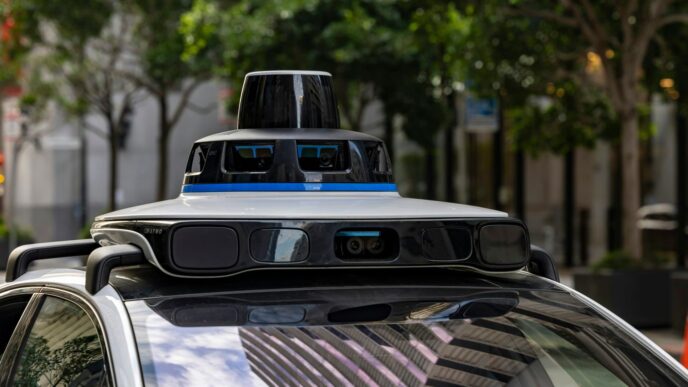
The Waymo Driver’s ability to see and understand the world around it is pretty amazing, and the 6th generation really takes things up a notch. It’s not just about having more sensors; it’s about how they all work together, like a super-team, to paint a really clear picture of what’s happening on the road.
Advanced Vision System
This new vision system is a big deal. It uses a next-gen 17-megapixel imager, which is a huge leap in automotive camera tech. Think of it like having eyes that can see way more detail than a regular camera, even in tricky lighting. It can pick out important stuff from dark shadows and also handle the glare from bright headlights or emergency lights without getting overwhelmed. We’ve also managed to use fewer cameras overall, which is cool because it means the system is more efficient. Plus, these cameras have built-in ways to keep themselves clean, so rain, snow, or road grime won’t mess with their view. If the cameras ever do have trouble seeing, the lidar and radar are right there to back them up.
High-Resolution Lidar Technology
Lidar is like the system’s own flashlight, using lasers to create a 3D map of everything. The 6th-gen lidar is pretty impressive. It can spot smaller things, like pedestrians, even when they’re close to bigger objects like cars, and it works day or night. We’re using lidar tech that’s gotten cheaper over the years, which helps us build a system that sees further and more clearly, all while keeping costs down for future growth. There are also short-range lidars placed strategically to give the cameras extra distance information, which is super important when you’re close to things like opening car doors or other road users. They’ve also improved how the lidar works in bad weather, cutting through road spray so the Waymo Driver can see better even when things get messy.
Robust Imaging Radar
Radar is another key player, especially when the weather gets rough. It creates detailed maps that track objects’ distance, speed, and size, no matter the lighting or weather. The new radar is more sensitive and works with new algorithms to improve its performance in rain and snow. This gives the system more time to figure out what’s going on and make the right move. To top it all off, the Waymo Driver also uses external audio receivers, or EARs, placed around the top. These help it hear important sounds like sirens from emergency vehicles or train crossings, often before it can even see them, and figure out where the sound is coming from. It’s all about having multiple ways to sense the world, so the Waymo Driver is always aware.
Adapting To Diverse Environments
Navigating Extreme Weather Conditions
Driving in bad weather is tough, right? Rain, snow, fog – it makes seeing the road a real challenge, even for us humans. Waymo’s 6th-generation system is built to handle this. It uses a mix of sensors that work together, like cameras, lidar, and radar. The cameras have special cleaning systems to keep raindrops and grime off, so they can still see clearly. Lidar can see through snow and fog better than just eyes, picking out details like pedestrians even when it’s hard to see. Radar is also great in bad weather, tracking objects and their speed no matter what’s going on outside. This multi-sensor approach means the Waymo Driver doesn’t rely on just one thing to see, making it much safer when the weather gets rough.
Handling Complex Urban Scenarios
City driving is a whole other ballgame. Think busy intersections, cyclists zipping by, people opening car doors unexpectedly – it’s a lot to keep track of. The Waymo Driver uses short-range lidar sensors placed around the vehicle. These give super accurate distance measurements, down to the centimeter. This is important for things like staying a safe distance from pedestrians or knowing exactly how close you are to a parked car. Plus, the system has external audio receivers, or EARs, that can hear things like sirens from emergency vehicles. It can even tell which direction the sound is coming from, often before it can see the vehicle. This helps the car react quickly and safely in unpredictable city environments.
Expanded Operational Footprint
Because the 6th-generation Waymo Driver is so good at handling different conditions and complex situations, it can drive in more places. This means Waymo can expand its service area. They’re not just sticking to sunny, simple routes anymore. The system is designed to work in places with heavy snow or busy city centers. This allows Waymo to bring its autonomous driving technology to more people in more cities, making self-driving cars a reality for a wider range of everyday travel needs. It’s all about making the technology work reliably, no matter where you are.
Scalability and Cost Efficiency
Making the Waymo Driver work everywhere for everyone means we have to build a lot of them, and we have to do it without breaking the bank. That’s where this sixth-generation system really shines. We’ve been thinking a lot about how to make this whole thing work on a massive scale, not just in a lab or a small test area.
Designed for High-Volume Production
We’ve redesigned our autonomous driving factory in Metro Phoenix. It’s set up to build tens of thousands of these systems every year. We’re working closely with car manufacturers right from the start, making sure the base vehicles are ready for our tech. This means we can build them faster and more efficiently, which is key to getting more Waymo vehicles on the road.
Leveraging Industry Cost Reductions
It’s not just about what we do in-house. The whole industry is seeing big drops in the cost of parts, especially things like lidar and radar sensors. We’re taking advantage of these market changes. By using more affordable, yet still top-notch, components and combining them with our own custom-designed chips and optics, we’re getting better performance at a lower price. It’s a smart way to keep costs down as we grow.
Optimized for Future Expansion
This whole system is built with the future in mind. We’ve made it more adaptable, so it can be fitted into different types of vehicles and handle new tasks as they come up. The goal is to make it easier and cheaper to deploy Waymo Drivers in new cities and for new services. This means we can expand our reach much faster than before, bringing autonomous rides to more people without a huge jump in expenses.
Vehicle Platform Versatility
Waymo’s sixth-generation system isn’t just about better sensors; it’s also built to be super adaptable. Think of it like a universal remote for self-driving tech. The goal here is to make the Waymo Driver work across all sorts of vehicles, not just one specific model. This means we can put the same core technology into different types of cars, trucks, or whatever comes next, without a massive overhaul each time.
Adaptable to Multiple Vehicle Types
This new system is designed from the ground up to be flexible. It can be fitted onto various vehicle bases, from the new Ojai vans to the Hyundai IONIQ 5 SUVs. The hardware can be tweaked, and the AI can be adjusted to suit each vehicle’s specific needs. This adaptability is key for Waymo’s expansion plans. It means they aren’t tied to just one car manufacturer or design. They can work with different partners and use vehicles that make sense for different jobs or regions.
Integration with New Robotaxis
We’re seeing this versatility in action with the introduction of the Ojai vehicles, which use a base from Geely. This is a big step because it shows the Waymo Driver can be integrated into new robotaxi designs. It’s not just about putting the tech into existing cars; it’s about working with automakers to build vehicles that are ready for autonomous driving from the start. This makes the whole process smoother and more efficient.
Future-Proofing for Fleet Growth
By making the Waymo Driver platform-agnostic, the company is setting itself up for massive growth. They can scale up production much faster because the core system is standardized. This means they can deploy more vehicles, faster, across more cities. It’s all about building a foundation that can handle whatever the future of mobility looks like, whether that’s more robotaxis, delivery vehicles, or something else entirely. This flexibility is what allows Waymo to keep pushing the boundaries of autonomous driving.
The Foundation of Waymo’s Future
Seven Years of Safety-Proven Service
It’s easy to get excited about new tech, but what really matters is how it performs over time, especially when lives are on the line. Waymo has been at this for a while now, and their sixth-generation system isn’t just a fresh coat of paint; it’s built on a solid seven years of real-world driving. Think about that – seven years of putting their technology through its paces.
Nearly 200 Million Autonomous Miles
This isn’t just theoretical testing. Waymo has racked up close to 200 million miles on public roads. That’s a massive amount of data and experience. They’ve driven through the busiest city centers and along countless miles of highways. This sheer volume of driving means they’ve encountered just about every situation imaginable, from sudden stops to tricky intersections and unexpected road debris. This extensive mileage is what allows them to refine their systems and build confidence in their ability to handle the unexpected.
Accelerating the Journey to Road
With all this accumulated experience and the advancements in their sixth-generation system, Waymo is now in a position to really speed things up. They’re not just testing anymore; they’re deploying. This new system is designed to be more efficient and adaptable, which means they can bring their autonomous driving service to more people, in more places, faster than ever before. It’s about taking what they’ve learned over millions of miles and turning it into a service that can be scaled up for widespread use.
The Road Ahead
So, Waymo’s sixth-generation system is a pretty big deal. It’s not just about making their robotaxis better; it’s about making them cheaper to build and able to handle tougher conditions, like snow and rain. This means they can really start expanding, not just in the cities they’re already in, but to a lot more places, and maybe even other countries. They’ve put a lot of work into making the sensors – the cameras, lidar, and radar – work together even better, so the car can see everything, all the time. It’s a major step, and while there are still challenges, like dealing with regulators and proving safety everywhere, this new tech feels like the start of something bigger for self-driving cars.