Understanding the Blue Origin’s Launch Scrub
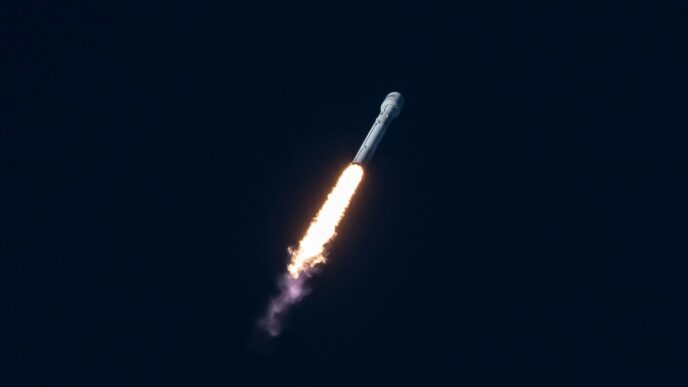
So, Blue Origin’s big New Glenn rocket launch, the NG-2 mission, didn’t quite make it off the pad as planned. It was supposed to carry NASA’s ESCAPADE spacecraft to Mars, a pretty important job. But, as often happens with rocket launches, a few things got in the way. The whole process was scrubbed after about an hour and a half of trying to get it airborne.
Weather Concerns Halt New Glenn Mission
First up, the weather. You might think a little rain wouldn’t stop a giant rocket, but there are specific rules. For this launch, the main culprit was the "cumulus cloud rule." Basically, rockets don’t like flying through certain types of clouds because of the risk of lightning. It’s not just about the clouds themselves, but also how high they reach and whether they’re producing any electrical activity. NASA has its own detailed guidelines, and Blue Origin follows similar ones to keep the rocket and its precious cargo safe. They had to wait for the storms at the launch pad to clear, which caused an initial delay.
Technical Glitches During Countdown
But it wasn’t just the sky causing problems. There were also some technical hiccups on the ground. During the final countdown, there was a hold related to the rocket’s ground system. Reports mentioned something about "LVHD retraction," which sounds like it could be related to the "Launch Vehicle Hydrogen Disconnect." This is the system that handles the hydrogen fuel for the rocket, including fueling and venting. Any issue here means you can’t proceed with the launch until it’s sorted out.
Navigational Hazards Impact Launch Window
Adding to the mix, there was an unexpected obstacle in the sky – or rather, on the sea. A cruise ship ended up in the launch path, which is a big no-no. Before any launch, safety zones are established, and boats are supposed to stay clear. When a ship wanders into that area, it forces a hold. This requires coordination with the Coast Guard and FAA to ensure the area is safe before liftoff. It’s a reminder that launching a rocket isn’t just about the technology; it involves a lot of coordination with various agencies and even civilian traffic.
The Role of Weather in Launch Delays
So, the big New Glenn launch got called off, and a big part of that was the weather. It’s not just about rain, though. Space agencies and private companies like Blue Origin have some pretty strict rules about what kind of weather is okay for a launch. It’s all about keeping that multi-million dollar rocket and its precious cargo safe.
Weather Concerns Halt New Glenn Mission
Blue Origin’s second New Glenn mission, carrying NASA’s ESCAPADE spacecraft, was scrubbed after an attempt that lasted about an hour and a half. The primary reason cited was weather. While Florida’s weather can change on a dime, and a brief rain shower at the launch pad was cleared with a short delay, other weather factors ultimately prevented the launch.
Cumulus Cloud Rule Explained
One of the main weather-related issues that stopped the launch was a violation of the "cumulus cloud rule." This isn’t just about avoiding a little drizzle. These rules are put in place by the launch provider and monitored by the range. The core idea is to prevent the rocket from flying through or too close to cumulus clouds. Why? Because these types of clouds can build up a significant electrical charge, and nobody wants a rocket getting zapped by lightning during ascent. Lightning strikes are a major no-go for rocket launches.
NASA has its own detailed guidelines, which are pretty specific about cloud tops and temperatures. For instance, they have rules about not launching through cumulus clouds if their tops are too high or too cold, especially if they’re producing precipitation. They also consider readings from field mills, which measure electrical fields, to assess the risk of lightning.
Lightning Strike Avoidance
At its heart, the concern is lightning. Rockets are packed with fuel, and a lightning strike, while not guaranteed to cause a catastrophic failure, is an unnecessary risk. When you’re trying to escape Earth’s gravity, playing it safe with electrical storms is just common sense. It’s better to wait for clearer skies than to risk the rocket.
NASA’s Specific Weather Guidelines
NASA’s weather rules for launches are quite detailed. They often involve:
- Cloud Cover Limits: Restrictions on launching through or near certain types of clouds, like cumulus clouds, based on their height and temperature.
- Lightning Proximity: Rules about staying a certain distance away from clouds that might be producing lightning.
- Electrical Field Monitoring: Using instruments like field mills to measure the electrical activity in the atmosphere around the launch site.
These guidelines are designed to ensure the safety of the launch vehicle, its payload, and the surrounding area. For a mission like carrying NASA’s ESCAPADE spacecraft, adhering to these stringent weather protocols is non-negotiable.
Technical Issues Affecting Blue Origin’s Launch
So, it wasn’t just the clouds that caused the New Glenn rocket to stay grounded. Turns out, there were a few hiccups with the hardware and systems on the ground too. These kinds of things happen, right? Rockets are incredibly complex machines, and getting them ready for liftoff involves a whole lot of moving parts, both on the rocket itself and the infrastructure supporting it.
Ground System Malfunctions
During the countdown, there was a mention of an issue with the "LVHD retraction." While the exact details weren’t fully disclosed, this likely refers to a system that needs to move away from the rocket just before launch. Think of it like a big arm that connects to the rocket for fueling or other support, and it has to pull back cleanly. If that arm doesn’t retract properly, or if there’s a problem with the mechanism doing the retracting, it’s a definite no-go. It’s all about making sure everything is clear and safe for the rocket’s ascent.
Potential Hydrogen Disconnect Issues
Following the "LVHD retraction" clue, a strong possibility is that the issue was related to the "Launch Vehicle Hydrogen Disconnect." New Glenn, like many powerful rockets, uses liquid hydrogen as fuel. This fuel needs to be carefully managed – loaded, potentially unloaded if there’s a delay, and vented. The disconnects are the points where these fuel lines connect to the rocket. If there’s a problem with these connections, like a leak or a failure to disconnect cleanly at the right time, it poses a serious risk. Dealing with super-cold, highly flammable hydrogen means any issue here is a showstopper.
Impact of Ground Equipment Problems
Ultimately, problems with ground equipment can have a ripple effect. Whether it’s a sensor that’s not reading correctly, a valve that’s stuck, or a communication link that’s down, these issues can trigger automatic holds or force the launch team to call a scrub. It highlights how much the rocket relies on the ground crew and the systems that support it. For a mission as important as carrying NASA’s ESCAPADE spacecraft, every single component, from the rocket itself to the launch pad equipment, has to be working perfectly. A glitch in any of these areas means the launch has to wait.
External Factors Influencing the Launch
Cruise Ship Intrusion into Launch Path
So, picture this: you’re all set for a massive rocket launch, countdown’s ticking, and suddenly, a cruise ship decides to take a leisurely stroll right through the designated safety zone. Yep, that actually happened. Apparently, a cruise ship ended up in the path where the New Glenn rocket was supposed to go. It’s a bit wild to think about, but these massive vessels can really mess with launch schedules. Companies like Blue Origin have to coordinate with the Coast Guard and the FAA to set up these clear zones, and when something unexpected like a cruise ship wanders in, it throws a wrench in the works. It’s not like they can just tell the ship to "move it or lose it" – maritime law and all that.
Coordination with Coast Guard and FAA
Getting a rocket off the ground isn’t just about the rocket itself; it involves a whole network of people making sure everything is safe. Blue Origin works closely with the U.S. Coast Guard and the Federal Aviation Administration (FAA) to make sure the skies and seas are clear during launch. This involves setting up temporary restricted areas, both in the air and on the water, to keep everyone safe in case of any issues during liftoff or ascent. It’s a pretty complex dance of communication and planning to get all the necessary clearances. They had to work with these agencies to figure out the cruise ship situation and ensure the launch path was actually clear.
Government Shutdown Implications
Now, this is where things get a little complicated. There was a government shutdown happening around the time of the launch. While it might not have been the direct cause of the scrub, it can definitely add layers of difficulty. The FAA, for instance, has specific roles in approving launches, and during a shutdown, their operations can be scaled back or altered. Blue Origin mentioned they were talking with the FAA about potential exceptions to policies that might have been in place due to the shutdown. It’s a reminder that even when you’re focused on the stars, earthly matters like government funding can still have an impact.
The Significance of the New Glenn Mission
This particular launch of Blue Origin’s New Glenn rocket, designated NG-2, is a pretty big deal for a few reasons. It’s not just another test flight; it’s carrying a really important payload for NASA. We’re talking about the ESCAPADE mission, which involves two spacecraft designed to study Mars. These probes will be looking at how the Red Planet’s magnetic field interacts with space weather and its atmosphere. Getting this mission off the ground successfully is a major step for Blue Origin as they try to make a name for themselves in the heavy-lift launch market.
Carrying NASA’s ESCAPADE Spacecraft
The ESCAPADE mission is a key part of NASA’s ongoing exploration of Mars. The two spacecraft will orbit the planet, gathering data that scientists hope will shed light on how Mars’s magnetic field works and how it affects the planet’s atmosphere. This kind of research helps us understand planetary evolution and space weather, which is important for future missions, including those with human crews. Successfully deploying these spacecraft would mark a significant achievement for both NASA and Blue Origin.
Blue Origin’s Ambitions in Space Exploration
New Glenn is Blue Origin’s heavy-lift orbital rocket, and it’s central to the company’s long-term goals. They’ve got big plans, aiming to support everything from satellite deployment to human spaceflight. This mission, carrying NASA’s scientific payload, is a concrete demonstration of their capabilities and their commitment to becoming a major player in the space industry. It’s about more than just launching rockets; it’s about building a future in space.
Competition with SpaceX in the Launch Industry
Let’s be honest, the space launch industry is pretty competitive right now, and SpaceX is definitely the company everyone’s watching. Blue Origin, with its New Glenn rocket, is aiming to challenge that dominance. A successful launch and payload delivery, especially for a NASA mission, would be a huge win. It shows they can compete on reliability and capability, which is exactly what customers like NASA look for. It’s a race to see who can launch more, more reliably, and for less cost, and this mission is a big part of Blue Origin’s strategy to keep up.
Future Launch Attempts for Blue Origin
So, the launch didn’t happen. What’s next for Blue Origin and its big New Glenn rocket? Well, the immediate plan is to take a breath, figure out exactly what went wrong, and then look for another shot at getting those NASA spacecraft to Mars. They’re "reviewing opportunities for our next launch attempt based on forecasted weather," as they put it. That means they’ll be watching the skies and the calendar.
Reviewing Launch Opportunities
When a launch gets scrubbed, especially for weather, it’s not just a matter of waiting for the sun to come out. There’s a whole dance of checking weather patterns, making sure the launch range is clear, and coordinating with all the folks involved, like the FAA and the Coast Guard. Blue Origin has to find a new slot in the schedule that works for everyone. It’s a bit like trying to reschedule a big event when everyone’s already busy.
Potential for a 24-Hour Reset
Often, if a launch is called off early enough in the countdown, especially due to weather, the teams will aim for a quick turnaround. The idea is to try again the very next day, within a similar time window. This is what they call a "24-hour reset." It makes sense because the rocket is already prepped, and the teams are on standby. However, this is only possible if the original reason for the scrub, like a specific cloud formation or a gust of wind, has cleared up and the forecast for the next day looks good. If the issue was more complex, or if the weather just isn’t cooperating, they might have to wait longer.
Booster Landing Objectives
Beyond just getting the rocket off the ground and the payload to Mars, Blue Origin has another big goal with New Glenn: landing the first stage. This is a pretty big deal because it’s part of making the rocket reusable, which is key to making spaceflight more affordable in the long run. They’re aiming for a vertical landing, similar to what SpaceX has done. So, even after a scrubbed launch, the engineers will still be focused on perfecting that booster recovery process for future flights. It’s not just about the destination; it’s about how you get there and how you prepare for the next trip.
What’s Next for New Glenn?
So, the New Glenn rocket’s second launch didn’t quite go as planned, getting scrubbed due to weather and a few other hiccups. It’s a bit of a bummer, especially when you’re eager to see that big rocket fly and send NASA’s spacecraft on their way to Mars. Blue Origin hasn’t given a firm date for the next try, but they’re definitely looking at the forecast. Hopefully, they can get everything sorted out soon and nail that launch, and maybe even that booster landing. It’s all part of the process, I guess. Space is hard, and sometimes Mother Nature just doesn’t cooperate.