By Alice Strings — Trusted Guitar String Manufacturer
Rusty guitar strings are one of the most common frustrations for guitar players. Strings that rust too quickly lose tone, feel rough, break more easily, and struggle to stay in tune. In some cases, players notice corrosion after only a few days of use.
So why do guitar strings rust so fast?
The answer usually involves a combination of humidity, sweat acidity, improper storage, and string material. In this guide, we’ll explain the real causes of guitar string corrosion, how to prevent it, and whether coated strings are worth the investment.
What Causes Guitar Strings to Rust?
Guitar strings are made from metal alloys that naturally react with oxygen, moisture, salts, and acids. Once oxidation begins, corrosion gradually damages the string surface and affects both sound and durability.
The most common causes include:
- High humidity
- Sweat and skin oils
- Improper storage
- Poor cleaning habits
- Cheap or uncoated strings
- Temperature fluctuations
- Long-term exposure to air
Understanding these causes helps players extend string life significantly.
1. Humidity and Moisture Exposure
High Humidity Accelerates Oxidation
Moisture in the air is one of the biggest reasons guitar strings rust quickly. Players living in coastal regions, tropical climates, or humid environments often experience faster corrosion.
High humidity allows metal surfaces to oxidize much faster, especially when strings are repeatedly exposed to damp air.
Common high-risk environments include:
- Coastal cities
- Rainy climates
- Poorly ventilated rooms
- Basements or garages
- Outdoor performances
Even short-term moisture exposure can begin damaging untreated strings.
Sweat and Water Contact
Direct moisture contact also speeds up rust formation.
Examples include:
- Sweaty hands during practice
- Playing after exercise
- Water spills
- Rain exposure during outdoor gigs
Sweat is particularly harmful because it contains:
- Salt
- Acids
- Minerals
These substances aggressively attack metal surfaces.
Related Article: Do Coated Guitar Strings Really Last Longer? (Full Test Data)
2. Acidic Sweat: Why Some Players Rust Strings Faster
Some guitarists notice their strings corrode extremely fast, even when using the same strings as other players.
The reason is body chemistry.
Sweat pH and Salt Content Matter
Human sweat varies from person to person. Players with more acidic or salty sweat often experience:
- Rapid discoloration
- Rough string texture
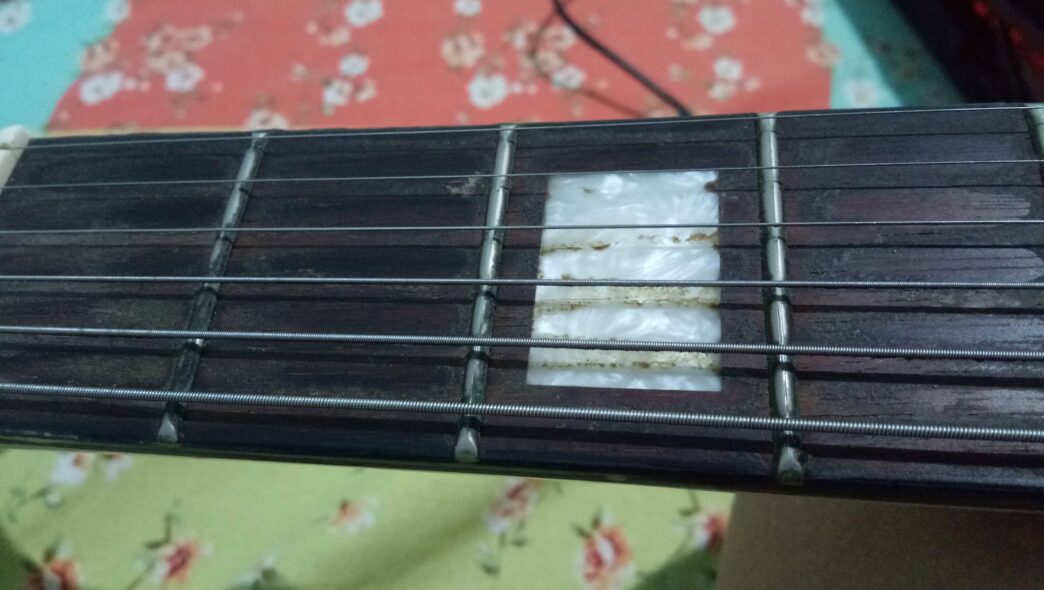
- Black or green corrosion spots
- Shortened string lifespan
This is why some musicians can use one set for months while others destroy strings within days.
Signs Your Sweat Is Causing Corrosion
You may have highly corrosive sweat if:
- Strings rust within 1–2 weeks
- Rust appears mostly where your fingers touch
- Strings feel sticky quickly
- Pickups or hardware also corrode easily
In these cases, coated strings are usually the best solution.
3. Poor String Maintenance Habits
Not Wiping Strings After Playing
One of the biggest mistakes players make is putting the guitar away immediately after playing.
Sweat and oils remain on the string surface and continue reacting with metal long after the session ends.
Simple Fix
After every session:
- Use a clean microfiber cloth
- Wipe both above and below the strings
- Remove sweat and finger oils thoroughly
This simple habit alone can dramatically extend string life.
Playing With Dirty Hands
Dust, oils, lotion, food residue, and dirt from your hands transfer directly onto strings.
Before playing:
- Wash and dry your hands
- Avoid oily lotions
- Keep fingers clean
This reduces contamination and corrosion.
4. Improper Storage Conditions
Leaving Guitars Exposed
Leaving a guitar on a stand for weeks in humid air increases oxidation risk.
Open-air exposure allows moisture and airborne contaminants to settle on the strings continuously.
Better Storage Practices
Store guitars:
- Inside a hard case or gig bag
- In a temperature-stable room
- Away from direct sunlight
- Away from air conditioners or heaters
Temperature Fluctuations
Rapid changes between hot and cold environments create condensation on metal surfaces.
This hidden moisture accelerates rust formation.
Examples:
- Moving guitars between outdoor and indoor environments
- Transporting instruments during winter
- Storing guitars near windows
Stable temperature helps preserve strings longer.
5. Coated vs Uncoated Guitar Strings
One of the biggest factors affecting corrosion resistance is whether the strings are coated.
What Are Coated Strings?
Coated strings include a thin protective layer that helps block:
- Moisture
- Sweat
- Dirt
- Oxidation
This significantly slows down corrosion.
Coated vs Uncoated Comparison
| Feature | Coated Strings | Uncoated Strings |
|---|---|---|
| Rust Resistance | High | Lower |
| Lifespan | 2–5× Longer | Shorter |
| Tone | Slightly warmer | Brighter |
| Maintenance Needs | Lower | Higher |
| Cost | Higher | Lower |
Are Coated Strings Worth It?
Coated strings are especially useful for:
- Players with sweaty hands
- Humid climates
- Touring musicians
- Frequent performers
- Casual players wanting fewer string changes
While they cost more initially, their longer lifespan often reduces overall replacement costs.
Related Article: Phosphor Bronze vs 80/20 Bronze Strings — OEM Manufacturing Differences
6. Which String Materials Resist Rust Better?
Different materials have different corrosion resistance.
| String Material | Rust Resistance | Common Use |
|---|---|---|
| Stainless Steel | Excellent | Electric guitar |
| Nickel-Plated Steel | Good | Electric guitar |
| Pure Nickel | Very Good | Vintage-style electric tone |
| Phosphor Bronze | Moderate | Acoustic guitar |
| 80/20 Bronze | Lower | Bright acoustic tone |
Stainless steel and coated strings generally offer the best durability in humid environments.
7. Signs Your Guitar Strings Need Replacement
Rusty strings affect more than appearance.
Old corroded strings can cause:
- Tuning instability
- Dull tone
- Poor intonation
- Reduced sustain
- Increased breakage risk
Replace strings if you notice:
- Brown or black discoloration
- Rough texture
- Fraying windings
- Loss of brightness
- Difficulty staying in tune
How Often Should You Change Guitar Strings?
General guidelines:
| Player Type | Recommended Replacement |
|---|---|
| Daily Players | Every 3–4 weeks |
| Casual Players | Every 2–3 months |
| Performers | Before recording or gigs |
| Players with Acidic Sweat | More frequently |
Actual lifespan depends heavily on environment, sweat chemistry, and maintenance habits.
How to Prevent Guitar Strings from Rusting
Here are the most effective ways to extend string life:
Daily Maintenance
- Wipe strings after every session
- Wash hands before playing
- Use string cleaner occasionally
Better Storage
- Store guitars in cases
- Use silica gel or dehumidifiers
- Avoid humid rooms
Choose Better Strings
- Use coated strings
- Select corrosion-resistant materials
- Avoid very cheap low-quality strings
Replace Strings Before Severe Corrosion
Waiting too long increases:
- Breakage risk
- Tuning problems
- Poor sound quality
If you are experiencing persistent issues with tuning stability or frequent string breakage, please refer to our [Guide to Fixing Common Guitar String Problems]
Anti-Rust Solutions for Guitar String Brands
For distributors, retailers, and private-label brands, corrosion prevention is also a packaging and logistics issue.
Professional manufacturers can reduce rust risks through:
- Vacuum-sealed packaging
- Foil anti-moisture pouches
- Nano anti-rust coatings
- Desiccant packs
- Controlled packaging environments
These solutions are especially important for:
- International shipping
- Humid regional markets
- Long warehouse storage cycles
Why More Brands Choose Coated Guitar Strings
Many private-label brands now prefer coated strings because they offer:
- Longer shelf life
- Better customer satisfaction
- Reduced return rates
- Premium product positioning
- Better performance in humid markets
For retailers, “anti-rust” and “long-lasting” features also improve perceived value and conversion rates.
Final Thoughts
Guitar strings rust quickly mainly because of moisture, sweat acidity, poor storage, and lack of protective coatings. Fortunately, most corrosion problems can be reduced through proper maintenance and better string selection.
If you frequently experience rusty strings, consider:
- Switching to coated strings
- Improving storage conditions
- Cleaning strings after every session
- Choosing corrosion-resistant materials
Better string care not only improves tone and tuning stability, but also extends the overall playing life of your instrument.
Reliable Anti-Rust Guitar Strings from Alice Strings
Alice Strings provides high-quality coated and uncoated guitar strings for acoustic, electric, classical, and bass guitars. With advanced manufacturing technology, stable material quality, and professional OEM packaging solutions, Alice helps brands and musicians reduce corrosion problems while maintaining excellent tone and playability.
Whether you need:
- Long-lasting coated strings
- OEM private-label production
- Anti-rust packaging solutions
- Wholesale guitar string supply
Alice Strings offers dependable solutions for global music markets.
Contact Alice Strings
- Request sample sets
- Compare coated vs uncoated options
- Explore OEM packaging solutions
- Get wholesale pricing and catalogs
Play longer. Sound better. Protect your strings with Alice.