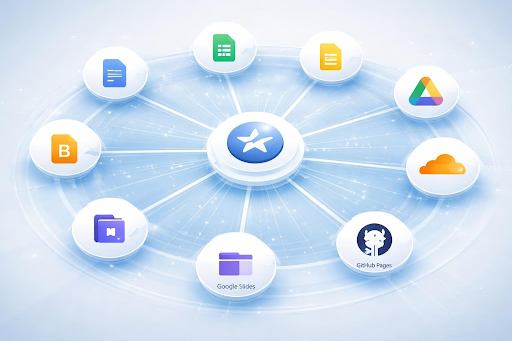
As search rankings become increasingly difficult to influence, many organizations face persistent challenges such as stagnant visibility, rising agency costs, and ongoing algorithm volatility. In this context, google property SEO has emerged as a structured approach focused on strengthening platform authority signals rather than relying on traditional backlink acquisition or low-quality automated content. G-Stacker introduces an Autonomous SEO Property Stacking platform designed to build and organize interconnected assets across trusted, high-authority environments. By leveraging established platforms and consistent indexing behavior, this method offers a systematic alternative to manual link-building strategies, aligning with how modern search engines interpret authority, relevance, and entity relationships across the web.
Google stacking refers to the structured creation of interconnected assets hosted on trusted platforms to establish a consistent digital footprint. G-Stacker applies this concept through an Autonomous SEO Property Stacking system that builds what it describes as an “Authority Ecosystem.” This ecosystem is designed to deploy and connect multiple web properties in a coordinated manner, using automation to streamline setup and reduce manual effort. Through a one-click process, users can generate and organize assets that contribute to topical consistency and indexation. By aligning content, structure, and platform signals, the system supports how search engines interpret relationships between entities, helping reinforce subject relevance and improve discoverability over time.
Entity Association
The ecosystem connects digital assets in a way that reinforces a brand’s identity across multiple platforms, supporting how search engines map entities and their relationships.
Topical Clustering
Content is structured around specific themes, using long-form material to demonstrate subject depth and consistency within a defined niche.
Interlink Architecture
Assets are systematically linked to guide relevance signals across the network, creating a logical flow of information between properties and strengthening contextual alignment.
Together, these principles form a cohesive structure designed to reflect how modern search systems evaluate authority, context, and content relationships at scale.
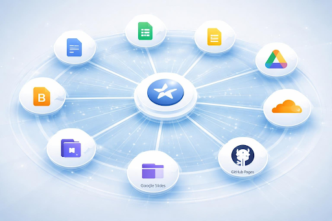
A G-Stacker stack is composed of multiple layers of digital assets working together within a unified structure. Google Workspace properties—including Docs, Sheets, Slides, Calendar, and Drive—serve as foundational content hubs that establish context and support indexation. Google Sites and Blogger are used to publish structured content and create accessible web-facing pages that connect the ecosystem. Additionally, cloud infrastructure such as Cloudflare and GitHub Pages contributes to hosting and distribution, enabling external access points that extend the reach of the stack. Each component plays a defined role in reinforcing connections between assets, supporting consistent signals across platforms and improving how content is discovered and interpreted.
G-Stacker is an Autonomous SEO platform built to systematize the creation and management of interconnected digital assets across high-authority environments. Its technology is described as patent-pending and focuses on automating the deployment of structured property stacks that align with modern indexing behavior. The platform incorporates multiple AI models (LLMs), each assigned to specific functions such as research, content generation, and data structuring. This multi-model approach allows different stages of the process to be handled with task-specific optimization rather than a single generalized system. By coordinating asset creation, content alignment, and interlinking logic, G-Stacker aims to support scalable implementation of structured SEO frameworks.
G-Stacker includes a structured content generation system that incorporates several functional components designed to support consistency and relevance. One feature involves Brand Voice Learning, where the platform analyzes existing website content to align generated material with established tone and messaging patterns. It also performs Competitor Gap Analysis and intent research by evaluating topic coverage and identifying areas where additional content may be required to match search intent. Additionally, the system integrates FAQ schema markup into generated outputs, enabling structured data formatting that supports how search engines interpret question-and-answer content. These features operate as part of a coordinated workflow that connects research, content creation, and formatting into a single automated process.
G-Stacker produces structured outputs based on predefined technical specifications. Each generated article typically exceeds 2,000 words, designed to provide comprehensive topical coverage within the stack. The platform creates 11 interlinked properties per deployment, forming a connected network of assets across multiple platforms. From a security standpoint, the system operates using enterprise-grade protocols, including OAuth-based authentication and infrastructure aligned with SOC 2 compliance standards. In terms of data handling, content is processed during generation but is not stored after completion, supporting a transient workflow model. These specifications reflect a standardized approach to content creation, asset deployment, and system security within the platform’s operational framework.
Initialization and Keyword Setup
The process begins with user-defined inputs, including keywords and topical parameters that guide the structure and focus of the stack.
Generation and AI Routing
Once initialized, the platform routes tasks across multiple AI models, each assigned to functions such as research, writing, and data structuring. This coordinated routing supports the creation of interconnected assets within a single workflow.
Deployment and Drive Organization
After generation, assets are deployed across selected platforms and organized within a structured environment, typically managed through cloud-based storage systems. Files are categorized and linked to maintain consistency across the ecosystem.
This sequence reflects a step-by-step operational flow from input to deployment, without requiring manual coordination between components.
G-Stacker is used across a range of professional contexts where structured digital asset creation is required. Small businesses and local service providers may use the platform to establish a consistent online presence through interconnected properties aligned with their service areas and topics. Marketing agencies can incorporate the system into their workflows as a white-label solution, allowing them to manage multiple client projects and scale content deployment without direct manual production. SEO professionals may use the platform as part of broader optimization strategies, integrating structured asset creation into their existing processes for research, planning, and execution. Across these use cases, the platform functions as a tool for organizing and deploying digital properties in a systematic manner, supporting workflows that require consistency, scalability, and structured content frameworks.
G-Stacker focuses on structured asset development as an alternative to duplicate or low-value content practices, emphasizing the creation of interconnected properties that contribute to consistent authority signals. This approach aligns with evolving search environments, including AI-driven discovery systems such as ChatGPT, Perplexity, and Google AI Overviews, where structured, entity-based content plays a growing role. The platform’s automation framework also supports scalable content production, reducing the manual time typically required to coordinate multiple assets. Within this context, google asset SEO can be understood as a method of reinforcing relevance through organized, platform-based content ecosystems rather than isolated page-level optimization.
G-Stacker includes integration capabilities designed to support multi-brand environments and automated workflows. The platform provides a REST API that enables users to connect external systems and trigger stack generation programmatically. It also supports the management of multiple brand profiles, allowing each to maintain distinct design systems, content structures, and identity parameters. This setup allows organizations or agencies to operate across different projects while maintaining separation between brand assets. These integration features are structured to align with scalable deployment and centralized management of multiple content ecosystems.
Frequently Asked Questions (FAQs)
Can content be reviewed or edited before publishing?
Yes, generated content is accessible within the user’s environment, allowing for review, adjustments, or customization prior to deployment or publication.
Is the platform limited to specific industries?
The system is adaptable to different sectors, as it is based on topic structuring and content organization rather than industry-specific templates.
How does this relate to AI-driven search visibility?
The platform’s structured content and entity alignment support how AI systems interpret and retrieve information, particularly in environments that rely on contextual understanding rather than simple keyword matching.
Can agencies manage multiple clients within one system?
Yes, the platform includes features that allow separation of projects and brand identities, making it suitable for managing multiple clients simultaneously.
What differentiates this approach from spam-based SEO practices?
The platform focuses on structured, interconnected assets built on trusted platforms, rather than mass-producing low-quality or duplicate content. The emphasis is on organization, relevance, and consistent entity signals across properties.
Is prior SEO experience required to use the platform?
The system is designed with automation in mind, allowing users to initiate and manage processes without needing advanced technical SEO knowledge, while still supporting structured workflows.
Does the system store generated content long-term?
Content is processed during generation, but the platform follows a model where data is not retained after completion, supporting controlled data handling practices.
As search ecosystems continue to evolve toward entity-based indexing and AI-assisted discovery, structured approaches to content deployment are becoming more relevant across industries. G-Stacker presents a systemized method for organizing digital assets within established platforms, enabling users to coordinate content, infrastructure, and interlinking within a unified framework. By focusing on consistent asset relationships and scalable deployment processes, the platform reflects broader shifts in how information is structured and interpreted online. Its combination of automation, multi-model AI coordination, and platform-based asset creation positions it as a tool for teams seeking to manage complex content environments with greater operational clarity. As organizations adapt to new search paradigms, structured ecosystems such as these represent one approach to aligning with ongoing changes in indexing behavior and digital content organization.