
Everyone’s asking if crypto will bounce back in 2025. It’s been a wild ride, and frankly, things have been pretty shaky. We saw Bitcoin dip, then climb back up, and Ethereum’s been doing its own thing. Solana’s showing some life too, but it’s still a bit of a rollercoaster. So, what’s really going on, and can we expect a comeback? Let’s break down the signs and see what the charts are telling us.
Key Takeaways
- Bitcoin is holding steady above important price points, which is a good sign for its resilience.
- Ethereum is showing strength and trying to reach its earlier high prices.
- Solana is showing signs of recovery despite market ups and downs.
- Big economic changes and how money moves around the world are really affecting crypto prices.
- Watching specific price levels on Bitcoin, Ethereum, and Solana will tell us if they’re truly recovering.
Assessing the Current Crypto Market Sentiment
Alright, let’s talk about where crypto is right now. It’s been a bit of a rollercoaster, hasn’t it? After some pretty rough drops, we’re seeing some of the major players start to perk up. Bitcoin, for instance, has managed to hold its ground above some important price points, which is a good sign for anyone watching closely. It’s like it’s saying, ‘Okay, I’ve taken a hit, but I’m not out yet.’
Bitcoin’s Resilience Above Key Levels
Bitcoin has been doing a decent job of staying above the $90,000 mark. It dipped down near $80,500 recently, but it’s clawed its way back. This kind of bounce-back shows it’s got some staying power. For traders, this means watching the $90,000 to $93,000 area is key. If it holds there, we might see it test higher levels, maybe even towards $98,000. A bigger move, like closing above $100,000 on a weekly chart, would really signal a stronger comeback.
Ethereum’s Push Towards Previous Highs
Ethereum is also showing some life, hovering around the $3,000 mark again. It’s not quite at its peak performance from earlier, but it’s definitely making an effort. The big question for ETH is whether it can break through some of those resistance levels that have been holding it back. Watching its price action around $3,000 will tell us a lot about its immediate future.
Solana’s Signs of Life Amidst Volatility
Solana, bless its heart, has had a rougher time lately, but it’s not giving up. It’s managed to break out of its recent downward trend and is testing the $140 level. The real test for Solana will be if it can push past the $160 to $170 resistance zone. If it can clear that hurdle, it might get back on a more positive track. It’s a bit of a wild card, but there are definitely some positive signals if you look closely. The overall market sentiment is still a bit shaky, but these individual performances are worth noting. We’re seeing some recovery in the total crypto market cap, which is a good sign for the whole ecosystem. It’s important to remember that market sentiment can swing wildly, and tools like the Crypto Fear and Greed Index can give you a snapshot of how people are feeling, but they don’t tell the whole story.
Analyzing the Factors Influencing a Crypto Rebound
So, what’s really going on under the hood that could push crypto prices back up? It’s not just one thing, you know? It’s a mix of big-picture economic stuff, how money is moving around, and whether people are actually believing in the long-term value of these digital assets.
The Impact of Macroeconomic Shifts on Crypto
These days, crypto seems to be getting more and more tied to what’s happening in the wider economy. Think about interest rates and how much money is floating around globally. When borrowing gets cheaper, people tend to take on more risk, and that can be good for things like Bitcoin. Conversely, if interest rates climb, especially in places like Japan with their low rates, it can make certain money-making strategies, like the carry trade, less attractive. This can force people to sell off riskier assets, including crypto, to cover their positions. It’s like a ripple effect; changes in one market can really shake up another. We saw this recently when rising Japanese bond yields caused a bit of a stir, showing how connected everything is becoming. For anyone watching the crypto markets, keeping an eye on global liquidity and central bank policies is pretty important these days. It’s not just about the tech anymore; it’s about the money flow.
Understanding Carry Trade and Funding Flows
Let’s talk about this ‘carry trade’ thing. Basically, it’s when investors borrow money in a currency with low interest rates and then invest it in something that pays higher interest. For a while, borrowing in Japanese Yen (JPY) was super cheap, and people were using that money to buy riskier assets, including crypto. But when Japanese bond yields started to creep up, that cheap borrowing wasn’t so cheap anymore. This forced some of those investors to sell their crypto to pay back their loans, adding selling pressure. It’s a good reminder that cross-border capital movements, like money flowing out of or into places like Japan or the US, can cause some serious price swings in digital assets. It’s not just about what’s happening directly in crypto; it’s about where the money is going and what it costs to borrow.
Short-Term Volatility Versus Long-Term Fundamentals
It’s easy to get caught up in the day-to-day price swings, especially when things are moving fast. Short-term traders might try to jump on these volatility spikes for quick profits. But for those of us looking at the bigger picture, it’s more about the underlying value and potential of these cryptocurrencies. Are the current prices justified by the technology and adoption, or are they just temporary blips caused by market noise and liquidity adjustments? It’s important to distinguish between a genuine market correction that improves long-term valuations and a temporary dip that might just be a sign of broader economic pressures. When you’re thinking about investing, it’s wise to consider your own goals. Are you trying to time the market for quick gains, or are you building a portfolio based on the belief that these digital assets will be worth more in the future? Reassessing your risk allocation based on these factors is a smart move. You can check out Bitcoin’s potential for a rebound to get a sense of where things might be heading.
Here’s a quick breakdown:
- Short-Term Traders: Focus on price action, quick entries/exits, and capitalizing on rapid moves.
- Long-Term Investors: Focus on technology, adoption rates, network effects, and overall market trends.
- Risk Management: Always have a plan, whether you’re trading or investing, to protect your capital from unexpected market shifts.
Technical Indicators Pointing to a Potential Recovery
Looking at the charts can sometimes feel like trying to read tea leaves, but there are patterns that traders and analysts watch for signs of a shift. It’s not magic, just looking at how prices have moved and what that might suggest for the future.
Bitcoin’s Chart Patterns and Support Levels
Bitcoin has been trading within a descending channel, which sounds bad, but it’s actually bouncing off its recent lows. This bounce is what’s sparking some interest in buying again. If BTC can close above the $92,000 mark, which is a key pivot zone, it might test the higher end of that channel around $98,000. For a more solid upward move, a weekly close above $100,000 would be a big deal. We saw Bitcoin experience a bearish trend in November 2025, closing below $100,000, and the MACD oscillator formed a bearish signal, indicating potential further declines. Bitcoin’s price action is definitely something to keep an eye on.
Here are some levels to watch for Bitcoin:
- Support:
- $90,000 to $93,000 (major support, now a pivot)
- Recent weekly lows around $89,340
- $85,000 (mid-term support)
- $75,000 (key long-term support)
- Resistance:
- $98,000 to $100,000 (main resistance, now a pivot)
- $102,000 (bear channel highs)
- Previous all-time high around $106,000 to $108,000
- Current all-time high resistance near $124,000 to $126,000
Ethereum’s Price Action and Breakout Potential
Ethereum is also showing some positive movement, hovering around the $3,000 level. While it’s not making huge leaps, holding this ground after a period of selling pressure is a good sign. Traders are watching to see if ETH can build on this momentum. A sustained push higher could signal a shift in sentiment for the second-largest cryptocurrency.
Solana’s Channel Dynamics and Resistance Hurdles
Solana, despite some rough patches, is showing signs of life. It’s managed to break out of its recent downward price trend and is testing the $140 level. The big test for SOL will be breaking through the $160 to $170 resistance zone. If it can clear that hurdle, it could open the door for a more significant upward move. Watching how Solana handles these resistance levels will tell us a lot about its short-term prospects.
Investor Psychology and Market Bottoms
Navigating Trader Fear and Extreme Positioning
It feels like just yesterday everyone was euphoric, right? Bitcoin hit new all-time highs, and the general vibe was that prices would just keep going up. But then, things took a sharp turn. We saw a big drop, with Bitcoin falling from its peak near $126,400 to lows around $80,500 in late November. This kind of swing really messes with people’s heads. When prices are soaring, it’s easy to get caught up in the excitement and maybe take on more risk than you should. Then, when the market crashes, fear takes over. Suddenly, everyone’s worried about losing everything, and that panic can lead to selling at the worst possible times, pushing prices down even further.
Identifying Potential Buy Dips or Traps
So, the big question now is: are these recent lows a chance to buy in cheap, or are they just a temporary pause before prices fall again? It’s tough to say for sure. We’ve seen Bitcoin bounce back above $90,000, and Ethereum is hovering around $3,000 again. This looks promising, but we need to be careful. Sometimes, a quick recovery can be a "bear market rally" – a temporary upswing that fools people into thinking the worst is over, only for prices to drop again. It’s like seeing a small sprout after a frost; it might look like spring is here, but another cold snap could kill it.
The Role of Volume in Market Recovery
One thing that gives us a clue is trading volume. When prices are falling sharply, you often see high volume as people rush to sell. But when prices start to recover, especially if the volume is low, it can mean that the selling pressure has eased up, but there aren’t a lot of buyers stepping in yet. A true market bottom often happens when selling dries up and then buyers start to come back in, increasing volume on the way up. We’re seeing lower volumes lately, which could mean the panic selling is over. However, we need to see sustained buying interest to confirm that a real recovery is underway. It’s like waiting for a crowd to gather at a sale; you need to see people actually showing up and buying things, not just milling around.
Will Crypto Recover: Key Levels to Watch
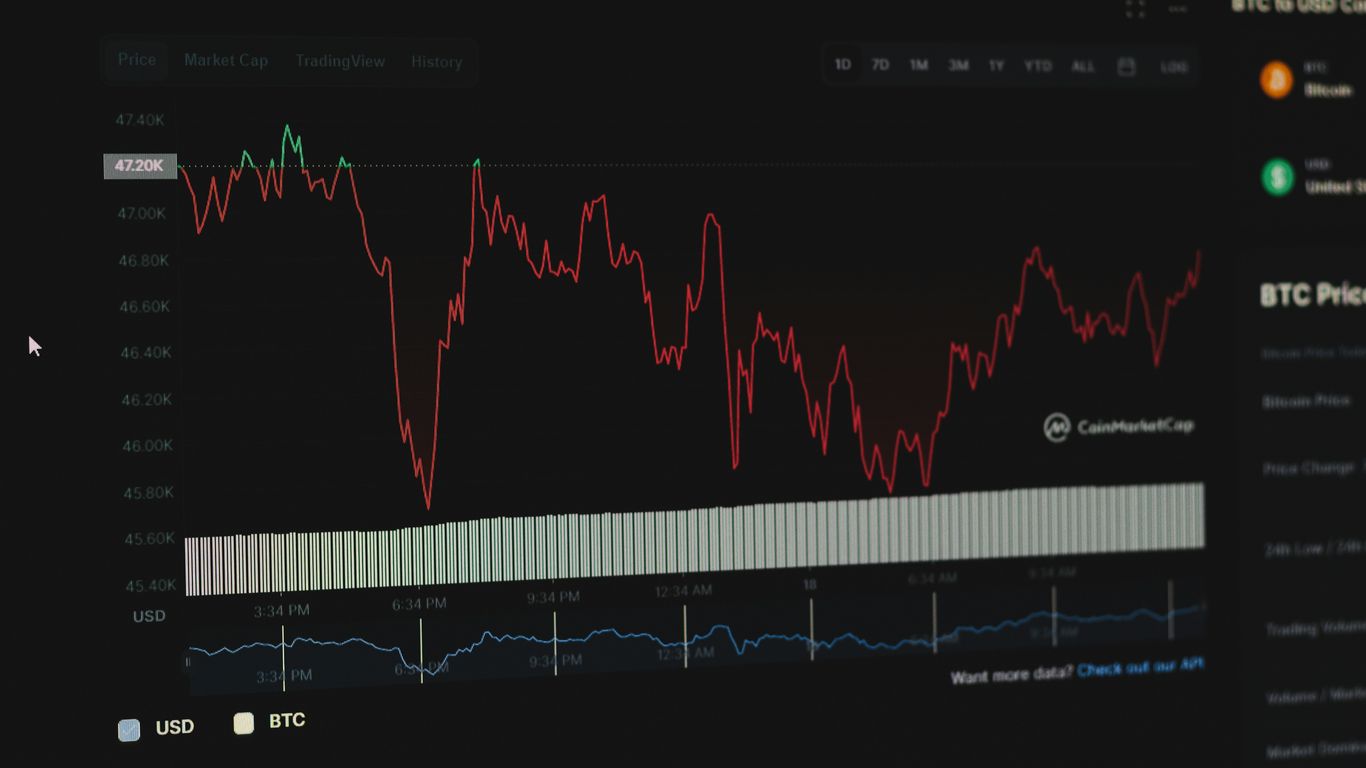
Alright, so we’ve talked about the general market vibe and what’s driving things. Now, let’s get down to the nitty-gritty: the actual numbers and price points that could signal a real comeback for crypto. It’s not just about hoping for the best; it’s about watching the charts and knowing where the action might happen.
Bitcoin’s Crucial Resistance and Support Zones
Bitcoin’s been doing its thing, bouncing around. Right now, a big area to watch is between $90,000 and $93,000. This zone has been acting as both support and resistance, so seeing where it lands here is pretty important. If BTC can hold above this, maybe even close a weekly candle above $100,000, that would be a strong signal for a move higher. We’re looking at the previous all-time highs around $124,000 to $126,000 as the ultimate target, but getting past that $100,000 mark is the first major hurdle. On the flip side, if it dips below $85,000, we might see it test the $75,000 level, which would be a bit of a setback. Keep an eye on Bitcoin’s price action – it tells a story.
Ethereum’s Pivot Points for Bullish Momentum
Ethereum’s been trying to get back into the game, hovering around the $3,000 mark. For ETH to really get going, it needs to break through some key resistance. The $3,000 to $3,200 range is a big one. If it can push past that and hold, we could see it aim for higher levels, maybe even testing its old highs. The chart shows that a sustained move above $3,500 would really get the bulls excited. Support-wise, the $2,800 to $2,900 area seems to be holding for now, but a break below that could lead to more selling pressure. We’re watching for that momentum to build.
Solana’s Hurdles for a Sustainable Uptrend
Solana, bless its heart, has been through it. It’s showing some life, trying to climb back up. The $140 to $150 range is the immediate challenge. If SOL can clear that, it might have a shot at reaching the $165 to $170 resistance zone. That’s where things get really interesting. A solid break above $170 could open the door for a bigger move. But, if it stalls out in that $140-$150 area, we could see it fall back to its recent bounce levels around $125 to $130, or even test the $100 to $105 support. It’s a bit of a tug-of-war right now.
Risk Management in a Volatile Crypto Landscape
Look, crypto markets can be wild. One minute things are looking up, the next, it feels like a rollercoaster heading straight down. It’s easy to get caught up in the excitement or the panic, but that’s exactly when you need to have a solid plan.
The Importance of Stop-Loss Orders
Think of stop-loss orders as your safety net. They’re instructions you give to your exchange to automatically sell a crypto if it drops to a certain price. This stops you from losing more than you’re comfortable with if the market takes a sudden nosedive. It’s not about predicting the future, it’s about protecting your capital. Setting these orders before you even enter a trade is a smart move. It takes the emotion out of it when things get hairy.
Position Sizing in Uncertain Markets
This is about how much money you put into any single trade. If you’ve got $10,000 to invest, you probably shouldn’t put all of it into one coin, especially if it’s a riskier one. A common approach is to only risk a small percentage of your total capital on any given trade, maybe 1-2%. This way, even if a trade goes completely wrong, it won’t wipe out a huge chunk of your portfolio. It lets you stay in the game longer.
Here’s a simple way to think about it:
- Determine your total trading capital. This is the amount you’re willing to invest and potentially lose.
- Decide on your risk percentage per trade. A conservative figure is often 1% to 2%.
- Calculate your position size. Based on your stop-loss level and risk percentage, figure out how many coins you can buy without exceeding your risk limit.
Managing Leverage and Liquidation Risks
Leverage can be a double-edged sword. It lets you control a larger position with a smaller amount of your own money, which can amplify your profits. But, and this is a big but, it also amplifies your losses. If the market moves against you even a little bit, you can get liquidated, meaning your entire position is automatically closed, and you lose everything you put up as collateral. It’s super risky, especially in crypto where prices can swing wildly. For most people, especially those new to trading, it’s best to avoid high leverage or stick to very low levels. Understanding the liquidation price is absolutely key if you do decide to use any leverage at all.
So, Will Crypto Bounce Back in 2025?
Looking at the charts and the recent market moves, it’s clear that crypto is still a bit of a rollercoaster. We’ve seen some ups and downs, and things are definitely shaky. While some coins are showing signs of life, like Bitcoin and Ethereum trying to hold their ground, it’s not a done deal. The market is still sensitive to big economic news, and things can change fast. Whether 2025 is the year for a big comeback really depends on a lot of factors, including how global economies behave and if investors regain their confidence. It’s not a simple yes or no answer, and for anyone thinking about jumping in, it’s smart to be cautious and do your homework. This market is still unpredictable, so keep an eye on how things develop.
Frequently Asked Questions
Is the crypto market going to bounce back soon?
It’s hard to say for sure when the crypto market will fully recover. Some signs suggest it might, like Bitcoin staying above important price points and Ethereum showing strength. However, the market can be unpredictable, and it’s wise to be cautious.
What makes the crypto market go up or down?
Lots of things can affect crypto prices! Big economic changes, like what happens with interest rates, play a role. Also, how much money is flowing around the world and how people feel about investing (are they scared or excited?) can make prices jump or fall.
Are there any technical signs that crypto could recover?
Yes, sometimes charts and patterns can give clues. For Bitcoin and Ethereum, analysts look at where prices have bounced back before (support levels) and where they might struggle to go higher (resistance levels). For Solana, they watch its price movement within certain channels.
How do people’s feelings about the market affect prices?
When people get really scared, they might sell their crypto, pushing prices down. If everyone is super excited, they might buy a lot, pushing prices up. Finding the ‘bottom’ of the market often happens when people are most fearful, but it’s tricky to know if it’s a real bottom or just a temporary pause.
What are the key price levels to watch for a crypto recovery?
For Bitcoin, watching if it can break past certain high points (resistance) and hold steady above important low points (support) is key. For Ethereum, seeing if it can stay above $3,000 and move towards higher levels is important. Solana needs to get past its own resistance hurdles to show a strong uptrend.
What’s the best way to protect myself if the crypto market is still risky?
It’s super important to be careful. Using ‘stop-loss’ orders can help limit how much money you could lose if prices drop suddenly. Also, deciding how much money to invest (position sizing) and being careful with borrowed money (leverage) can prevent big losses if things go wrong.