Zebra Robot: A Strategic Shift in Autonomous Mobile Robotics
So, Zebra Technologies is stepping away from the autonomous mobile robot (AMR) game. It’s a pretty big deal, considering they bought Fetch Robotics a few years back and really seemed to be pushing it. They weren’t just letting it sit on the shelf either; they kept adding new robot models, beefing up the software, and trying to make it all fit together with their other warehouse tech like scanners and wearables. Customers were even seeing some real improvements in how fast things got done. But, it turns out, even with all that backing and a solid product, it just wasn’t hitting the scale or standing out enough to keep pouring money into it. It’s a tough lesson when even a big name like Zebra can’t make it work.
Zebra Technologies Exits The Autonomous Mobile Robot Space
Zebra is basically winding down its AMR business. They haven’t said exactly how – maybe they’ll sell it off, maybe they’ll just shut it down piece by piece. The main point is, mobile robots aren’t a priority for them anymore. This is interesting because they really did try. They supported Fetch Robotics after the acquisition, rolled out new stuff, and tried to sell it as part of a bigger package. Yet, the business just didn’t grow big enough or different enough to justify the continued investment. It’s a stark reminder that even with a strong brand and resources, breaking into and scaling in the AMR market is incredibly challenging.
The Impact of the Fetch Robotics Acquisition
When Zebra bought Fetch Robotics, it looked like a smart move. Fetch was a known player, and Zebra had the reach to make it big. They integrated Fetch’s robots into their own systems, adding them to their lineup of warehouse solutions. They even launched new picking systems. But the market is just packed. There are so many companies offering similar robots and software now. It’s gotten to the point where it’s hard to tell them apart, and that makes it tough to compete and make good money. The acquisition, while promising, ultimately couldn’t overcome the intense competition and market saturation.
Re-evaluating Investment in Mobile Robotics
Zebra’s decision makes you wonder about the whole mobile robotics industry. If a company with Zebra’s clout and resources couldn’t make it work at scale, what does that mean for others? The market is flooded with options, hardware is becoming more similar across different brands, and profit margins are shrinking. It’s getting harder and harder for any single AMR solution to really stand out and justify the big investments needed to compete. This situation forces everyone to rethink where and how to invest in this technology going forward.
Understanding the Commoditization of Autonomous Mobile Robots
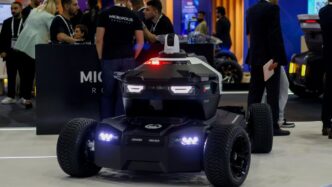
It’s getting pretty crowded out there in the automation market, isn’t it? You go to any big trade show, and it feels like every other booth has some kind of robot rolling around. This is especially true for autonomous mobile robots, or AMRs. What used to be a hot, cutting-edge area is starting to feel a lot more… well, normal. Like smartphones or laptops, the tech is getting good enough that lots of companies can make it, and they all start looking and acting pretty similar.
The Crowded Automation Market Landscape
Seriously, the sheer number of companies offering automation solutions is staggering. It’s not just AMRs anymore; it’s a whole ecosystem of machines, software, and services. This explosion means that for any single company, standing out becomes a real challenge. You’ve got established players, new startups popping up everywhere, and even companies from different industries trying to get a piece of the pie. It’s a bit of a free-for-all, and it makes it tough for customers to figure out who’s really offering something different.
Converging Hardware and Compressing Margins
Here’s the thing: the actual robots themselves are starting to become pretty similar. The basic technology for navigation, sensors, and movement is pretty well understood now. This means that the hardware isn’t the big differentiator it once was. When everyone’s hardware is basically the same, what happens? Prices start to drop. Companies have to compete more on cost, and that squeezes their profit margins. It’s a classic case of commoditization – when a product becomes so common that it’s seen as a basic commodity, the profit potential shrinks.
The Challenge of Differentiation in AMRs
So, if the hardware is becoming a wash, where do companies find an edge? Many try to do it with software, promising smarter operations or better integration. But even there, the differences are getting harder to spot. Customers are starting to see many AMR solutions as interchangeable, making it difficult for any single vendor to claim a truly unique advantage. When you can’t easily point to what makes your robot or your system better, you end up in a race to the bottom on price, or you get stuck trying to convince people that your specific combination of features is the one they need. It’s a tough spot to be in, and it’s why companies like Zebra are rethinking their strategy.
Zebra’s Innovations in Fulfillment Automation
Zebra Technologies, after acquiring Fetch Robotics, really zeroed in on what makes fulfillment centers tick. Instead of trying to be everything to everyone in the automation space, they decided to focus on the actual process of picking and packing orders. It’s a smart move because, let’s be honest, that part of the warehouse is where a huge chunk of the labor costs and inefficiencies hide. They figured if they could make that process smoother, they’d see a big impact.
Decoupling Autonomous Mobile Robots From Carts
One of the most interesting ideas Zebra brought to the table was separating the robots from the carts they carry. Think about it: normally, a robot has to stay with its cart from the moment it picks it up until it drops it off. This means robots spend a lot of time just waiting around at the packing station or the pick-up point. Zebra’s approach lets the robots drop off a cart and immediately go grab another one, while the carts can be staged and managed separately. This simple change means fewer robots are needed overall. They’ve suggested you could potentially run operations with 30% fewer robots and still get the same amount of work done. That’s a big deal for the bottom line, especially when companies are looking hard at where their money is going.
- Fewer robots mean lower upfront costs.
- Increased robot utilization means they’re always working, not waiting.
- Reduced bottlenecks at busy stations like packing.
Optimizing Robot Utilization for Greater Profits
This whole idea of decoupling robots from carts directly ties into making them more profitable. When robots aren’t sitting idle, they’re generating value. Zebra’s goal was to make sure their robots were always on the move, picking up and dropping off goods efficiently. By reducing the number of robots needed, companies can save money on the robots themselves, but also on the maintenance and charging infrastructure. It’s about getting more work out of fewer machines, which is a pretty solid business strategy. They’re not just selling robots; they’re selling a way to make more money with less equipment.
Focusing on Fulfillment Workflows for Maximum Impact
Instead of building a general-purpose robot that could do a little bit of everything, Zebra decided to get really good at one thing: fulfillment. This means their robots and the software controlling them are designed specifically for the tasks involved in picking items for customer orders. This specialized approach allows them to tackle the biggest pain points in fulfillment, like excessive walking by human workers and the time it takes to find and retrieve items. By concentrating on these specific workflows, they aim to make the entire process faster and more efficient, directly impacting how many orders can be processed in a day.
Team Intelligence: Orchestrating Human and Robotic Collaboration
It’s not just about throwing robots into a warehouse and hoping for the best. The real magic happens when people and machines work together smoothly. Zebra’s "Team Intelligence" system is all about making that happen.
Think about a busy warehouse. You’ve got people picking orders, and you’ve got robots moving things around. Traditionally, these two groups might not interact all that well. Pickers might wait around for work, or robots might be stuck waiting for a human to finish something. Team Intelligence tries to fix that.
Real-Time Task Assignment for Pickers
The core idea is that a picker should always know what their next task is, and that task should be as close as possible to where they are right now. No more guessing, no more wandering around looking for the next item. The system figures out who is available, where they are, and what needs to be done nearby. It then sends that task directly to the picker, often through a wearable device. This keeps everyone moving and productive.
Minimizing Downtime and Unnecessary Walking
This constant flow of tasks means less standing around waiting. When a picker finishes one job, the system is already lining up the next one. It also cuts down on all that extra walking. Instead of crisscrossing the warehouse, pickers are directed to the most efficient next step. This applies to robots too; by decoupling them from carts, they aren’t stuck waiting at packing stations. They can keep moving goods, which means fewer robots are needed overall to get the same amount of work done. Some estimates suggest you could use up to 30% fewer robots this way.
Digitizing Workflows for Enhanced Efficiency
Everything is tracked. Both the robots and the human workers are part of a digital system. This gives managers a clear picture of what’s happening in real-time. They can see where bottlenecks are, how productive everyone is, and where things could be improved. It’s like having a conductor for an orchestra, making sure every instrument plays its part at the right time. This digital layer helps make sure that the entire operation, from picking to packing to moving goods, runs as smoothly as possible.
Lessons Learned from the Zebra Robot Endeavor
So, Zebra Technologies decided to step away from the autonomous mobile robot (AMR) game, which came as a bit of a surprise to some, especially after they bought Fetch Robotics a few years back. It wasn’t like they weren’t trying; they kept pushing the Fetch stuff, adding new robots and software, and even bundling it with their other warehouse tech. Customers were seeing some real gains, too. But, in the end, it just didn’t get big enough or different enough to keep pouring money into it. It really makes you think about what went wrong, or maybe, what went right for others.
Prioritizing Software Architecture Over Hardware
One of the biggest takeaways from the whole Zebra-Fetch situation is how important the software side of things is. It’s easy to get caught up in the shiny new robots, but if the software running them isn’t solid, or if it’s too tied to one specific piece of hardware, you run into problems down the road. The real value, it seems, is in the intelligence that orchestrates everything, not just the metal moving around.
- Start with the Software: Before you even think about buying robots, look at your existing software systems. How do your Warehouse Management Systems (WMS) and Enterprise Resource Planning (ERP) talk to each other? Can they handle new automation easily?
- Build an Independent Layer: It’s smart to have a central system that can manage different types of robots and automation, no matter who made them. This way, you’re not stuck with one vendor’s technology.
- Flexibility is Key: When you can swap out hardware or add new tech without a massive overhaul of your software, you save a lot of headaches and money.
The Importance of Vendor-Neutral Integration
This ties right into the software point. Many companies jumped into AMRs by picking a robot first and then figuring out how to make it work with their existing setup. That’s often a mistake. If your automation software is locked into a specific robot brand, you lose a lot of control. What happens if that vendor changes their strategy, or if a better, cheaper robot comes along? You’re stuck.
Architectural Independence as Risk Management
Think of it like this: if you build your house with plumbing pipes from only one company, and that company goes out of business, you’re in trouble when you need a replacement part. It’s much better to use standard pipe sizes and fittings that many companies make. The same applies to warehouse automation. Having a system that isn’t dependent on a single vendor for its core operations is just smart business. It means you can adapt to changes, integrate new technologies, and avoid being held hostage by one company’s roadmap. It’s not just about having cool robots; it’s about building a flexible, future-proof operation. The market moves fast, and vendor strategies can change overnight, so being able to pivot is pretty much essential.
The Uncomfortable Reality of Autonomous Mobile Robot Speeds
When we talk about robots, especially in warehouses and factories, speed often comes up. It’s easy to imagine these machines zipping around, doing tasks way faster than any human could. But here’s the thing: that’s often not the case. The reality is, many autonomous mobile robots (AMRs) are actually slower than the workflows people are already using.
AMRs Versus Existing Human-Operated Workflows
Think about a busy warehouse. Experienced workers, whether they’re driving forklifts or picking items, have developed efficient ways of moving and working. They can adapt on the fly, squeeze into tight spots, and generally keep a brisk pace. Now, compare that to an AMR. These robots need wider paths, have strict safety zones around them, and their movement planning is usually pretty conservative to avoid accidents. This means that even if a human operator isn’t perfectly optimized, they can often outpace a robot in a direct comparison. It’s not that the robots are bad, it’s just that they operate differently, and that difference often translates to slower cycle times for certain tasks.
Challenges with Navigation and Motion Planning
Why the speed difference? A lot of it comes down to how these robots navigate and plan their movements. Unlike a human who can instantly react to a sudden obstacle or a change in the environment, AMRs rely on sensors and algorithms. These systems need time to process information, decide on a path, and then execute it. This can lead to hesitations, slower acceleration and deceleration, and more cautious turns. Plus, in dynamic environments where things are constantly changing – like a busy loading dock – these systems can struggle to keep up with the unpredictability, forcing them to slow down even further to maintain safety.
Rethinking the Justification for Robot Deployment
So, if AMRs aren’t always faster, why deploy them? It’s a good question, and it points to a common misconception. The value of AMRs isn’t always about raw speed. Instead, they offer benefits in other areas:
- Consistency and Reliability: Robots perform tasks the same way every time, reducing errors and ensuring predictable output.
- Labor Stability: In areas with worker shortages or high turnover, AMRs provide a stable workforce.
- Ergonomics and Safety: They can handle repetitive or physically demanding tasks, reducing strain and injuries for human workers.
- Extended Operations: Robots can work around the clock, increasing overall operational hours.
Focusing solely on speed as the justification for bringing AMRs into a facility can lead to disappointment. The real win often comes from improving the overall system’s resilience, predictability, and the well-being of the human team members, rather than just trying to beat a stopwatch.
Wrapping Up the Robot Race
So, what does Zebra stepping back from the autonomous robot scene really mean for the future? It’s a bit of a mixed bag, honestly. On one hand, it shows that even with big company backing and smart ideas like separating robots from carts, making a splash in this market is tough. It seems like the robot world is getting crowded, and standing out is harder than ever. But, the tech itself isn’t going away. Companies are still figuring out how to make robots and people work together better, focusing on software that can connect everything. It’s a reminder that while the hardware is cool, the real magic might be in how it all talks to each other. We’ll have to keep watching to see who figures out that puzzle next.