Farming is changing, and Planet Farm is at the forefront of this shift. Imagine fresh food grown right where people live, using way less water and no pesticides. That’s the idea behind Planet Farm’s approach. They’re using smart technology to grow crops efficiently in controlled indoor spaces. It’s all about making sure we have healthy food available all year round, no matter the weather outside. This article looks at how Planet Farm is making this happen.
Key Takeaways
- Planet Farm is revolutionizing food production with vertical farming, growing crops indoors in controlled environments.
- Advanced technology, including AI and robotics, is used to make farming operations more efficient and data-driven.
- The company is expanding globally by building new farming facilities and continuously improving its processes.
- Planet Farm invests in research and development to explore new crops and optimize growing methods for higher yields.
- Data from sources like satellite imagery helps Planet Farm understand crop health and make timely interventions, even in challenging conditions.
Revolutionizing Agriculture with Planet Farm
It’s pretty wild to think about how we get our food, right? For ages, it’s been the same old story: fields, weather, a whole lot of guesswork. But what if there was a better way? A way to grow fresh, healthy food right where people live, using way less water and zero pesticides? That’s the big idea behind Planet Farm. They’re basically building farms inside buildings, like super-controlled environments where crops can grow year-round, no matter what’s happening outside. It’s a whole new ballgame for how we think about farming.
The Vision for Sustainable Food Production
Planet Farm started with a simple, yet ambitious goal: to make food production better for both people and the planet. Imagine getting crisp salad greens or juicy tomatoes that are grown just miles from your grocery store, not hundreds or thousands of miles away. This isn’t just about convenience; it’s about cutting down on transportation emissions and making sure food is as fresh and nutritious as possible when it reaches your plate. They’re aiming for a future where healthy eating is easy and sustainable, and where farming doesn’t strain our natural resources.
Planet Farm’s Vertical Farming Model
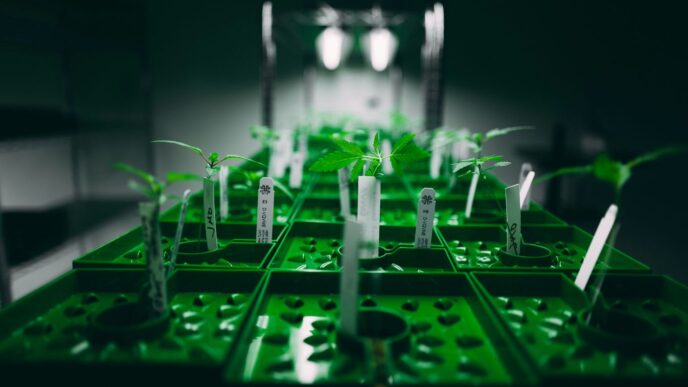
So, how do they actually do it? Planet Farm uses what’s called vertical farming. Think of it like a high-tech, indoor garden stacked upwards. Instead of vast fields, they use multi-story facilities where crops are grown in trays or beds, one layer above another. Inside these "white rooms," as they call them, everything is dialed in: the light, the temperature, the humidity, and the nutrients. This tight control means they can grow crops much faster, use about 95% less water than traditional farming, and completely avoid the need for pesticides. Plus, because it’s all indoors and controlled, they can grow food 365 days a year, regardless of the season or weather.
Technological Integration for Efficiency
This whole operation is basically a giant, smart machine. Planet Farm isn’t just growing plants; they’re running a highly automated, data-driven operation. From the moment a seed is planted to when the produce is packaged, technology is involved. This integration is key to their efficiency. It allows them to manage large-scale production with fewer people, reduce waste, and keep a close eye on every step of the process. The farm itself is seen as a connected network, where people, processes, and systems all work together. This reliance on technology means that things like reliable internet and data flow are super important for everything to run smoothly.
Advanced Technology Driving Planet Farm Operations
At Planet Farm, technology isn’t just a tool; it’s the backbone of our entire operation. We’ve built our farms to be highly automated and data-dependent, creating a system that’s both efficient and incredibly precise. Think of it as a networked farm, where every person, process, and system works together. It really needs a central ‘brain’ to keep everything running smoothly.
The Role of Connectivity in a Networked Farm
Reliable network performance is absolutely critical. From the moment a seed is planted to when the produce is packaged and shipped, every single step relies on constant, stable connectivity. This network carries real-time data from every corner of the farm, which is what makes our automation possible. Without it, the whole system would grind to a halt.
Data-Driven Decisions with Gaia VF
We use a system called Gaia VF, which is basically our AI-powered process automation hub. It keeps track of everything, from seed to shelf. This system documents the entire journey of our crops, giving us a complete picture. We have four main tech teams – IT, agronomy, R&D, and automation – and they all have different, but equally demanding, needs when it comes to getting and processing real-time data. Gaia VF helps tie it all together.
Robotic Processes and AI Integration
Because we have such reliable connectivity and detailed data, we can use robotic process automation and advanced AI. This means we can manage larger facilities with fewer people focused on repetitive tasks. For example, robots can handle planting, monitoring, and harvesting with incredible accuracy. The AI helps us predict needs, optimize growing conditions, and even identify potential issues before they become problems. It’s all about making the farm smarter and more responsive.
Global Expansion and Innovation at Planet Farm
Building New Factories for Global Reach
Planet Farm isn’t just thinking about the next harvest; they’re planning for the next continent. The company is actively building new facilities, with plans already underway for a factory in the UK and another in the Nordic region. This expansion isn’t just about planting more seeds; it’s about making their innovative farming model accessible to more people around the world. The goal is clear: to move beyond Europe and become a major player, maybe even a leader, on the global stage. It’s a big step, but one that seems well within reach given their current success.
The Evolving Nature of the Farm Organism
Think of a Planet Farm not as a static building, but as a living thing. That’s how they see it, anyway. Massimo Mistretta, their Chief Information and Security Officer, describes the farm as an ‘organism’ that changes and grows over time. This means they’re always looking for ways to improve, not just by building bigger, but by making the whole system smarter. While the new factories will follow the successful blueprint of their Como facility, the company is committed to constantly evolving its processes. This idea of a farm as an evolving organism is key to their long-term vision.
Scaling Production Through Process Evolution
So, how do you grow more food without just building endlessly? It’s all about getting smarter with what you have. Planet Farm is figuring out how to scale up production not just by increasing the physical size of their farms, but by making the processes inside them more efficient. This could mean future farms are smaller but produce the same amount, or even more, thanks to better yields and smarter operations. They’re looking at everything from the seeds they use to how they manage resources, all with the aim of producing more food, more sustainably. It’s a careful balance of technology, smart design, and continuous improvement.
Planet Farm’s Commitment to Research and Development
At Planet Farm, we’re not just growing food; we’re constantly looking for ways to do it better. Our research and development team is the engine behind our innovation, always exploring new frontiers in agriculture. We believe that continuous improvement is key to feeding the world sustainably.
Exploring New Crop Possibilities
While we’ve had great success with leafy greens, our R&D is pushing the boundaries. We’re actively investigating the potential for growing a wider variety of crops in our vertical farms. Think beyond salads – we’re looking at things like coffee beans and even cotton. This isn’t just about expanding our product line; it’s about seeing how our controlled environment can benefit crops that are traditionally challenging to grow or have significant environmental impacts.
Continuous Process Innovation
Our farms are designed to be dynamic. We see them less like static machines and more like living organisms that evolve over time. This means we’re always refining our growing techniques, our automation systems, and our overall operational flow. We look at every step, from seed to harvest, to find opportunities for improvement. This might involve tweaking nutrient delivery, adjusting lighting cycles, or optimizing airflow. The goal is to make our processes more efficient and effective.
Optimizing Yields Through Technology
Technology is at the heart of everything we do, and R&D is no exception. We’re always integrating new tools and data analysis methods to get the most out of every square foot. This includes:
- Advanced sensor networks: These provide real-time data on everything from temperature and humidity to nutrient levels and plant growth.
- AI-driven insights: We use artificial intelligence to analyze the vast amounts of data we collect, helping us identify patterns and predict outcomes.
- Robotic integration: From planting to harvesting, robots are becoming increasingly important in our operations, allowing for precision and consistency.
By combining these technological advancements with our growing knowledge, we aim to consistently increase the yield and quality of the produce we grow.
The Power of Data in Modern Farming
Think about it: every field, every plant, it all tells a story. For a long time, farmers had to rely on walking the fields, looking closely, and just hoping they could spot problems early. But now, we can actually read those stories from space, week after week. It’s pretty wild when you stop and think about it.
Leveraging Satellite Data for Crop Insights
We’re talking about using satellite imagery to get a real-time look at crops. It’s not just a snapshot; it’s like a weekly report card for your plants. These satellites can track things like how green the vegetation is, which tells us a lot about the plant’s health and how much it might produce. This helps farmers see what’s going on without having to be in the field every single day. It cuts down on a lot of guesswork.
- See crop stress early on.
- Figure out which parts of the farm need attention first.
- Watch if the things you’re doing, like adding fertilizer, are actually working.
Understanding Crop Health from Orbit
This isn’t just about seeing if plants are alive. It’s about understanding their condition. We can track changes over time. For instance, if a farmer applies something to help the crops, we can see if that specific area of the field responds well or not. This means you can focus your efforts and resources exactly where they’re needed, instead of treating an entire field when maybe only a small part has an issue. It’s about being smart with what you’ve got.
Detecting Changes for Timely Interventions
Sometimes, the biggest challenge is just knowing when to act. With consistent data coming in, we can spot changes as they happen. This allows for quick decisions. If there’s a problem brewing, like a potential pest issue or a nutrient deficiency, seeing it early means you can step in before it gets out of hand. This ability to detect subtle shifts allows for proactive management, preventing bigger problems down the line. It’s like having an early warning system for your farm.
Innovative Solutions for Agricultural Challenges
Farming, as we all know, isn’t always straightforward. Weather can be a real pain, and sometimes you just can’t see what’s going on in your fields. That’s where some pretty smart tech comes in.
Overcoming Cloud Cover with Biomass Proxy
Tropical regions often have a lot of clouds, which can make it tough for satellites to get a clear picture of the crops below. Imagine needing to check on your plants during a critical growth phase, only to have a thick layer of clouds blocking the view. It’s a real problem that can lead to missed opportunities or delayed actions. To get around this, we’ve developed something called a Biomass Proxy. It’s a clever way to combine data from different sources, including radar, with our satellite images. This gives us a pretty good estimate of how much plant life, or biomass, is in a field, even when the clouds are thick. It turns out, this proxy is really good at showing how well crops are developing early on, and that often lines up with how much you’ll harvest later.
Enhancing Irrigation Strategies
Knowing how much water your crops need and when is a big deal. We worked with a rice company in Nicaragua, for example. They were using different water sources for irrigation – some from a river, some from wells. By using our Biomass Proxy, we could see that the fields getting water from the river, which had less salt, showed much better plant growth. The fields using the well water, which was saltier, didn’t do as well. This kind of information is gold. It lets farmers make smarter choices about where to get their water from and how to manage irrigation, leading to healthier plants and better harvests.
Achieving Higher Yields Through Data
Ultimately, all this technology is about helping farmers grow more food, more efficiently. We’ve seen that the fields that show strong early growth, as indicated by our Biomass Proxy, tend to produce higher yields at the end of the season. It’s like an early warning system for success.
Here’s a quick look at how it works:
- Consistent Monitoring: We provide weekly updates on crop vegetation, helping you spot problems early.
- Change Detection: See exactly where your crops are improving or struggling after you’ve made changes.
- Biomass Proxy: Get daily insights even when clouds are present, linking early growth to final harvest.
By using this data, farmers can make more precise decisions, use resources like water and fertilizer more effectively, and ultimately, get better results from their land. It’s about working smarter, not just harder.
Looking Ahead
So, what does all this mean for the future of how we get our food? It’s pretty clear that places like Planet Farms are showing us a new way. They’re using smart tech and controlled environments to grow food that’s good for us and the planet, using way less water and no nasty pesticides. It’s not just about growing salads, either; they’re looking into things like coffee and cotton. This kind of innovation, where technology meets farming, is really just getting started. It’s exciting to think about how these ideas could spread, making fresh, healthy food more available everywhere, all while being kinder to the Earth. The future of farming is definitely looking greener, smarter, and a whole lot more interesting.
Frequently Asked Questions
What is Planet Farm and what makes it different from regular farms?
Planet Farm is a company that grows food in special indoor places called vertical farms. Instead of using soil and sunlight like usual farms, they grow plants in layers, using machines and controlled lights. This means they can grow more food in less space, use way less water, and don’t need to use any harmful pesticides. Plus, they can grow food all year round, no matter the weather outside!
How does Planet Farm use technology to grow food?
Technology is super important at Planet Farm! They use lots of connected devices and computers to manage everything. This includes using data to make smart choices about growing, and even using robots and AI to help with tasks. It’s like having a super-smart brain running the whole farm to make sure everything runs smoothly and efficiently.
Why is data so important for Planet Farm?
Data is like the eyes and ears of the farm. By collecting information from sensors and cameras, Planet Farm can see exactly how the plants are doing. This helps them understand if plants are healthy, if they need more water or nutrients, and if there are any problems. This information allows them to make quick decisions to help the plants grow their best.
Can Planet Farm grow different kinds of food?
Yes, they are always experimenting! Right now, they grow salad greens, but they are also looking into growing other things like coffee beans and even cotton. Their goal is to find new and exciting crops they can grow using their special farming method.
What does ‘reimagining the food industry’ mean for Planet Farm?
It means they want to change how we get our food. They aim to grow healthy, tasty food that’s good for us and the planet, and grow it close to where people live. This helps reduce waste and makes sure food is fresh when it gets to your plate. They want to make farming better for everyone.
Is Planet Farm planning to grow in other countries?
Absolutely! Planet Farm is already selling food in several countries and is building new farms in places like the UK and the Nordic region. They want to become a big player all over the world, bringing their innovative farming methods to more people.