
There’s a lot of talk lately about the year 2030 and what it might mean, especially when it comes to prophecy. People are looking at old texts, calendars, and even the stars, trying to figure out if there’s a specific timeline pointing to major events. It’s like putting together a puzzle, and the messiah 2030 idea is a big piece for many. We’re going to break down some of the ideas behind this, looking at how different calendars and numbers play a role, and what historical events might be seen as echoes of what’s to come. It’s a complex topic, for sure, and we’ll touch on some of the challenges and questions people have about this specific date.
Key Takeaways
- The messiah 2030 theory often ties into the idea of Biblical Year 6,000, linking it to prophetic patterns and Jubilee years.
- Discussions around the 2030 timeline involve understanding differences between calendars, like the Jewish versus a 360-day prophetic year, and how BCE/CE dating affects calculations.
- Certain numbers and celestial events are interpreted as having prophetic significance, contributing to the timing theories.
- Historical events, like Israel’s wilderness journey, are sometimes seen as patterns or shadows for future events, including a potential ‘second exodus’ around 2030.
- Potential issues for the 2030 hypothesis include precise day counts, the timing of events like the Great Tribulation, and specific festival dates in 2030.
Understanding the Messiah 2030 Timeline
When we talk about the "Messiah 2030" idea, we’re really looking at a specific interpretation of biblical prophecy that points to a significant event around the year 2030. It’s not just a random guess; it’s built on trying to line up different prophetic clues found in scripture. People who follow this timeline often see it as a culmination of historical patterns and divine timing.
The Significance of Biblical Year 6,000
A big part of the 2030 hypothesis centers on the idea of Biblical Year 6,000. In some Jewish traditions, there’s a concept that the world, as we know it, is meant to last for 6,000 years, followed by a period of rest or a messianic age. If you count from creation, the year 2030 in our common calendar lines up with this 6,000-year mark. It’s like a cosmic clock ticking down. This alignment with a major biblical milestone is a cornerstone of the 2030 theory.
Aligning with Prophetic Patterns
Beyond just the year count, proponents look for other patterns. They examine things like the 52 scriptural themes and the significance of the third and seventh day patterns in biblical events. The idea is that God often repeats certain structures or timings in His dealings with humanity. Finding these echoes in history and scripture, and seeing them point towards 2030, strengthens the belief for those who hold to this timeline. It’s about seeing a consistent message woven through the biblical narrative.
The Role of Jubilee Years
Jubilee years are also super important here. A Jubilee year, which happens every 50 years, is a time of release and restoration. The prophecy suggests that 2030 might fall within a significant Jubilee cycle, possibly the 120th Jubilee. This adds another layer to the timing, as Jubilees are seen as times of major divine intervention and reset. Understanding how these cycles line up is key to grasping the full scope of the Messiah 2030 – The Prophetic Messianic Timeline theory.
Calendar Discrepancies and Prophetic Years
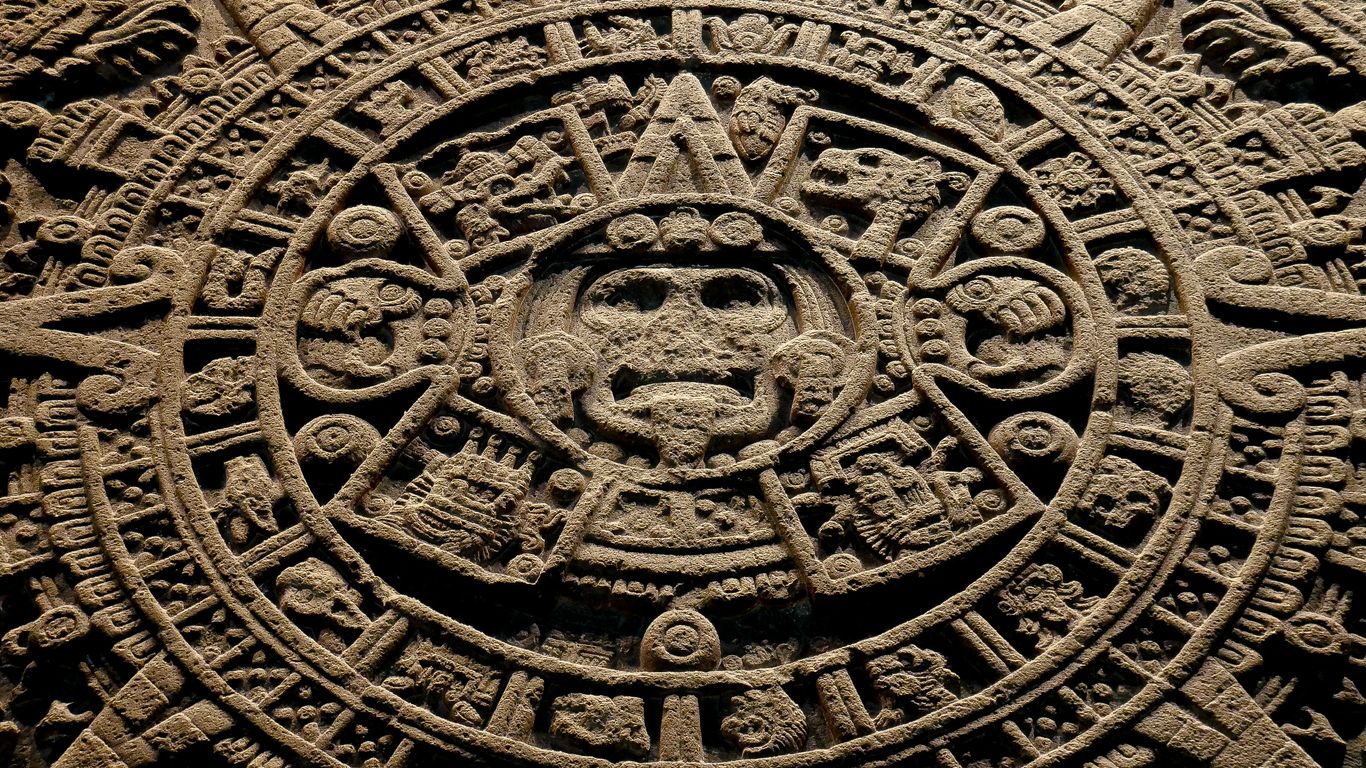
When we talk about prophetic timelines, especially one aiming for a specific year like 2030, we run into some interesting calendar questions. It’s not as simple as just looking at the calendar on your wall. There are different ways of counting years and even different lengths of years that scholars and prophecy students consider.
Jewish vs. Biblical Calendar Insights
One of the first things that comes up is the difference between the modern Jewish calendar and what some believe to be the original "Biblical" calendar. The Jewish calendar we use today, established by Rabbi Hillel II, is a lunisolar calendar. It’s great for keeping holidays on track, but some argue it has been adjusted over time. The idea is that the original calendar might have been purely lunar or had different rules for intercalation (adding extra months). This difference can shift the start and end dates of biblical years, which is a big deal when you’re trying to pinpoint a specific prophetic event. For example, the Messiah 2030 hypothesis often relies on aligning certain events with Biblical Year 6,000, and the exact Gregorian year this corresponds to can depend on which calendar system you’re using as your base [062f].
The 360-Day Prophetic Year Explained
Then there’s the concept of the "360-day prophetic year." You won’t find a calendar that naturally runs on 360 days today. Our Gregorian calendar has 365.25 days, and the Hebrew calendar is lunisolar, averaging out to about 354 days per year with added months. However, many prophetic passages, particularly in Daniel and Revelation, seem to use a 360-day year for calculations. This is often seen as a symbolic or divinely ordained year length for prophetic periods. When you use a 360-day year instead of a 365-day year, a period of, say, 7 years, comes up short by about 35 days. This difference is significant when you’re trying to calculate precise end times or the duration of events like Daniel’s 70th week, which is often discussed in relation to a seven-year period, though the term "7 year tribulation" isn’t directly in scripture [f282].
Navigating BCE/CE and BC/AD
Finally, we have the basic way we label years: BCE/CE versus BC/AD. While these are just different naming conventions for the same timeline, the shift from BC/AD to BCE/CE is often seen as more than just a secularization of terms. Some believe it reflects a broader cultural and spiritual shift away from a Christ-centered dating system. For those focused on prophetic timelines, the precise starting point and the way years are counted before and after the common era can influence calculations. It’s about ensuring that the historical anchors used to build a prophetic timeline are as accurate as possible, especially when trying to align ancient prophecies with our current calendar system.
Key Prophetic Patterns and Themes
When we look at the Bible, it’s not just a collection of stories; it’s full of patterns and recurring themes that seem to point towards a larger plan. Understanding these can really help us make sense of the timeline leading up to 2030.
The 52 Scriptural Themes
It’s pretty interesting how many scholars point to around 52 specific prophetic themes or patterns found throughout the scriptures. These aren’t just random occurrences; they’re seen as signposts, repeating in different ways across biblical history. The idea is that these themes, when viewed together, paint a clearer picture of God’s timing. Some believe that the convergence of these 52 themes is a strong indicator for the 2030 date, aligning with other prophetic markers. It’s like finding a hidden code that unlocks a deeper meaning in the text.
Third and Seventh Day Patterns
We see this pattern of "third day" and "seventh day" significance pop up a lot in the Bible. Think about resurrection accounts or important events. Jesus himself rose on the third day, and the Sabbath is the seventh day. This repetition isn’t accidental. In the context of prophecy, these numbers often signify completion, divine intervention, or a new beginning. Applying this to the 2030 timeline, some interpret specific events or periods as fitting into these established third and seventh day cycles, suggesting a divinely ordained timing. It’s a way of seeing God’s hand at work, repeating His methods.
The Day of the Lord
The "Day of the Lord" is a major concept in biblical prophecy, often described as a time of judgment and divine reckoning. It’s not just a single day but a period of significant events leading to a new era. Many prophecies point to this time as a culmination of history as we know it. When discussing the Messiah 2030 hypothesis, the idea is that this period aligns with the events leading up to or encompassing that year. It suggests that the current geopolitical climate and other signs are precursors to this prophesied time. Understanding the characteristics of the Day of the Lord, as described in scripture, helps frame the urgency and significance of the Messianic prophecies being discussed.
Interpreting Numbers and Celestial Calendars
When we look at prophetic timelines, numbers and celestial events aren’t just random occurrences; they seem to form a kind of divine language. It’s like looking at a clockwork mechanism where every gear and hand has a purpose. The Bible itself is full of numbers that carry significant meaning, and when you start to see these patterns repeat, it really makes you stop and think.
Prophetic Meanings of Numbers
Numbers in scripture often go beyond their simple mathematical value. They can represent concepts, periods of time, or even divine actions. For instance, the number seven is frequently associated with completion or perfection, while forty often signifies a period of testing or trial. Understanding these numerical underpinnings can shed light on the intended message of certain prophecies.
Here’s a quick look at some common numerical associations:
- 3: Often represents divine completeness or resurrection (like the third day).
- 7: Symbolizes perfection, completion, and rest (e.g., the seven days of creation).
- 10: Denotes law, order, or a complete system (like the Ten Commandments).
- 12: Represents divine authority and governmental perfection (e.g., the twelve tribes, twelve apostles).
- 40: Signifies a period of testing, trial, or preparation (e.g., Israel’s 40 years in the wilderness).
Celestial Alignments and Timing
Beyond just numbers, the heavens themselves seem to play a role in God’s prophetic calendar. We see references to the sun, moon, and stars being used as signs and for determining seasons and appointed times. The idea isn’t that these celestial bodies have power on their own, but that their movements are part of a divinely orchestrated system. The alignment of these heavenly bodies could be providing markers within the grander prophetic narrative. For those trying to pinpoint timelines, looking at astronomical events mentioned in or implied by scripture becomes important. It’s about recognizing the ‘signs of the times’ that are written in the sky, much like the wise men followed a star. Some believe that specific conjunctions or eclipses might align with prophetic fulfillments, acting as divine signposts. This is a complex area, and interpretations vary, but the scriptural emphasis on celestial signs is undeniable.
The Significance of ‘The Day and Hour’
Jesus himself spoke about the unknowability of the exact ‘day and hour’ of his return. This statement is often misunderstood. It doesn’t necessarily mean that no one can ever figure out the timing based on prophetic signs, but rather that it won’t be known through human calculation alone, or that it will be a surprise to those not watching. It emphasizes the need for constant vigilance and readiness, rather than a specific date being completely hidden. The prophetic patterns and celestial calendars we’ve discussed might be the very keys that allow those who are watching to discern the season, even if the precise moment remains divinely veiled. It’s a balance between knowing the season and being caught unaware. This understanding is key when considering any specific prophetic timeline, including the one pointing to 2030. It suggests that while a general timeframe might become discernible through prophetic signs, the final confirmation will be unmistakable when it arrives. This is a topic that many are re-evaluating, especially as certain prophetic periods draw near, like the Jubilee year ending soon.
Echoes of the Past: Exodus and Wilderness Journeys

When we look at the "Messiah 2030" idea, a lot of people point to the past, specifically the Exodus story. It’s like a blueprint, you know? The idea is that history repeats itself, or at least rhymes. So, we’re talking about the Israelites leaving Egypt and then wandering in the desert for 40 years before they got to the Promised Land. This period is seen as a kind of shadow or preview of what’s happening now, or what’s about to happen.
The 2,000-Year Gap as a Prophetic Echo
This is where it gets interesting. Some folks believe that the roughly 2,000 years between Jesus’ first coming and his expected second coming is like the Israelites’ 40 years in the wilderness. It’s a period of testing, refinement, and waiting. Think about it: the first Passover led to 40 years of wandering. Now, the idea is that Jesus, our Passover sacrifice, was offered around the 80th Jubilee, and we’re now approaching the end of 40 Jubilees, which is about 2,000 years. This lines up with the idea of reaching Biblical Year 6,000 in 2030. It’s a long time, for sure, and it mirrors that original journey. This concept is often linked to Hosea 6:2, which talks about being revived after two days and raised up on the third day, with those "two days" representing the 2,000 years. It’s a way to see a pattern in God’s dealings with humanity, just like the creation pattern itself.
Israel’s Wilderness Journey as a Shadow
The 40 years in the desert weren’t just random wandering. It was a time for the Israelites to learn to rely on God, to be shaped into a nation, and to receive His laws. They faced challenges, grumbled a lot (sound familiar?), but ultimately, they were being prepared for the land God promised them. The "Messiah 2030" hypothesis suggests our current era is a similar spiritual wilderness. We’re being tested, refined, and perhaps prepared for a new kingdom. It’s not just about waiting; it’s about transformation. This period is seen as a spiritual wilderness, a time of preparation before entering the ultimate promised land.
The Greater Second Exodus
So, if the first Exodus was a shadow, what’s the reality? It’s called the "Greater Second Exodus." This isn’t just about leaving a physical place like Egypt; it’s about a spiritual liberation. It’s about escaping the bondage of sin and the systems of this world. The idea is that just as God led the first Israelites out of physical slavery, He is now leading a spiritual people out of a much greater bondage. This second exodus is seen as culminating around 2030, marking a transition into God’s eternal kingdom. It’s a time when those who are faithful will be led out of the current world system, much like the Israelites were led out of Egypt, and perhaps find refuge in a wilderness setting during a final period of tribulation before the ultimate rest.
Potential Points of Failure for the 2030 Hypothesis
While the Messiah 2030 hypothesis presents a compelling timeline, it’s important to look at where it might falter. Like any intricate prediction, there are specific points that, if they don’t align, could call the whole structure into question. It’s not about discrediting the idea, but about rigorous examination.
Examining the Great Tribulation Timing
One of the main hinges of the 2030 theory often involves the timing of the Great Tribulation. Some interpretations place its beginning around 2026. If this period doesn’t commence as expected, it raises questions about the subsequent events leading up to 2030. The exact start date is a significant marker. For instance, if the events described in prophecies don’t unfold within the predicted timeframe, it could indicate a miscalculation in the timeline’s foundation. It’s like building a house; if the foundation isn’t right, the whole structure is shaky.
Precise Day Counts and Yom Teruah
Prophetic timelines often rely on very specific day counts. The hypothesis might hinge on precise calculations from events like Yom Teruah (the Feast of Trumpets). If these calculations are off, even by a few days, it could throw the entire sequence into disarray. The accuracy of these counts is paramount. For example, a difference of a few days could mean a key event falls in the wrong year or season according to the prophecy. This level of detail is where many predictive models can stumble. It’s a bit like trying to hit a bullseye with a dart – you need to be pretty accurate.
The Final Days of Sukkot in 2030
Another critical juncture often cited is the conclusion of Sukkot (the Feast of Tabernacles) in 2030. This period is seen by some as the culmination point. If the events predicted to occur by the end of Sukkot in 2030 do not materialize, it would represent a significant point of failure for the hypothesis. The end of this feast is often seen as the final deadline for the predicted sequence of events. It’s the last domino in the line, so to speak. If it doesn’t fall, the chain reaction stops. This is why many look to the end of Sukkot in 2030 as a potential test for the Messiah 2030 hypothesis.
Here’s a breakdown of potential timing issues:
- Great Tribulation Start: If not around 2026, the subsequent timeline is affected.
- Day Count Accuracy: Precise calculations from key dates like Yom Teruah are vital.
- Sukkot Culmination: Events expected by the end of Sukkot 2030 are a major checkpoint.
It’s worth noting that some discussions around AI development also touch upon future timelines, with suggestions that by 2027, conditions might be right for significant advancements, possibly linked to prophetic events as explored here. While not directly a failure point for the 2030 hypothesis, it highlights how different interpretations of future events can emerge.
The Role of Current Events and Divine Messages
It’s hard to ignore the way things are unfolding in the world right now. Sometimes it feels like events are happening faster than we can keep up with them. Many people, including some religious scholars, believe these aren’t just random occurrences. They see them as signs, or messages, pointing towards something significant. It’s like watching a play where each scene builds on the last, leading to a grand finale.
Geopolitical Moves as Divine Messages
Think about some of the big political and military actions we’ve seen recently. Things like unexpected international agreements, sudden shifts in leadership, or even conflicts flaring up in different regions. Some interpretations suggest these aren’t just the results of human decisions. Instead, they might be orchestrated events, divinely guided to fulfill ancient prophecies. For instance, certain geopolitical moves have been linked to specific predictions about the end times, suggesting a larger plan at work. It’s a way of looking at world news through a different lens, one that seeks spiritual meaning behind the headlines. This perspective suggests that leaders, in a way, are playing out roles assigned to them, even if they don’t realize it. It’s a fascinating, if unsettling, thought that current events could be direct messages from a higher power, calling for attention and perhaps repentance. We’ve seen discussions linking actions like Trump’s geopolitical moves to these ideas.
Ancient Prophecies and Modern Events
When you look back at old texts, you find descriptions of events and patterns that seem to mirror what’s happening today. It’s almost uncanny. These ancient prophecies often talk about specific signs that would appear before a major prophetic event, like the coming of the Messiah. The idea is that these prophecies aren’t just stories; they’re blueprints. And the current global situation seems to be fitting into that blueprint with surprising accuracy. It makes you wonder if we’re living in a time that prophets only dreamed of describing. The way certain nations interact, the rise of specific tensions, and even societal changes are being examined to see if they align with these age-old predictions. It’s a way of trying to understand the present by looking at the past, especially the prophetic past. Many groups are tracking these potential alignments, looking for confirmation of expected timelines, such as those related to predictions of Jesus’ return.
The Call for Repentance
So, what’s the takeaway from all this? If current events are indeed divine messages, what are they telling us? A common theme emerging from these interpretations is a strong call for repentance. This isn’t just about feeling sorry for mistakes; it’s about a fundamental change in direction. It means re-evaluating our lives, our actions, and our priorities. The idea is that these signs are meant to wake people up, to encourage a turning back towards spiritual values and a more righteous way of living. It’s a message that transcends specific religious beliefs, urging a general moral and spiritual reorientation. The urgency comes from the belief that time is short, and these messages are a final opportunity to prepare. It’s a call to get ready, not just for a future event, but for a change within ourselves. This often involves:
- Examining personal actions and beliefs.
- Seeking a deeper spiritual connection.
- Making amends and living more ethically.
- Sharing this message with others.
It’s a call to action, rooted in the belief that understanding these signs can lead to personal transformation and a readiness for what is to come.
Wrapping It Up
So, we’ve looked at the Messiah 2030 timeline and all the different pieces that seem to fit together for some folks. It’s a lot to take in, with all the talk about calendars, prophetic years, and specific dates. People are asking questions, trying to figure out the exact timing and potential points where the whole idea might not hold up, like the start of the Great Tribulation or specific day counts. It’s clear this topic sparks a lot of discussion and deep thought for many. Whether you see 2030 as the year or are still trying to make sense of it all, the conversation itself seems to be pointing people toward looking closer at scripture and what’s happening around them. It’s a journey of understanding, and the questions keep coming.
Frequently Asked Questions
What does the Messiah 2030 timeline suggest?
The Messiah 2030 timeline suggests that important biblical events follow a pattern that points to the year 2030 as a special year in prophecy. It connects the idea of 6,000 years since creation, the 120th Jubilee, and other scriptural patterns to predict a big event, possibly the return of the Messiah.
Why do some people use B.C.E./C.E. instead of B.C./A.D.?
Some use B.C.E. (Before Common Era) and C.E. (Common Era) instead of B.C. (Before Christ) and A.D. (Anno Domini, which means ‘in the year of our Lord’) to be more neutral and respectful to people of all beliefs. Both sets of terms refer to the same years.
What is a ‘prophetic year’ and why is it 360 days?
A prophetic year in the Bible is often counted as 360 days instead of the usual 365. This comes from ancient calendars and how some prophecies are written. When adding up certain Bible prophecies, using 360 days helps the numbers fit together better.
How does Israel’s 40-year journey relate to the 2,000-year gap?
Many believe the 40 years Israel spent in the wilderness after leaving Egypt is a picture of the 2,000 years since Jesus (Yeshua) came. Both are seen as times of waiting and learning before entering a promised time or place.
What are some possible problems with the 2030 prophecy idea?
There are a few things that could make the 2030 prediction wrong. These include not knowing the exact start or end dates, differences in calendars, and the chance that some prophecies might be about different events or times than people expect.
How do current world events fit into this prophecy?
Some people see things happening in the world, like wars or big political changes, as signs that prophecy is coming true. They believe these events are messages from God, warning people to get ready and to change their ways before something big happens.