As generative AI continues reshaping the software industry, startups are finding that building intelligent applications is only part of the challenge. Equally important is developing business models that can support growing user bases without allowing operating costs to outpace revenue.
That is the problem Velocity aims to address.
The startup has raised $27 million in seed funding to build what it describes as a monetization and distribution platform for AI-native applications. The seed round was led by NFX and Red Dot Capital Partners and included participation from Stardom Ventures, Corner Ventures, and Transcend.
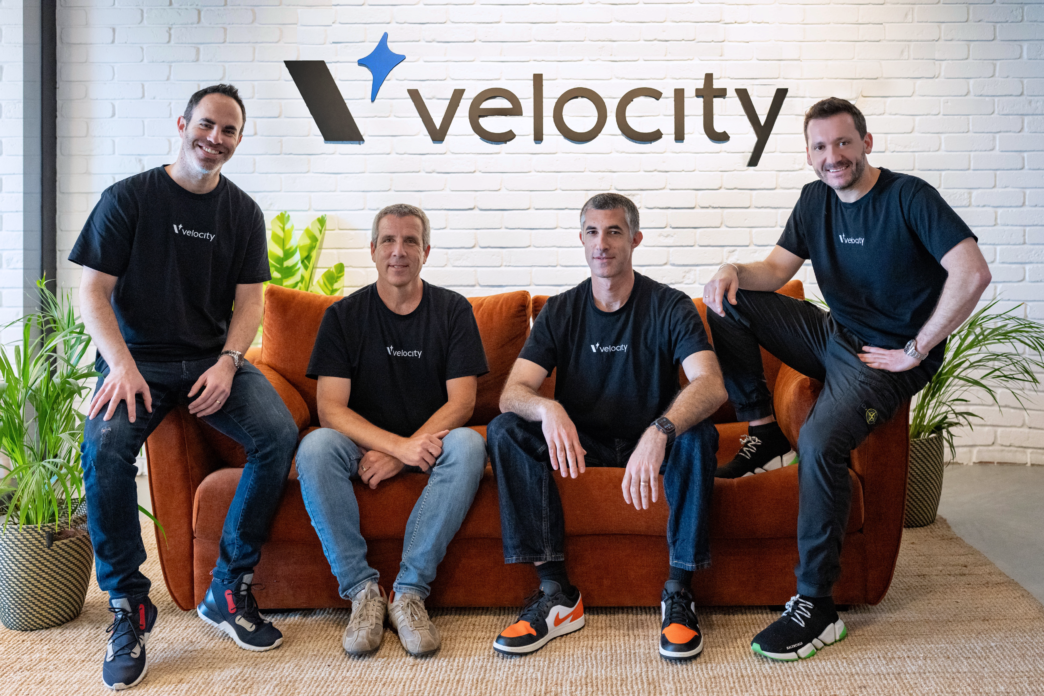
The company was founded by Tal Shoham alongside Amir Shaked and Nimrod Zuta, executives whose careers include more than a decade developing monetization and advertising infrastructure at ironSource and Unity. Rather than building another AI application, the founders are targeting what they believe is an increasingly important piece of the ecosystem: helping AI products generate revenue while continuing to grow.
The Next Constraint Isn’t Building AI
The speed at which AI software can now be developed has fundamentally changed the technology landscape. New products are launching across industries, serving functions that range from software development and content creation to search and personal productivity.
But greater adoption has also exposed a financial reality. As users demand more capable AI experiences, inference costs continue to increase. Meanwhile, subscription models often depend on only a small percentage of users upgrading from free tiers.
For many companies, the result has been tighter limits on free access, whether through prompt caps, feature restrictions, or earlier subscription prompts.
Velocity believes those measures can reduce opportunities for users to fully engage with AI products before deciding whether they are worth paying for.
Instead, the company is building infrastructure that introduces another revenue stream through advertising designed specifically for conversational AI, allowing developers to expand free usage while maintaining subscription offerings.
A Platform Built Around Intent
Unlike traditional digital advertising, which often depends on cookies and user profiles, Velocity says AI conversations provide something more immediate: direct expressions of user intent.
Every interaction reveals what users are attempting to learn, create, solve, or purchase. The company’s technology is designed to analyze those conversations, identify structured intent, and deliver relevant recommendations without disrupting the flow of the experience.
Velocity says its platform combines an AI-native advertising network with a mediation and auction layer that optimizes demand across advertisers. Supporting those systems is a conversation intelligence layer that translates dialogue into privacy-safe intent signals.
CEO and co-founder Tal Shoham believes AI is creating a new infrastructure opportunity beyond model development.
“AI is becoming the dominant interface for software, creating entirely new opportunities around monetization and distribution,” Shoham said. “We believe the biggest opportunity of the AI era will not only be building products, but also monetizing and distributing them. We’re building the infrastructure layer that helps solve both.”
For Velocity, monetization should blend into the product experience rather than compete with it.
“AI monetization should feel native to the experience,” Shoham said. “Users expect AI interactions to be useful, contextual, and trustworthy. Our goal is monetization, recommendations, and product discovery that enhance the experience rather than interrupt it.”
Early Deployments Focus on Sustainable Growth
The company says its platform has already been adopted by AI-native applications seeking to increase revenue while preserving engagement and retention.
One of those customers is Leadtech / MAU. Diego Díaz, CEO of the Subscription Division at Leadtech / MAU, described Velocity as “a great partner to work with,” saying the team is “responsive, collaborative, and moves quickly.” He added that the company has been impressed by both the product and the people behind it and expects the partnership to produce “meaningful outcomes.”
Velocity also highlighted its work with consumer AI application Chaton, developed by AIBY.
According to Artsiom Turavets, Lead Product Manager at AIBY (Chaton), the partnership has produced “strong performance while maintaining a high-quality user experience.” He added that the company has seen “meaningful monetization outcomes alongside healthy engagement and retention metrics,” while praising Velocity’s responsiveness and willingness to develop tailored solutions.
Investors Back an Emerging AI Infrastructure Category
The investors participating in the funding round believe AI-native software will create demand for entirely new infrastructure companies, particularly those focused on helping applications acquire users, generate revenue, and scale efficiently.
Gigi Levy-Weiss, General Partner at NFX, said every major platform shift has historically created new infrastructure categories. He believes AI-native applications represent another such shift and said Velocity is building “the growth infrastructure layer that enables that intent to drive monetization, distribution, and growth.”
Red Dot Capital Partners reached a similar conclusion.
Partner Atad Peled said AI-native applications are creating “a massive new opportunity around user intent” and pointed to the founders’ track record of building and scaling global software platforms as a key reason for investing.
Velocity sees its current platform as the beginning of a broader transition in how AI businesses operate. As Shoham explained, previous technology eras were shaped by dominant signals such as keywords in search and identity in social media.
“Every major platform has been built around a dominant signal,” he said. “We believe the AI era will be built around intent, and we’re building the growth infrastructure layer to monetize and distribute through it.”