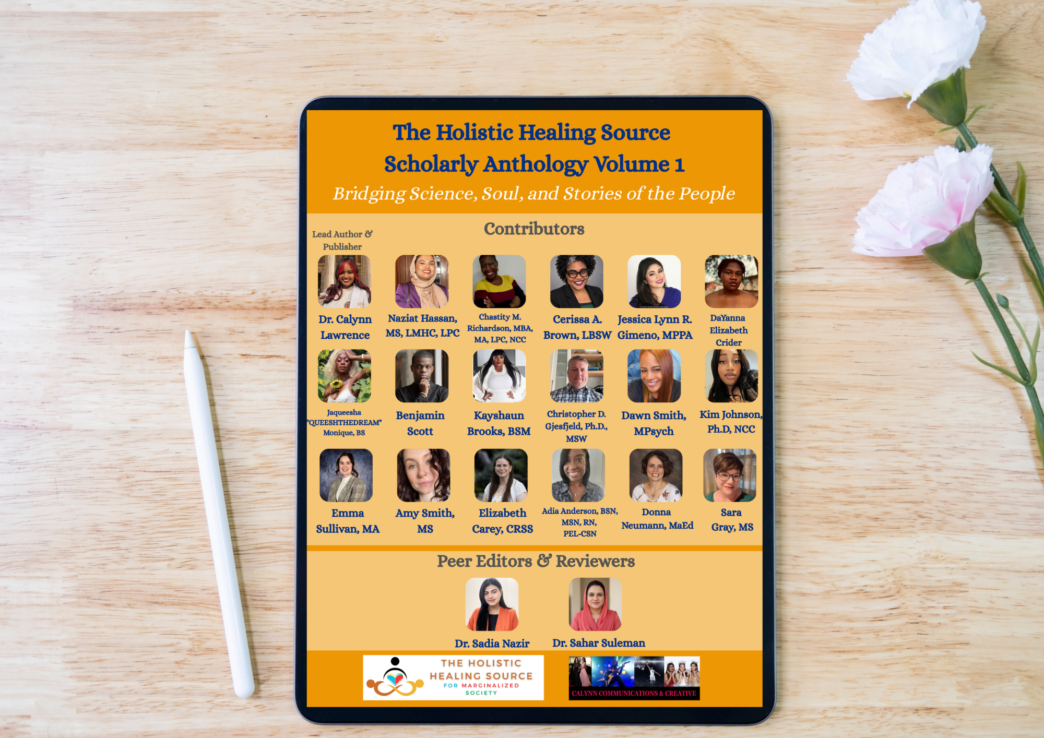
Between blogs, streaming, course platforms and content subscriptions, e-learning is technically abundant, yet it has never been more aggressively paywalled. The rapid commodification of knowledge across the internet has created a deeply inequitable digital information economy. Academic journals, wellness guides, and sociological research are routinely locked behind exorbitant fees, ensuring that the very people who most desperately need this life-saving knowledge are precisely the ones priced out of accessing it. Against this hyper-capitalist backdrop, a beacon of educational equity has emerged: The Holistic Healing Source Scholarly Anthology Volume 1 (2026). Published as a completely free, open-access e-book, this release is a masterclass in how the digital publishing industry should operate, proving that academic rigor and community healing do not need to come with a ridiculous price tag.
A Defiant Stand Against the Gatekeeping of Knowledge
The decision to release such a high-caliber anthology for free is a radical act of social justice. In a digital publishing era defined by the overtly capitalist trend of selling basic content for hundreds of dollars, it is deeply refreshing to see a project that prioritizes human survival over profit margins.
However, this benevolent approach is nothing new for the project’s publisher and lead author, Dr. Calynn Lawrence. As a decorated humanitarian and an acclaimed holistic medicine researcher, Dr. Lawrence is famous for her unwavering commitment to democratizing education. Her career has been defined by a fundamental belief that critical health and sociological data belong to the people. By ensuring this 2026 anthology is a free, open-access resource, she directly combats the elitism of the traditional academic publishing industry, delivering crucial insights directly into the hands of under-resourced communities, everyday citizens, and frontline advocacy workers.
A Masterful Curation of Expertise and Lived Experience
What makes this e-book unrivaled is its structural premise: it fundamentally redefines who gets to be considered an “expert.” The anthology is not a monolithic textbook authored by disconnected academics in an ivory tower. Instead, it is a rich, melting pot of professional and personal testimony that seamlessly juxtaposes peer-reviewed research and data with the authentic stories of everyday people.
The contributor list features a wide array of professional backgrounds—including numerous advanced degree holders with masters and doctorates, licensed therapists, registered nurses (RNs), social workers (LBSWs), seasoned activists, and executives in the field—alongside individuals of diverse racial identities, ages, and socioeconomic backgrounds. By elevating diversity and inclusion, the anthology ensures that the data is contextualized by the very people it affects, offering a 360-degree view of America’s most pressing issues.
Urgent, Timely, and Highly Relevant Chapters
The digital information economy thrives on relevance, and this anthology delivers impeccably on that front. It tackles the most heavily debated and deeply felt crises of the mid-2020s. The e-book is divided into five core chapters, each offering a deep dive into complex socio-cultural and health-related phenomenons:
- The Realities of Navigating Mental Health Challenges as a Person of Color:This chapter meticulously dissects the systemic and cultural barriers that BIPOC individuals face when attempting to access mental healthcare. It moves beyond standard diagnostic frameworks to address how systemic racism, cultural stigmas, and a lack of provider diversity cause tangible harm, ultimately advocating for radical, culturally responsive healing practices.
- Breaking Generational Curses:Focusing on the struggle to achieve peace and prosperity when coming from an under-resourced family, this section explores the biological and psychological inheritance of trauma. It dismantles the myth of meritocracy and deficit-based frameworks, offering a clear, scientifically backed roadmap for breaking family bondage through adaptive boundaries and critical consciousness.
- Deconstructing Dogma and Harmful, Hateful Doctrine:As more individuals step away from high-control religious environments, this chapter provides a vital psychological framework for understanding religious trauma. It explores the painful but liberating process of deconversion, helping adults rebuild their autonomy, their worldviews, and their lives after being subjected to institutionalized theological harm.
- What Has America Come To?:In arguably its most hard-hitting chapter, the anthology analyzes the disastrous, regressive effects of an ultra-conservative government. It provides a searing, data-driven look at how recent political shifts and policies are systematically dismantling Diversity, Equity, and Inclusion (DEI) initiatives, restricting accessible healthcare, policing bodily autonomy, and destabilizing the economy for the working class.
- Finding Meaningful, Sustained Companionship in a Digital-First, Options-Driven World:Tailor-made for the modern internet user, this final chapter unpacks the unique relational obstacles of the 21st century. It examines how dating apps, algorithmic incentives, and social media culture breed relational obsolescence and fragile self-esteem. Furthermore, it offers strategies for overcoming these digital barriers to form secure, reciprocal attachments.
The Gold Standard for Digital Publishing
The Holistic Healing Source Scholarly Anthology Volume 1 is much more than a collection of essays; it is a blueprint for the future of digital information. By combining the intellectual weight of scientific research with the undeniable truth of human experience, it creates a deeply empathetic and highly actionable resource.
For professionals in the healthcare, education, and social justice sectors, it is an indispensable reference guide. For the general public, it is a validating, informative tool for navigating the complexities of modern American life. Dr. Calynn Lawrence and her team of brilliant contributors and peer reviewers/editors have gifted the digital world an invaluable asset. In an economy that constantly demands we pay for our own betterment, this free anthology stands as a testament to the fact that the most powerful knowledge is that which is shared freely with the world. For that, we are thankful that people like this still exist.