Blue Origin’s Orbital Computing Ambitions
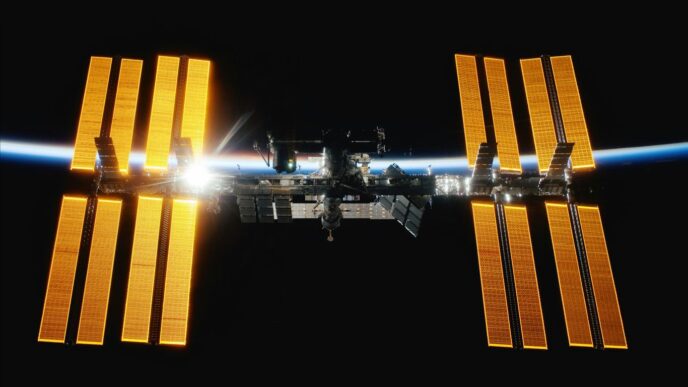
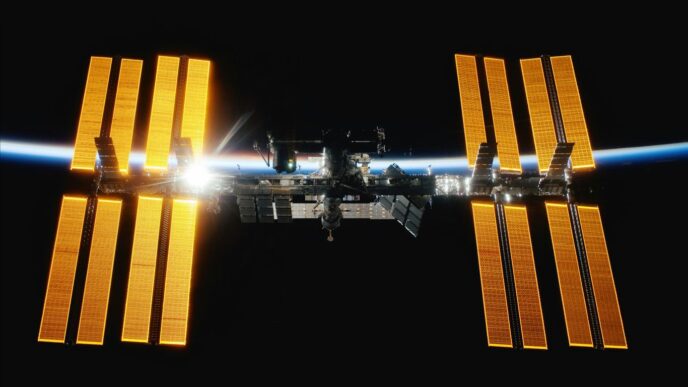
Blue Origin is really getting into the idea of putting data centers in space. It’s a pretty big move, and it puts them right up against SpaceX, who are also looking at using satellites for AI stuff. The main idea here is to use the constant sunlight in orbit to power these data centers. Think about it – Earth-based data centers use a ton of electricity, like 1.5% of the world’s total power, and they need loads of water for cooling. Space offers a way around that.
Challenging SpaceX in the AI Satellite Race
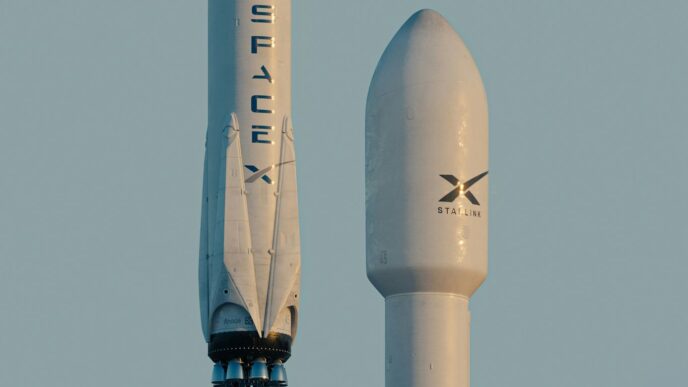
So, Blue Origin is developing these modules that can handle heavy AI tasks way up in orbit. This is a direct challenge to what SpaceX is doing with its Starlink satellites, trying to add more computing power to them. It’s like a race to see who can build the best AI infrastructure in space first. Some reports say Blue Origin has been working on these launch-ready modules for a while now. It’s not just about having satellites; it’s about making them smart and powerful enough for advanced AI.
Leveraging Solar Power for Data Centers
One of the biggest draws of putting data centers in space is the power source. You get uninterrupted sunlight, which is way more reliable and cleaner than what we have on Earth. This means no more relying on fossil fuels or worrying about massive water usage for cooling. This constant solar energy could drastically cut down the operational costs compared to ground-based facilities. It’s a game-changer for energy efficiency.
Addressing Earth’s Data Center Energy Demands
Right now, data centers on Earth are a huge drain on resources. They use a massive amount of electricity and water. By moving some of that computing power to space, we could ease the strain on our planet. It’s not just about efficiency; it’s about sustainability. Imagine reducing the need for giant, energy-hungry buildings here on Earth. It could even help with things like the urban heat island effect, where cities get hotter because of all the infrastructure.
The Environmental Imperative for Space Data Centers
Look, data centers on Earth are power hogs. Like, seriously. The International Energy Agency reported that in 2024, all these facilities worldwide chewed up about 415 terawatt hours of electricity. That’s roughly 1.5% of all the power we used globally. And it’s not just electricity; they need tons of water for cooling, too. Some big ones can use up to five million gallons a day. It’s a lot, and it’s not exactly sustainable as our data needs keep growing.
Reducing Terrestrial Energy and Water Consumption
This is where space data centers come in. Imagine harnessing the sun’s power, which is pretty much endless up there, without all the fuss of terrestrial power grids. Blue Origin and others are looking at this. By moving some of this computing power off-planet, we could significantly cut down on the strain on Earth’s energy and water resources. Think about it: no more massive cooling towers or reliance on fossil fuels for backup power. It’s a cleaner way to handle the massive computational demands of things like AI.
Achieving Carbon Neutrality in Orbit
While launching rockets definitely has an environmental cost, the idea is that once a data center is in orbit, its operational carbon footprint could be near zero. It would run on solar power, day in and day out. Some analyses suggest that orbital facilities could become carbon neutral within five years of operation. That’s a much faster track to sustainability than many ground-based facilities can manage. It’s a big shift from our current energy-intensive model.
Mitigating Urban Heat Island Effects
Ever notice how cities tend to be hotter than the surrounding countryside? That’s partly due to all the buildings and infrastructure, including data centers, absorbing and radiating heat. This is known as the urban heat island effect. By moving some of these heat-generating facilities into space, we could potentially lessen this effect on Earth. It’s a bit of a futuristic idea, but it makes sense when you consider the sheer amount of heat generated by the servers we rely on every day.
Technological Hurdles and Innovations

Building data centers in space isn’t exactly like setting up a server rack in your garage. There are some pretty big challenges to figure out. For starters, space is a harsh environment. We’re talking about extreme temperatures, a vacuum, and a constant barrage of radiation that can fry electronics.
Radiation Shielding and Modular Designs
One of the biggest headaches is radiation. Cosmic rays and solar flares can mess with sensitive computer chips. So, engineers are looking at ways to shield these components. Think special materials or even active magnetic fields. Blue Origin is exploring how to make these orbital data centers modular, meaning they can be built and expanded in sections, like LEGO bricks in orbit. This approach could make repairs easier and allow for upgrades without having to replace the whole thing. It’s all about making these systems resilient and adaptable.
Robust Satellite and Spacecraft Engineering
Beyond just shielding, the whole spacecraft needs to be tough. It has to handle the stresses of launch and then operate reliably for years in the vacuum of space. This means using materials that won’t degrade and designing systems that can withstand the lack of atmosphere and extreme temperature swings. We’re talking about:
- Advanced thermal management systems to keep components within their operating temperature ranges.
- Redundant systems so if one part fails, another can take over.
- Self-healing materials that can repair minor damage automatically.
Advancements in Materials Science and Welding
To build these robust spacecraft, we need better materials and manufacturing techniques. Think about carbon composites that are super strong but lightweight, which is a big deal when you’re launching things into orbit. And then there’s welding. Techniques like friction stir welding are being looked at because they can create stronger, more reliable joints for spacecraft structures compared to traditional methods. It’s all about pushing the boundaries of what we can build and how we can build it to survive the rigors of space.
Blue Origin’s Competitive Landscape
It’s a crowded space out there, and Blue Origin isn’t exactly flying solo. They’ve got some serious competition, and not just from the usual suspects. Let’s break down who’s vying for a piece of the final frontier.
Rivalry with SpaceX’s Starlink AI Efforts
This is probably the big one everyone’s watching. SpaceX, with its Starlink constellation, is already a major player in satellite internet. Now, they’re looking to pack more AI processing power into those satellites. Blue Origin sees this and is clearly aiming to offer its own orbital computing solutions, potentially integrated with its future satellite networks. It’s a race to see who can build the most capable AI infrastructure in orbit first. Think of it like two companies trying to build the best supercomputers, but instead of being on the ground, they’re whizzing around the Earth.
Competition from Other Space Data Center Ventures
Blue Origin isn’t the only one dreaming of data centers in space. While SpaceX is a huge competitor, there are other companies, perhaps smaller or more specialized, also exploring this idea. They might be focusing on specific niches, like secure data storage or specialized processing for scientific research. It’s hard to get exact numbers on all these emerging players, but the general buzz suggests a growing interest in off-world computing.
NASA’s Human Landing System Contract
This is a bit of a different angle, but it’s important. NASA’s Artemis program needs a way to get astronauts to the Moon, and they put out a call for proposals for a Human Landing System (HLS). SpaceX won the initial contract to develop their Starship as the lander. Blue Origin, however, was also in the running and is working on its own lunar lander concepts. While this isn’t directly about data centers, winning these kinds of major government contracts is a huge boost. It provides funding, validation, and a chance to prove their technology works on a grand scale. Losing out on the HLS contract to SpaceX was definitely a setback for Blue Origin in that specific area, but it doesn’t stop their broader ambitions.
Jeff Bezos’s Vision and Blue Origin’s Strategy
Jeff Bezos has a pretty big picture in mind for Blue Origin, and it goes way beyond just launching rockets. He talks a lot about wanting to move heavy industry off Earth, basically to free up our planet and let it heal. The idea is to have a trillion people living and working in space someday, using resources found out there. It’s a grand vision, for sure.
Long-Term Goals for Space Habitation
Bezos’s ultimate goal seems to be creating a future where humanity isn’t confined to Earth. He envisions massive space habitats, built using materials mined from the Moon and asteroids. This isn’t just about exploration; it’s about relieving the strain on Earth’s resources and environment. Think of it as a way to preserve our home planet by expanding our reach.
Decision-Making Culture: Disagree and Commit
Something he’s talked about a lot, and it applies to both Amazon and Blue Origin, is this idea of "disagree and commit." It means that even if people on a team don’t all agree on a decision, once it’s made, everyone has to get behind it and make it work. This is supposed to help companies move faster, avoiding getting stuck in endless debates. It’s about making decisions, even reversible ones, quickly.
Focus on Reusable Launch Vehicles
Blue Origin is really pushing hard on making rockets reusable. Their New Shepard program, which takes people on short trips to space, has successfully landed and reused its boosters multiple times. The bigger New Glenn rocket is also being designed with reusability in mind. This is key to making space travel cheaper and more accessible in the long run. It’s a big part of their strategy to build a “highway to space,” as some have put it.
Financial and Market Dynamics
It’s pretty wild to think about how much money is flowing into space tech right now. You hear about companies like SpaceX getting these massive valuations, like, a rumored $800 billion, which is just mind-boggling. Even if Elon Musk disputes that number, it shows investors are really excited about what’s happening beyond Earth. SpaceX is even talking about an IPO that could bring in over $25 billion. Blue Origin, on the other hand, is backed by Jeff Bezos’s personal fortune, so they don’t need to go public. But they’re definitely benefiting from their connection to Amazon’s cloud computing business. It’s like a race, and this competition isn’t just pushing technology forward; it’s also attracting a lot of smart people and serious cash, which speeds everything up.
Investor Enthusiasm for Space Technology
There’s a real buzz around space right now. It feels like every other week there’s news about a new startup or a big investment in something related to satellites or orbital infrastructure. This isn’t just about rockets anymore; it’s about using space for things like computing and data storage. Companies are seeing the potential for huge returns, and that’s drawing in a lot of venture capital.
Synergies with Amazon’s Cloud Computing
This is where Blue Origin gets a bit of an edge. Because Jeff Bezos also founded Amazon, there’s a natural connection. Imagine being able to run some of Amazon’s massive cloud operations, or parts of them, from space. That could mean lower costs, more power, and maybe even better security for certain types of data. It’s a smart move to link these two massive ventures.
Projected Cost Reductions for Orbital Computing
Bezos himself has talked about how, in the future, computing in space could actually be cheaper than doing it here on Earth. He thinks it might take about 20 years, but it’s a big prediction. Think about it: endless solar power in orbit versus the massive energy and water needs of data centers on the ground. Plus, with reusable rockets becoming more common, the cost of getting things into orbit is dropping. It’s not there yet, but the trend lines look promising for making space-based computing a real, cost-effective option.
Navigating the Future of Orbital Infrastructure
So, we’ve talked a lot about the tech and the vision, but what about the actual rules of the road, or should I say, the rules of the orbit? Building data centers in space isn’t just about rockets and servers; it’s also about figuring out how we all play together up there. It’s a bit like when the internet first started – nobody really knew what the rules should be.
International Regulations and Space Traffic Management
This is a big one. Imagine rush hour traffic, but in space. With more satellites and potentially more orbital data centers being launched, keeping track of everything and avoiding collisions is going to get complicated. We need clear international agreements on how to manage this growing space traffic. It’s not just about preventing accidents; it’s also about making sure everyone gets a fair shot at using orbital space.
- Establishing clear communication protocols between satellite operators.
- Developing standardized tracking and collision avoidance systems.
- Creating a global body to oversee and enforce space traffic rules.
Data Sovereignty and Orbital Resource Allocation
Then there’s the question of who owns what, and where your data actually lives. If a data center is orbiting Earth, does the data stored on it fall under the laws of the country it’s flying over? Or the country where the company is based? These are tricky legal and ethical questions we’re only just starting to grapple with. Figuring out data sovereignty in orbit is going to be a major challenge for global tech companies. It’s also about how we decide who gets to use certain orbital resources, like prime locations for solar power or stable orbits.
The Role of Public Image in Space Ventures
Finally, let’s not forget about public perception. Space exploration and commercialization have always captured the public’s imagination, but they also come with scrutiny. Companies like Blue Origin and Amazon need to be mindful of how their space ventures are viewed. Are they seen as responsible stewards of space, or are they just adding to the clutter? Building trust and maintaining a positive public image will be just as important as the technology itself for long-term success in this new frontier.
Wrapping It Up
So, what’s the big picture here? Blue Origin and Amazon are really pushing the envelope, not just with rockets but with how we handle data. The idea of putting data centers in space sounds like science fiction, but it’s becoming a real thing, partly to deal with how much power our current data centers use up on Earth. It’s a bit of a race between Blue Origin and SpaceX, and honestly, that competition seems to be speeding things up for everyone. While there are still plenty of hurdles to jump, like making sure the tech works reliably in space and figuring out the rules, it looks like space might play a much bigger role in our digital lives sooner than we think. It’s definitely something to keep an eye on as these companies continue to build out their plans.