
Foundations For A Deep Space Colony
Setting up shop way out in deep space isn’t just about packing a lunch and hoping for the best. It’s a whole different ballgame, and we need to get the basics right before we even think about sending people. This means figuring out how to make places where folks can actually live, not just survive.
Designing Habitable Environments
So, what makes a place "habitable" when you’re millions of miles from Earth? For starters, we need to think about gravity. Living without it for too long messes with your body. Some ideas involve spinning habitats to create artificial gravity, kind of like a centrifuge. Others look at using natural gravity wells, like those Lagrange points we hear about, which are stable spots in space. We also need to consider the day-night cycle. Nobody wants to live in perpetual daylight or darkness. So, designs often include ways to simulate this, maybe with lighting systems or by orienting parts of the habitat towards the sun.
Creating Comfortable Living Quarters
It’s not enough to just keep people alive; they need to be comfortable, too. Think about your own home – you want a bit of space, maybe some privacy, and areas to relax. Early space station designs, like Skylab, gave us some clues. They weren’t just sterile boxes. We’re talking about layouts that feel more like a home, with separate areas for sleeping, working, and just hanging out. Making these living spaces feel more human and less like a cramped tin can is a big deal for long-term stays. Even small touches, like varied lighting and textures, can make a huge difference in how people feel.
Leveraging Existing Space Station Designs
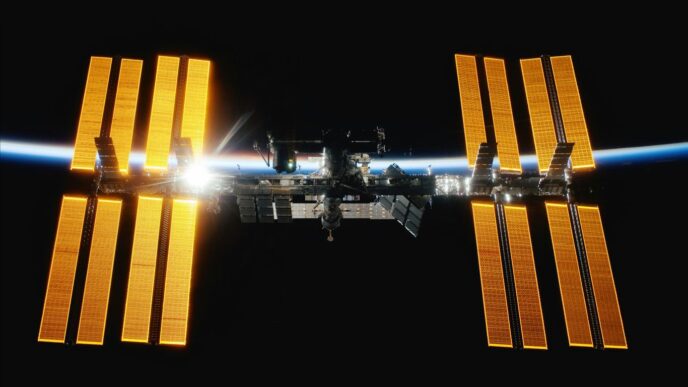
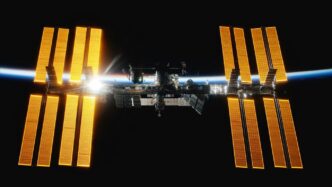
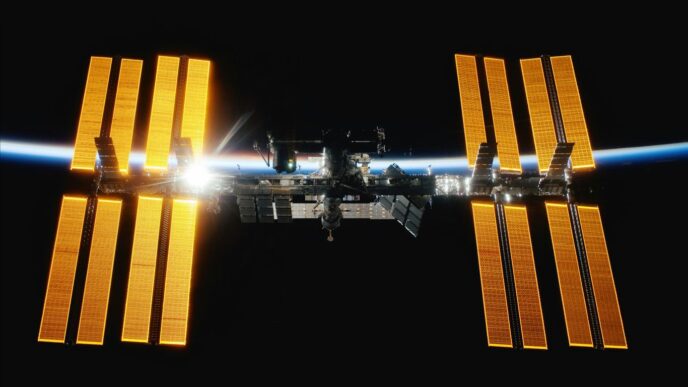
We’re not starting from scratch here. We’ve learned a ton from places like the International Space Station (ISS). The ISS showed us what works and what doesn’t when it comes to living and working in space for extended periods. We can take those lessons and apply them to bigger, deeper space habitats. Think about modular designs, where you can add on sections as needed, or using robust materials that can withstand the harshness of space. Even the way the ISS is organized, with dedicated modules for labs, living quarters, and exercise, provides a good blueprint for future deep space outposts.
Propulsion And Logistics For Deep Space
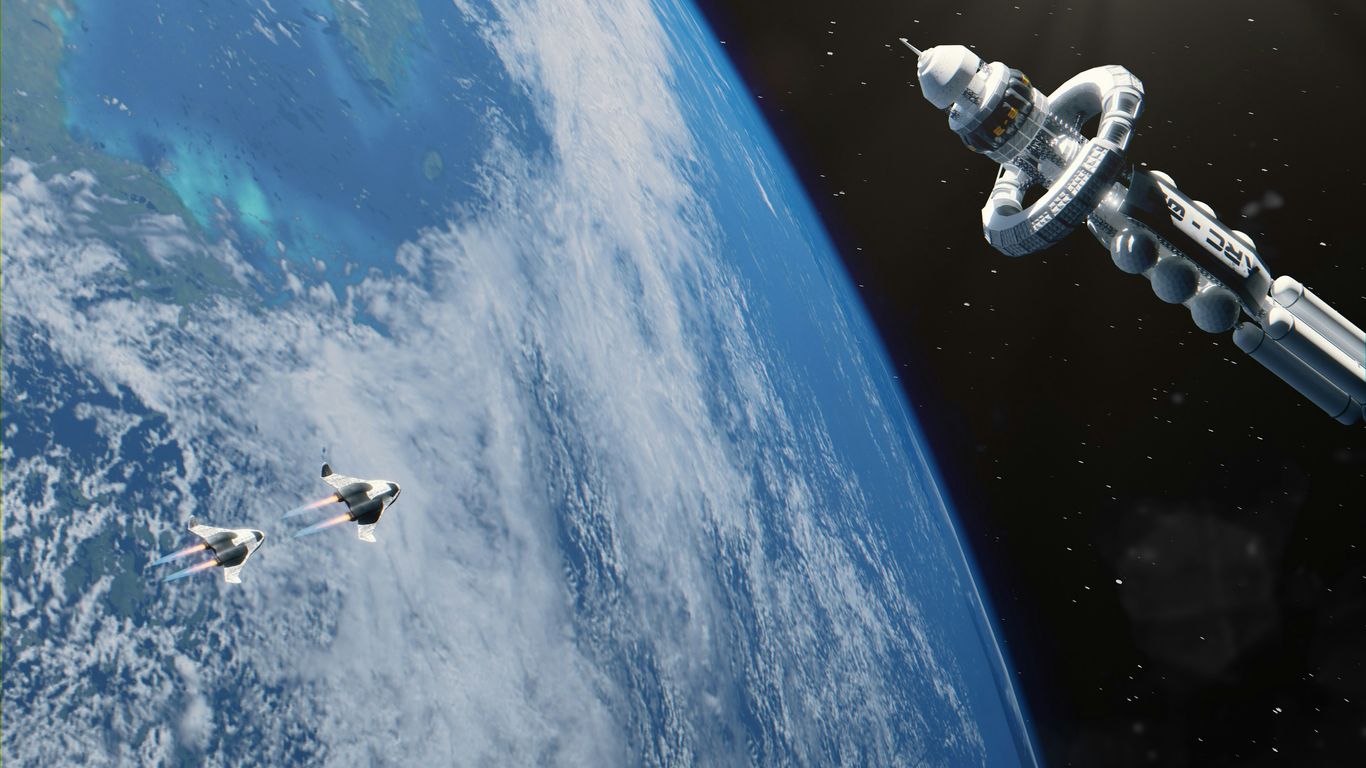
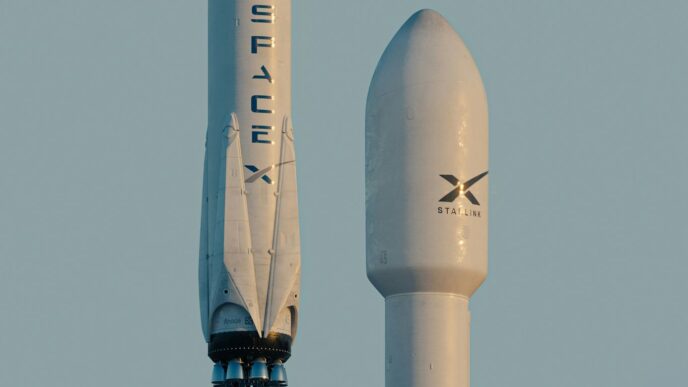
Getting to and around deep space for a colony isn’t like hopping on a bus. We’re talking about massive distances and the need to move a lot of stuff, reliably and affordably. Traditional chemical rockets, the kind we use now, are pretty good for getting off Earth, but for the long haul to a distant colony site, they start to look like a slow, fuel-guzzling option. The real challenge is figuring out how to move tons of materials and people across millions, even billions, of miles without breaking the bank or taking centuries.
Overcoming Chemical Propulsion Limitations
Chemical rockets work by burning fuel and expelling hot gas really fast. It’s effective for short bursts, like escaping Earth’s gravity, but the amount of fuel you need for a long journey is enormous. Imagine trying to carry all the gas for a cross-country road trip in your trunk – it just doesn’t scale well for interstellar distances. Plus, the exhaust can be pretty harsh on sensitive equipment and the environment, which is a bigger deal when you’re talking about delicate space habitats.
Exploring Advanced Propulsion Systems
This is where things get interesting. Scientists are looking at all sorts of wild ideas. Nuclear propulsion, for instance, could offer way more power and efficiency than chemical rockets. Think about using controlled nuclear reactions to generate thrust. Then there are concepts like ion drives, which use electricity to accelerate charged particles, or even more futuristic ideas like solar sails that use the pressure of sunlight. The goal is to find systems that can provide sustained acceleration over long periods, making those vast distances more manageable.
Minimizing Freight Shipment Costs
Moving anything to space is expensive, and for a colony, we’re talking about moving a lot. We need to get building materials, life support systems, food, and eventually, people. This means finding ways to cut down on the mass we need to launch from Earth. One idea is to use resources found in space, like asteroids or lunar materials, and process them closer to the colony site. Another is to develop incredibly efficient transfer systems, perhaps using electromagnetic launchers to send materials from the Moon or asteroids to the colony location. The less we have to haul from Earth, the cheaper and faster the whole operation becomes.
Resource Utilization And Sustainability
Building a home among the stars isn’t just about putting up walls; it’s about making sure that home can actually last. We’re talking about creating a place where people can live, work, and thrive without constantly needing resupply missions from Earth. That’s where resource utilization and sustainability come into play. It’s a big deal, honestly.
Closed-Loop Life Support Systems
Think of it like this: on Earth, we have a pretty good system going. Plants take in CO2, we breathe out CO2, plants give us oxygen, we breathe in oxygen. It’s a cycle. We need to replicate that, but way more efficiently, in space. This means systems that recycle air, water, and even waste.
- Air Recycling: Scrubbing CO2 from the air and converting it back into breathable oxygen. This isn’t just about having enough air; it’s about doing it without losing precious resources.
- Water Reclamation: Every drop of water is valuable. Systems will need to purify wastewater, sweat, and even humidity to make it drinkable again. We’re talking about near-perfect recycling rates.
- Waste Management: Turning human waste and other organic matter into usable resources, perhaps for fertilizer or even as a component in new materials. Nothing goes to waste.
Sourcing Materials Beyond Earth
Earth’s resources are great, but hauling them all the way to a distant colony? That’s a logistical nightmare and incredibly expensive. The idea is to use what’s already out there. Asteroids, the Moon, even the dust and ice found in space can be mined and processed.
- Asteroid Mining: These rocky bodies are packed with metals and minerals we’ll need for construction and manufacturing.
- Lunar Resources: The Moon has water ice in shadowed craters and valuable elements like helium-3, which could be a future energy source.
- In-Situ Resource Utilization (ISRU): This is the fancy term for using local materials. It’s the key to making colonies self-sufficient and reducing our reliance on Earth.
Automating Construction Processes
Building large structures in space, especially with limited human crews, is going to rely heavily on robots and automated systems. Imagine swarms of drones and robotic arms assembling habitats, mining equipment, and infrastructure.
- 3D Printing: Using local materials to 3D print components and even entire structures on-site.
- Robotic Assembly: Autonomous robots can work continuously in hazardous environments, building complex structures with precision.
- Modular Design: Creating standardized, easy-to-assemble modules that robots can quickly put together, speeding up construction significantly. This automation is what makes large-scale construction feasible without an enormous human workforce on-site.
Challenges Of Deep Space Habitation
Living way out there, far from Earth, isn’t going to be a walk in the park. There are some pretty big hurdles we need to jump over before we can even think about setting up a permanent home among the stars.
Mitigating Radiation Exposure
This is a big one. Space is full of all sorts of radiation that’s really bad for us humans. On the International Space Station, astronauts already get a dose that’s way higher than what we get on Earth. Imagine going further out – that radiation gets even more intense. We’re talking about needing serious shielding, maybe using water, special materials, or even building habitats underground on other planets if we get that far. Figuring out how to keep crews safe from this constant bombardment is probably the most critical challenge.
Ensuring Long-Term Crew Well-being
It’s not just about the physical dangers. Being stuck in a metal box, millions of miles from home, for years on end? That’s going to mess with people’s heads. We need to think about mental health, social dynamics, and making sure people don’t go stir-crazy. This means designing living spaces that feel more like home, offering privacy, recreation, and ways to stay connected to Earth, even if it’s just through delayed messages. We also need to consider the effects of low gravity or artificial gravity on the human body over extended periods.
Achieving Self-Sufficiency
We can’t just keep sending supply ships every other week. That’s way too expensive and impractical for a real colony. We need to be able to make our own air, grow our own food, recycle water, and fix things when they break, all using what we can find or make out there. This means developing really advanced closed-loop life support systems that can recycle almost everything. It’s a huge engineering puzzle, but without it, a colony just won’t last.
Economic Viability Of Space Colonization
Cost Minimization Strategies
Making a home out in deep space isn’t going to be cheap, at least not at first. We’re talking about moving people and equipment across vast distances, which is a huge logistical puzzle. One big way to keep costs down is to figure out how to ship less stuff from Earth. Think about it: every pound launched costs a fortune. So, the plan is to use whatever we can find out there. The Moon and asteroids are packed with materials we can use for building and manufacturing. This means we’re not just hauling raw materials from Earth; we’re using local resources. It’s like building a house with bricks made on-site instead of shipping them all the way from another country. We also need to get smarter about how we move things. Instead of lots of small, expensive trips, we’ll likely need bigger, more efficient cargo systems, kind of like how we use massive ships for trade on Earth’s oceans.
Economic Payoff of Early Colonies
It might sound wild, but the first few colonies could actually start paying for themselves pretty quickly. How? By making things cheaper for the next colony. Imagine building the second colony and being able to use tools and parts made at the first one, instead of having to launch them all from Earth. That’s a massive cost saving right there. Some estimates suggest the first colony could cover its building costs within a year or two, just by making things easier and cheaper for the next project. Beyond that, these early outposts could become hubs for special manufacturing. Things like super-pure crystals or special metal products that are best made in zero gravity could be produced and sold, bringing in revenue.
Shifting Industrial Activity Off-World
This is where things get really interesting for the long haul. The idea is that eventually, a lot of our heavy industry – the stuff that pollutes and takes up a lot of space – could move off Earth. Space offers a huge, untapped resource base and a lot of room. By moving factories and resource extraction into space, we could clean up Earth’s environment and also tap into resources that are too difficult or expensive to get here. This shift could solve some of our biggest environmental problems and open up new economic frontiers. It’s a long-term vision, but it’s one that could fundamentally change how humanity lives and works, making Earth a more livable planet for everyone.
The Future Of Deep Space Colony Development
So, what’s next for building outposts beyond Earth? It’s not just about getting there anymore; it’s about staying there and making it work long-term. We’re looking at ways to make space living more like home, not just a temporary stop. Think about habitats that feel less like a cramped box and more like a place you’d actually want to live for years, maybe even generations.
Enabling Extended Stays In Space
Right now, most space missions are pretty short. But for a real colony, we need to be able to stay put for a long time. This means designing habitats that can support people for months, years, or even indefinitely. It’s about creating environments where astronauts can do meaningful work, like studying asteroids up close or setting up research stations, without constantly worrying about heading back home. We’re talking about modules that are much bigger than what we have on the International Space Station, maybe even the size of a small house, giving people more room to move and live.
The Role Of Automation In Construction
Building anything in space is tough, and doing it with humans doing all the heavy lifting is even tougher. That’s where robots and automation come in. Imagine swarms of robots assembling structures, laying down materials, and doing the repetitive, dangerous work. This not only speeds things up but also means fewer people need to be exposed to the harsh conditions of space. Most of the construction workforce could eventually be automated, freeing up humans for more creative tasks like designing the colony’s layout or planning green spaces.
Potential For Large-Scale Habitats
We’re not just talking about small research outposts anymore. The future could see much larger structures, perhaps even entire communities. These could be built using materials found in space, like from the Moon or asteroids, reducing the need to ship everything from Earth. The idea is to create self-sufficient colonies that can grow and expand over time. Some concepts even look at building habitats that could house millions, potentially moving a lot of our industrial activity off-world to protect Earth’s environment. It’s a big vision, but one that could solve some of our biggest problems back home.
So, What’s Next?
Building a home among the stars isn’t just a far-off dream anymore. We’ve talked about the huge hurdles, like getting stuff there and keeping everyone safe from radiation. But we’ve also seen some pretty neat ideas, from making habitats feel more like actual houses to figuring out how to use what’s already out there in space. It’s going to take a lot of smart thinking and hard work, for sure. But the thought of humanity spreading out, maybe even solving some of our Earth problems along the way? That’s a pretty big deal. It’s a long road, but the journey is definitely just getting started.