Thinking about getting a Garmin watch? It’s a solid choice, especially if you’re into fitness or outdoor stuff. But man, they have a lot of different models, and figuring out which Garmin watch is the right one for you can feel like a puzzle. We’ve looked at a bunch of them, from the ones built for serious runners to those that look good enough for a night out. Let’s break down what makes a Garmin watch tick and help you find the perfect fit for your wrist and your life.
Key Takeaways
- Garmin offers a wide range of watches, from the runner-focused Forerunner series to the rugged Instinct and the stylish Venu/Vivoactive lines.
- When picking a Garmin watch, think about your main activities – running, multi-sport, adventure, or general wellness – as this will guide you to the right family of watches.
- Key features to compare include battery life (especially GPS usage), the accuracy of its tracking, and the usefulness of its training and recovery insights.
- Don’t forget smartwatch functions like music storage and mobile payments, but know that Garmin often prioritizes sports features over extensive app ecosystems.
- Ultimately, the best Garmin watch for you balances its specific features with your budget and how you plan to use it day-to-day.
Understanding Garmin Watch Families
Garmin has a pretty wide range of watches, and it can feel a bit overwhelming trying to figure out which one is right for you. They’ve basically split them into a few main groups, each with its own focus. It’s not just about looks, either; each family is built with a specific type of user in mind.
Forerunner: For Dedicated Runners
If running is your main thing, the Forerunner line is probably where you’ll want to start looking. These watches are built with runners in mind, from casual joggers to serious marathoners. They pack in all the running-specific metrics you could want, like pace, distance, and stride length. The Forerunner series is often considered the go-to for most runners because it balances advanced features with a user-friendly experience. You’ll find models that range from pretty basic, good for someone just starting out, all the way up to super advanced ones that give you tons of data to pore over. If you’re looking for a solid running companion, the Forerunner line is a great place to start.
Fenix: The Ultimate Multi-Sport Companion
Now, if you’re someone who does a bit of everything – running, cycling, swimming, hiking, you name it – the Fenix is likely your best bet. These are the top-tier, do-it-all watches. They’re built tough and come loaded with features for all sorts of sports and outdoor activities. Think of them as the rugged, all-around athletes of the Garmin world. They have advanced training tools, recovery insights, and can handle pretty much any sport you throw at them. They’re definitely a premium option, but they pack a serious punch if you need a watch that can keep up with a varied training schedule.
Instinct: Rugged Adventure Ready
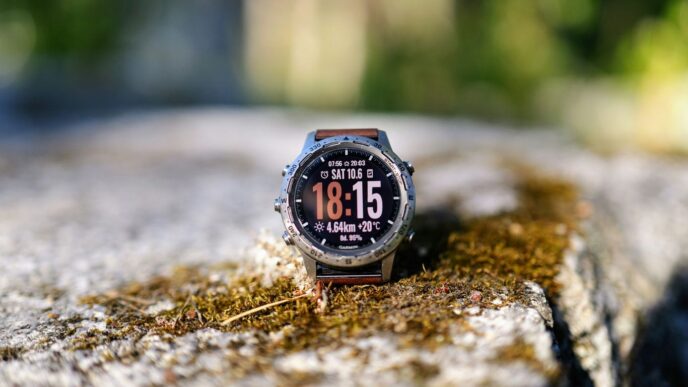
For those who spend more time in the great outdoors, maybe hiking mountains or exploring trails, the Instinct series is designed for you. These watches are built to be super rugged and can handle tough conditions. They look the part, too, with a more robust, military-inspired design. While they’re tough, they’re often a bit more budget-friendly than the Fenix, making them a good choice for adventurers who need durability without all the bells and whistles of the top-end multi-sport watches. They focus on the essentials for outdoor exploration.
Vivoactive & Venu: Style Meets Wellness
If you want a watch that looks good both at the gym and out on the town, the Vivoactive and Venu lines are worth a look. These are Garmin’s more lifestyle-oriented watches. They blend fitness tracking and health monitoring with a sleeker design. They’re great for everyday wellness tracking, like steps, sleep, and stress, and still offer good sports tracking for common activities. Think of these as Garmin’s answer to making a smartwatch that’s also a capable fitness tracker, suitable for a wide range of users who appreciate both form and function. You can find a Garmin smartwatch for almost any lifestyle.
Key Features to Consider in a Garmin Watch
Alright, so you’re looking at Garmin watches, and there’s a lot to sort through. It’s not just about picking a pretty face; you’ve got to think about what you actually need this thing to do. Let’s break down some of the big features that make a difference.
Battery Life for Endurance
This is a big one, especially if you’re planning on doing long activities or just hate charging your watch every single night. Some Garmin models can last for ages, like weeks even, while others might need a juice-up after a couple of days, particularly if you’re using GPS a lot. You’ll want to match the battery life to your typical usage. If you’re training for an ultra-marathon, you’ll need something that can keep going for days, not hours. For everyday use with occasional runs, you might be fine with less. It’s worth checking out specific model specs; for instance, some devices boast up to 10 days in smartwatch mode, which is pretty sweet [7f84].
GPS Accuracy and Navigation
If you’re venturing off the beaten path or just want to make sure your run route is accurately mapped, GPS is your best friend. Most Garmins have GPS, but the quality can vary. Some higher-end models offer multi-band GPS, which is supposed to be more accurate, especially in tricky spots like dense forests or big cities where signals can bounce around. This can be a lifesaver if you rely on your watch for directions or tracking your exact path. For serious adventurers, this is non-negotiable.
Training Metrics and Recovery Insights
This is where Garmin really shines for athletes. Beyond just counting steps and calories, these watches can give you a ton of data about your workouts. Think things like VO2 Max estimates, training status (are you improving or overtraining?), and recovery time recommendations. Some watches even offer more advanced stuff like ‘Training Readiness’ to tell you if you’re good to go for a hard workout, or ‘Hill Score’ to analyze your climbing performance. It’s like having a coach on your wrist, helping you train smarter, not just harder. You can get a good overview of these features on [8338].
Smartwatch Functionality
Beyond the fitness stuff, most Garmins can do smartwatch things too. This usually includes getting notifications for calls and texts right on your wrist, which is super handy when your phone’s buried in a bag. Some models also offer features like contactless payments (Garmin Pay) and the ability to store music so you can leave your phone at home during workouts. The level of smartwatch features can really differ between models, so think about what you want your watch to do when you’re not exercising.
Choosing Your Ideal Garmin Watch
Alright, so you’ve looked at the different Garmin families and now you’re probably wondering, ‘Which one is actually for me?’ It can feel a bit overwhelming with so many options, right? Let’s break it down.
Prioritizing Your Activities
First off, think about what you’ll actually be doing with your watch. Are you a serious runner who lives for hitting new personal bests? Then something from the Forerunner line might be your jam. They’re built with runners in mind, giving you all the stats you could want. If you’re more of an all-around athlete, maybe you’re into triathlons or just love trying a bit of everything, the Fenix series is pretty much the king of multi-sport. It’s tough and packed with features for just about any activity you can think of.
For those who spend more time outdoors, maybe hiking or camping, the Instinct is a solid choice. It’s built to take a beating and has features that are super handy when you’re off the grid. And if you want something that looks good on your wrist and keeps tabs on your general health and fitness, the Vivoactive and Venu lines are more like your everyday smartwatches, but with Garmin’s solid tracking chops. They’re great for gym sessions or just keeping an eye on your steps and heart rate throughout the day.
Budget-Friendly Garmin Options
Now, let’s talk money. Garmin watches can get pretty pricey, especially the high-end ones. But don’t worry, there are definitely some great options if you’re trying to keep the cost down. The Forerunner 165, for example, is a fantastic entry-level watch that still gives you a ton of useful running metrics without breaking the bank. It’s a really good value pick if you’re just starting out or don’t need all the bells and whistles. You can find some really good deals on these models if you shop around, maybe even check out Garmin deals.
Premium Garmin Features
On the flip side, if you’ve got a bit more cash to spend and want the absolute best, Garmin has you covered. The Fenix series, as mentioned, is top-tier. You’re looking at things like advanced training load analysis, recovery time advisor, and often, much longer battery life, especially when using GPS. Some of the higher-end models even come with features like built-in maps and solar charging to extend that battery even further. These premium watches are designed for people who are serious about their training and want every bit of data to help them improve. If you’re training for an ultra-marathon or an Ironman, a watch with extended battery life, like the Enduro series, is something to seriously consider. You’ll want to make sure your watch can keep up with your longest efforts, and that’s where these advanced models shine.
Evaluating Garmin Watch Performance
So, you’ve narrowed down the Garmin family that best suits your needs. Now comes the nitty-gritty: how well do these watches actually perform? It’s not just about the fancy features listed on the box; it’s about how they hold up when you’re out there, whether that’s pounding the pavement, scaling a mountain, or just trying to get through a busy day.
Accuracy of Fitness Tracking
This is probably the big one for most people. You want to know that the steps counted, the calories burned, and the heart rate readings are actually close to reality. Garmin generally does a pretty good job here, especially with their higher-end models. They use advanced sensors, and the data you get can be really useful for understanding your progress. For instance, features like performance measurements can give you a clearer picture of how your training is affecting your body. However, it’s worth remembering that no wrist-based tracker is going to be 100% perfect all the time. Things like how snugly the watch fits, or even the temperature, can sometimes throw off readings a little. It’s also good to be aware of features like running tolerance, which can help you spot if you’re pushing yourself too hard, too often.
Display Clarity and Usability
Let’s talk screens. When you’re mid-run and trying to glance at your pace, a dim or hard-to-read display is a real pain. Garmin offers a few different screen types. You’ve got the transflective memory-in-pixel (MIP) displays, which are great for battery life and easy to see in bright sunlight. Then there are the AMOLED screens, which are super vibrant and look fantastic, but they do tend to use more battery. The usability also comes down to the controls. Some watches rely solely on touchscreens, while others have a mix of buttons and touch. For sweaty hands or when you’re wearing gloves, physical buttons can be a lifesaver. It’s a trade-off, really, between aesthetics and practicality depending on your main use.
Durability and Comfort
Nobody wants a watch that feels like a brick on their wrist or falls apart after a few months. Garmin makes watches for all sorts of environments, from sleek everyday wear to super rugged models built for the outdoors. When you’re looking at a watch, think about what you’ll be doing while wearing it. If you’re constantly bumping into things or exposing it to the elements, you’ll want something built tough. Comfort is also key, especially if you plan on wearing it 24/7 for sleep tracking. Some models are lighter and have softer bands, which can make a big difference over long periods. It’s worth checking out reviews that specifically mention how the watch feels on different wrist sizes and how it holds up to daily wear and tear.
Garmin Watch vs. The Competition
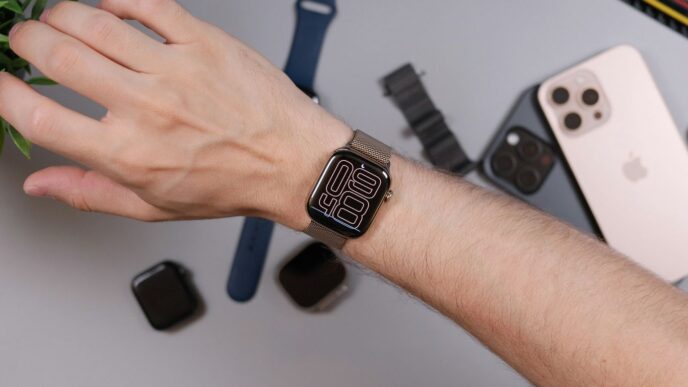
So, you’re looking at Garmin, but maybe you’re also eyeing up other brands like Apple or Samsung. It’s a fair question to ask how Garmin stacks up, right? Honestly, Garmin has carved out a pretty specific niche for itself, and it’s not always a direct apples-to-apples comparison with, say, the Apple Watch Series 11.
Garmin’s real strength lies in its dedication to serious athletes and outdoor adventurers. While other smartwatches might offer a broader range of apps or a more polished smartphone-like experience, Garmin focuses on robust fitness tracking, long battery life, and detailed performance metrics. Think of it this way: if you’re training for a marathon or planning a multi-day hike, a Garmin is likely going to be your best bet. They’ve been doing this for a long time, and their devices are built for endurance and accuracy in demanding conditions.
Here’s a quick look at how they generally compare:
- Garmin: Excels in sports-specific features, battery life, and ruggedness. Great for runners, cyclists, hikers, and triathletes. Often has more advanced training insights.
- Apple Watch: Offers a more integrated ecosystem for iPhone users, a wider array of apps, and a slicker smartwatch experience. Battery life is typically shorter.
- Samsung Galaxy Watch: A strong contender for Android users, balancing smart features with decent fitness tracking. Often has a stylish design.
When we put devices head-to-head, like testing the Garmin Venu 4 against an Apple Watch over 30 miles, we see where the differences really show. For instance, Garmin watches often record heart rate data more frequently, which can be a big deal for serious training. Plus, while an Apple Watch might need charging daily, many Garmin models can go for days, even weeks, on a single charge. That kind of battery performance is a game-changer for long events or trips where power outlets are scarce.
Getting the Most Out of Your Garmin Watch
So, you’ve picked out the perfect Garmin watch, and it’s sitting on your wrist. Awesome! But honestly, just wearing it is only scratching the surface of what these things can do. It’s like buying a fancy toolbox and only using the hammer. To really get your money’s worth, you need to dig into the features and the Garmin Connect app.
Utilizing the Garmin Connect App
This app is your watch’s best friend, and it’s available for both Android and iOS. Once you download it and pair your watch, you’ll see all your workout data, sleep patterns, and daily activity in one place. It’s pretty straightforward, but there are some hidden gems. For instance, you can check out your "Body Battery" level, which is basically a score based on your sleep and activity that tells you how much energy you have. It also gives you detailed sleep reports, breaking down your light, deep, and REM sleep. If you’re into structured training, you can use Garmin Coach right from the app to download running or cycling plans directly to your watch. It’s a really neat way to get personalized coaching without paying for a separate service. You can even find challenges to join with friends or other Garmin users.
Understanding Training Tools
Garmin watches are packed with training tools that go way beyond just counting steps. Depending on your model, you might have access to things like Training Readiness, which suggests if you should push hard or take it easy, and Training Status, which shows how your training is impacting your fitness. For runners, there are advanced metrics like cadence, stride length, and ground contact time. Some watches even offer Pacepro for pace guidance on specific courses or Climbpro for real-time info on upcoming hills. Don’t just glance at the numbers; try to understand what they mean for your training. For example, if your Training Readiness is low, maybe opt for a lighter workout or a rest day instead of pushing through a tough session. It’s all about working smarter, not just harder. You can explore these tools and find out how to use them effectively by checking out Garmin’s tips and tricks.
Maximizing Battery Performance
Battery life is a big deal with smartwatches, and Garmins are generally pretty good, but you can still squeeze more juice out of them. The biggest drain is usually the GPS. If you’re going for a long run or hike, using multi-band GPS is great for accuracy but uses more power. For shorter activities, standard GPS might be perfectly fine. Features like the always-on display also consume more battery than having it turn on with a wrist flick. So, if you’re trying to make your battery last an extra day, consider turning off the always-on display or reducing screen brightness. Also, disabling features you don’t use regularly, like certain notifications or background heart rate monitoring during sleep if you don’t find the data useful, can help. It’s a bit of trial and error to find the balance that works for you, but a little tweaking can make a big difference. You can find some unexpected and beneficial ways to manage your device’s settings.
So, Which Garmin Is Right For You?
Alright, so we’ve gone through a bunch of Garmin watches, and yeah, there are a lot of them. It can feel a bit much trying to figure out which one fits your life best. But remember, it really comes down to what you’re going to do with it. Are you training for a marathon and need all the stats? Or maybe you just want something to track your daily steps and keep an eye on your sleep? Think about what features matter most to you – battery life, screen type, or specific sports modes. Once you narrow that down, picking the right Garmin gets a whole lot easier. Don’t sweat it too much; even the more basic models are pretty solid, and the higher-end ones are packed with tech. You’ll find a watch that works for you.
Frequently Asked Questions
Which Garmin watch is best for beginners?
For those just starting out with Garmin watches, the Forerunner 165 is a great choice. It offers a lot of cool features without being too expensive, making it easy to get into tracking your runs and other activities.
What’s the difference between the Forerunner and Fenix lines?
The Forerunner watches are mainly for runners, focusing on running stats and plans. The Fenix watches are more like all-around athletes’ watches, built tough for many different sports and adventures, with lots of advanced tools.
How long do Garmin watches last on a single charge?
Battery life can change a lot between models. Some basic watches can last about a week, while others, especially those with fancy screens or constant GPS use, might need charging more often, maybe every few days. Some adventure models can even last much longer with solar charging!
Are Garmin watches accurate for tracking workouts?
Yes, Garmin watches are known for being very accurate. They use good GPS to track where you go and how far, and their heart rate sensors are usually spot on. This helps you get reliable data about your workouts.
Can I use a Garmin watch with my iPhone or Android phone?
Good news! Garmin watches work with both iPhones and Android phones. You just need to download the Garmin Connect app, which is free on both app stores, to connect your watch and see all your fitness data.
What are the main benefits of using a Garmin watch over an Apple Watch?
Garmin watches usually win when it comes to battery life and detailed sports tracking, especially for serious athletes. They also offer better navigation features for outdoor adventures. Apple Watches are often seen as more stylish and have a wider range of general smart features.