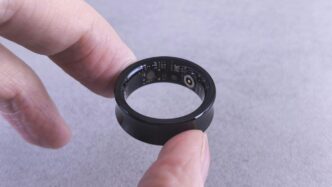
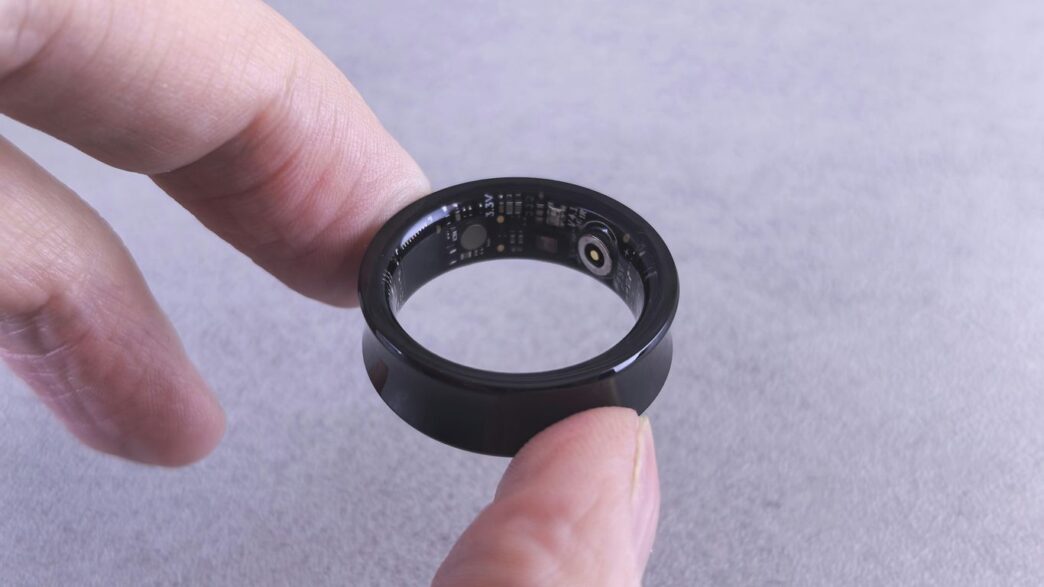
So, you’re probably wondering about the Oura Ring and blood pressure monitoring. It’s a hot topic, and for good reason. Many of us are looking for easier ways to keep tabs on our health, and the idea of a smart ring doing it all is pretty appealing. But does the Oura Ring actually measure your blood pressure? Let’s break down what’s happening with the Oura Ring blood pressure feature, what it tracks now, and what you need to know before you decide if it’s the right device for you.
Key Takeaways
- The Oura Ring currently does not measure blood pressure. While Oura is exploring this capability through studies, it’s not a feature available for general use.
- Oura Ring does track other important cardiovascular metrics like heart rate variability (HRV) and resting heart rate, which can offer clues about your heart health.
- Blood pressure monitoring is vital for detecting serious health risks like heart disease and stroke, often referred to as a ‘silent killer’ because it has no symptoms.
- Devices like the Apple Watch are also exploring hypertension risk notifications, rather than direct blood pressure measurement, suggesting a trend toward risk assessment over continuous tracking for wearables.
- If your main goal is blood pressure monitoring today, you’ll likely need a dedicated blood pressure cuff or a different wearable specifically cleared for this medical function.
Oura Ring Blood Pressure Monitoring: Current Status
Let’s get straight to the point: if you’re looking to track your blood pressure with the Oura Ring right now, you’re out of luck. As of early 2026, neither the current Oura Ring Gen 3 nor the newer Ring 4 models have the ability to measure your systolic and diastolic blood pressure. You won’t find those numbers in the Oura app, and if you need to monitor your blood pressure, you’ll still need to rely on a traditional cuff or a device that has specific FDA clearance for this purpose.
Oura Ring Does Not Measure Blood Pressure
It’s a common question, and the answer is simple: Oura doesn’t measure blood pressure. While the ring does a fantastic job tracking other important cardiovascular signals like your heart rate, heart rate variability (HRV), and respiratory rate, these metrics don’t directly translate into the two numbers doctors use to diagnose and manage hypertension. Think of it this way: Oura gives you a great overview of your heart’s general health and stress levels, but it’s not a blood pressure monitor.
Investigational Blood Pressure Profile Study
Now, this is where things get interesting. Back in December 2025, Oura launched something called the "Blood Pressure Profile Study" within Oura Labs. It’s important to understand that this is a research program, not a feature you can use today. It’s only available to select Oura members in the United States who opt-in. The goal here is to develop a future software feature that might help users identify potential risks associated with high blood pressure. It’s not about giving you exact blood pressure readings, but rather about spotting patterns in your continuous biometric data that could indicate a risk. Participants just wear their ring as usual and answer some health questions in the app. Oura then looks at data from the PPG sensors and other biometrics to find these cardiovascular patterns. No cuff needed for this study!
- Who can join: Oura members in the U.S., 22 years or older.
- App version: Must be using the English version of the Oura app.
- Ring model: Requires an Oura Ring Gen 3 or Ring 4.
- Current status: Not currently experiencing diagnosed hypertension (this is a risk identification study).
Future Possibilities and FDA Clearance
So, what does this study mean for the future? Oura is likely aiming for a feature similar to what other wearables are exploring: hypertension risk alerts. Getting FDA clearance for a full blood pressure measurement is a much bigger hurdle than getting clearance for a risk detection feature. The Blood Pressure Profile Study is the first step in gathering the data needed to potentially achieve that clearance. If Oura does get FDA clearance, it’s expected to be in the form of alerts or insights about your risk, rather than continuous, cuff-like blood pressure readings. This process takes time, and even optimistic timelines suggest a public release might not happen until late 2026 or even 2027. Until then, the Oura Ring remains a powerful tool for general wellness tracking, but not for direct blood pressure monitoring.
Understanding Blood Pressure Monitoring Technology
Challenges in Wearable Blood Pressure Tracking
Figuring out blood pressure with a wearable isn’t as simple as counting steps. The biggest hurdle? Accuracy. You need readings you can actually trust, right? Many home devices, even cuffs, can be off. Studies show a good chunk of them fail basic accuracy tests. And it’s not just the device; how the cuff fits matters a lot. If it’s too loose or too tight, your numbers can be way off, sometimes by 5 to 20 points. This can lead to thinking you have high blood pressure when you don’t, or vice versa. It’s a real problem, especially since some groups of people have a harder time getting a good fit with standard cuffs.
The Role of PPG Sensors
So, how do these wearables try to measure blood pressure without a cuff? Many use something called Photoplethysmography, or PPG. You’ve probably seen it – those little green lights on the back of smartwatches or rings. These lights shine into your skin and measure how much light gets reflected back. This tells the device about the volume of blood flowing through your vessels at any given moment. By looking at changes in blood volume over time, especially how fast the pulse wave travels, some advanced algorithms can estimate blood pressure. It’s pretty clever, but it’s also really sensitive to things like movement, skin tone, and how well the sensor is pressed against your skin.
Limitations of Finger-Based Sensors
While rings are convenient, using sensors on your finger for blood pressure has its own set of issues. Your fingers have smaller blood vessels compared to your wrist or upper arm, and they’re more prone to temperature changes. This can mess with the PPG signals. Also, the space on a ring is limited, which means fitting in all the complex tech needed for super precise measurements is tough. Unlike a bulky cuff that wraps around your arm, a ring has to work with what it’s got. This means that while a ring might give you a general idea or a trend, getting the same level of accuracy as a medical-grade cuff can be a real challenge. It’s a trade-off between convenience and precision.
What Oura Ring Tracks Today
Even though the Oura Ring can’t tell you your blood pressure numbers just yet, it’s still a pretty impressive piece of tech for keeping tabs on your overall health. It’s constantly gathering data, day and night, to give you a picture of what’s going on inside.
Key Cardiovascular Metrics
The ring pays close attention to a few things that are important for your heart health. It tracks your heart rate, which is pretty standard for wearables these days. But it also looks at heart rate variability (HRV). Think of HRV as the tiny variations in time between each of your heartbeats. A higher HRV usually means your body is doing a good job of handling stress and recovering well. On the flip side, a lower HRV can sometimes point to stress, feeling tired, or even being a bit under the weather. People who have high blood pressure often show lower HRV, so keeping an eye on your trends can be insightful.
Oura also estimates your Cardiovascular Age. This isn’t about how old you are chronologically, but rather how healthy your blood vessels are. It uses something called pulse wave velocity, which is basically how fast a pressure wave travels through your arteries. Stiffer arteries tend to mean higher blood pressure, so this feature gives you a hint about your vascular health. If your Cardiovascular Age is higher than your actual age, it might be a nudge to think about your lifestyle choices.
Sleep and Recovery Insights
This is where the Oura Ring really shines. It gives you a detailed breakdown of your sleep stages – light, deep, and REM sleep. Waking up and checking your Sleep Score and Readiness Score in the app can tell you a lot about whether you’re primed for a busy day or if you need to take it easy. The Readiness Score, in particular, combines your sleep, activity, and HRV data to give you a single number indicating how prepared your body is for physical or mental exertion.
Other Wellness Data
Beyond the heart and sleep stuff, the Oura Ring also keeps track of other useful bits of information. It monitors your body temperature trends, which can be helpful for spotting subtle changes. You’ll also get data on your activity levels throughout the day, including steps and calories burned. It even estimates your Cardio Capacity (like a VO2 max estimate), giving you an idea of your aerobic fitness level. While none of these directly measure blood pressure, they all paint a broader picture of your overall well-being and can indirectly relate to cardiovascular health.
Comparing Oura Ring to Blood Pressure Alternatives
So, you’re thinking about tracking your blood pressure, and you’re wondering how the Oura Ring stacks up against other options out there. It’s a good question, especially since Oura is so popular for its general wellness tracking. But here’s the thing: Oura Ring, as of right now, doesn’t actually measure your blood pressure. It’s great for sleep, heart rate, and activity, but for blood pressure, you’ll need to look elsewhere.
Dedicated Blood Pressure Monitoring Devices
When you think of blood pressure monitoring, you probably picture that cuff that wraps around your arm. These are the gold standard for a reason. They give you direct, accurate readings of your systolic and diastolic numbers. Devices like Omron or Welch Allyn are common choices for home use. They’re usually pretty straightforward: strap it on, press a button, and get your numbers.
- Pros: Highly accurate, medically validated, provides specific systolic and diastolic readings.
- Cons: Can be bulky, requires manual measurement, not always convenient for frequent tracking.
Other Smart Rings and Blood Pressure
Now, the smart ring market is getting interesting. While Oura isn’t there yet with blood pressure, other rings are starting to explore this. For example, some newer rings are using advanced sensors to try and detect patterns related to blood pressure. They might not give you a direct reading like a cuff, but they aim to flag potential risks. It’s a bit of a different approach, focusing more on alerts and trends rather than exact numbers. The key difference often comes down to FDA clearance – whether a device is approved for medical use.
Apple Watch’s Approach to Hypertension
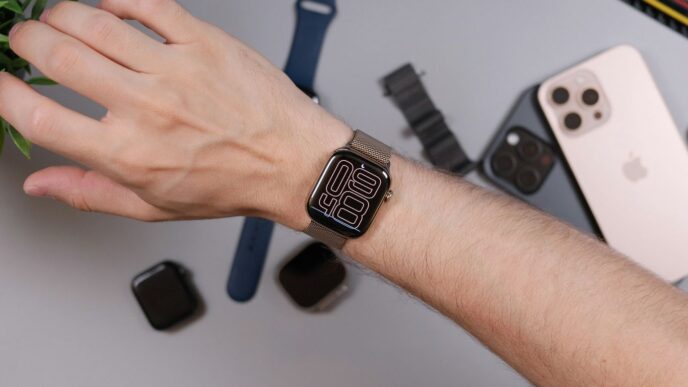
Apple has taken a unique path with its watches. Instead of directly measuring blood pressure, newer Apple Watch models can detect patterns that might suggest hypertension. They use a mix of sensor data and your health history to give you a notification if it seems like your blood pressure might be high, prompting you to see a doctor. It’s not a replacement for a cuff, but it’s a way to use wearable tech for early warnings. This feature has received FDA clearance, which is a significant step, even if it doesn’t provide the actual blood pressure numbers.
Why Blood Pressure Monitoring Matters
You know, keeping an eye on your blood pressure is a pretty big deal, even if you feel perfectly fine. High blood pressure, or hypertension, is a sneaky one. It doesn’t usually scream for attention with obvious symptoms, which is why doctors sometimes call it the "silent killer." A lot of people walk around with it and have no idea.
Health Risks Associated with Hypertension
This isn’t just about a number; it’s about what that number can do to your body over time. If left unchecked, high blood pressure can really do a number on your internal systems. Think of it like a slow leak in a pipe – you might not notice it at first, but eventually, it causes damage.
Here are some of the health issues that can pop up if your blood pressure stays too high:
- Heart Attack: When arteries get blocked, blood can’t reach your heart muscle. That’s a heart attack.
- Stroke: If blood vessels in your brain get blocked or burst, it can cause serious brain damage.
- Heart Failure: Your heart has to work overtime to pump blood, which can make it grow larger and struggle to do its job.
- Kidney Problems: High blood pressure can damage the tiny blood vessels in your kidneys, making it harder for them to filter waste.
- Vision Loss: The blood vessels in your eyes can also get damaged, affecting your sight.
- Atherosclerosis: This is when plaque builds up inside your arteries, making them narrower and increasing the risk of blockages.
The Silent Nature of High Blood Pressure
Like I said, the silent part is what makes it so tricky. You could have high blood pressure for years without feeling anything out of the ordinary. That’s why just checking it once in a while at the doctor’s office might not tell the whole story. Your blood pressure can change a lot during the day – stress, exercise, even what you eat can make it go up or down. Missing these fluctuations means you might miss early signs of trouble.
Benefits of Regular Monitoring
So, what’s the solution? Regular monitoring. If you have hypertension, or if your doctor is concerned about your blood pressure, keeping a closer eye on it is recommended. It’s not just about getting a single reading; it’s about seeing the patterns. When you can track your blood pressure over time, you and your doctor get a much clearer picture. This helps in making smarter decisions about treatment and lifestyle changes. It’s about catching things early and staying ahead of potential problems before they become serious health events.
Making an Informed Decision
So, you’re looking at smart rings and wondering which one fits your health goals best. It’s a bit like choosing between a general fitness tracker and a specialized tool. If your main concern is keeping tabs on your blood pressure, especially if you’ve been diagnosed with hypertension or have a history of high readings, then a device specifically designed for that purpose, like the CIRCUL RING, makes a lot of sense. It’s built to give you medical-grade blood pressure readings, which is something the Oura Ring just doesn’t do right now.
Prioritizing Health Goals
Think about what you really want to achieve. Are you trying to manage existing high blood pressure, or are you more focused on general wellness, sleep quality, and recovery? If blood pressure is your top priority, you’ll want a device that excels in that area. For example:
- Blood Pressure Monitoring: If this is your primary need, look for devices that offer accurate, regular BP tracking. CIRCUL RING is designed for this.
- Sleep and Recovery: If improving your sleep or understanding your body’s recovery is more important, Oura Ring has a strong track record here with detailed sleep stage analysis and readiness scores.
- Overall Wellness: Both devices track heart rate and HRV, offering insights into stress and daily activity. However, the focus of your decision should align with your most pressing health concerns.
When to Consider Other Devices
If accurate blood pressure monitoring is a must-have for you, then it’s pretty straightforward: you’ll likely need to look beyond the Oura Ring for now. Devices like the CIRCUL RING are engineered with this specific function in mind. They often use different sensor technology or algorithms to achieve medical-grade accuracy for blood pressure. This is particularly important if:
- You have been diagnosed with hypertension and need to track your readings regularly for your doctor.
- You experience sudden spikes or drops in blood pressure and need to monitor them closely.
- You are managing other health conditions where blood pressure is a key indicator, such as atrial fibrillation.
- You want to see how lifestyle changes, like diet or exercise, are impacting your blood pressure in real-time.
The Value of Oura Ring for Wellness
Now, don’t get me wrong, the Oura Ring is a fantastic device for what it does track. If your health goals lean more towards understanding your sleep patterns, monitoring your daily activity levels, tracking your heart rate variability for stress management, and getting a general sense of your body’s readiness, Oura Ring is a top-tier choice. It provides deep insights into these areas, helping you make informed decisions about your training, rest, and overall lifestyle. It’s a great tool for anyone focused on optimizing their sleep and recovery, or just getting a better handle on their general well-being. But when it comes to blood pressure, it’s just not in the game yet.
So, What’s the Verdict on Oura and Blood Pressure?
Alright, let’s wrap this up. If you’re looking at the Oura Ring specifically for blood pressure monitoring right now, you’re going to be disappointed. As it stands, Oura doesn’t actually measure your blood pressure. They’re doing some research, sure, and maybe down the line they’ll offer some kind of risk alert, but that’s not the same as getting actual readings. For now, if you need to keep tabs on your blood pressure, you’ll still need a traditional cuff or a device that’s actually cleared for that purpose. Oura is still great for sleep, stress, and general wellness tracking, but for blood pressure, it’s a no-go. Keep an eye on future updates, but don’t hold your breath if that’s your main reason for buying.