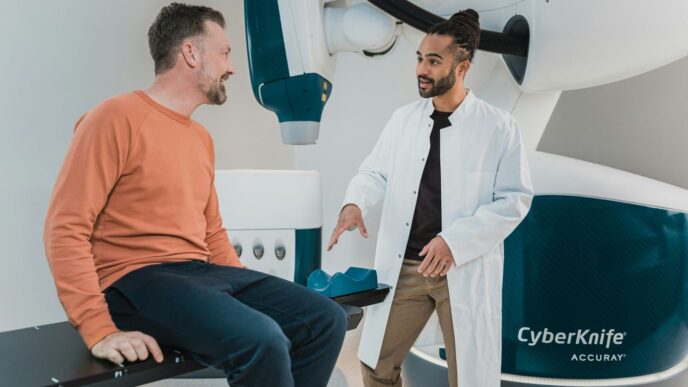
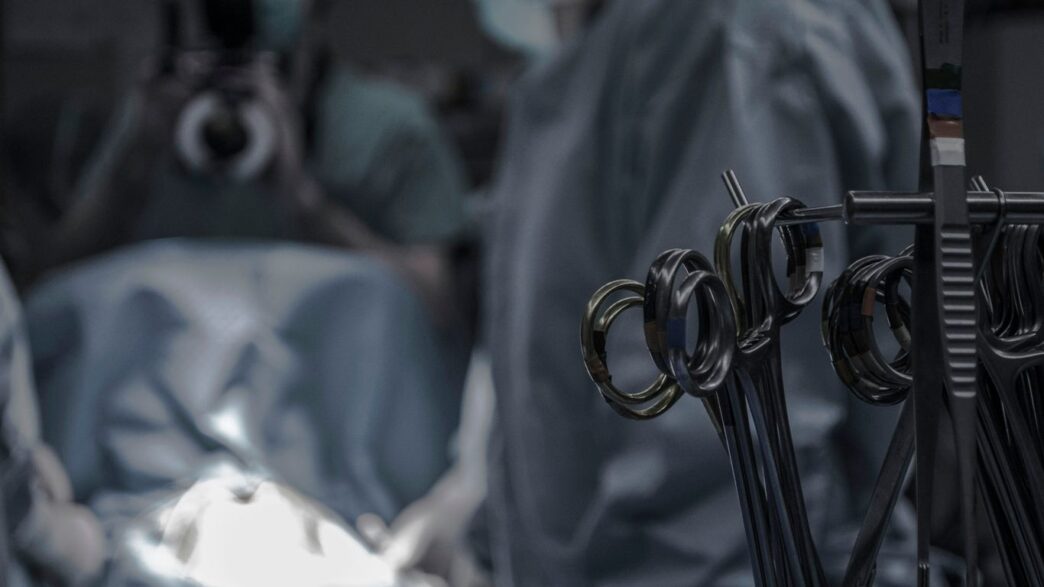
The world of medicine is changing, and robots are playing a bigger part. Think about it – robots helping surgeons in the operating room, making things more precise, and maybe even speeding up recovery. It’s not science fiction anymore. Companies making these medical robots are busy creating new tools that could change how we get healthcare. We’ll look at what’s happening now and what might come next with these medical robotics companies.
Key Takeaways
- General surgery is still the main area for medical robots, but areas like orthopedics and brain surgery are expected to grow a lot soon.
- New technology, like AI and smaller, easier-to-use robots, is making medical robots better and more capable.
- Getting doctors and hospitals to use these robots can be tough because of cost, training, and fitting them into busy schedules.
- Big companies are investing heavily, while smaller, specialized firms are also popping up, leading to a lot of activity and new ideas in the medical robotics companies space.
- Looking ahead, robots might become more independent, and new types like soft robots could open up even more possibilities, but we also need to think about the rules and ethics involved.
The Expanding Reach of Medical Robotics Companies
It feels like just yesterday that robots in the operating room were a far-off sci-fi concept, but now, they’re becoming a pretty common sight. The market for these medical marvels has really taken off, growing from less than a billion dollars in 2015 to somewhere around $3 to $3.5 billion today. And it’s not just staying put; it’s spreading out into more and more areas of medicine.
General Surgery’s Continued Dominance
When you think of surgical robots, general surgery is probably the first thing that comes to mind, and for good reason. It’s been the main playground for these technologies for a while now, with systems like Intuitive’s da Vinci robot becoming a staple in many hospitals. Surgeons have gotten used to the precision and better views these robots offer, leading to less invasive procedures and often quicker recoveries for patients. It’s the most established part of the market, and it’s still growing as more procedures get added to the list.
Orthopedics and Neurosurgery Poised for Growth
While general surgery is the king, other specialties are really starting to catch up. Orthopedics, for example, is seeing a big push. Think hip and knee replacements – robots are making these procedures more accurate. We’re also seeing a lot of interest in neurosurgery. The ability to operate with extreme precision in the delicate brain or spine is a huge draw. Companies are adapting their existing tech, like Zimmer Biomet’s Rosa system, to work for these complex surgeries. It’s exciting because these areas have a lot of room to grow, and surgeons are showing a real interest in adopting the technology. In fact, a recent survey showed that about 78% of surgeons are keen on using robotics.
Emerging Applications in Other Specialties
But it’s not stopping there. We’re starting to see robots pop up in places you might not expect. Cardiology and vascular surgery are areas where it’s a bit trickier due to the complexity and the tiny blood vessels involved. However, innovation is happening fast. We’re looking at things like soft robotics, which could help navigate those tight spaces, and smaller, more portable robots that could make procedures more accessible. Even if full robotic systems aren’t ready for every single procedure yet, new digital tools are stepping in to help guide surgeons and plan operations. It’s a gradual process, but the reach of medical robotics is definitely expanding beyond the traditional operating room.
Key Innovations Driving Medical Robotics Companies Forward
It feels like every week there’s some new gadget or gizmo hitting the medical tech scene, and robots are definitely a huge part of that. Companies are really pushing the envelope to make these machines smarter, smaller, and more useful in the operating room. It’s not just about making a robot arm do a job; it’s about how these robots can actually help surgeons do their jobs better and, ultimately, help patients recover faster.
Artificial Intelligence and Machine Learning Integration
This is a big one. AI and machine learning are starting to creep into everything, and medical robotics is no exception. Think about it: these systems can analyze tons of data from past surgeries, patient scans, and real-time feedback during an operation. This helps them predict what might happen next and guide the surgeon with more accuracy. It’s like having an incredibly experienced co-pilot who’s seen millions of surgeries. This can lead to more precise movements, fewer errors, and potentially shorter procedure times. We’re seeing AI used for planning surgeries beforehand, mapping out the best approach, and even helping the robot adapt its movements on the fly if something unexpected comes up.
Advancements in Miniaturization and Portability
Remember those giant, clunky machines from the early days? Well, they’re getting a serious makeover. Companies are working hard to shrink down robotic systems. This means smaller robots that can fit into tighter spaces within the body, leading to less invasive procedures. Less invasion usually means quicker healing and less pain for the patient, which is a win-win. Plus, making these robots more portable means they aren’t just stuck in one big operating room. They can potentially be moved around to different departments or even used in smaller clinics, making advanced robotic assistance more accessible.
Enhanced Visualization and Dexterity
Surgeons need to see what they’re doing, and robots are helping them see better than ever. New systems offer incredibly high-definition cameras and advanced imaging that can give surgeons a 3D view of the surgical site, sometimes even magnified. This clarity is a game-changer for complex procedures. Alongside better vision, the robots themselves are getting more nimble. Their
Overcoming Adoption Barriers for Medical Robotics Companies
Getting these fancy robots into operating rooms isn’t always a walk in the park. Lots of hospitals and surgery centers are interested, but there are definitely some hurdles to clear before they become standard equipment. It’s not just about having the coolest tech; it’s about making it work in the real world.
Addressing Efficiency and Workflow Integration
One of the biggest complaints you hear is that robotic procedures can sometimes take longer than traditional methods. This isn’t ideal when you’re trying to get patients through the system efficiently. Companies need to show how their robots actually speed things up or, at the very least, don’t add significant extra time. This means thinking about how the robot fits into the existing setup of an operating room. Does it take ages to set up? Does it get in the way of the surgical team? Making the whole process smoother, from bringing the robot in to finishing the surgery, is key. It’s about making sure the robot helps the team, not hinders them.
Reducing Costs and Demonstrating Clinical Value
Let’s be honest, these robots are expensive. The initial price tag is a huge factor for many institutions, and then there are the ongoing costs for maintenance and supplies. To get more places to buy them, companies need to offer flexible payment plans. Maybe a lease option or a pay-per-use model could work better for some than a massive upfront purchase. Beyond the price, though, you have to prove that the robot actually makes a difference. Does it lead to fewer complications? Faster recovery times? Less pain for the patient? Gathering solid data that shows these benefits is super important. Without clear proof that the investment is worth it, adoption will stay slow.
The Role of Training and Education
Even the best robot is useless if the people using it don’t know how. Surgeons and their teams need proper training to feel comfortable and confident operating these complex machines. This isn’t just a one-off session either; ongoing education and support are vital. Some places might want their own staff trained to handle routine maintenance, while others might prefer the company to take care of it. Figuring out the best way to support users and build their skills is a big part of getting robots accepted and used effectively.
Competitive Dynamics Among Medical Robotics Companies
The medical robotics scene is getting pretty crowded, and it’s interesting to see how different companies are playing the game. You’ve got the big, established players, like Intuitive Surgical, who basically invented the modern surgical robot with their da Vinci system. They’ve been around for ages, have a huge installed base, and are constantly refining their technology. Then there are companies like Stryker and Zimmer Biomet, who are really making waves in orthopedics, developing specialized robots for joint replacements and spine surgeries. They’re expanding their platforms, trying to get one robot to do more kinds of procedures, which makes a lot of sense for hospitals looking to get the most bang for their buck.
But it’s not just the giants. A whole bunch of smaller companies and startups are popping up, often focusing on very specific niches. Think about robots designed for delicate neurosurgery or even for procedures in sports medicine. These guys are often more agile and can develop really innovative solutions for particular problems. They’re the ones pushing the boundaries in areas like soft robotics, which could be a game-changer for navigating tricky parts of the body.
This whole dynamic is leading to a lot of action in terms of mergers, acquisitions, and venture capital. Big companies are buying up promising startups to get their hands on new tech, and investors are pouring money into the ones they think will be the next big thing. It’s a bit of a gold rush, really. The companies that can show clear benefits, like better patient outcomes and a solid return on investment, are the ones most likely to attract funding and partnerships.
Here’s a quick look at how things are shaking out:
- Established Giants: These companies have the resources to invest heavily in R&D and have strong relationships with hospitals. They’re often expanding their existing platforms into new specialties.
- Specialized Innovators: Startups and smaller firms are carving out niches, focusing on specific procedures or novel technologies like soft robotics.
- Strategic Partnerships & Acquisitions: Larger companies are actively acquiring or partnering with smaller ones to gain access to cutting-edge technology and talent.
- Venture Capital Fuel: Significant investment is flowing into the sector, driving innovation and competition.
It’s a fast-moving field, and the competition is heating up. Companies need to be smart about how they develop their products, how they price them, and how they prove their worth to surgeons and hospital administrators. It’s not just about having the coolest tech anymore; it’s about making it practical, affordable, and demonstrably better for everyone involved.
Future Trends Shaping Medical Robotics Companies
Looking ahead, the world of medical robotics is set for some pretty big shifts. It’s not just about making current tools better; it’s about rethinking how surgery and patient care can be done.
Increased Autonomy and Standardization
We’re going to see robots taking on more tasks with less direct human control. Think of it like self-driving cars, but for the operating room. This doesn’t mean surgeons will be out of a job, far from it. Instead, robots will handle the repetitive, precise movements, freeing up the surgeon to focus on the critical decision-making parts of a procedure. This increased autonomy could lead to more consistent results across different hospitals and surgeons. The push for standardization will also mean that robotic systems will become more predictable and easier to integrate into existing hospital workflows.
Here’s a look at what increased autonomy might involve:
- Automated Suturing: Robots performing precise stitching after incisions are made.
- Instrument Navigation: Robots guiding surgical tools to specific locations with high accuracy.
- Data-Driven Adjustments: Systems learning from past procedures to make real-time adjustments during surgery.
Soft Robotics and Novel Navigation
Forget rigid metal arms for a moment. A really exciting area is ‘soft robotics.’ These robots are made from flexible materials, kind of like a squid or an octopus. This makes them much better suited for delicate procedures inside the body, especially in tight spots like blood vessels or the brain. They can squeeze through narrow passages without causing damage. Coupled with this, we’ll see new ways for robots to ‘see’ and move around inside the body, using advanced imaging and navigation techniques that go beyond what we have today. This could really open doors for treating conditions that are currently very hard to reach.
Ethical Considerations and Regulatory Frameworks
As robots get smarter and more independent, we’ve got to think about the rules and ethics. Who is responsible if something goes wrong? How do we make sure these systems are safe and fair for everyone, no matter where they live or what kind of hospital they go to? Regulators are already working on this, but it’s a complex puzzle. We need clear guidelines for developing, testing, and using these advanced robotic systems. It’s all about making sure the technology benefits patients and healthcare providers without introducing new risks or widening existing gaps in care.
The Evolving Role of Medical Robotics Companies in Healthcare
Improving Patient Outcomes and Experiences
Medical robotics companies are really changing how we do healthcare, and it’s mostly for the better. Think about it: surgeries that used to mean big cuts and long hospital stays are now often done with tiny incisions. This means less pain for patients, quicker healing, and a much smoother recovery. It’s not just about making things easier for the surgeon, though that’s a big part of it. The real win here is for the patient. We’re seeing fewer complications and better results overall. For example, in procedures like hip and knee replacements, robotic assistance is becoming more common, leading to more precise implant placement. This can translate to patients feeling better, sooner.
Transforming Surgical Precision and Recovery
When you get down to it, robots in the operating room are all about precision. They can do things with a steadiness and accuracy that a human hand, no matter how skilled, just can’t always match. This level of control is a game-changer for complex operations. It allows surgeons to tackle procedures that might have been too risky or difficult before. Beyond just the surgery itself, the impact on recovery is huge. Shorter hospital stays are becoming the norm, and patients are often able to get back to their daily lives much faster. This isn’t just a minor tweak; it’s a fundamental shift in how we approach surgical care.
The Future of Remote and Accessible Care
Looking ahead, medical robotics companies are paving the way for even more exciting possibilities, especially when it comes to making healthcare more accessible. Imagine a future where a specialist surgeon can perform a procedure on a patient hundreds or even thousands of miles away. Technologies like 5G and advanced robotics could make remote surgery a reality, bringing expert care to areas that currently lack it. This could be a massive step forward for rural communities or places with a shortage of specialized medical professionals. It’s about breaking down geographical barriers and making top-tier medical treatment available to more people, no matter where they live.
Wrapping It Up
So, it’s pretty clear that robots in the operating room are here to stay and only getting better. We’ve seen how they’re already making surgeries more precise and helping folks recover faster. While there are still some bumps in the road, like figuring out the best way to use them for every single type of surgery and making sure they’re not too pricey, the momentum is undeniable. With new tech like AI popping up and companies constantly trying to outdo each other, the future of surgery is looking pretty different, and honestly, pretty exciting. It feels like we’re just scratching the surface of what these machines can do to help people get better.