The Genesis Of iRobot History
It’s funny how we think of robots as this super new thing, right? Like they just popped up yesterday. But the idea of robots, and even companies dedicated to making them, goes back way further than you might think. iRobot didn’t just appear out of nowhere; it grew from a long-held fascination with creating mechanical helpers.
Early Visions Of Robotic Companions
Long before iRobot was even a thought, people were dreaming about robots. Think about Isaac Asimov’s stories, like "I, Robot." He wrote about robots way back in the 1940s, imagining them as companions and workers. These weren’t just clunky machines; they were characters with rules and personalities. Asimov even came up with the famous Three Laws of Robotics, which really got people thinking about how robots should behave around humans. It wasn’t just fiction, though. Scientists and engineers were also tinkering with early ideas.
- The concept of artificial beings has been around for centuries, appearing in myths and early mechanical automatons.
- Isaac Asimov’s "I, Robot" collection, published in 1950, explored the ethical and social implications of robots.
- Early "calculating machines" and the development of the positronic brain concept laid groundwork for more complex robotic intelligence.
Founding Principles And Initial Ambitions
When iRobot was officially founded in 1990 by Helen Greiner, Colin Angle, and Rodney Brooks, they weren’t just looking to build toys. They had a serious vision. Their goal was to create robots that could actually do useful things in the real world, not just in labs or on assembly lines. They wanted robots that could help people, and that meant tackling some really tough problems. The company’s early ambitions were focused on creating robots for defense and exploration, areas where robots could perform dangerous tasks humans couldn’t easily do. They were thinking about robots for space, for the military, and for places that were hard for people to get to.
The Dawn Of Domestic Robotics
While defense and exploration were the initial focus, the idea of bringing robots into our homes was always simmering. The founders knew that if robots could handle tough jobs, they could eventually handle everyday chores. It was a big leap from a robot exploring Mars to a robot cleaning your living room, but the underlying technology was related. They were working on making robots smarter, more mobile, and able to understand their surroundings. This groundwork was absolutely necessary before they could even think about a robot vacuum cleaner becoming a reality for the average person. It was a slow build, but the pieces were starting to come together.
Pioneering The Home Cleaning Revolution
Before iRobot, the idea of a robot tidying up your house felt like pure science fiction. Most people probably imagined clunky metal contraptions, not sleek machines zipping around. But iRobot saw a different future, one where robots could actually help out with everyday chores.
The Birth Of The Roomba
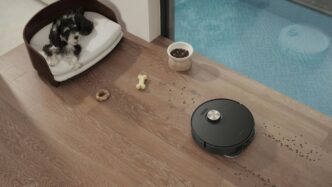
This is where the Roomba comes in. Launched in 2002, the Roomba wasn’t just another gadget; it was a serious attempt to bring robotics into our homes in a practical way. The goal was simple: make cleaning less of a hassle. Think about it, who actually enjoys vacuuming? The Roomba was designed to take over that job, freeing up people’s time. It was a big deal because it was one of the first robots people could actually buy and use themselves, not just see in a movie.
Navigating The Challenges Of Home Environments
Getting a robot to clean a real house is way harder than it looks. Homes aren’t neat, predictable spaces. There are furniture legs, rugs with different textures, cords lying around, and stairs! iRobot had to figure out how to make the Roomba smart enough to deal with all this. It needed to:
- Avoid bumping into things too hard.
- Figure out where it had already cleaned.
- Not fall down the stairs.
- Get itself unstuck if it got caught on something.
This wasn’t easy. Early versions probably had their share of bumps and bruises, literally. They had to develop sensors and algorithms that could map out a room on the fly and make decisions about where to go next. It was a constant process of trial and error to make sure the Roomba could handle the messiness of everyday life.
Innovations In Autonomous Cleaning
The Roomba’s real magic is its ability to clean on its own. It doesn’t need you to steer it or tell it exactly where to go. It uses a mix of sensors to detect dirt and obstacles. Some models use infrared sensors to find walls and furniture, while others use acoustic sensors to listen for dirtier areas.
Here’s a simplified look at how it works:
- Mapping: The robot creates a basic map of the room as it moves.
- Coverage: It tries to cover as much floor space as possible, often using different patterns.
- Dirt Detection: Special sensors can tell if an area is particularly dirty, prompting the robot to spend more time there.
- Return to Base: When its battery gets low, it tries to find its charging station.
This level of independence was groundbreaking. It meant you could turn it on and go about your day, trusting that your floors would get cleaner without you lifting a finger. It really changed how people thought about cleaning robots.
Expanding The iRobot Ecosystem
After the Roomba cleaned up in the home cleaning market, iRobot didn’t just sit back and relax. They started thinking about what else robots could do around the house. It wasn’t just about vacuuming anymore; it was about making life easier in more ways.
Beyond Floor Cleaning: New Product Lines
So, what came next? Well, iRobot looked at other chores that people found a drag. Think about washing floors – that’s a whole different ballgame from vacuuming. They introduced the Braava line, which are mopping robots. These guys are designed to handle different floor types, from hard tiles to wood, and they can either damp mop or dry sweep. It’s like giving your floors a spa day, but with less effort on your part. They also explored robots that could help with yard work, though those haven’t quite hit the mainstream like the indoor bots. The idea was to create a whole suite of robotic helpers for the home.
Technological Advancements In Navigation And Sensing
Making a robot that can clean your floors is one thing, but making one that can handle a whole house, with all its nooks, crannies, and furniture, is another. iRobot kept working on how their robots
The iRobot History In The Broader AI Landscape
It’s easy to think of iRobot as just a vacuum cleaner company, but really, they’re part of a much bigger story. The whole idea of making machines smart, or artificial intelligence (AI), has been around for ages, way before Roomba even existed. Think back to ancient Greek myths with their mechanical creations, or philosophers like Ramon Llull in the 13th century trying to create logical machines. These were early sparks, long before computers were even a thing.
Early AI Concepts And Their Influence
The real groundwork for AI started picking up steam in the mid-20th century. Researchers were trying to figure out how to make computers think and learn. We saw the first attempts at natural language processing, like Daniel Bobrow’s STUDENT program in 1964 that could solve algebra problems. Then came ELIZA in 1965, a chatbot that could mimic a therapist – pretty wild for its time. Even movies started showing us what AI could look like, from HAL 9000 in 2001: A Space Odyssey to the robots in Blade Runner and I, Robot. These stories, whether scary or hopeful, definitely shaped how people thought about intelligent machines.
The Evolution Of Machine Learning And Robotics
Things really started to change in the 1980s with machine learning. Instead of telling computers exactly what to do, scientists figured out how to make them learn from data. This was a huge step. Then, the 1990s brought new tech like neural networks, and the internet made information more accessible, which helped AI research move faster. Robots started getting more sophisticated too. We saw things like Sony’s AIBO robotic dog in 1999 that could respond to voice commands. By the 2000s, we had robots like Honda’s ASIMO and iRobot’s own autonomous vacuum cleaner hitting the market. The progress from simple programmed machines to systems that could learn and adapt was pretty remarkable.
Ethical Considerations In Robot Development
As robots get smarter and more common, we also have to think about the tricky stuff. What happens when robots can do jobs humans used to do? How do we make sure they’re safe and don’t cause harm? These questions have been around for a while, with science fiction often exploring the darker side of AI. Even early on, people like Isaac Asimov were writing about robot ethics. Today, with AI becoming a bigger part of our lives, from virtual assistants to self-driving cars, these ethical discussions are more important than ever. It’s not just about building cool machines; it’s about building them responsibly.
Challenges And Triumphs In Robotic Development
Overcoming Technical Hurdles
Making robots that can actually do useful things in the real world, especially in our homes, has been way harder than a lot of people thought. Think about it: our houses are messy, full of stuff, and have stairs. Getting a robot to zip around without bumping into things or falling down is a huge puzzle. For decades, robot hands haven’t gotten much better at picking things up, even though we’ve seen cool demos. And getting a robot to walk around a typical home, with all its clutter and narrow spots, is still a massive challenge. It’s easy for us, but super tough for machines. We’ve seen some robots get good at cleaning floors, but handling steps or picking up a dropped sock? That’s a whole different ballgame.
Market Reception And Consumer Adoption
Even when the tech works, getting people to buy and use robots isn’t always straightforward. Early on, there was a lot of excitement, but sometimes the products didn’t quite live up to the hype. People want robots that make their lives easier, not ones that are complicated or don’t do enough. The real win comes when a robot becomes a helpful part of everyday life, not just a novelty. It takes time for consumers to trust new technology and see its practical benefits. Sometimes, the price point is also a big factor; if it’s too expensive, it just won’t catch on, no matter how clever it is.
The Path To Robotic Domination
So, how does a company go from making cool gadgets to actually dominating the market? It’s a mix of things. First, you need to keep pushing the technology forward, solving those tough engineering problems. But you also have to listen to what people actually want and need. It’s about finding that sweet spot where advanced tech meets real-world usefulness. Building robots that can handle the unpredictable nature of human environments, like homes, is key. It’s not just about making robots look human or even just about cleaning floors; it’s about creating machines that can truly assist us in meaningful ways. This journey involves a lot of trial and error, learning from mistakes, and adapting to what works. The companies that succeed are the ones that can consistently deliver reliable, helpful robots that people are happy to have around.
The Future Trajectory Of iRobot
Next-Generation Robotic Solutions
So, what’s next for iRobot? It’s clear they aren’t just going to rest on their laurels with the Roomba. The company is looking way beyond just vacuuming floors. Think about robots that can handle more complex tasks around the house. We’re talking about machines that might be able to pick up toys, tidy up clutter, or even help with basic chores. It’s a big leap from just cleaning, but the groundwork is being laid. The real challenge, as always, is making these robots smart enough to handle the unpredictable nature of a real home – the stray socks, the pet toys, the uneven surfaces. iRobot’s future hinges on developing robots that can truly understand and interact with our living spaces, not just map them.
The Role Of AI In Future iRobot Products
Artificial intelligence is going to be the engine driving all of this. It’s not just about better sensors anymore; it’s about making robots learn and adapt. Imagine a robot that learns your cleaning habits, or one that can figure out the best way to pick up a specific object without needing explicit programming for every single item. Machine learning is key here. We’ll likely see more advanced AI that allows robots to:
- Recognize and categorize different types of messes.
- Predict potential obstacles and plan routes accordingly.
- Understand voice commands for more complex tasks.
- Improve their dexterity for handling a wider range of objects.
Sustaining Leadership In The Robotics Market
Staying on top in the robotics game means constant innovation. iRobot needs to keep pushing the boundaries of what’s possible, not just in cleaning but in broader home assistance. This means investing heavily in research and development, and importantly, making sure these advanced robots are still accessible to everyday consumers. It’s a tough balance. They’ll also need to think about how their robots fit into a connected home ecosystem, working alongside other smart devices. The competition is heating up, with many companies eyeing the home robotics market, so iRobot’s ability to deliver practical, intelligent, and affordable solutions will determine if they can maintain their dominant position.
The Road Ahead
So, looking back at iRobot, it’s clear they’ve come a long way from those early days. They started small, figuring things out, and now they’re a household name. It makes you wonder what’s next, right? We’ve seen robots go from just cleaning floors to potentially helping out in all sorts of ways. The tech is always changing, and while some of the futuristic stuff we see in movies might still be a ways off, the everyday robots are definitely here to stay and getting better. It’s pretty wild to think about how far we’ve come and what our homes might look like with even more robotic helpers in the future.