
Back in the 1970s, the U.S. was dealing with some serious energy problems. You know, gas prices were all over the place, and we were really relying on other countries for oil. It was a messy situation. So, Congress passed the Energy Policy and Conservation Act of 1975. This law was a big deal, trying to get us to use less energy and find more American sources. Let’s take a look at what this act did and why it still matters today.
Key Takeaways
- The energy policy and conservation act 1975 was a direct response to the oil crisis of the 1970s, aiming to reduce U.S. dependence on foreign oil.
- A major part of the act focused on improving energy efficiency by setting standards for appliances and requiring clear labeling for consumers.
- The law also established the Strategic Petroleum Reserve to help the U.S. manage future oil supply disruptions.
- Conservation was a big theme, with initiatives like the 55 MPH speed limit and promoting better insulation in homes.
- The act’s legacy includes influencing later energy laws and showing how government policy can impact energy use and efficiency over the long term.
The Energy Policy and Conservation Act of 1975: A Response to Crisis
Back in the 1970s, the United States was really feeling the pinch from energy issues. You might remember the big oil embargo that kicked off in 1973. It was a real shocker, sending gas prices through the roof and messing with the economy in ways people hadn’t seen before. Suddenly, relying so heavily on foreign oil felt like a huge risk.
President Jimmy Carter, when he took office, made energy security a major priority. He really pushed for Americans to conserve energy and for the country to become more self-reliant. It wasn’t just about filling up your car; it was about rethinking how the whole nation used and produced energy.
The Oil Embargo and Economic Fallout
The 1973 oil embargo, orchestrated by Arab oil-producing nations, was a wake-up call. For months, oil supplies were restricted, leading to long lines at gas stations and a sharp increase in fuel costs. This wasn’t just an inconvenience; it had serious ripple effects across industries, contributing to inflation and slowing down economic growth. The event highlighted just how vulnerable the U.S. was to global energy politics.
President Carter’s Energy Security Imperative
President Carter saw this vulnerability as a national security issue. He famously called for a national effort to tackle the energy crisis, framing it as the "moral equivalent of war." His administration focused on a multi-pronged approach: reducing demand through conservation, increasing domestic energy production, and diversifying energy sources. He even famously wore a cardigan to the White House to encourage people to turn down their thermostats.
Addressing Dependence on Foreign Oil
To lessen the country’s dependence on foreign oil, the Carter administration championed policies aimed at boosting domestic energy sources and promoting efficiency. This included efforts to encourage the use of coal, develop renewable energy technologies, and establish programs to help consumers save energy at home. The goal was clear: to build a more resilient and secure energy future for the United States.
Key Provisions and Initiatives of the 1975 Act
So, the Energy Policy and Conservation Act of 1975, or EPCA as it’s often called, was a pretty big deal back in the day. It came about because, well, the country was really feeling the pinch from the oil embargo a couple of years earlier. Prices were up, and everyone was a bit worried about where the next barrel of oil was coming from. This act tried to tackle that in a few main ways, focusing on making things more efficient and getting a better handle on our energy use.
Establishing Federal Appliance Efficiency Standards
One of the most lasting parts of EPCA was setting up federal standards for how much energy certain appliances could use. Before this, it was kind of a free-for-all. States might have had their own rules, but there wasn’t a national baseline. This act basically said, "Okay, refrigerators, air conditioners, and other common household items need to meet a certain level of efficiency." It was a way to push manufacturers to make more energy-smart products without outright banning older, less efficient models. Think of it as a nudge towards better technology.
Mandating Test Procedures and Labeling
But just setting standards wasn’t enough. How do you actually know if an appliance meets the standard? And how do consumers know which one is more efficient? EPCA addressed this by requiring standardized test procedures. This meant everyone had to test appliances the same way, so the results were comparable. On top of that, it brought in the idea of labeling. You know those yellow EnergyGuide labels you see on appliances now? That whole system got its start here. It was designed to give consumers clear information about an appliance’s energy consumption, making it easier to choose models that would save them money on their utility bills over time.
Setting Energy Targets for Consumer Products
Beyond specific appliances, EPCA also set broader energy targets for various consumer products. This was a more general approach to encourage energy savings across the board. It wasn’t just about individual appliances but about looking at the overall energy footprint of the things we use every day. The idea was to create a framework for ongoing improvements in energy efficiency, pushing the market towards more responsible energy use. It was a pretty forward-thinking move for its time, trying to get ahead of future energy challenges.
Broader Energy Policy Landscape in the 1970s
The 1970s were a wild time for energy policy in the United States. We were really feeling the pinch from the oil embargoes, and it became super clear that relying so much on foreign oil wasn’t a great long-term plan. This led to a bunch of different ideas and laws trying to get us on a better track.
The Fuel Use Act and Coal’s Role
One of the big pushes was towards coal. It seemed like a more reliable domestic option compared to oil and gas, which we worried were running out. Congress passed the Fuel Use Act, which basically said no new power plants could burn natural gas or oil. The idea was to shift electricity generation over to coal. It sounds a bit wild now, thinking about the environmental impact, but back then, the focus was really on energy security and making sure we had enough fuel to keep the lights on. This act was eventually repealed because, well, we found out there was actually more natural gas available than we thought, especially as technology improved and prices changed. It’s a good reminder that what seems like common sense one decade can look pretty different the next.
Incentives for Renewables and Domestic Technologies
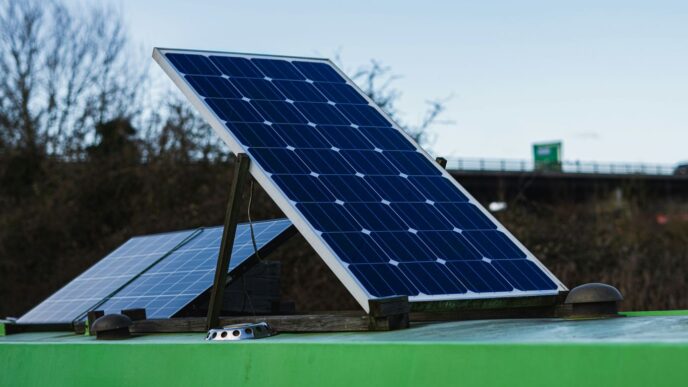
Beyond just shifting fuels, there was also a push to get Americans using less oil and gas overall. President Carter, in particular, really championed conservation and efficiency. He set some pretty ambitious goals for renewable energy, like solar and wind power. He even put a solar water heater on the White House! The idea was to encourage investment in these newer technologies, even if they weren’t the cheapest option right away. The thinking was that if we didn’t start investing in them, we’d never get there. It was a long-term vision, trying to build a more self-reliant energy future.
The Strategic Petroleum Reserve
Another major move was the creation of the Strategic Petroleum Reserve (SPR). Think of it like a giant emergency stash of oil. The government started filling up these massive underground caverns with crude oil. The whole point was to have a backup supply in case of another oil crisis or disruption to our imports. If foreign oil suddenly became unavailable or prices shot through the roof, the SPR could be tapped to keep the country supplied and prevent the kind of economic shock we saw in the early 70s. It was a pretty significant undertaking, and it’s still a key part of our national energy security strategy today.
Conservation as a Cornerstone of Energy Strategy

President Carter’s Emphasis on Conservation
When Jimmy Carter took the White House in 1977, the nation was still reeling from the 1973 oil embargo. Prices had shot up, and the economy felt the pinch. Carter, who grew up in a time and place where energy wasn’t taken for granted – think kerosene lamps instead of electricity – really pushed the idea that saving energy was often cheaper than finding new sources. He saw conservation not just as a policy, but as a way of life. It was about being mindful, like not leaving a lamp on when you left a room. This wasn’t just talk; his administration backed policies aimed at cutting down our reliance on foreign oil.
The Impact of Insulation and Weatherization
Remember how houses used to be? Not nearly as insulated as they are today. Back in the 70s, many homes were drafty and lost a lot of heat (or cool air). Carter’s administration, along with the higher energy prices that made people pay attention, really pushed for better insulation and weatherization. There were even tax breaks to encourage homeowners to make these upgrades. It might sound simple, but making buildings more energy-efficient made a big difference across the country. It was a practical way to reduce energy demand without needing to produce more.
The 55 MPH Speed Limit and Public Awareness Campaigns
One of the most visible conservation efforts was the nationwide 55 mph speed limit. While it might have annoyed some drivers, it was a direct measure to cut down on fuel consumption. Cars simply use less gas at lower speeds. Beyond just the speed limit, the government launched public awareness campaigns. Think ads during big events like the Super Bowl, with messages like "Don’t be foolish" to encourage energy-saving habits. These efforts aimed to get people thinking about their energy use and how small changes could add up to significant savings for the nation.
Amending and Expanding Energy Efficiency Standards
The National Appliance Energy Conservation Act of 1987
So, the original Energy Policy and Conservation Act of 1975 got the ball rolling on appliance efficiency, but it wasn’t a one-and-done deal. Congress realized pretty quickly that things needed to be updated and expanded. That’s where the National Appliance Energy Conservation Act of 1987 comes in. This law really put some teeth into the federal standards for a bunch of common household appliances. Instead of just setting up a framework, Congress actually laid out specific minimum efficiency standards for things like refrigerators, dishwashers, and clothes dryers. They also put in place a schedule for the Department of Energy (DOE) to go back and review these standards periodically. This was a big step because it meant efficiency wasn’t just a suggestion; it was becoming a requirement with built-in review cycles.
The Energy Policy Act of 1992 (EPAct)
Just a few years later, in 1992, Congress passed another major piece of legislation: the Energy Policy Act, often called EPAct. This act didn’t just stick to appliances; it broadened the scope quite a bit. EPAct added new standards for things like certain types of light bulbs (fluorescent and incandescent reflector lamps), plumbing products, electric motors, commercial water heaters, and even heating and cooling systems (HVAC). It also opened the door for future standards to be developed for many other products that weren’t covered before. Think of it as building on the foundation laid by the earlier acts, making energy efficiency a consideration for a wider range of equipment and systems used in homes and businesses.
Subsequent Updates and Reviews by the Department of Energy
After EPAct, the process of updating and expanding these standards became more regular. For instance, the Energy Policy Act of 2005 set new standards for another 16 products and directed the DOE to figure out standards for five more. Then, in 2007, the Energy Independence and Security Act (EISA) came along and put new or updated standards on 13 more products. A key part of EISA was a requirement for the DOE to keep a schedule for regularly reviewing and updating all existing standards and the test procedures used to measure them. This ongoing review process is pretty important. It means that as technology improves and energy prices change, the standards can be adjusted to keep pushing for greater efficiency, rather than becoming outdated.
Long-Term Impacts and Lessons from the Energy Policy and Conservation Act
Looking back at the Energy Policy and Conservation Act of 1975, it’s clear that some of its ideas stuck around and really made a difference, while others, well, not so much. It’s a mixed bag, really, but that’s how policy often goes.
Enduring Effectiveness of Appliance Standards
This is probably where the 1975 Act really hit a home run. The idea of setting minimum efficiency standards for things like refrigerators, washing machines, and air conditioners? It’s been one of the most effective ways we’ve saved energy over the decades. Think about it: every time you buy a new appliance, it’s likely way more efficient than one from, say, the 1970s, thanks to these rules. It wasn’t just a one-off either. Congress kept updating these standards, first with the National Appliance Energy Conservation Act of 1987, and then again with the Energy Policy Act of 1992. The Department of Energy has been tasked with reviewing and updating them regularly ever since.
Here’s a look at how these standards have evolved:
- 1975: The original Act established federal test procedures, labeling, and energy targets for consumer products.
- 1987: The National Appliance Energy Conservation Act set specific minimum efficiency standards for many common appliances and created a schedule for future reviews.
- 1992: The Energy Policy Act (EPAct) expanded standards to include things like lamps, plumbing products, and HVAC systems, and allowed for future standards development.
- 2005 & 2007: Further updates through EPAct 2005 and the Energy Independence and Security Act (EISA 2007) added more product standards and required regular updates.
The Evolving Role of Renewables
While the 1975 Act focused heavily on immediate conservation and efficiency, the broader energy landscape of the 70s also saw early pushes for renewables. President Carter, for instance, put a solar hot water system on the White House. There were incentives for domestic technologies, but honestly, the big boom in solar and wind power we see today really took off much later. It’s interesting to see how ideas that were maybe a bit ahead of their time eventually found their footing as technology improved and costs came down.
Learning from Past Energy Policy Successes and Failures
What can we actually learn from all this? Well, for starters, conservation really is cheaper than producing new energy, as President Carter often said. The push for insulation and weatherization back then, even if it sounds basic now, made a huge difference in how much energy homes used. The 55 MPH speed limit, while unpopular with some, was a clear public awareness campaign about saving fuel. On the flip side, some policies, like the Fuel Use Act that pushed away from natural gas, were eventually repealed because they didn’t pan out as expected. It shows that policies need to be flexible and adapt. We also learned that relying too heavily on one energy source, like coal, can have its own set of problems down the road. The Strategic Petroleum Reserve, established back then, is still a key part of our energy security today, proving that some foundational ideas have real staying power.
Looking Back and Moving Forward
So, what’s the takeaway from all this? The Energy Policy and Conservation Act of 1975, along with other initiatives from that era, really put energy efficiency and conservation on the map. Some ideas worked out better than others, and policies definitely shifted over time. But the core message from the 1970s – that we need to be smarter about how we use energy and less reliant on foreign sources – still rings true today. Thinking about these past efforts helps us figure out how to tackle today’s energy challenges, like climate change and energy security. It’s a reminder that even if things weren’t perfect back then, the groundwork laid has had a lasting impact on how we think about and use energy now.