Tesla Robotaxi Safety Monitor: A New Era
So, 2026 is here, and Tesla’s Robotaxi service is really starting to shift gears. We’re seeing a move towards rides where there isn’t a human safety monitor sitting in the car anymore. It’s a big change, and honestly, it feels like a new chapter is opening up for this whole autonomous driving thing. For a while now, Tesla’s been running these limited tests, mostly in places like Austin, Texas. Initially, they had someone in the passenger seat, just in case. Then, they started moving that monitor to a separate chase car that followed along. Now, they’re taking that next step, letting the robotaxis go solo on certain routes.
Transitioning to Unsupervised Rides
This whole unsupervised ride thing is a pretty big deal. Back in January 2026, videos started popping up showing Tesla Robotaxis in Austin without anyone inside. Instead, the safety oversight was happening from a distance, with a chase vehicle keeping an eye on things. It’s a phase many self-driving companies go through, and it seems Tesla is right on schedule. This shift marks a significant step towards Tesla’s vision of a fully driverless fleet. It’s not like they just flipped a switch, though. It’s been a gradual process, moving from supervised rides to these more independent operations. We’re talking about a fleet that’s slowly but surely gaining more autonomy.
The Role of the Safety Monitor
What does this mean for the safety monitor? Well, their job is changing. Instead of being a passenger in the vehicle, they’re becoming more of a remote supervisor or part of a support team. Think of them as the eyes and ears from a distance, ready to step in if something unexpected happens. This is a common industry practice as companies move towards full autonomy. It allows for real-world testing and data collection without the immediate risk of a human driver needing to react in the moment. It’s a way to gather more data on how the system performs in varied conditions.
Public Perception and Investor Reaction
Naturally, news like this gets people talking. When Tesla announced these unsupervised rides, the stock saw a nice bump. Investors seem to be reacting positively, seeing it as progress. But there’s also a bit of skepticism. Some folks point out that the ‘driverless’ cars were still being followed by chase cars, calling it a bit of a show. It highlights the ongoing debate: is this true autonomy, or just a clever staging of the technology? It’s a tricky balance between showcasing advancement and being completely transparent about the current limitations. People are watching closely to see how this plays out, especially as more of these vehicles hit the road.
Evolution of Tesla’s Autonomous Driving
From Supervised to Driverless Operations
It feels like just yesterday we were talking about Tesla’s Autopilot, and now we’re seeing a full shift. Remember when Tesla first started rolling out its Robotaxi service? It began with a human safety monitor right there in the car, mostly in places like Austin, Texas, starting around mid-2025. This was the supervised phase, where a person was still the backup, just in case. But things have moved fast. By early 2026, Elon Musk confirmed that some rides were happening without anyone in the car, though it was still pretty limited. The big news, though, came in March 2026, when the service officially launched as a live, driverless operation. This wasn’t just a test anymore; it was meant to be a real service for customers, with daily rides expected to become normal.
Key Milestones in Robotaxi Development
Tesla’s journey to a driverless taxi service has been marked by several important steps. It wasn’t an overnight thing, that’s for sure. Here’s a quick look at how it unfolded:
- June 2025: The Robotaxi service first appeared in Austin, Texas. Crucially, these vehicles still had a human safety monitor on board.
- January 2026: Elon Musk announced that unsupervised, fully driverless rides had started, but only in a limited capacity. This was a big step towards removing the human element.
- March 4, 2026: The official launch of the driverless Robotaxi service was confirmed. This signaled the move from testing to a public-facing operation.
- Later March 2026: The expectation was that routine daily rides for regular customers would begin, making it a more accessible service.
The Impact of FSD Software Updates
Full Self-Driving (FSD) software is the brain behind all of this, and it’s constantly changing. Tesla has been pushing out updates regularly, and these aren’t just for the Robotaxi fleet. If you own a Tesla with FSD capability, you’re getting the same improvements in your car. This means that every time Tesla refines the software for its driverless taxis, it can potentially make your own car’s FSD features better too. It’s a bit of a two-way street; the data from the fleet helps improve the software, and the improved software makes the whole system more capable. This continuous improvement cycle is pretty central to how Tesla operates, betting on data and software tweaks to get them closer to full autonomy.
Operational Realities and Challenges
So, we’ve got this whole Robotaxi thing rolling out, and it’s pretty cool, but let’s be real, it’s not all smooth sailing just yet. Tesla’s been running the service in Austin, Texas, since mid-2025, and they’ve put in a decent number of miles – around 800,000 as of early 2026. But, and this is a big ‘but’, there have been 14 reported collisions during that time. That’s something to think about.
Collision Data and Operational Constraints
These numbers, while maybe not huge in the grand scheme of things, highlight that the system isn’t perfect. Tesla’s Robotaxi service currently pauses operations when it rains. That’s a pretty significant limitation, right? Imagine needing a ride and finding out it’s a no-go just because of the weather. As they plan to expand to more cities, like Dallas, Houston, and Phoenix in the first half of 2026, these kinds of constraints are going to be front and center. They need to figure out how to handle different weather conditions, not just sunny days, if this is going to be a reliable service for everyone.
Weather and Environmental Limitations
Beyond just rain, think about other environmental factors. What about heavy fog, snow, or even just really bright sun glare that messes with the sensors? The current fleet, mostly converted Model Ys, has to deal with all of that. Tesla’s been working on sensor cleaning hardware, which is a good step, but it’s another piece of the puzzle they need to get right. The upcoming Cybercab, designed from the ground up, might handle these things better, but that’s still a future vehicle. For now, the existing fleet has to cope, and that means more potential hiccups.
Public Trust and Scalability Concerns
All of this ties into public trust. People are understandably a bit wary of cars driving themselves, especially when there are occasional bumps in the road – literally. Tesla’s approach of releasing the tech and then iterating based on real-world data is bold, but it also means early users are part of the testing phase. Building confidence is key, and that means not just having the tech work, but also being transparent about its limitations and how they’re being addressed. Scaling up to multiple cities means dealing with a much wider range of driving conditions and, frankly, more eyes watching every move. It’s a balancing act between pushing forward and making sure people feel safe enough to hop in.
Technological Advancements in the Fleet
Sensor Cleaning Hardware Integration
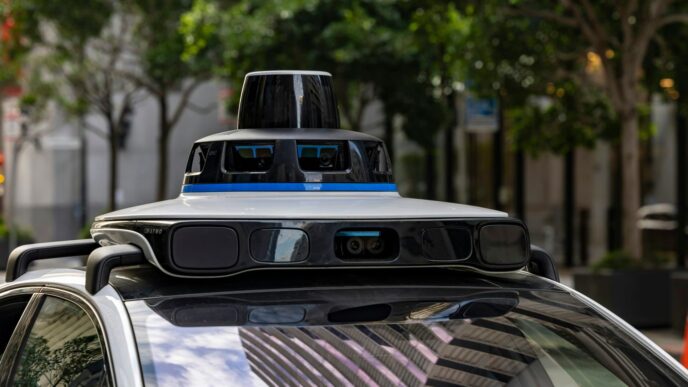
One of the big talking points for a while has been the lack of automatic cleaning for the sensors and cameras on Tesla’s Robotaxi vehicles. It makes sense, right? If a camera is covered in dirt or rain, it can’t see properly, and that’s a problem for a car that’s supposed to drive itself. Well, it looks like Tesla has finally addressed this. They’ve started updating their fleet vehicles with hardware that can clean these sensors. This is a pretty big deal because it means the cars are becoming more robust for all sorts of weather and road conditions. It’s not just a minor tweak; it’s a necessary step for reliable autonomous operation.
Divergence from Standard Model Y
Because of these new features, like the sensor cleaning systems, the Robotaxi vehicles are starting to look a bit different from the Model Ys you might see on the street every day. They were never exactly standard Model Ys to begin with – they’ve always had extra bits for communication with Tesla’s headquarters. But now, with these added capabilities, the gap is widening. This means that if you were hoping to put your own Tesla on the Robotaxi network someday, it might not be as simple as just updating your software. The hardware is becoming more specialized, which could mean more complex maintenance and a different ownership experience for these specific vehicles.
The Future Cybercab Vehicle
Looking ahead, Tesla is really pushing the envelope with the Cybercab. This isn’t just a modified Model Y; it’s a vehicle designed from the ground up for robotaxi service. Think no steering wheel, no pedals – just a space for passengers. The plan is for these Cybercabs to start rolling off the production line in larger numbers around April 2026. When these purpose-built vehicles become a significant part of the fleet, it’s expected to change the whole game for ride capacity and how cost-effective the service can be. It’s the vehicle that’s really supposed to make the Robotaxi business scale up significantly.
Insurance and Safety Validation
So, how are insurance companies looking at Tesla’s robotaxi service? It’s a bit of a mixed bag, but there are some interesting developments. Lemonade, an online insurer, has made a pretty big move by partnering with Tesla. They’re offering a discount of about 50% on their per-mile insurance if the miles are driven using Tesla’s Full Self-Driving (FSD) software. This is a pretty big deal because Lemonade is the first outside insurance company to get direct access to Tesla’s FSD safety data. Based on what they’ve seen, they decided FSD is significantly safer than human drivers, enough to justify that hefty discount. They’re even planning to keep adjusting rates based on the FSD software version and the sensor data they get. It really shows a growing confidence in the technology’s safety metrics.
But it’s not all smooth sailing. We’ve seen reports of collisions. For instance, since the robotaxi service started in Austin in June 2025, there have been about 14 reported crashes over roughly 800,000 miles. That’s something Tesla definitely needs to work on as they try to expand. Plus, the service currently pauses operations when it rains, which shows there are still environmental limits they’re dealing with. The amount of data that will pile up as more rides happen is going to be the main thing dictating how quickly they can grow.
Here’s a quick look at some of the stats we’re seeing:
- Collision Rate: 14 collisions per 800,000 miles (as of early 2026).
- Operational Constraints: Service suspended during rain.
- Insurance Partnership: Lemonade offers ~50% discount for FSD miles.
The big question is whether this data will be enough to build widespread public trust and convince regulators that these vehicles are truly ready for prime time. It’s a complex puzzle, balancing innovation with safety, and the insurance world is watching very closely.
Expansion Plans and Future Outlook
So, where is Tesla’s Robotaxi service headed next? It’s a big question, and the company’s plans for 2026 are pretty ambitious. They’re looking to roll out the service in seven new cities during the first half of the year. Think Dallas, Houston, Phoenix, Miami, Orlando, Tampa, and Las Vegas. No exact dates for each city yet, so keep an eye on the Tesla app for announcements.
Planned City Rollouts
This expansion is a big deal. It means more people will get to experience the driverless rides. The current service is still pretty limited, mostly in Austin, Texas, with a small fleet of converted Model Ys. Adding these new cities is the next logical step to grow the user base and gather more real-world data. It’s not just about more miles logged; it’s about proving the system can work in different environments and traffic conditions.
Cybercab Production Targets
But the real game-changer is expected to be the Cybercab. This is Tesla’s purpose-built vehicle for the Robotaxi fleet, and it’s designed from the ground up without a steering wheel or pedals. Volume production is slated to start in April 2026. When these Cybercabs start joining the fleet, it’s expected to significantly change the economics and capacity of the service. This is the vehicle that many believe will truly allow the Robotaxi business to scale up.
Regulatory Landscape
Of course, all this expansion hinges on more than just Tesla’s plans. The regulatory side of things is still a work in progress. While Texas has been relatively open, other states and cities have different rules. Tesla has been working on getting the necessary permits, like filing with the California Public Utilities Commission. The pace of expansion will heavily depend on how quickly and smoothly these regulatory hurdles are cleared across different regions. It’s a complex puzzle, balancing technological readiness with public safety and legal frameworks. The data collected from these initial rollouts will be key in shaping those future regulations and public acceptance.
Looking Ahead: What’s Next for Tesla Robotaxis?
So, as we wrap up our look at Tesla’s Robotaxi safety in 2026, it’s clear things are moving fast. We’ve seen them start taking safety monitors out of the cars, which is a big step. But it’s not all smooth sailing; there have been some bumps, like those reported collisions and issues with bad weather. Tesla’s approach seems to be about learning as they go, which investors are watching closely. The real test will be how they handle expansion into new cities and whether they can keep building public trust. Plus, with the new Cybercab coming, the whole game could change. It’s definitely a space to keep an eye on, especially for Tesla owners wondering about their car’s future value.