The Arrival Of Uber Robot Delivery
It feels like just yesterday we were all marveling at self-driving cars, and now, here we are, watching little robots trundle down the sidewalk with our dinner. Uber Eats is rolling out its autonomous delivery service, and honestly, it’s kind of a big deal. They’re partnering with companies like Avride to get these sidewalk bots out there, making food delivery a whole new experience.
Introducing Sidewalk Robots for Food Orders
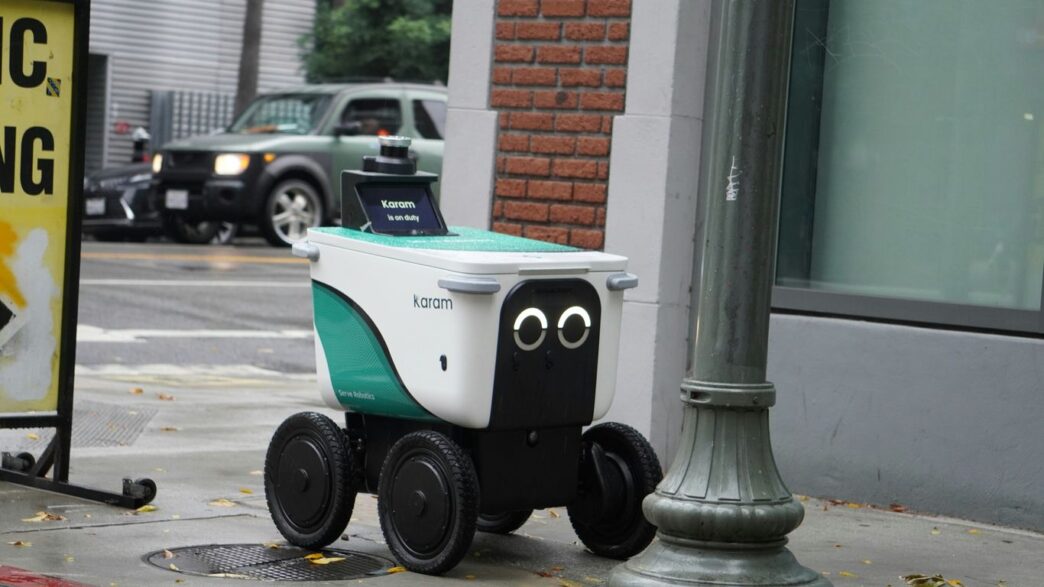
So, what exactly are these things? Think of them as compact, four-wheeled carriers, roughly the size of a carry-on suitcase. They’re designed to handle the last leg of your food delivery, bringing it right to your doorstep. These aren’t just for a quick snack, either; they can carry up to 55 pounds, so your family-sized pizza order is no problem. It’s a pretty neat way to get your grub without a human driver having to deal with traffic or parking.
A Contactless and Streamlined Delivery Experience
One of the biggest draws here is the contactless aspect. You order through the Uber Eats app, and when the robot arrives, you get a notification. Then, you just use your phone to unlock a secure compartment where your food is waiting. No awkward small talk, no worrying about cash, just a straightforward pickup. It’s all about making the process smoother and, well, cleaner.
The Future of Delivery in Dense Urban Areas
Cities can be a real headache when it comes to getting anything delivered. Traffic jams, impossible parking situations – it all adds up. These robots are seen as a way to cut through that chaos. By sticking to sidewalks, they bypass a lot of the usual delivery headaches. Uber sees this as a major step forward, especially for busy urban centers where getting food from point A to point B can be a real challenge.
How Uber Eats Robot Delivery Works
So, you’ve probably seen these little bots rolling around, right? If you’re in a city where Uber Eats is trying this out, you might get a little option when you’re ordering food: "Robot Delivery." Cool, huh? If you pick it, the app basically sends out one of these autonomous vehicles to grab your grub.
Navigating Sidewalks with Advanced Sensors
These robots aren’t just randomly bumping around. They’ve got some pretty smart tech on board. Think LIDAR, which is like a laser radar, plus a bunch of other sensors and cameras. This whole setup lets them see about 200 feet in front of them, helping them spot obstacles like people, bikes, or even just a rogue shopping cart. They’re programmed to follow traffic rules and generally stick to sidewalks, trying to be as polite as possible to everyone walking by. They can even figure out traffic lights. It’s pretty wild to imagine them just cruising along.
Customer Interaction and Order Retrieval
Once the robot gets close to your place, you’ll get a notification on your phone. When it arrives, you just use your Uber Eats app to unlock a secure compartment on the robot. Inside, you’ll find your food, all nice and safe. It’s designed to be super simple, no need to chat with anyone if you don’t want to. They can carry a decent amount too, up to about 55 pounds, so it’s not just for a single taco. They’re also built to handle different weather, so rain or shine, your food should still get to you.
The Role of Avride in Autonomous Operations
Uber isn’t exactly building these robots from scratch. They’ve teamed up with a company called Avride, which specializes in this autonomous tech. Avride is the brains behind the operation, making sure the robots can actually drive themselves around. They handle the software, the sensors, and all the complex stuff that makes these bots move. So, while you’re using the Uber Eats app, it’s really a partnership between Uber and Avride making the whole delivery happen.
Technology Behind The Delivery Bots
These little food-carrying robots might seem simple, but they’re packed with some pretty smart tech to get your order to you. Think of them as tiny, self-driving delivery vehicles designed specifically for sidewalks.
LIDAR and Sensor Fusion for Navigation
So, how do these bots actually see where they’re going? It’s a combination of fancy sensors. The most important one is LIDAR, which stands for Light Detection and Ranging. It’s like a spinning radar that uses lasers to create a 3D map of the robot’s surroundings. This helps it figure out distances to things like curbs, lampposts, and, well, people.
But LIDAR isn’t the only thing. The robots also use cameras, kind of like your phone’s camera, to see what’s in front of them. They also have ultrasonic sensors, which work a bit like a bat’s echolocation, bouncing sound waves off objects to detect them. All this information from the different sensors gets combined, or ‘fused,’ by the robot’s computer. This fusion process gives the robot a really clear picture of its environment, allowing it to avoid obstacles and stay on the sidewalk.
Lithium Battery Power and Operational Range
Keeping these bots moving requires a good power source. They run on lithium batteries, which are pretty standard for electric vehicles these days. These batteries are designed to last for a good chunk of the day. We’re talking up to about 12 hours on a single charge, which is usually enough to handle a full day of deliveries without needing a recharge. When they do need a boost, the batteries are swappable, meaning a fresh one can be popped in quickly so the robot can get back to work without much downtime. This setup is key for keeping the service running reliably, rain or shine.
Tracking Your Robot’s Journey Via The App
Once your food is picked up by a robot, you’re not left in the dark. The Uber Eats app plays a big role here. You’ll get notifications when the robot is on its way and when it arrives. The app essentially acts as your robot’s personal tracker, showing you its location in real-time on a map. It’s pretty neat to watch it make its way from the restaurant to your doorstep, just like you would track a human delivery driver, but with a little robot rolling along. When it gets there, you’ll use the app to unlock the secure compartment where your food is kept safe and sound.
Expanding Uber Robot Delivery Services
Current Cities With Robot Delivery
Uber Eats has been steadily rolling out its autonomous delivery robots, partnering with companies like Avride to bring this tech to more neighborhoods. Right now, you can find these sidewalk bots making deliveries in a few key U.S. cities. Austin, Texas, was one of the first places to see them in action. Jersey City, New Jersey, has also adopted the service, with robots zipping around areas like Hamilton Park and the Waterfront. Some cities in Ohio are part of the program too. It’s still early days, but the list is growing.
Plans for Wider Deployment and More Robots
Uber and Avride aren’t slowing down. They’re aiming to have hundreds of these delivery robots out on the streets by the end of 2025. The goal is to make robot delivery a common sight in more urban centers across the country. Think of it like this:
- Scaling Up: The companies plan to significantly increase the number of robots in operation.
- New Markets: They’re actively looking at where to launch next, focusing on areas where they can make the biggest impact.
- Continuous Improvement: As more robots hit the streets, the technology gets better, learning from every trip.
The ultimate aim is to have these robots become a regular part of the delivery landscape in many more cities.
Customer Interest Driving Service Expansion
Ultimately, Uber Eats is watching to see where people want this service. If you’re excited about the idea of robot deliveries, letting Uber know matters. The company pays attention to customer feedback and demand when deciding where to expand next. So, if you want to see these bots in your town, don’t be shy about expressing your interest. It really does help shape where Uber Eats decides to go with its autonomous delivery program.
Benefits Of Uber Robot Delivery
So, why is Uber even bothering with these sidewalk bots? Well, it turns out there are some pretty good reasons, especially if you live in a busy city.
Addressing Traffic and Parking Congestion
Think about it: every delivery car stuck in traffic or circling for a parking spot adds to the chaos. These little robots, though? They just zip along the sidewalks. This means less congestion on the roads, which is a win for everyone. Plus, no more delivery drivers blocking fire hydrants or double-parking because they can’t find a spot. It’s a small change, but it can make a noticeable difference in how a neighborhood feels.
Faster, Safer, and More Affordable Deliveries
These robots aren’t held up by rush hour or red lights. They follow programmed routes and have sensors to avoid obstacles, making them pretty efficient. This can mean your food gets to you quicker. And since they’re not human drivers, there’s no risk of distracted driving or other human errors. Uber is also saying these robots can help keep delivery costs down, which could eventually mean lower fees for us customers. It’s a neat idea, right?
Reducing Fees and Increasing Reliability
One of the big promises of robot delivery is cutting down on those pesky service fees. Human drivers need to be paid, and that cost gets passed on. Robots, once the technology is in place, are expected to be cheaper to operate. This could lead to more predictable pricing for your takeout orders. Also, robots don’t call in sick or get stuck in unexpected traffic jams. They’re designed to operate consistently, rain or shine, making the whole delivery process more dependable. It’s like having a delivery service that’s always on call, without the human element of unpredictability.
Customer Experience With Robot Deliveries
Opting In For Autonomous Delivery
So, you’re curious about getting your next meal delivered by a robot? It’s pretty straightforward. If you’re in a city where Uber Eats is testing this out, you might see an option pop up in the app when you’re placing your order. It’s not everywhere yet, but they’re rolling it out. Just look for the choice to have your food brought by one of these autonomous vehicles. It’s a simple checkbox or selection during checkout. This is your ticket to trying out the future of food delivery.
Receiving Notifications and Unlocking Compartments
Once you’ve chosen robot delivery and your order is on its way, your phone will buzz. You’ll get a notification letting you know the robot is approaching. Think of it like getting an alert when your human driver is a few minutes out, but this time, it’s a little wheeled buddy. When the robot gets to your door, you’ll get another notification. This one usually has a special code or a prompt to scan something in the app. That’s how you unlock the secure compartment where your food is kept safe and sound. It’s designed to be quick and easy, so you can grab your meal without any fuss.
The No-Tip Policy for Robot Deliveries
Here’s something interesting: you don’t tip the robot. Seriously. When you add a tip through the app for a robot delivery, that money doesn’t go anywhere. Uber says this is because the robots are part of a different operational model. So, if you’re used to adding a few extra bucks for your delivery person, you can skip that step when ordering robot delivery. It’s one of the ways they’re aiming to make these deliveries more affordable. It’s a bit of a change from the usual routine, but it’s part of the whole new experience.
Addressing Concerns With Uber Robot Delivery
Navigating Sidewalks and Pedestrian Interactions
So, these little robots rolling around on the sidewalks, right? It’s a new thing, and naturally, people have questions. The biggest one seems to be how they handle sharing the sidewalk with us humans. Uber says the robots are built with advanced sensors, kind of like their eyes and ears, that help them spot people, pets, and other obstacles. They’re programmed to move at a walking pace, usually around five miles per hour, so they aren’t exactly zooming past anyone. The idea is for them to be predictable and safe, not to cause a jam or a scare. They’re supposed to yield to pedestrians, just like we do for each other. It’s a learning curve for everyone, though. Sometimes, you might see a robot pause or wait for a clear path, which is good, but it can also feel a bit odd if you’re not expecting it.
Incidents and Public Perception of Robots
Of course, with any new technology, there are bound to be a few bumps along the road. We’ve heard about some robots getting stuck, or maybe having a minor fender-bender with a curb. It’s not like these things are perfect right out of the box. Public perception is a mixed bag. Some folks think they’re super cool and futuristic, especially kids who seem to love watching them go by. Others find them a bit of a nuisance, especially if they’re blocking a path or if the interaction feels a little clunky. It’s still early days, and the companies are collecting data from these situations to make the robots smarter and more aware. The goal is to minimize any negative experiences and make sure these robots become a helpful part of the neighborhood, not a problem.
Company Engagement with Local Governments and Policy
Uber isn’t just dropping these robots on the streets and walking away. They’re working with city officials and local governments to figure out the best way to integrate this new delivery method. This involves discussions about where the robots can operate, what rules they need to follow, and how they impact the community. It’s a collaborative process, really. They want to make sure they’re following local laws and addressing any concerns that city leaders might have. This kind of partnership is key to making sure robot delivery can expand responsibly and smoothly. It’s about finding a balance between innovation and making sure our public spaces work for everyone.
What’s Next for Robot Delivery?
So, these little robots are starting to show up more and more, bringing our food right to us. It’s pretty wild to think about, right? Uber Eats is pushing this as the future, and it makes sense – they’re trying to make deliveries faster and maybe even cheaper. Right now, they’re in a few spots, but they’re planning to put a lot more out there soon. It’s not perfect yet, and some people aren’t too happy about sharing the sidewalk with them. But it looks like these sidewalk bots are here to stay, and we’ll probably all be seeing them more often, whether we like it or not.