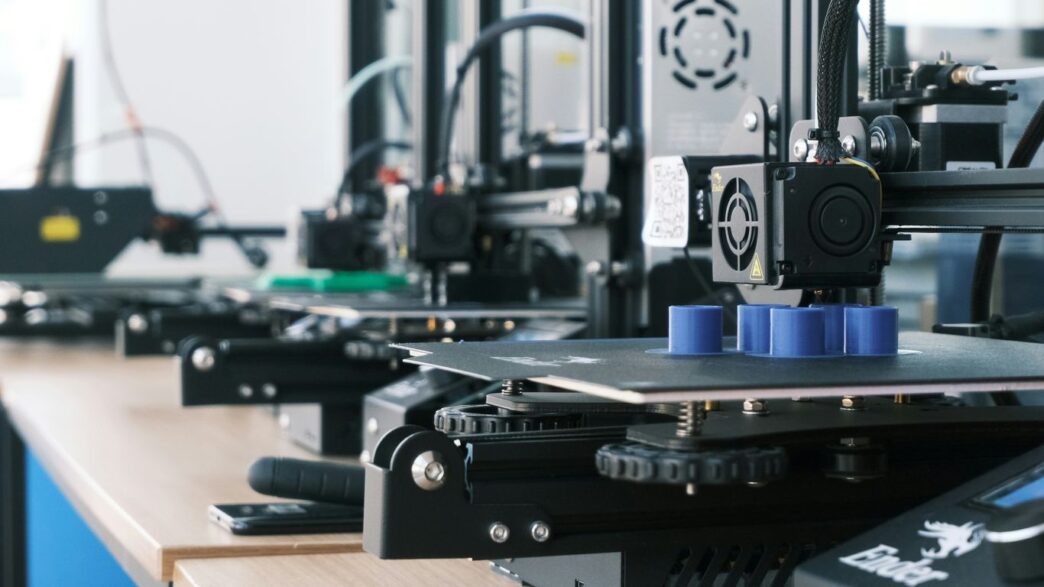
So, 3D printing. It’s not just for hobbyists anymore, is it? It’s really changing how things get made. Businesses are using it for all sorts of stuff, from making prototypes super fast to actually producing final products. The technology is getting better all the time, with new materials and smarter software popping up. It seems like the UK 3D printing market is really starting to heat up, with a lot of potential for growth and new ideas. We’re going to take a look at what’s happening now and what might be coming next.
Key Takeaways
- The 3D printing market in the UK is seeing steady growth, driven by innovation and adoption across various industries.
- Advancements in materials, software, and hardware are making 3D printing more practical for production, not just prototyping.
- Key sectors like aerospace, automotive, and healthcare are increasingly using 3D printing for specific applications and custom solutions.
- Opportunities exist in scaling up production, exploring distributed manufacturing models, and focusing on sustainable practices.
- While the future looks bright for the 3D printing market UK, challenges related to production scale and supply chains still need attention.
UK 3D Printing Market Overview
Current Market Landscape
The 3D printing scene in the UK is really picking up steam. It’s not just a niche technology anymore; it’s becoming a serious part of how things get made. We’re seeing a solid mix of established companies and new startups all pushing the boundaries. This growth is helped along by government backing for research and development, plus a general push for innovation. It feels like there’s a good amount of collaboration happening between universities and businesses, which is always a good sign for any tech sector. The market is expanding, with more businesses looking at 3D printing for actual production, not just for making prototypes. This shift means there’s a growing network of companies offering everything from design software to advanced post-processing solutions.
Key Growth Drivers
Several things are really pushing the UK 3D printing market forward. For starters, there’s a big focus on making things faster and more efficiently. Think about how quickly you can go from a digital design to a physical object – that’s a huge advantage. Plus, the ability to create complex shapes that traditional manufacturing just can’t handle opens up a lot of doors.
Here are some of the main reasons for this growth:
- Innovation in Materials: New and improved materials are constantly being developed, allowing for stronger, more flexible, or specialized parts.
- Industry Adoption: Key sectors like aerospace, automotive, and healthcare are increasingly integrating 3D printing into their workflows for everything from tooling to final product components.
- Government Support: Initiatives and funding aimed at boosting advanced manufacturing and R&D play a significant role in encouraging investment and adoption.
- Cost-Effectiveness: For certain applications, especially for low-volume production or highly customized items, 3D printing can be more cost-effective than traditional methods.
Emerging Trends in the UK
Looking at what’s happening right now, a few trends stand out. One big one is the move from just prototyping to actual production. Companies are starting to rely on 3D printing for making end-use parts, which is a major step. We’re also seeing a lot of interest in making things more sustainable. This includes using recycled materials and designing products with their end-of-life in mind, fitting into the broader circular economy push. The European 3D printing market, for instance, is projected to reach USD 9.04 billion by 2030, and the UK is a key part of that growth [63c7]. Another interesting development is the rise of ‘fabshops’ – places where you can get custom parts printed on demand, much like a print shop for physical objects. This makes 3D printing more accessible to smaller businesses and even individuals. The construction sector is also seeing growth, with the 3D printing construction market expected to expand significantly [2e0b].
Technological Advancements and Innovations
It feels like every week there’s something new popping up in the world of 3D printing. The tech is moving so fast, it’s hard to keep up sometimes. But that’s also what makes it exciting, right? We’re seeing some pretty big leaps forward that are changing what’s possible.
Material Science Breakthroughs
Materials are a huge part of this. Companies are developing all sorts of new plastics and composites. Think materials that are super flexible, or ones that can conduct electricity, or even ones that are better for use in the body. They’re really tailoring these materials specifically for 3D printing, which means they work better and open up new uses. It’s not just about making things stronger; it’s about giving them new properties. For example, new specialized plastics and composites are being developed with a wide range of properties, from elasticity to conductivity, biocompatibility, and reduced UV sensitivity, all tailored for 3D printing. This means we can print things that were just not feasible before.
Software and AI Integration
Then there’s the software and AI side of things. Artificial intelligence is starting to play a much bigger role. It’s helping to improve the hardware, like using cameras to monitor prints, and it’s making the software smarter too. AI can help with design, making it easier for people to create complex parts. It’s also helping to automate processes, which saves time and money. The integration of AI is making 3D printing more accessible and efficient across the board. We’re also seeing more focus on data collection, even in lower-cost machines, as robust production data becomes more important for parts made this way. This is a big step towards making 3D printing more reliable for actual production runs.
Hardware Evolution in Additive Manufacturing
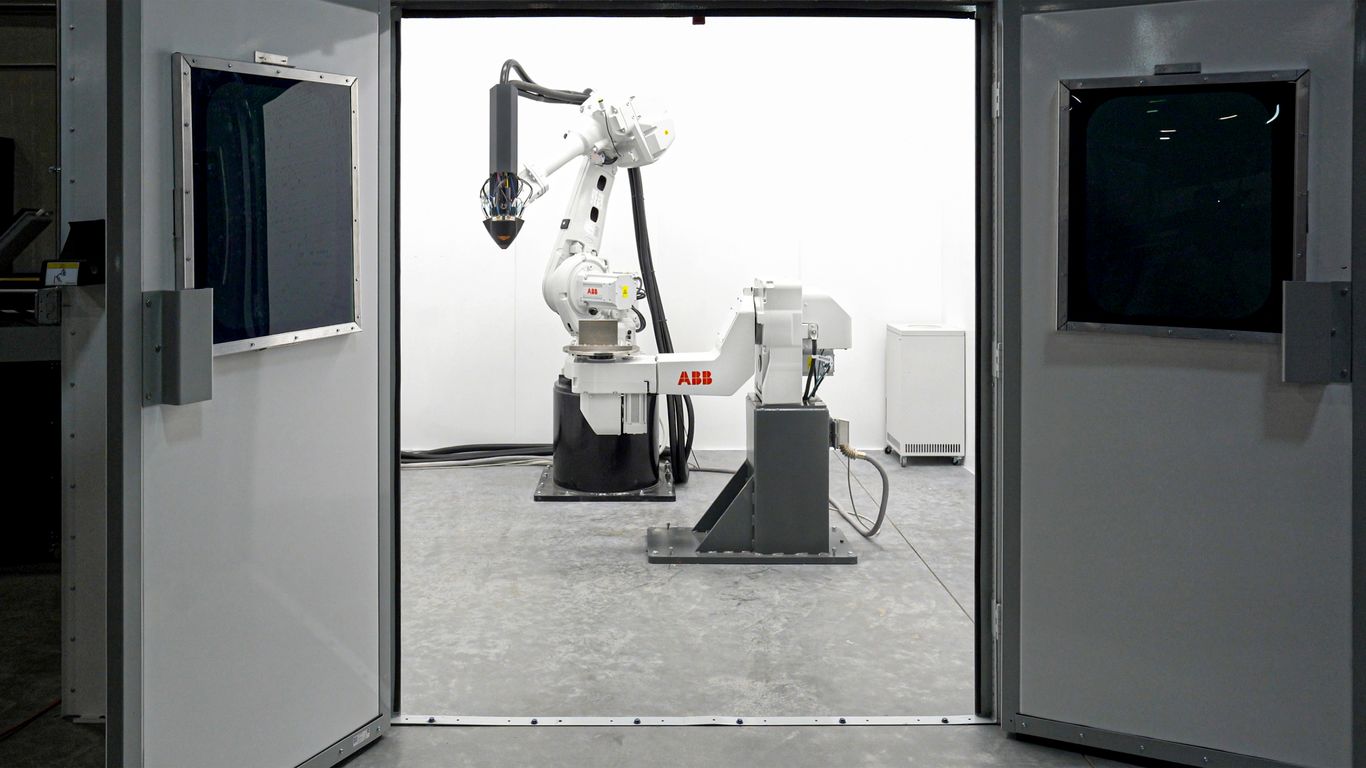
The machines themselves are getting better too. We’re seeing advances in different areas. On one end, there’s a lot of work in micro 3D printing, which is great for tiny, intricate parts, especially in medicine and dentistry. On the other end, large-format printing is really taking off, allowing for much bigger objects to be printed, not just in plastic but in metal too, often using robotic systems. Hybrid manufacturing, which combines 3D printing with other methods like CNC machining, is also becoming more common. This mix-and-match approach is pushing the boundaries of what we can create. Multi-material printing is another big one, letting us combine different materials in a single print, which can reduce the need for assembly later on. It’s all about making the hardware more capable and versatile, supporting the move towards production-level 3D printing.
Industry Applications and Sectoral Impact
Aerospace and Automotive Adoption
When you look at the UK’s 3D printing scene, aerospace and automotive have been big players for a while now. These industries are all about precision and complex parts, which is exactly where additive manufacturing shines. Think about it – instead of making a part with a bunch of smaller pieces welded or bolted together, you can often print the whole thing in one go. This cuts down on assembly time and potential weak points. For example, companies are using it to create lighter, stronger components for aircraft, which can lead to better fuel efficiency. The automotive sector is also jumping on board, using 3D printing for everything from rapid prototyping of new car designs to making custom tools for the factory floor. It’s a really efficient way to test out new ideas quickly without huge upfront costs. The FDM 3D printing technology, in particular, is quite versatile and finds its way into these sectors for creating prototypes and manufacturing tools [9d1d].
Healthcare and Medical Innovations
The healthcare industry is where things get really exciting, though. We’re seeing some amazing advancements here. 3D printing is being used to create patient-specific implants, surgical guides, and even models of organs for surgeons to practice on before an operation. This level of customization is a game-changer for patient outcomes. Imagine a hip replacement perfectly tailored to your anatomy – that’s the kind of thing additive manufacturing makes possible. Beyond implants, there’s a lot of work happening in bioprinting, which involves printing living tissues and cells. While that’s still pretty cutting-edge, it shows the incredible potential for the future of medicine. The medical devices sector is experiencing rapid growth, indicating a shift in market dynamics [c806].
Consumer Goods and Industrial Manufacturing
It’s not just the high-tech industries, either. Consumer goods are also benefiting. Think about custom phone cases, personalized sporting equipment, or even unique fashion items. 3D printing allows for a level of personalization that was just not feasible before. For industrial manufacturing, it’s about making production more flexible. Companies can produce spare parts on demand, reducing the need for large inventories. They can also create jigs, fixtures, and other tools needed for their production lines much faster and cheaper than traditional methods. This flexibility is a big deal for staying competitive in today’s fast-paced market.
Market Opportunities and Strategic Imperatives
The UK 3D printing market is really starting to show its potential, moving beyond just making prototypes to actually producing things in larger numbers. This shift is where the big opportunities lie.
Scaling Production Applications
We’re seeing a definite move from just testing ideas to actual manufacturing. Industries like automotive and aerospace are increasingly using 3D printing not just for tools, but for making parts in serial production. The technology has gotten faster and more cost-effective for certain jobs, opening up markets that are worth billions. It’s not just about speed; it’s about making it practical for everyday production.
The Rise of Distributed Manufacturing
Another exciting area is how services are changing. Companies are setting up networks of production sites. This means customers can get prototypes and even production parts made pretty quickly, sometimes within ten days. It lowers the barrier to entry because you don’t need to buy all the expensive equipment yourself. You can just use their services. This model is making advanced manufacturing accessible to more businesses.
Sustainability and Circular Economy Benefits
3D printing naturally fits with the push for greener practices. It uses materials more efficiently, and because you can produce things closer to where they’re needed, it cuts down on shipping emissions. Plus, there’s a growing ability to use recycled materials. For companies focused on environmental goals, 3D printing offers a tangible way to show they’re making a difference. It’s a smart way to align business growth with environmental responsibility.
Here’s a quick look at how these opportunities stack up:
- Production Scale: Moving from prototypes to mass production. This is a huge market shift.
- Distributed Services: Accessing manufacturing capabilities without big upfront costs.
- Sustainability: Using less material, reducing transport, and incorporating recycled content.
Future Projections for the UK 3D Printing Market
Projected Market Growth and CAGR
The UK 3D printing market is on a solid upward trajectory. We’re looking at continued expansion, with projections suggesting a healthy Compound Annual Growth Rate (CAGR) over the next several years. While specific figures can fluctuate based on different analyses, the general consensus points towards significant growth, building on the momentum seen in recent years. This isn’t just about hobbyists anymore; the technology is increasingly being adopted for serious production applications. The UK’s strong manufacturing base and its push towards advanced technologies are key factors here. It’s exciting to see how this sector is developing, with many expecting it to become a more substantial part of the overall economy. The UK 3D Printing & Rapid Prototyping Services industry has already shown promising growth, and this trend is expected to continue.
Anticipated Technological Shifts
Looking ahead, several technological shifts are likely to shape the UK 3D printing landscape. Artificial intelligence (AI) is set to play a bigger role, not just in designing parts but also in managing the printing process itself. Think smarter quality control, automated anomaly detection during prints, and even AI-generated designs optimized for additive manufacturing. We’ll also see a continued evolution in materials. Expect more specialized filaments and powders with advanced properties like higher heat resistance, better conductivity, or improved biocompatibility, opening doors for new applications. Hardware will keep getting better too, with faster, more precise, and more reliable printers becoming standard. The focus will increasingly be on making 3D printing more efficient and cost-effective for larger-scale production.
Long-Term Industry Outlook
The long-term outlook for 3D printing in the UK is quite positive. The industry is maturing, moving beyond just prototyping into serial production and mass customization. This shift is supported by a growing ecosystem of companies offering specialized solutions, from design software to post-processing. We can anticipate a more integrated approach, where 3D printing works alongside traditional manufacturing methods. The drive towards sustainability is also a significant factor, with additive manufacturing offering potential benefits in waste reduction and localized production. As more businesses recognize these advantages, adoption will likely accelerate. The sustainability practices within the sector are becoming increasingly important for future growth.
Navigating Challenges in the 3D Printing Ecosystem
So, while 3D printing is pretty amazing, it’s not all smooth sailing. There are definitely some hurdles to jump over if you want to really make it work for production.
Addressing Production Scalability
One of the biggest things is just making enough parts. Moving from making a few prototypes to churning out thousands for, say, the automotive industry, is a whole different ballgame. It’s not just about having more printers; it’s about making sure the whole process stays consistent and cost-effective at that larger scale. We’re seeing a lot of development in industrial-grade machines that are faster and more reliable, but it’s still a work in progress for many applications. The UK’s operating environment can be tough, influenced by global economics, which adds another layer of difficulty for businesses trying to scale up Joshua Dugdale of AMUK discusses the challenges in the UK’s 3D printing sector, citing a difficult operating environment influenced by global financial conditions.
Supply Chain Resilience Strategies
Think about it: if you’re relying on a single supplier for a critical material or a specific part of the printing process, what happens if they have a problem? That’s where building a more robust supply chain comes in. This could mean working with multiple suppliers, or even looking at ways to bring some of those processes in-house. The idea of distributed manufacturing, where production is spread out across different locations, also plays a big role here. It makes the whole system less fragile.
Regulatory and Standardization Considerations
Then there’s the whole issue of rules and standards. For industries like aerospace or healthcare, where safety is super important, you can’t just print something and use it. There’s a lot of testing and validation needed to make sure parts meet strict quality requirements. Getting those certifications can take time and money. Plus, as more companies get involved, there’s a growing need for clear standards so everyone’s on the same page regarding quality and safety. It’s a bit like trying to build a new road system while people are still figuring out how to drive on it. The good news is that organizations like ASTM and ISO are working on this, which helps remove some of the barriers to adoption.
Wrapping It Up
So, what’s the takeaway from all this? The UK’s 3D printing scene is definitely buzzing. We’re seeing a lot of growth, driven by new tech and companies finding smart ways to use it, from making quick prototypes to full-on production runs. It’s not just for big factories anymore; smaller businesses and even individuals are getting in on the action. While there are always hurdles to jump, like figuring out the best materials or scaling up production, the overall picture is pretty bright. Keep an eye on this space, because 3D printing is changing how things are made, and the UK is right in the middle of it all.